What a Trough Idler Bracket Set Does
A trough idler bracket set is the mounting structure that holds the carrying idlers in a troughed profile beneath a conveyor belt. It is the part that turns a row of loose idler rollers into a stable, correctly angled support station. In a quarry, a coal preparation plant, or a cement plant, the troughing bracket set is usually one of the first components inspected after the belt itself, because wear here shows up quickly as belt misalignment and spillage.
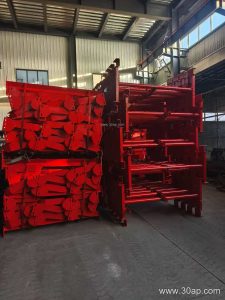
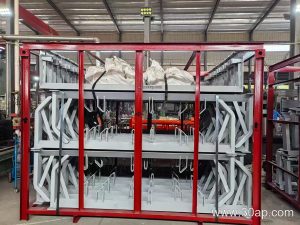
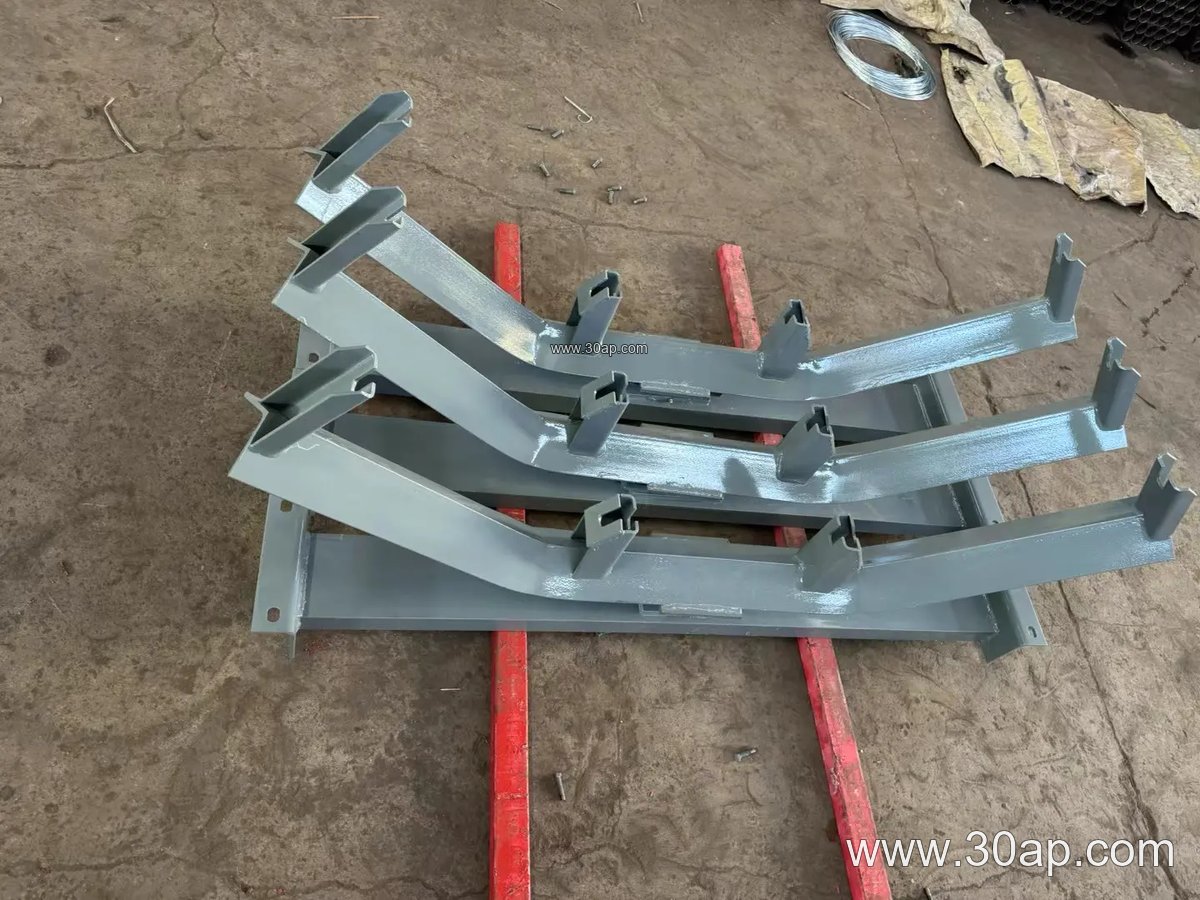
The same item is often called a troughing idler bracket set or a conveyor troughing frame set. These are accurate equivalents for the same assembly, not different products. The set normally includes the crossbeam or frame, the mounting feet, and the brackets or arms that position each idler at the required trough angle.
Construction and Common Materials
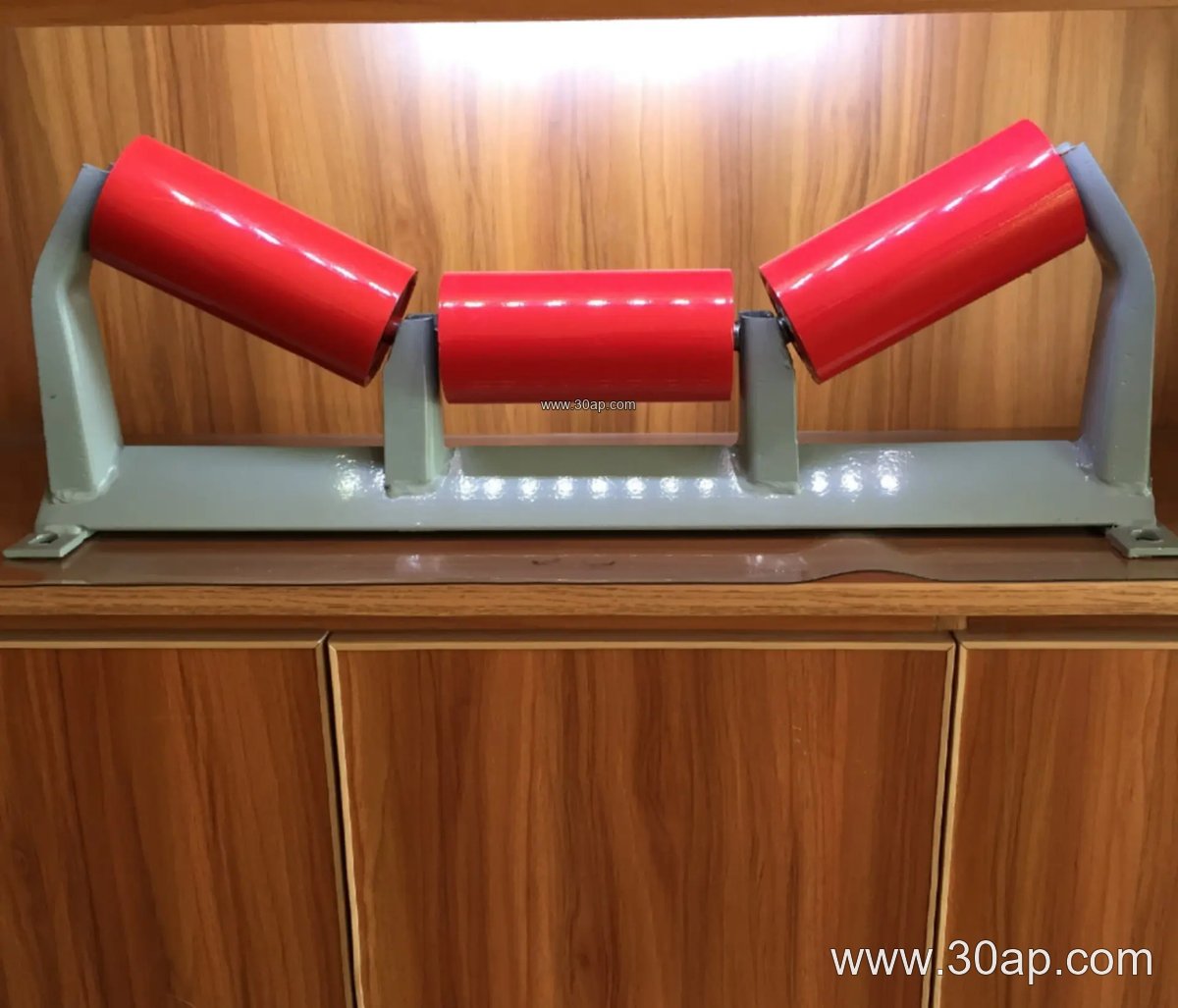
Most troughing bracket sets are fabricated from angle steel, channel steel, or folded steel plate, then drilled or punched for the idler shaft ends. The design must resist bending under the weight of the loaded belt as well as the vibration from lumpy material. A typical set is built to hold three idlers in a V or U profile, with the centre roll flat or slightly raised and the two wing rolls inclined.
Installation hole spacing and crossbeam length are not fixed values. They are determined by belt width, trough angle, and the idler diameter chosen for the duty. A buyer should always match these dimensions to the existing conveyor frame rather than assuming a standard fit.
Where the Set Fits on the Conveyor
The troughing bracket set belongs on the carrying side of the conveyor, between the head and tail pulleys along the load-carrying run. It is not a substitute for a bend pulley or a tail pulley, which are completely different components. On a long overland conveyor or an underground coal mining conveyor belt system, these bracket sets repeat every few metres and form the backbone of the belt support.
Common industrial settings include:
- Aggregate and sand production lines feeding a crusher conveyor belt
- Coal handling and power plant coal conveyor systems
- Cement plant clinker and raw material transport
- Iron ore and copper ore handling in steel and smelting plants
- Port and ship loading conveyors moving bulk material
Matching Trough Angle, Belt Width, and Roll Diameter
The trough angle controls how deeply the belt sits in the frame. A 20 degree set gives a shallow profile and is common on smaller belts, while 30 and 35 degree sets are widely used in general bulk handling. A 45 degree set is chosen where material containment matters more than belt flexing, often on heavy-duty mining conveyor belt runs.
Roll diameter is a separate decision. Common carrying idler diameters include Ø89, Ø108, Ø133, Ø159, and Ø194, and the bracket must have the correct slot or mounting height for the shaft size. The table below shows reference combinations only; each conveyor is designed on its own data and no single combination is mandatory.
| Reference | Belt Width | Trough Angle | Idler Diameter | Typical Field |
|---|---|---|---|---|
| A | B650 | 30 degrees | Ø89 | Aggregate and sand lines |
| B | B800 | 35 degrees | Ø108 | Cement and coal handling |
| C | B1200 | 45 degrees | Ø133 | Iron ore and heavy bulk |
| D | B1400 | 35 degrees | Ø159 | Port and ship loading |
| E | B1800 | 45 degrees | Ø194 | Large mining and quarry duty |
Adjustable bracket sets allow the trough angle to be changed within a range, such as between 20 and 45 degrees, which is useful during commissioning or when the belt loading pattern changes. Fixed sets are simpler and often preferred where the profile is already proven.
Selection and Maintenance Notes
When specifying a trough idler bracket set, confirm the belt width, the required trough angle, the idler shaft diameter, and the bolt hole pattern on the existing frame. A bracket set that is close but not exact will cause the idler roller to sit unevenly, and that leads to edge wear and tracking problems.
Inspection is straightforward. Check for bent arms, elongated bolt holes, cracked welds, and loose fasteners. Corrosion matters in wash plants and fertiliser handling, so a painted or galvanised finish may be worth requesting. Replacing a worn bracket set before the belt starts to wander is far cheaper than replacing a damaged conveyor belt.
For a complete support station, the bracket set works together with the conveyor belt, the idler roller, and the conveyor pulley at each end of the run. Buyers sourcing for a new line often combine it with an EP conveyor belt or a steel cord conveyor belt, depending on tension and impact requirements, and with a matching flame retardant conveyor belt in underground coal mining conveyor belt service.
Practical Buying Checklist
- Measure the existing crossbeam length and hole centres.
- Record the trough angle and whether adjustment is needed.
- Confirm idler shaft diameter and end fitting type.
- State the material and finish required for the site conditions.
- Order by set, not by single arm, so the geometry stays consistent.
A well matched troughing idler bracket set keeps the belt profile stable, reduces spillage, and extends the life of both the idlers and the belt itself.