What a Conveyor Support Bracket Does
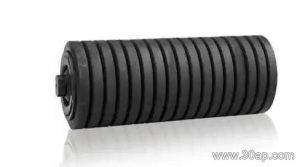
A conveyor support bracket is the structural interface between the conveyor frame and the idler roller or pulley. In a typical bulk material handling line, it holds the idler roller at the correct height, spacing, and angle so the conveyor belt runs smoothly. Without a properly aligned bracket, the belt may mistrack, spill material, or wear unevenly. This component is common in quarry, cement plant, coal washing, and power plant coal handling systems.
Sometimes called a conveyor bracket or support frame, it is not a drive pulley, tail pulley, or bend pulley. Those are separate components with different functions. A support bracket mainly carries the idler roller and, in some designs, the return roller or belt cleaning accessories.
Construction and Common Materials
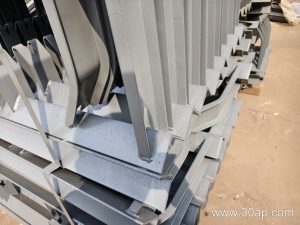
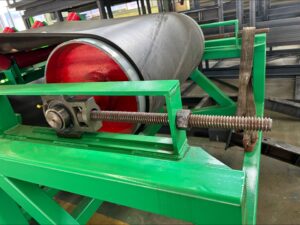
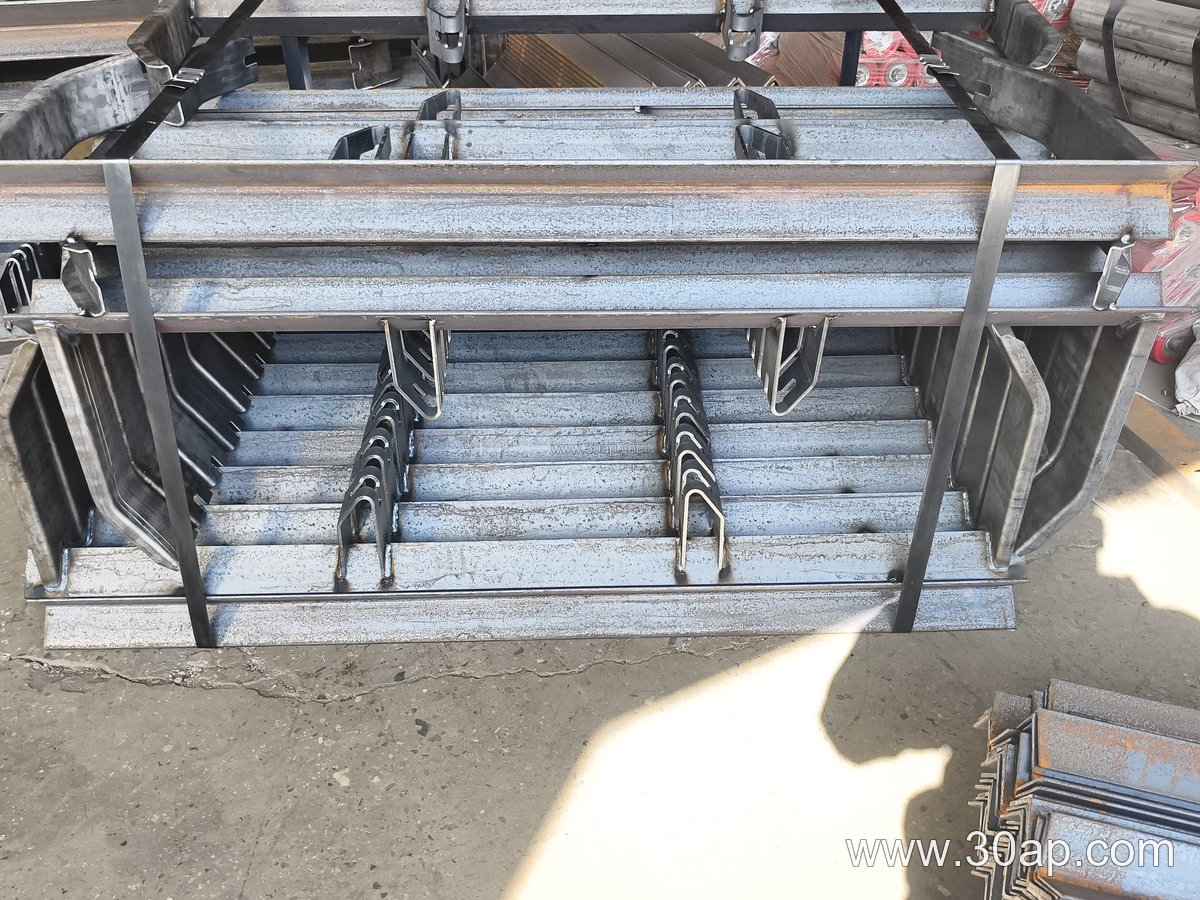
Most support brackets are fabricated from angle steel, channel steel, or folded steel plate. The choice depends on the load, belt width, and operating environment. For dusty or corrosive conditions, galvanized or painted versions are often selected. A typical bracket includes mounting holes for the idler roller shaft, slots for adjustment, and a base that bolts to the conveyor stringer.
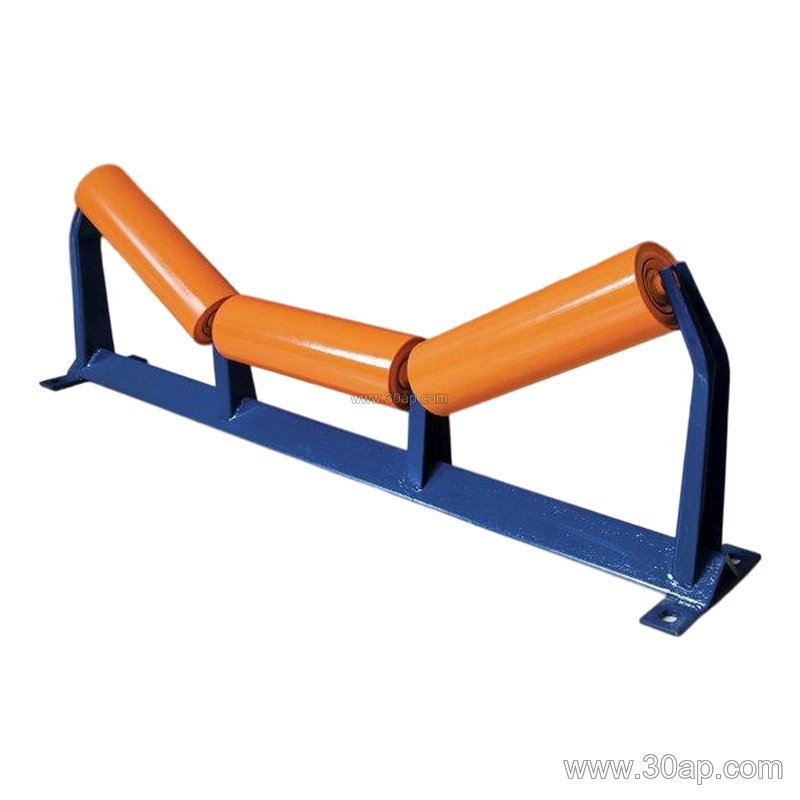
Adjustable brackets allow the trough angle to be changed between certain values, such as 20, 30, 35, or 45 degrees. Fixed brackets are welded or bolted at one angle. Forward-leaning brackets, usually about 1.5 to 2 degrees, help the belt center itself. These are practical details for maintenance teams in a sand and gravel line or a fertilizer plant.
Types and Applications
Several bracket styles exist for different positions along the conveyor. The table below lists common examples. They are not interchangeable with drive, tail, or bend pulleys.
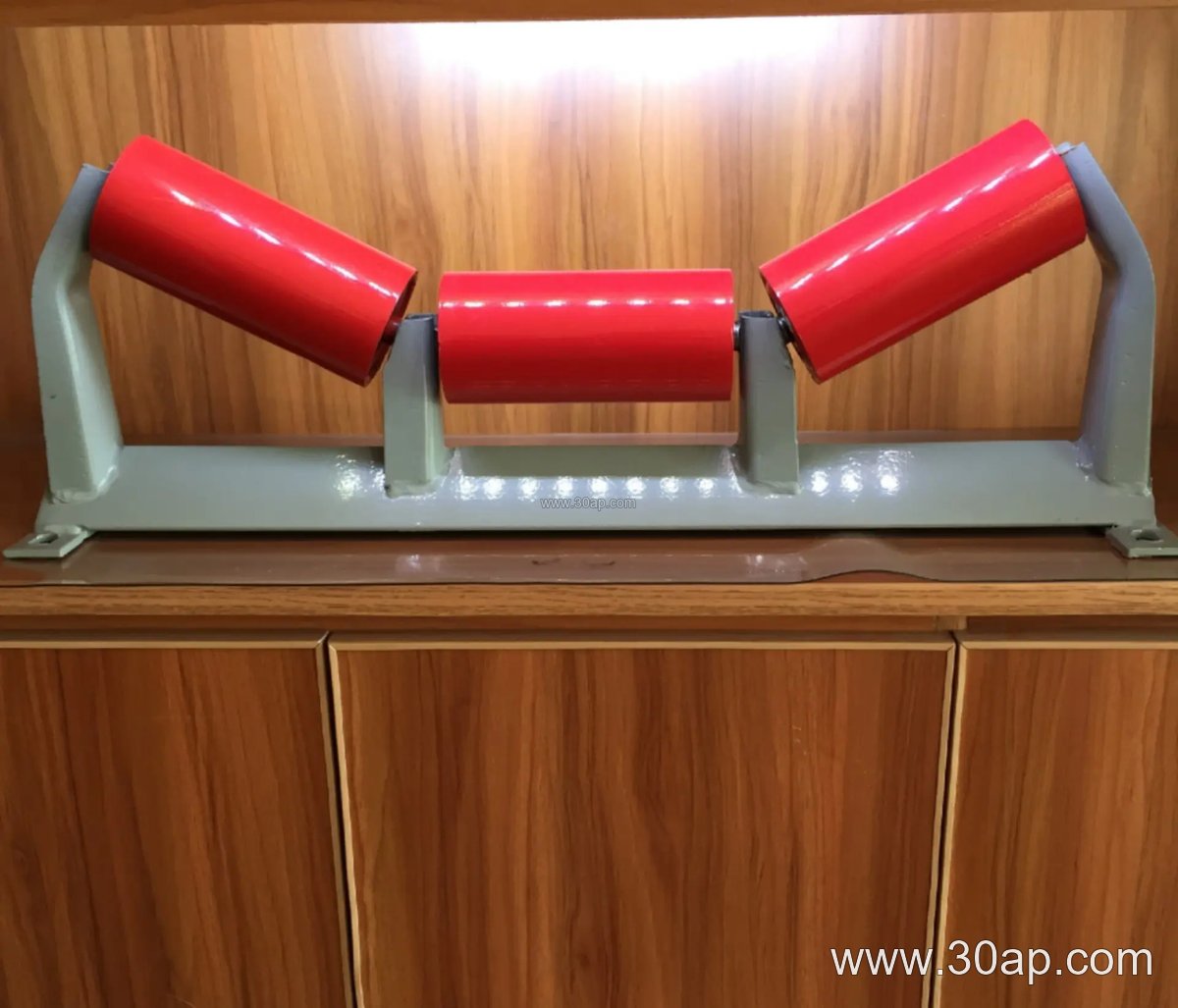
- Troughing bracket: supports three idler rollers to form a trough for carrying material.
- Transition bracket: eases the belt from flat to trough shape near pulleys.
- Return bracket: supports the empty belt on the return side.
- V-return bracket: uses two rollers in a V shape to help belt tracking.
- Impact bracket: reinforced for loading zones under a crusher or screen.
- Self-aligning bracket: allows small lateral movement to correct mistracking.
- Hanging bracket: suspends idlers from a cable or chain in some structures.
For example, a B800 belt with 35-degree trough and Ø108 idler rollers is a common combination in a small quarry. A B1200 belt with 45-degree trough and Ø133 rollers may appear in a cement plant. These are examples, not fixed rules. A B650 belt can use 30-degree trough and Ø89 rollers, but the actual choice depends on the conveyor design.
Key Parameters and Reference Sizes
When specifying a conveyor support bracket, buyers often consider belt width, trough angle, roller diameter, and mounting hole spacing. The table below shows typical reference values, but actual dimensions should follow the conveyor design.
| Parameter | Common Reference Values |
|---|---|
| Belt width | B500, B650, B800, B1000, B1200, B1400, B1600, B1800, B2000, B2200 |
| Trough angle | 20°, 30°, 35°, 45° |
| Roller diameter | Ø89, Ø108, Ø133, Ø159, Ø194 |
| Material | Angle steel, channel steel, folded steel plate |
Do not assume a fixed shaft diameter from belt width alone. Mounting hole spacing and crossbeam length vary with belt width and trough angle. Always confirm with the conveyor manufacturer or the current bracket drawing.
Selection and Maintenance Notes
Choose a bracket that matches the idler roller diameter, belt width, and trough angle. For heavy loading points in an iron ore or limestone mine, use a reinforced or impact bracket. For long overland conveyors, consider adjustable brackets to fine-tune alignment. Regular inspection of bolts, welds, and alignment helps prevent belt damage. Replace bent or corroded brackets promptly to avoid idler roller misalignment.
For coal mines and power plant coal handling, dust and moisture may require galvanized or painted brackets. In a tunnel boring operation, compact brackets with low profile may be preferred. Always follow the conveyor system design and local safety requirements.
Buyer Checklist
- Confirm belt width and trough angle.
- Match idler roller shaft diameter and mounting hole pattern.
- Check material and surface treatment for the environment.
- Decide between fixed and adjustable design.
- Verify load capacity and impact resistance if used at loading zone.
A well-chosen conveyor support bracket keeps the conveyor belt, idler roller, and pulley system working together. It is a small but critical part of any bulk material handling line, from a sand and gravel plant to a fertilizer silo.