What Conveyor Pulley Lagging Does
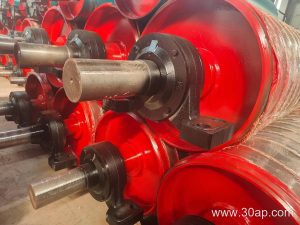
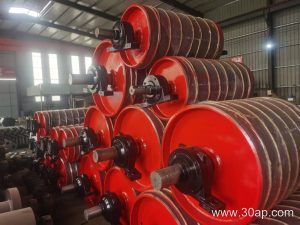
Conveyor pulley lagging is the sacrificial rubber or ceramic layer bonded to a pulley shell to raise friction between the drum and the conveyor belt. Without it, a bare steel drum in a damp or dusty circuit often slips, especially on the drive pulley where torque is highest. The lagging also protects the shell from wear and can be replaced without scrapping the pulley. In a quarry or a coal preparation plant, a small increase in grip frequently decides whether a heavily loaded belt starts cleanly or smokes at the head end.
How the Lagging Is Built
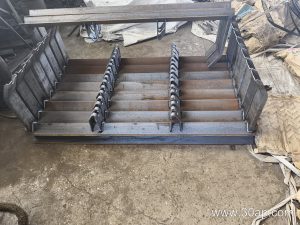
Most lagging starts as a rubber sheet with a fabric or cord backing. It is applied in one of three ways: hot vulcanized in a press, cold bonded with an adhesive system, or supplied as pre-cast strips with countersunk bolts. A common arrangement uses a smooth cover for a tail pulley and a grooved surface for a drive pulley. Grooves give water and fines somewhere to escape, which matters in wash plants and on wet aggregate lines. Ceramic tiles embedded in rubber are chosen where abrasive rock or sinter is handled and slip is a constant risk.
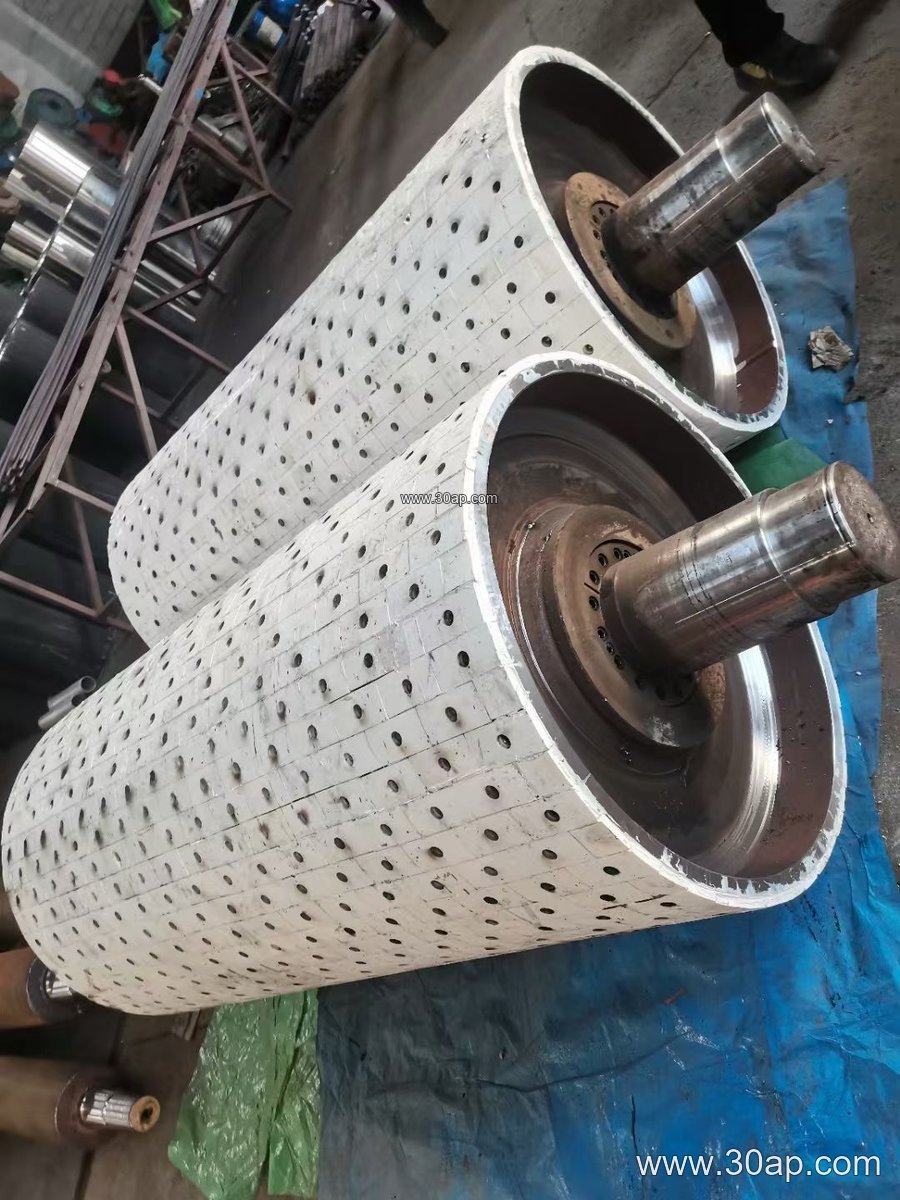
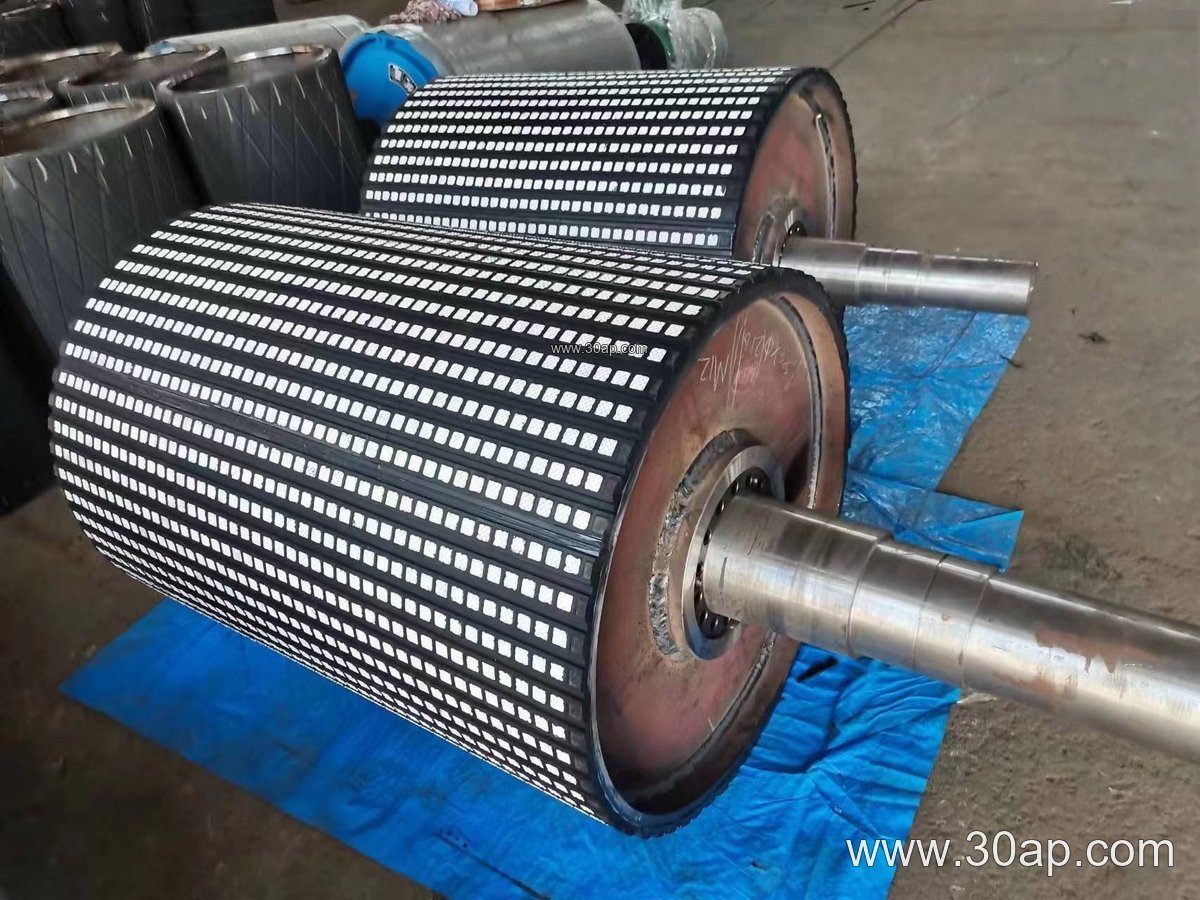
Thickness is normally quoted between 8 mm and 20 mm. A 10 mm or 12 mm layer is common on medium-duty pulleys, while 15 mm and 20 mm appear on large drive drums in iron ore or copper ore circuits. The rubber grade should suit the site: oil resistant where hydraulic leaks are possible, flame retardant underground, and abrasion resistant on hard rock. These are material choices, not a single universal compound.
Where It Is Used
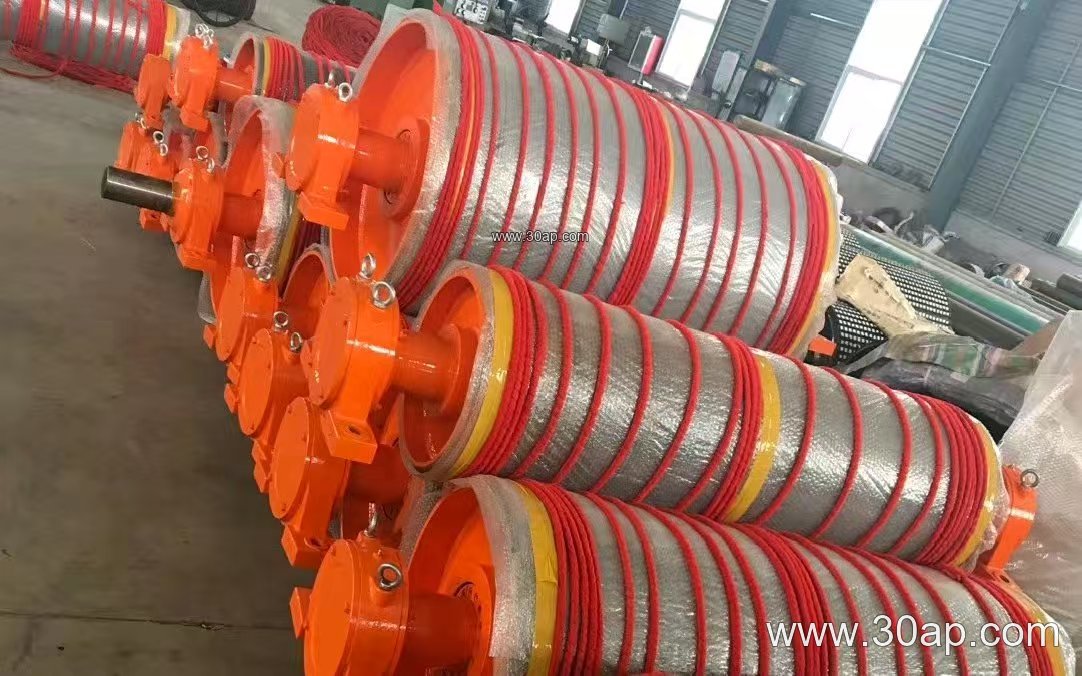
Lagging is found on the drive pulley first, then on the tail pulley and any bend pulley that sees high wrap angle or dirty conditions. A snub or take-up pulley may also be lagged when belt tracking is poor. In a cement plant, the clinker transport pulleys often run hot, so heat resistant grades are considered. In a power plant coal yard, flame retardant and anti-static properties may be specified alongside grip. Port bulk terminals with long overland conveyors tend to use diamond or herringbone patterns to shed rainwater. A conveyor pulley in a tunnel spoil line may need a plain surface to avoid packing with wet fines.
Matching Lagging to the Pulley and Belt
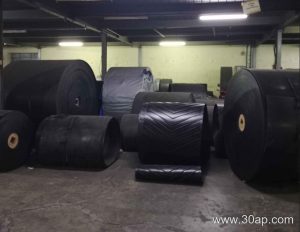
Selection begins with the pulley duty, not with a catalogue number. A B800 drive pulley with a Ø500 shell and a 12 mm lagged surface behaves very differently from a B1400 bend pulley with a Ø800 shell and an 8 mm cover. The belt itself matters: a heavy-duty mining conveyor belt with a thick cover tolerates a coarser groove pattern, while a thin EP conveyor belt on a short aggregate line may run better on a smoother finish. The table below shows typical reference combinations; final values are set by the conveyor designer.
| Belt width | Common pulley diameter | Lagging thickness | Surface form |
|---|---|---|---|
| B500 | Ø250 to Ø400 | 8 to 10 mm | Plain or diamond |
| B650 | Ø315 to Ø500 | 10 mm | Diamond or herringbone |
| B800 | Ø400 to Ø630 | 10 to 12 mm | Diamond or ceramic |
| B1000 | Ø500 to Ø800 | 12 to 15 mm | Herringbone or ceramic |
| B1200 | Ø630 to Ø1000 | 12 to 15 mm | Herringbone or ceramic |
| B1400 | Ø800 to Ø1250 | 15 mm | Ceramic or grooved rubber |
| B1600 | Ø1000 to Ø1400 | 15 to 20 mm | Ceramic or grooved rubber |
| B1800 | Ø1250 to Ø1600 | 20 mm | Ceramic or heavy grooved |
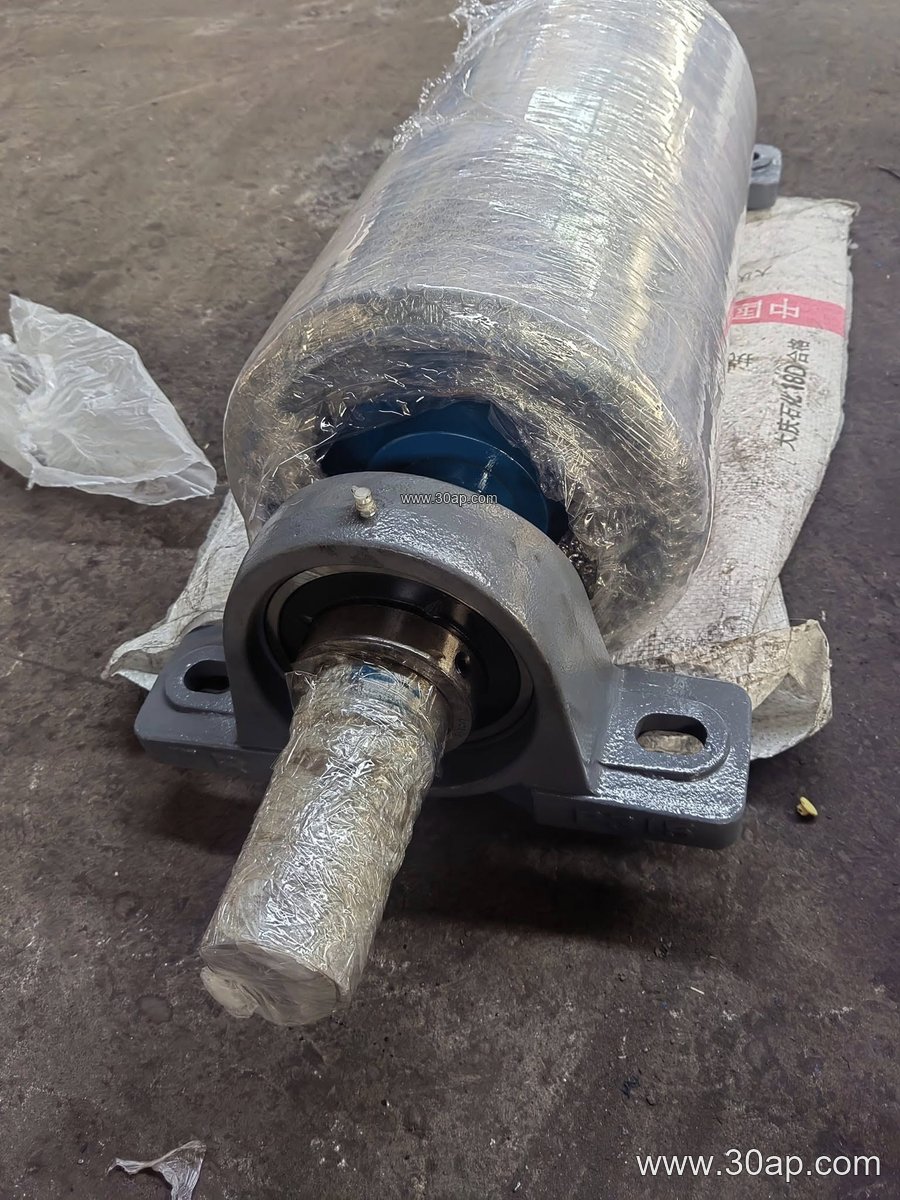
Shaft diameter is a separate decision. Values such as Ø80, Ø100, Ø120 or Ø160 are chosen from torque and bearing load, not from belt width alone. A fabric core conveyor belt and a steel cord conveyor belt of the same width can require different pulley shafts because the tension differs.
Buyer Checklist
- Confirm the pulley role: drive, tail, bend, take-up or snub. The required grip and groove pattern change with position.
- State the belt type and duty, for example an abrasion resistant conveyor belt in a stone crushing line or a flame retardant conveyor belt in an underground coal mine.
- Check shell dimensions and existing bolt patterns if the lagging is bolted rather than bonded.
- Ask for the rubber grade and hardness, and whether the joint is vulcanized or cold bonded.
- Keep spare strips in the warehouse; a worn lagging on a single drive pulley can stop a whole cement or port circuit.
- Inspect for worn grooves, embedded rock and loose edges during scheduled shutdowns, not only after a slip event.
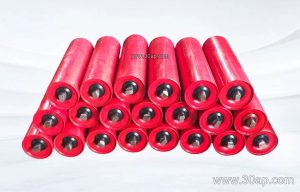
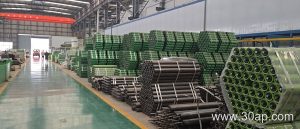
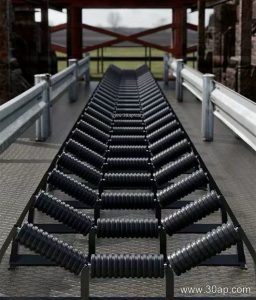
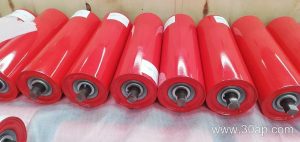
For more on matching pulleys with rubber conveyor belt, EP conveyor belt and heavy-duty conveyor belt specifications, or for pulley and idler roller details, visit conveyorbeltingpro.com and check the pulley and lagging pages before ordering.