What a Conveyor Idler Bracket Does on the Line
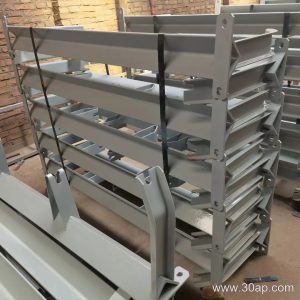
A conveyor idler bracket is the structural component that holds each idler roller at the correct position under or above the conveyor belt. It carries the roller shaft, fixes the trough angle, and transfers the load of the belt and material into the conveyor frame. In a quarry, a cement plant, or a coal handling system, the bracket is one of the most frequently replaced parts because it wears with the rollers and the frame around it.
The same item is also described as a conveyor roller bracket or idler frame bracket. Whatever name is used on a drawing, the function stays the same: locate the idler roller, keep the belt profile steady, and allow straightforward maintenance.
Construction and Materials
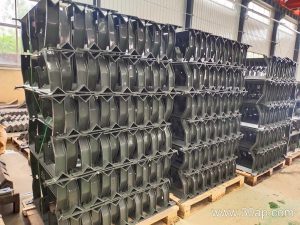
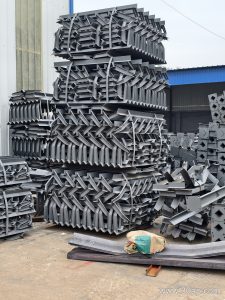
Most brackets are fabricated from angle steel, channel steel, or folded steel plate. The choice depends on belt width, load, and the environment. A dusty stone crushing line may use folded plate for easier cleaning, while a heavy iron ore or sintering application often calls for thicker channel sections.
- Angle steel brackets: simple, economical, common on lighter duty lines
- Channel steel brackets: higher stiffness for wide belts and heavy loads
- Folded plate brackets: clean profile, fewer dirt traps, good for dusty plants
Mounting slots are usually slotted rather than round so the bracket can be aligned with the belt during installation. The hole spacing and crossbeam length vary with belt width and trough angle, so they are confirmed from the drawing rather than assumed.
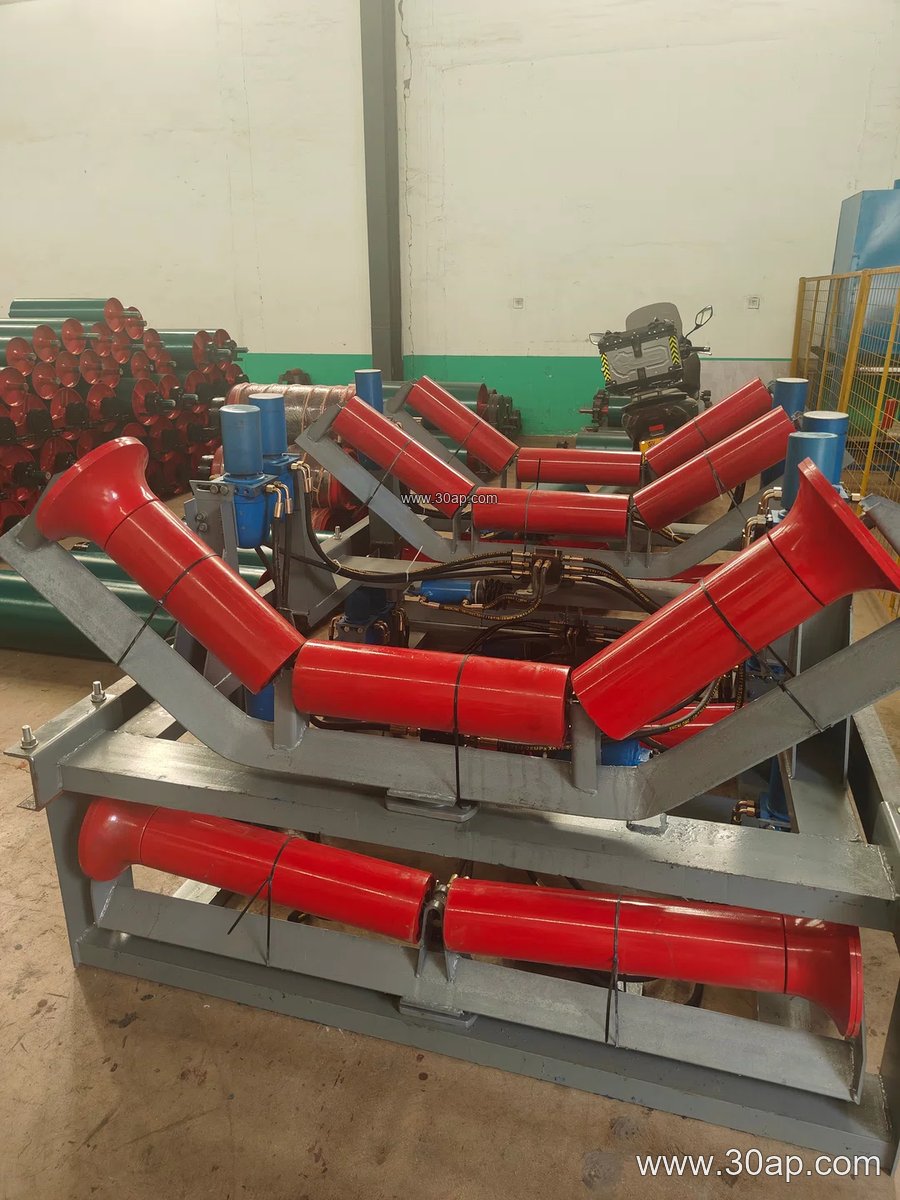
Common Types and Where They Sit
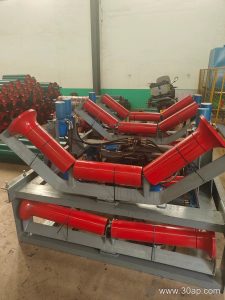
The carrying side normally uses troughing brackets, while the return side uses flat or V-return brackets. Impact brackets are placed under the loading point to absorb the drop of material. Self-aligning brackets are fitted where the belt tends to wander, and transition brackets ease the belt from flat to troughed profile near the head and tail.
- Troughing bracket, upper side, 20 to 45 degree trough angle
- Flat return bracket, lower side, flat belt support
- V-return bracket, lower side, self-cleaning profile
- Impact bracket, under the loading chute
- Self-aligning bracket, at points where belt tracking is difficult
- Transition bracket, near the conveyor pulley at each end
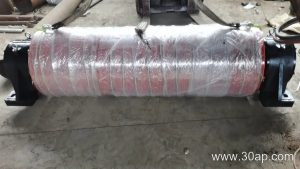
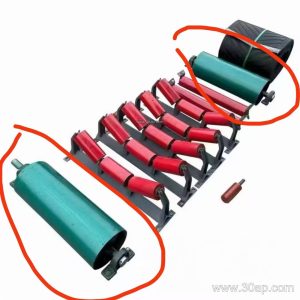
It is worth noting that a bend pulley or a tail pulley changes belt direction; it is not an idler support. The bracket belongs to the idler station, not to the pulley assembly.
Typical Reference Combinations
The figures below are common reference data for early planning, not fixed supply rules. A belt width does not lock the bracket to one trough angle or one roller diameter.
| Belt width | Common trough angle | Typical roller diameter | Typical use |
|---|---|---|---|
| B500 | 20 to 30 degrees | Ø89 | Small aggregate and sand lines |
| B650 | 30 degrees | Ø89 to Ø108 | Crushing and screening plants |
| B800 | 30 to 35 degrees | Ø108 | General bulk material handling |
| B1000 | 35 degrees | Ø108 to Ø133 | Cement and power plant coal lines |
| B1200 | 35 to 45 degrees | Ø133 | Mining and port conveyors |
| B1400 | 35 to 45 degrees | Ø133 to Ø159 | Heavy ore and coal handling |
| B1600 to B2000 | 35 to 45 degrees | Ø159 to Ø194 | High capacity transport |
Forward-tilted brackets are usually set around 1.5 to 2 degrees to help the belt centre itself. Adjustable brackets let the maintenance team change the trough angle within the 20 to 45 degree range on site.
Matching the Bracket to the Belt and the Plant
The bracket should be selected together with the belt and the roller, not in isolation. On a long overland line carrying a steel cord conveyor belt, the bracket spacing and stiffness must suit the belt tension and load. In a coal mine using a flame retardant conveyor belt or PVG conveyor belt, the bracket surface finish and clearance matter for dust build-up and fire safety practice.
For an EP conveyor belt or a multi-ply fabric core conveyor belt running at moderate tension, standard troughing brackets with Ø108 or Ø133 rollers are often sufficient. A heat resistant conveyor belt on a clinker line needs brackets that keep alignment stable despite thermal expansion of the frame.
Buyer Checklist
- Confirm belt width, trough angle, and roller diameter as a set
- Check mounting hole spacing against the existing frame
- Ask for material thickness, not only the profile shape
- Confirm whether the bracket is fixed or adjustable
- Check surface treatment for the plant environment
- Order brackets and idler rollers together so they fit first time
Small details decide whether a conveyor runs quietly for years or needs constant attention. A well chosen conveyor idler bracket keeps the belt centred, protects the roller, and reduces downtime at the transfer points where problems usually start. For drawings and reference data, visit www.example.com/conveyor-idler-bracket or check the conveyor bracket section on the site before placing an order.