What a Rubber Conveyor Belt Is
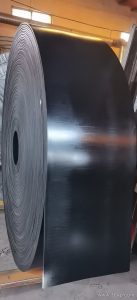
A rubber conveyor belt is the load-carrying element of a belt conveyor, and in most bulk handling plants it is the single component that determines how much material can move, how far, and at what cost per tonne. The product is a composite: a rubber cover on both faces, a tension-bearing carcass inside, and often an additional breaker or impact layer beneath the top cover. When buyers ask for a rubber belt they usually mean a fabric-cored or steel-cord construction with rubber covers, not a lightweight PVC sheet used in food or parcel handling.
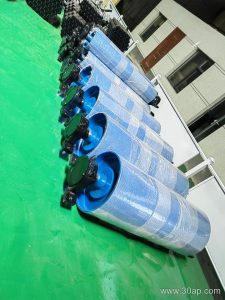
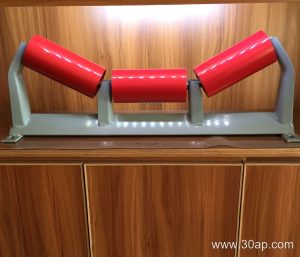
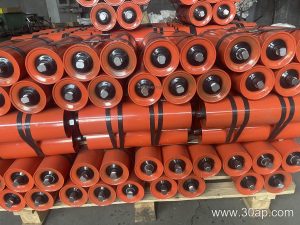
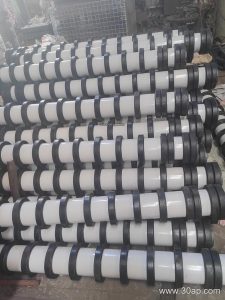
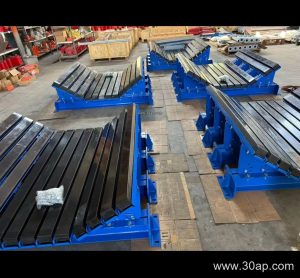
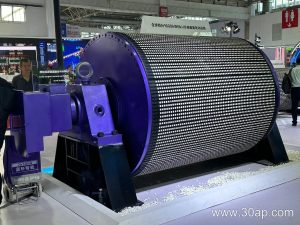
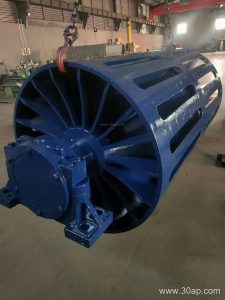
The working principle is simple. The belt runs over a drive pulley that transmits torque, returns over a tail pulley, and is supported on the carrying side by idler rollers. A conveyor pulley at the head end discharges the material, while bend pulleys and take-up arrangements maintain tension. Conveyor brackets and frames hold the idlers and pulleys in alignment. The belt itself must resist abrasion, cuts, heat, oil, or fire depending on the duty.
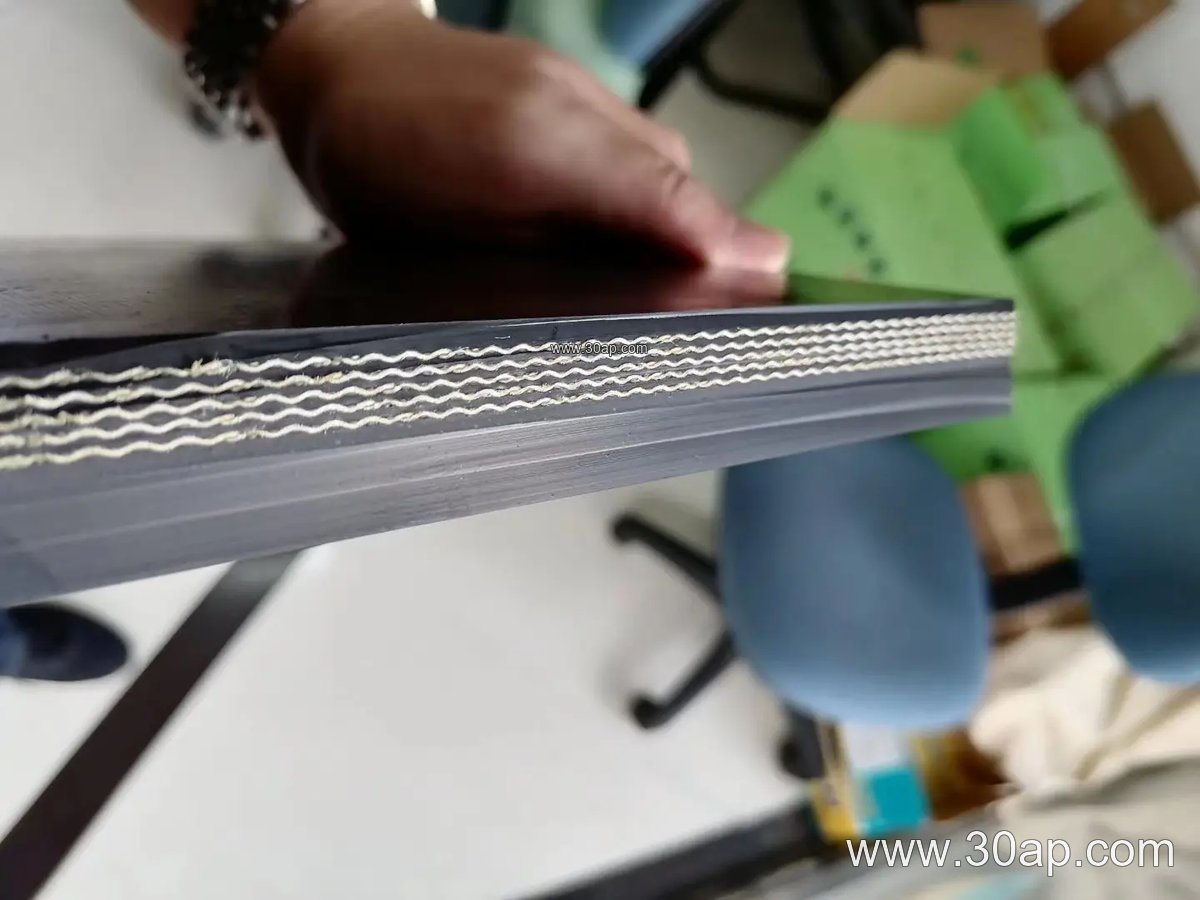
Construction and Carcass Options
The carcass is the strength member. Fabric cores use woven plies, usually 2 to 6 layers, and are classified by nominal tensile strength. EP (polyester-nylon) carcasses are the common general-purpose choice because they stretch less than pure nylon. NN (nylon-nylon) carcasses offer high elasticity and good fatigue resistance. Steel cord belts replace fabric plies with brass-plated wires for very long runs and high tensions.
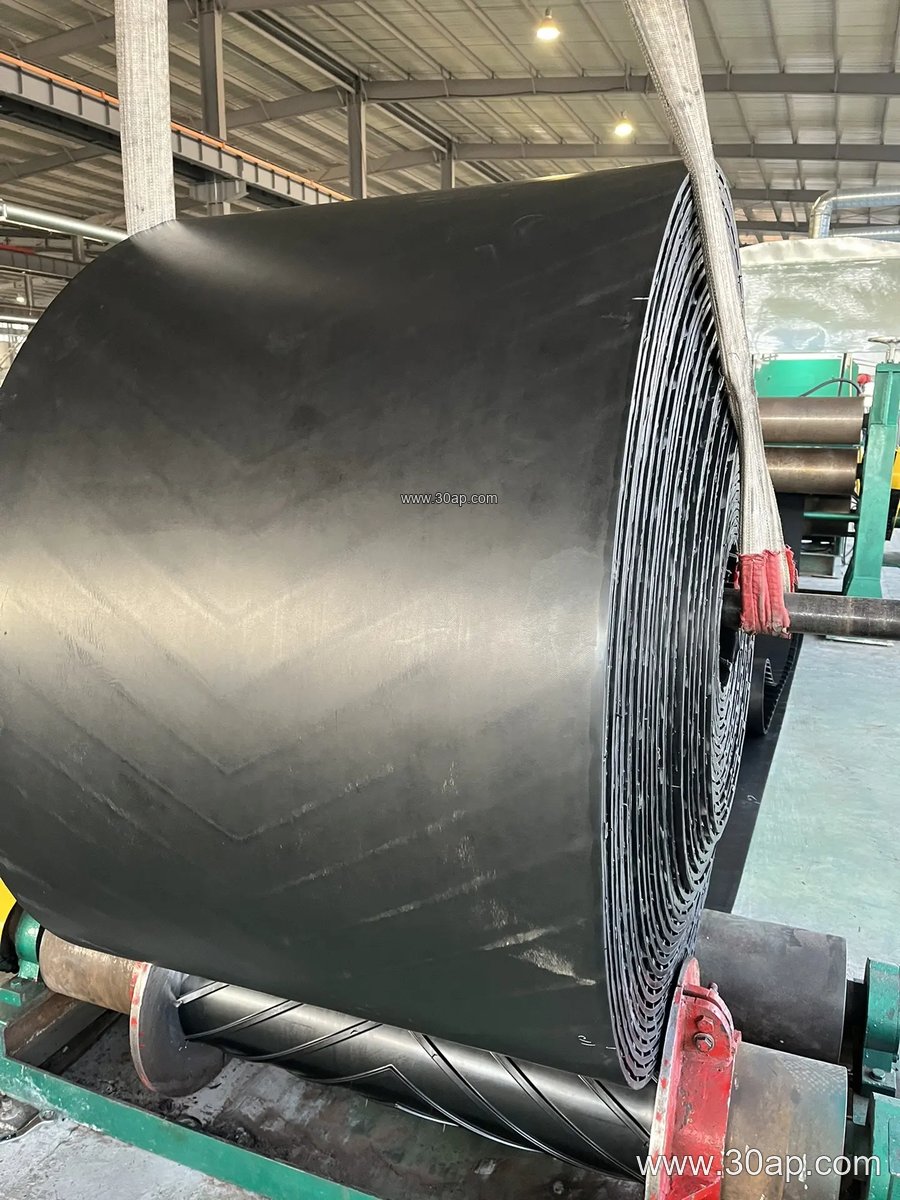
Cover compounds are selected by the environment rather than by strength alone. Abrasion resistant grades suit crushed stone and sand; heat resistant grades suit cement clinker and sinter; oil resistant grades suit grain and some recycled streams; flame retardant and anti-static grades are typical in coal mining and underground work. Cold resistant, acid resistant, and food grade compounds exist for specialist duties.
Common reference data (indicative only)
| Item | Typical range |
|---|---|
| Carcass type | EP, NN, steel cord |
| Nominal strength (EP) | EP200 to EP2000 |
| Belt width | B500 to B2000 mm |
| Cover thickness | 3+1.5, 4+2, 5+2, 6+2, 8+3 mm |
| Ply count | 2 to 6 |
These figures are reference values. Actual construction is confirmed by the manufacturer against the conveyor design, and belt width should never be matched to a pulley diameter by a simple rule.
Where It Is Used
Mining and quarrying account for a large share of demand. An ore conveyor belt at an iron ore or copper ore site usually needs a heavy-duty carcass and thick abrasion resistant covers. A coal mining conveyor belt in an underground roadway needs flame retardant and anti-static properties, often with a PVG or PVC solid-woven construction for the smaller sections. Cement plants use heat resistant belts on clinker lines and abrasion resistant belts on limestone and raw meal. Power plants handle coal with flame retardant grades, while ports and ship loading terminals favor wide, high-strength belts for fast transfer.
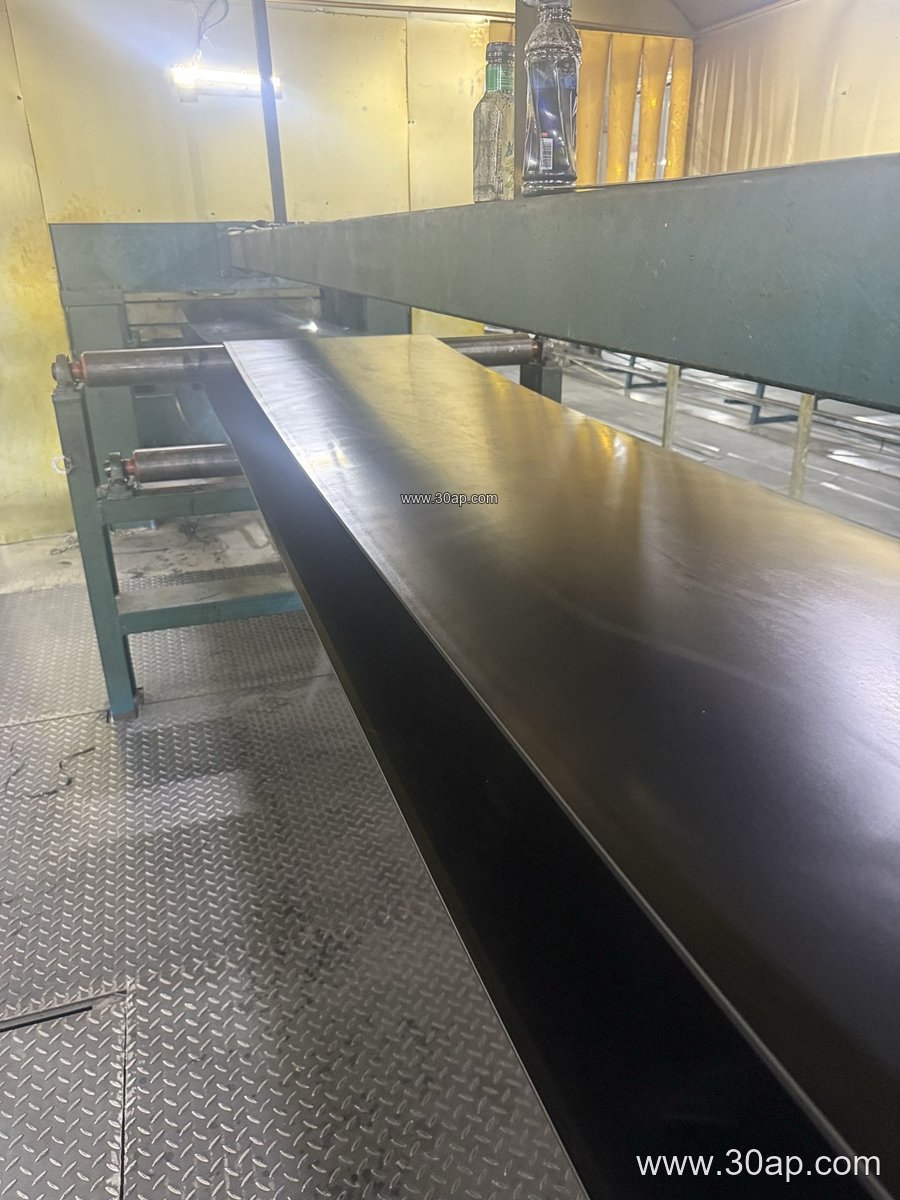
Aggregate and sand making plants rely on a crusher conveyor belt with impact resistant covers under the discharge point. Recycling lines may need oil resistant or cut resistant compounds. Food processing uses food grade belting where contact is direct.
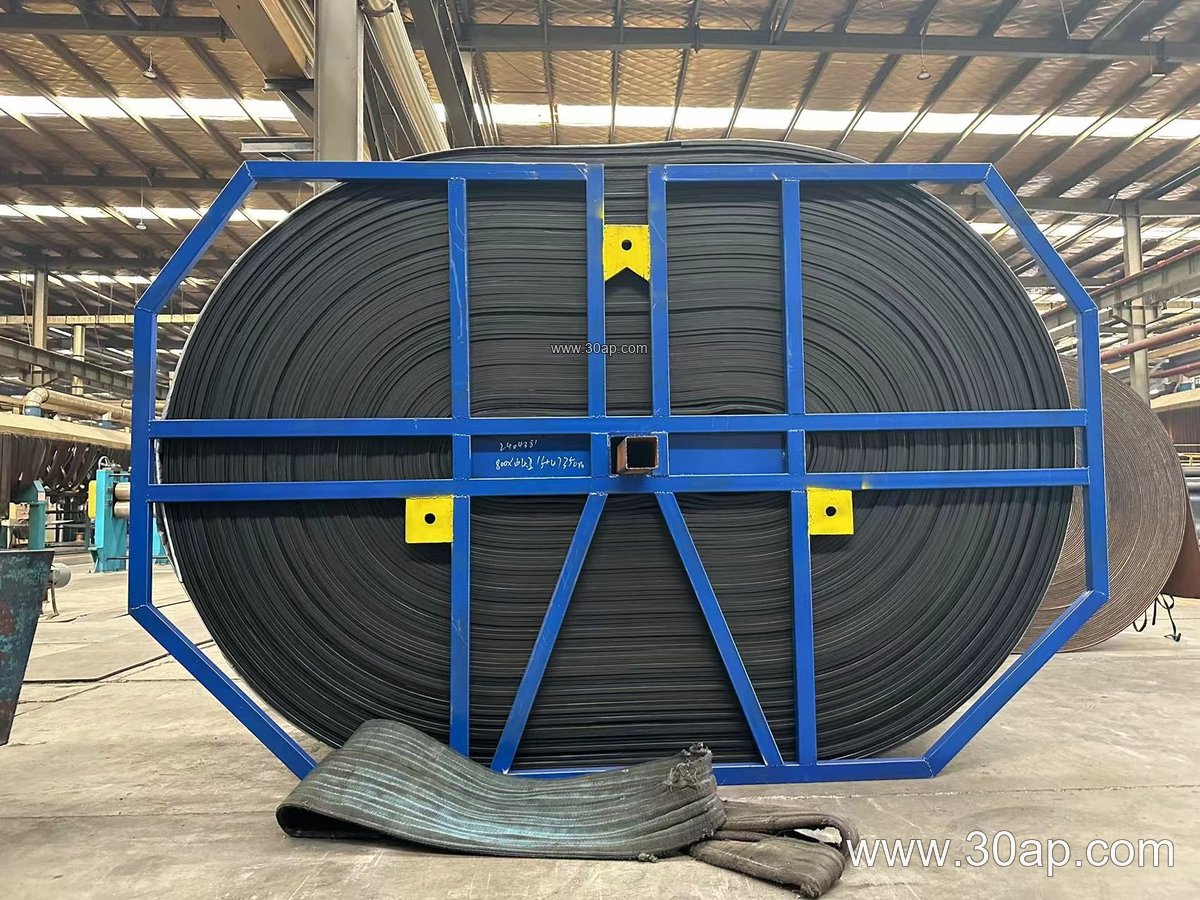
Special Profiles and Widths
Not every route is flat. A chevron conveyor belt uses raised ribs to prevent material rollback on inclines. A corrugated sidewall belt with cleats carries material vertically in a confined space, and a skirted conveyor belt keeps fine material from spilling at the edges. Pipe conveyor belts fold into a tube to protect the environment along the route. Endless belts are spliced in the factory for short, high-cycle machines.
Width selection follows tonnage, lump size, and troughing angle. Common widths include 500 mm, 650 mm, 800 mm, 1000 mm, 1200 mm, 1400 mm, 1600 mm, and 1800 mm; wider belts such as 2000 mm and 2200 mm appear in high-capacity port and mine installations. A 1200 mm wide belt with an EP1000 carcass is a frequent combination in medium-size plants, but it is a design outcome, not a rule.
Buyer Checklist
- Confirm the duty: material, lump size, temperature, moisture, oil content, and fire risk.
- State the conveyor geometry: length, incline, trough angle, and pulley diameters.
- Choose carcass strength from the calculated tension with a sensible safety factor.
- Match cover thickness to wear and impact rather than to habit.
- Check splice method, edge condition, and whether an endless belt is preferred.
- Verify that idler roller spacing and conveyor pulley alignment suit the belt stiffness.
- Ask for the manufacturer’s data sheet for the exact compound and carcass.
A well-specified Rubber Conveyor Belt lasts longer than a cheap one chosen by width alone. For high-tension duties compare an EP Conveyor Belt with a steel cord option, and for underground coal work confirm the flame retardant grade before ordering. Matching the belt to its idlers, pulleys, and brackets is what keeps a conveyor running quietly for years.