What the Feed-End Pulley Does
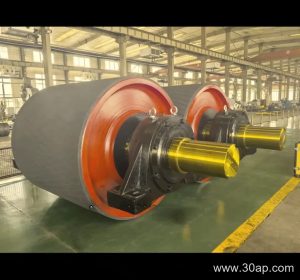
The feed-end pulley is the tail pulley at the loading point of a belt conveyor. It supports and returns the belt where bulk material first drops onto it, so it works under constant impact, dust and fines. In a quarry, a crusher discharge line or a cement plant raw-material section, this pulley sets the belt path and helps keep the belt centred as the load arrives. It is not a drive pulley, not a bend pulley, and not interchangeable with either. The drive transmits torque, the bend changes belt direction, while the feed-end pulley mainly guides and supports the belt at the feed zone.
Correctly applied, a tail pulley of this kind reduces spillage, belt edge damage and misalignment at the start of the run. It also pairs with the conveyor belt in a way that matters for wear life, especially when the belt carries abrasive ore or sharp aggregate.
Construction and Surface Options
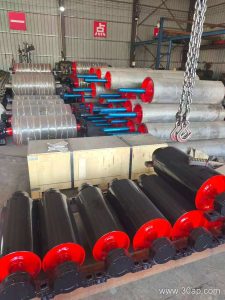
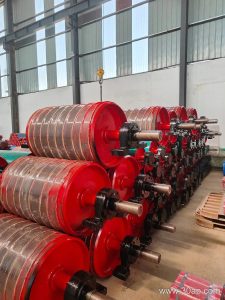
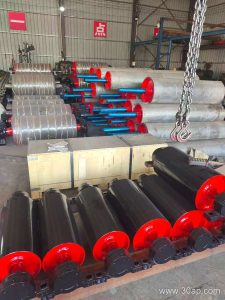
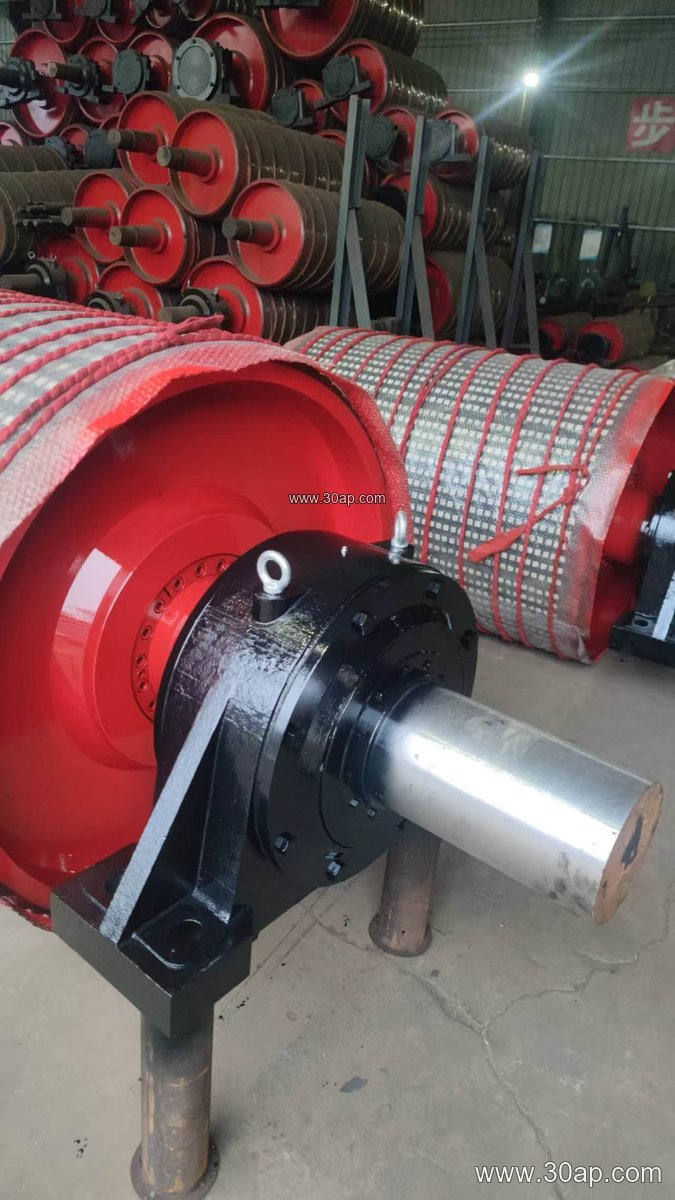
The pulley is normally a welded steel drum with a shaft, hubs, end discs and a bearing housing on each side. The shell may be plain or lagged, depending on the material and the belt. Common surface forms include plain, hot-vulcanised rubber, cold-bonded rubber, diamond grooved, herringbone grooved and ceramic lagging. Lagging thickness is often 8, 10, 12, 15 or 20 mm, selected for grip, impact cushioning and wear allowance rather than as a fixed rule.
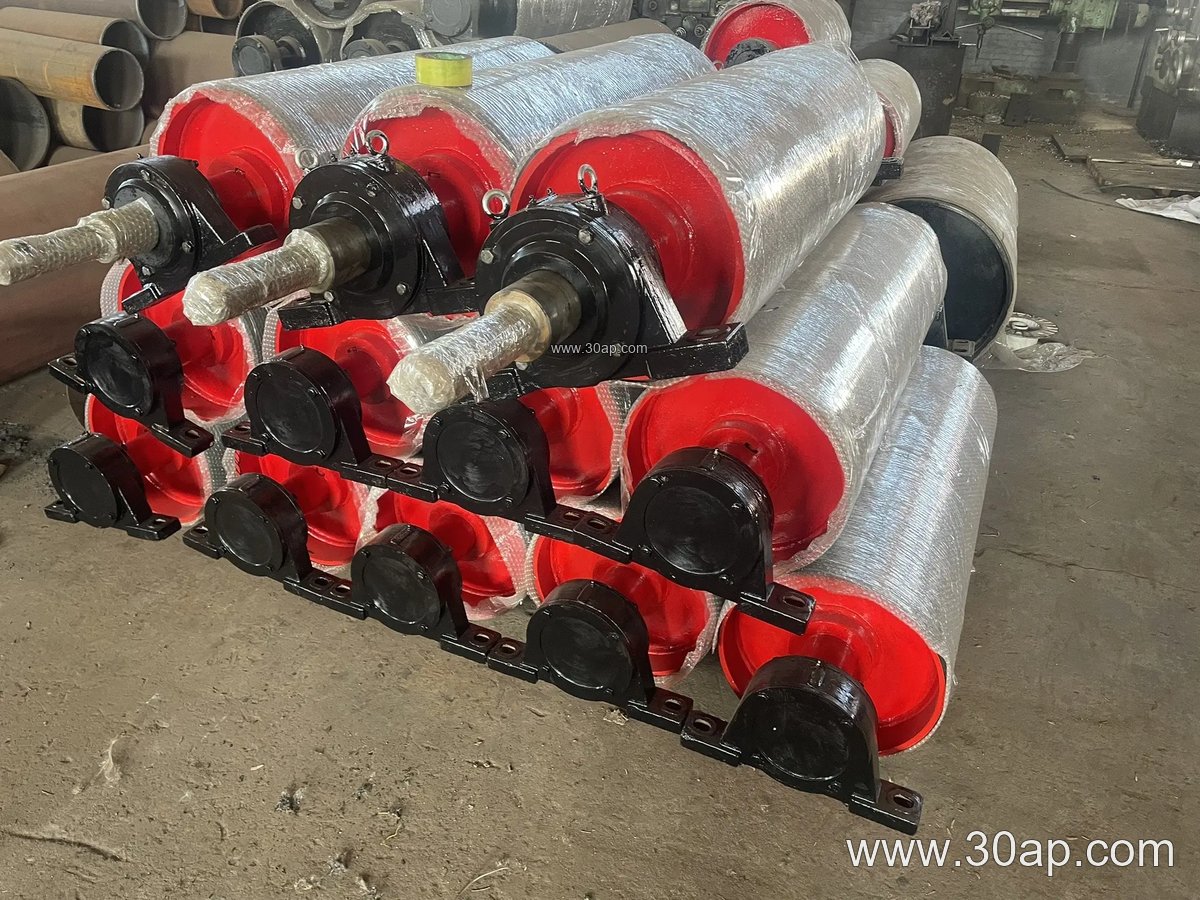
Bearing selection follows the actual load and belt tension. Shaft diameter is determined by torque and radial load, so a given belt width does not automatically define one shaft size. Typical shaft sizes range from Ø50 to Ø200, but the final value comes from the conveyor design.
Typical Sizes and Matching
Feed-end pulleys are built across a wide range of belt widths. The table below shows common reference combinations; they are examples, not mandatory pairings.
| Belt width | Typical pulley face width | Example diameter | Example shaft diameter |
|---|---|---|---|
| B500 | about 600 mm | Ø250–Ø400 | Ø60–Ø80 |
| B650 | about 750 mm | Ø315–Ø500 | Ø70–Ø90 |
| B800 | about 950 mm | Ø400–Ø630 | Ø80–Ø100 |
| B1000 | about 1150 mm | Ø500–Ø800 | Ø90–Ø120 |
| B1200 | about 1400 mm | Ø630–Ø1000 | Ø100–Ø140 |
| B1400 | about 1600 mm | Ø800–Ø1000 | Ø120–Ø160 |
| B1600 | about 1800 mm | Ø800–Ø1250 | Ø140–Ø180 |
| B1800 | about 2000 mm | Ø1000–Ø1400 | Ø160–Ø200 |
A typical selection might read B800 × Ø500 or B1200 × Ø1000. The face width is usually a little wider than the belt so the belt is fully supported. The diameter should be checked against belt tension, wrap angle and the space available at the tail station.
Where It Fits in the Plant
In a coal washing plant or a power station coal yard, the feed-end pulley sits under the transfer chute and takes the first impact of the load. In an iron ore or copper ore concentrator, abrasive fines make lagging choice and shell thickness important. Aggregate lines and stone crushing plants often use a rubber-lagged version to cushion lump impact, while dusty cement plants pay attention to sealing and bearing protection.
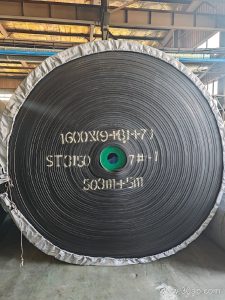
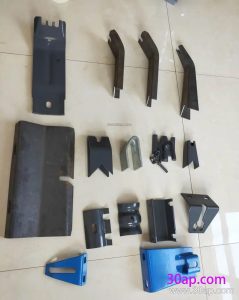
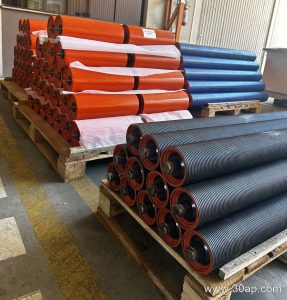
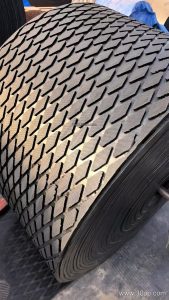
The pulley works alongside the conveyor belt, conveyor idler rollers, conveyor brackets and the conveyor frame. A well-aligned installation reduces edge wear on the belt, and that matters whether the belt is an EP conveyor belt, a multi-ply fabric core belt or a steel cord belt on a long overland run.
Buyer Checklist
- Confirm the actual belt width, belt type and belt tension at the tail station.
- State the material size, moisture and abrasiveness so the lagging can be chosen.
- Check shaft diameter against torque and bearing load, not belt width alone.
- Ask for the bearing type, sealing arrangement and lubrication method.
- Match the pulley face width to the belt and confirm clearance with the chute and frame.
- For underground coal mining, discuss flame retardant and anti-static requirements with the belt supplier.
A feed-end pulley is a small part of the conveyor but a busy one. Getting its diameter, lagging and shaft detail right at the design stage saves belt damage and downtime later in quarry, mining, cement and power plant service.