What the Main Drive Pulley Does
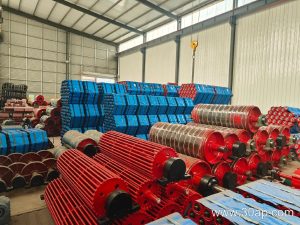
The main drive pulley is the head-end drum that transmits torque from the gearbox or motor to the conveyor belt, converting rotary power into linear motion. In a typical bulk handling line, this component sits at the discharge point and carries the highest tension in the system, so its design must match the belt class, the load profile, and the duty cycle. Whether you run a quarry conveyor belt moving crushed stone or a coal mining conveyor belt feeding a power plant, the drive drum is the single point where the entire drive train meets the belt.
Engineers often call this part the head pulley, drive drum, or main driving drum. The main drive pulley is distinct from the tail pulley, which only redirects and tensions the belt, and from bend pulleys used to change belt direction. These are not interchangeable: a tail pulley does not transmit drive torque, and a bend pulley is not built for the same radial and torsional loads.
Construction and Surface Options
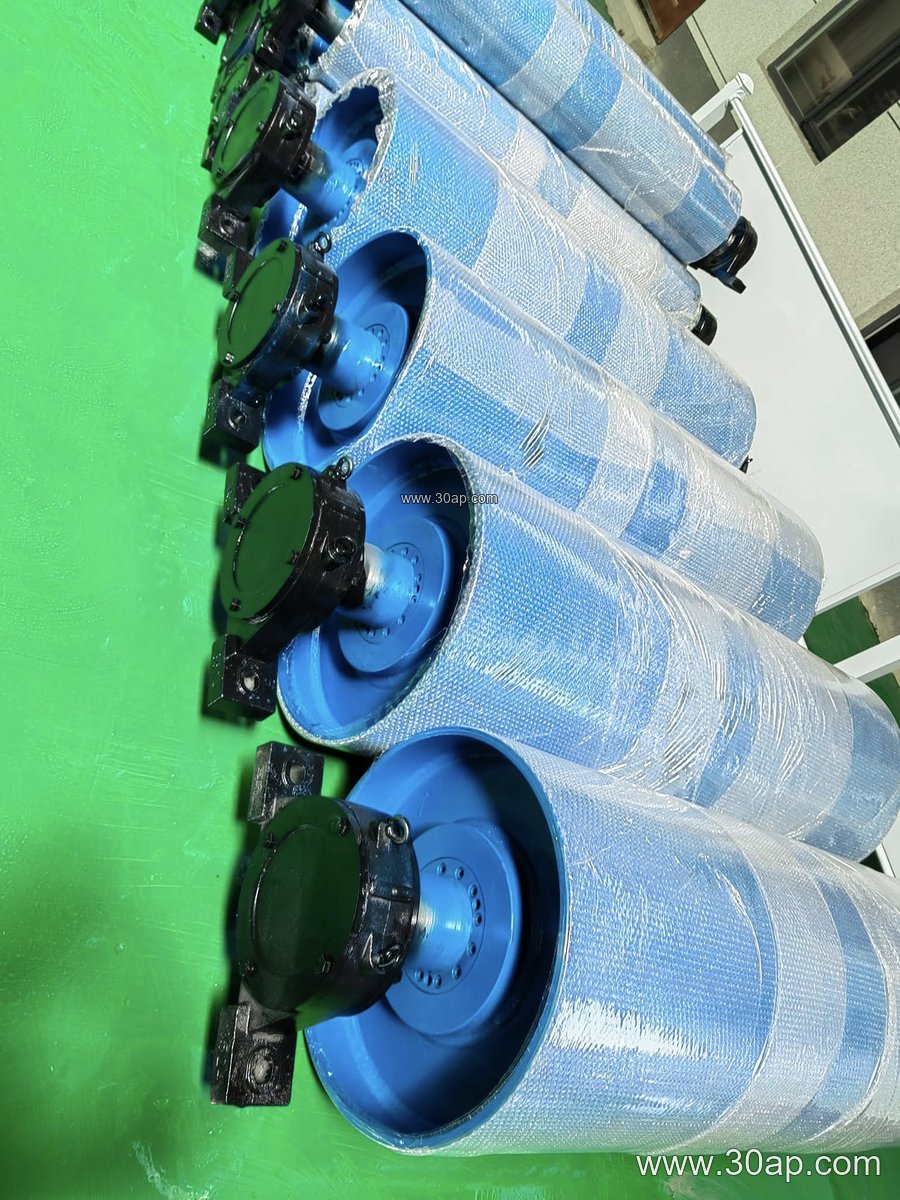
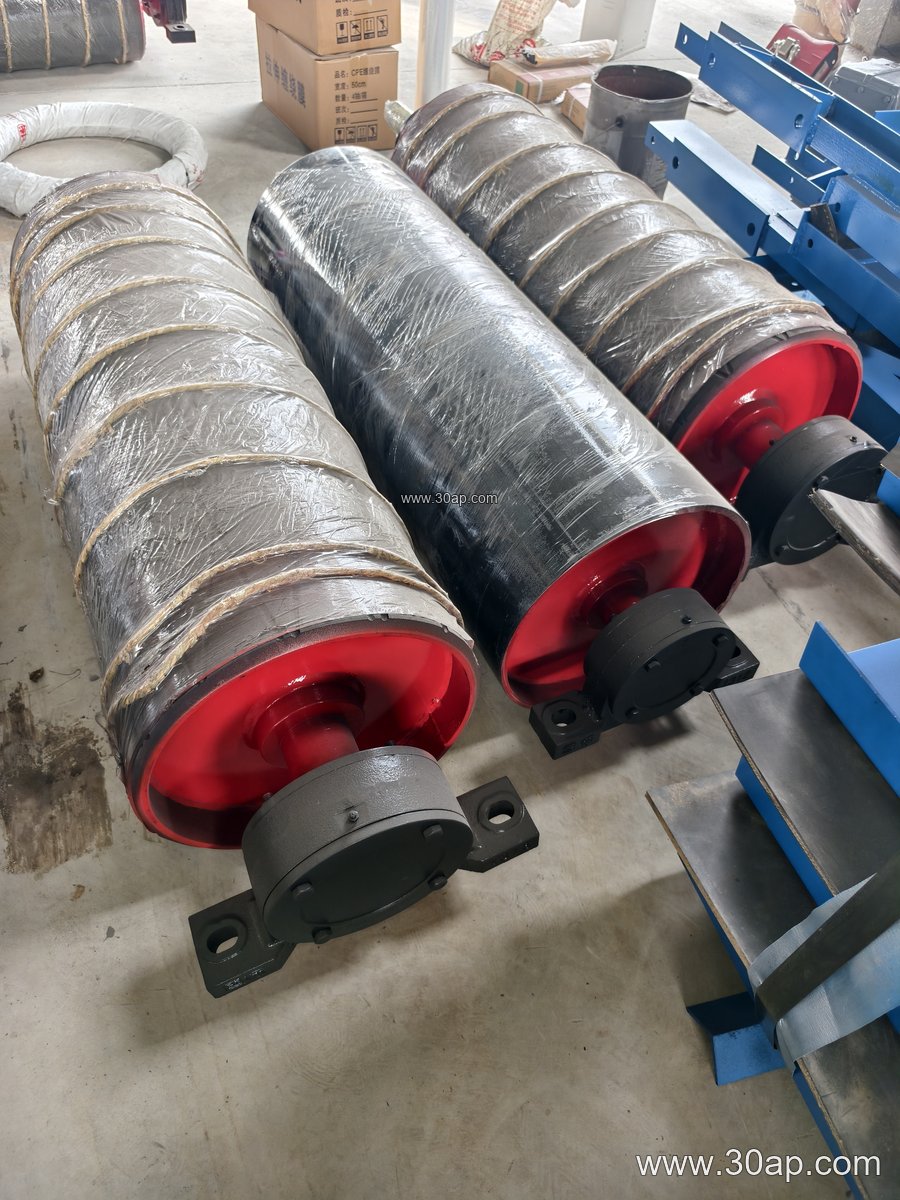
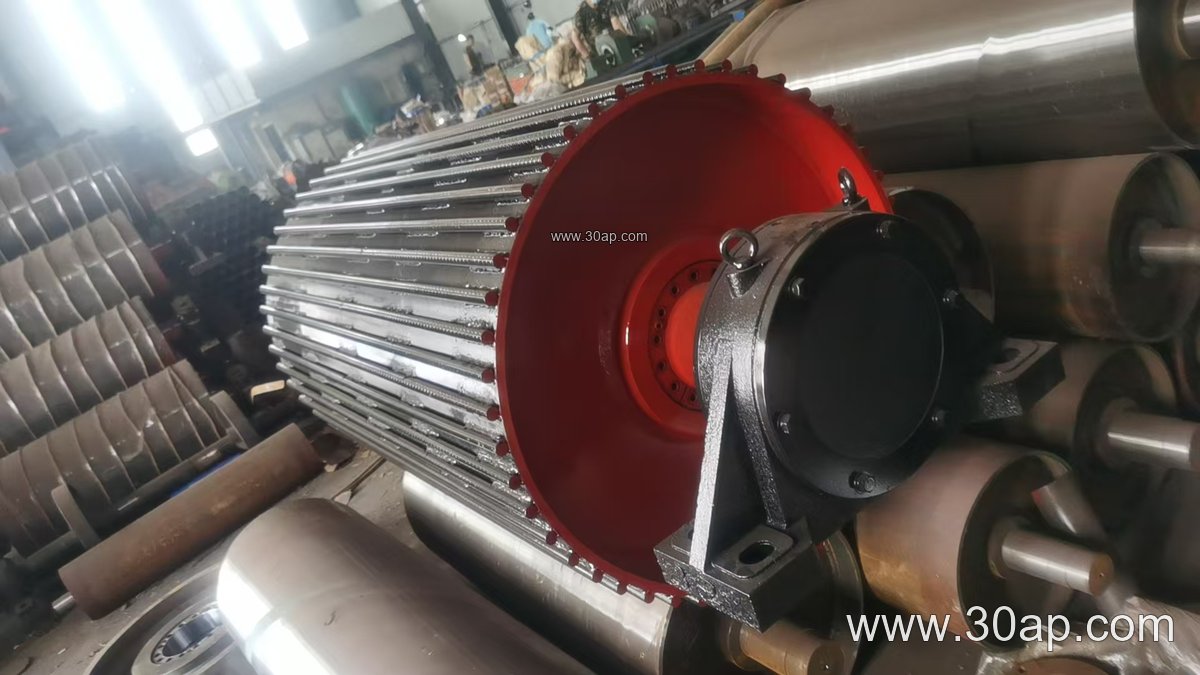
A drive pulley consists of a cylindrical shell, end discs, a shaft, hub connections, and bearing housings. The shell is usually welded steel; the shaft is sized by torque and radial load rather than by belt width alone. Surface treatment matters because it determines friction between drum and belt. Common surface forms include:
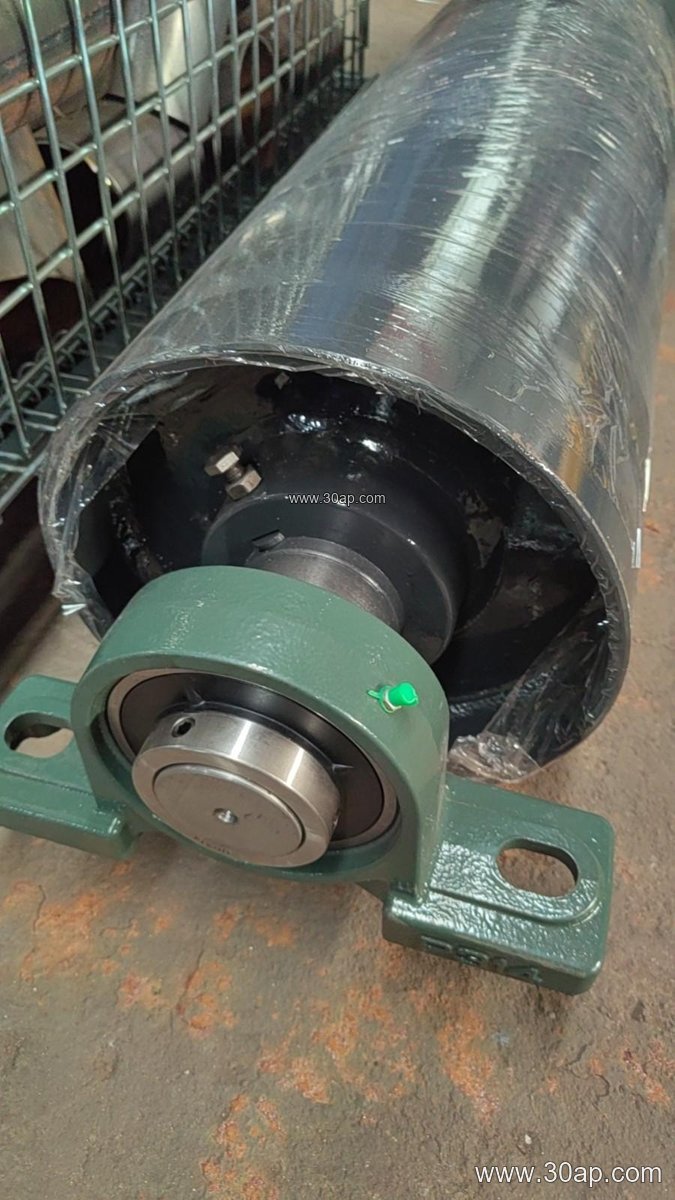
- Plain (smooth) finish for light duty or where a snub or take-up function is combined
- Rubber lagging applied by cold bonding or hot vulcanizing
- Diamond grooved lagging for water and fines shedding
- Herringbone (chevron) lagging for better traction in wet conditions
- Ceramic lagging for high abrasion service
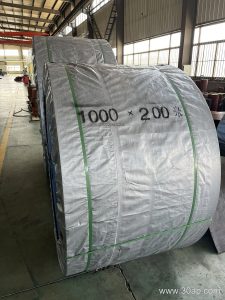
Lagging thickness commonly ranges from 8 mm to 20 mm, with 10 mm and 12 mm frequent in medium-duty installations. A rubber lagged drive drum is a practical pairing with a rubber conveyor belt or an EP conveyor belt; in coal and underground mining, flame retardant conveyor belt and anti-static conveyor belt grades are specified together with fire resistant lagging.
Matching Belt Width and Drum Diameter
Belt width and pulley diameter are related but not locked one-to-one. A wider belt needs a longer face, and the drum diameter is chosen from belt tension, belt construction, and the minimum bend radius recommended for the belt carcass. Typical face widths run slightly wider than the belt, for example B400 around 500 mm, B800 around 950 mm, B1200 around 1400 mm, and B1800 around 2000 mm. Diameters such as Ø500, Ø630, Ø800, Ø1000, and Ø1250 are common in heavy-duty mining conveyor belt systems. A combination like B1200 × Ø1000 or B1400 × Ø800 shows how the two dimensions are paired by design, but no single belt width is restricted to one diameter. Shaft diameters are usually Ø80 to Ø200 for these sizes and are confirmed by torque calculation.
Where the Drive Pulley Is Used
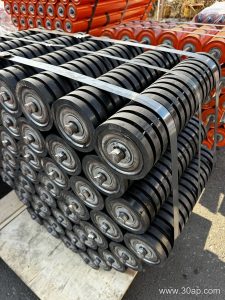
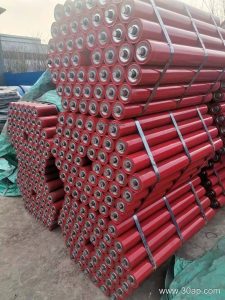
In a limestone quarry or aggregate conveyor belt line, the main drive pulley sits at the head of the primary crusher feed or the stockpile conveyor. In a coal washing plant, it works with a flame retardant conveyor belt and a series of conveyor idler rollers to keep the belt tracking. In cement plants, heat resistant conveyor belt grades are paired with a lagged drive drum near the clinker cooler discharge. Port bulk terminals and steel plant sinter lines also rely on this drum for continuous high-tonnage operation.
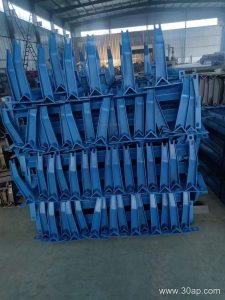
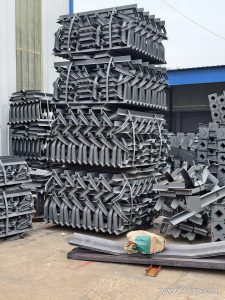
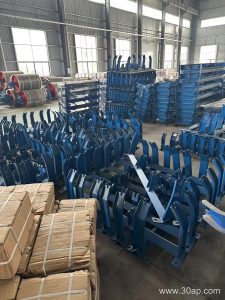
When selecting a main drive pulley, confirm the belt tension, the required lagging type and thickness, the shaft and bearing size, and the bracket dimensions. Also check compatibility with the conveyor bracket and the take-up arrangement. A correctly matched drive drum reduces belt slip, extends lagging life, and keeps the whole conveyor pulley assembly running smoothly. For more on matching drums with rubber conveyor belt, EP conveyor belt, and steel cord conveyor belt, review the drive layout before ordering.