What a Trough Idler Bracket Does
A trough idler bracket is the steel support that holds the carrying-side idler rollers in a troughed arrangement. It sits on the conveyor frame and positions three rolls so the conveyor belt forms a shallow channel, keeping bulk material centered as it travels. In a quarry, a coal washing plant, or a cement clinker line, this bracket is the link between the structure and the rotating parts, so its geometry and strength directly affect belt tracking and idler life.
The same item is also called a troughing idler bracket or troughing bracket. Those names refer to the same product. It should not be confused with a return bracket, which carries the belt on the way back, or with a bend pulley bracket, which supports a conveyor pulley rather than idlers.
How the Bracket Is Built
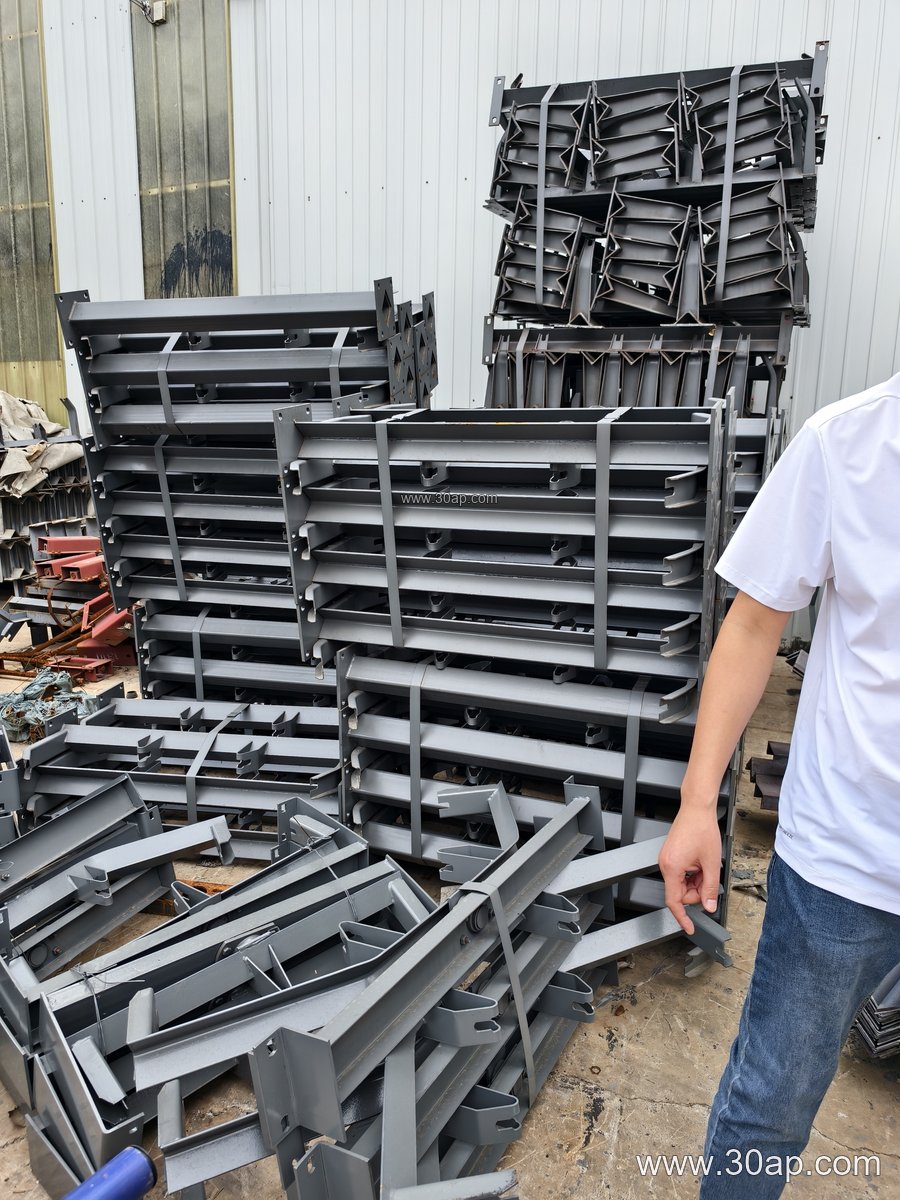
Most units are fabricated from angle steel, channel steel, or folded steel plate, then drilled and welded to suit a specific frame. A typical carrying bracket has two inclined arms and a lower center seat, with mounting holes that align with the conveyor stringer. The trough angle is fixed at manufacture or, on an adjustable version, set by movable hinge points.
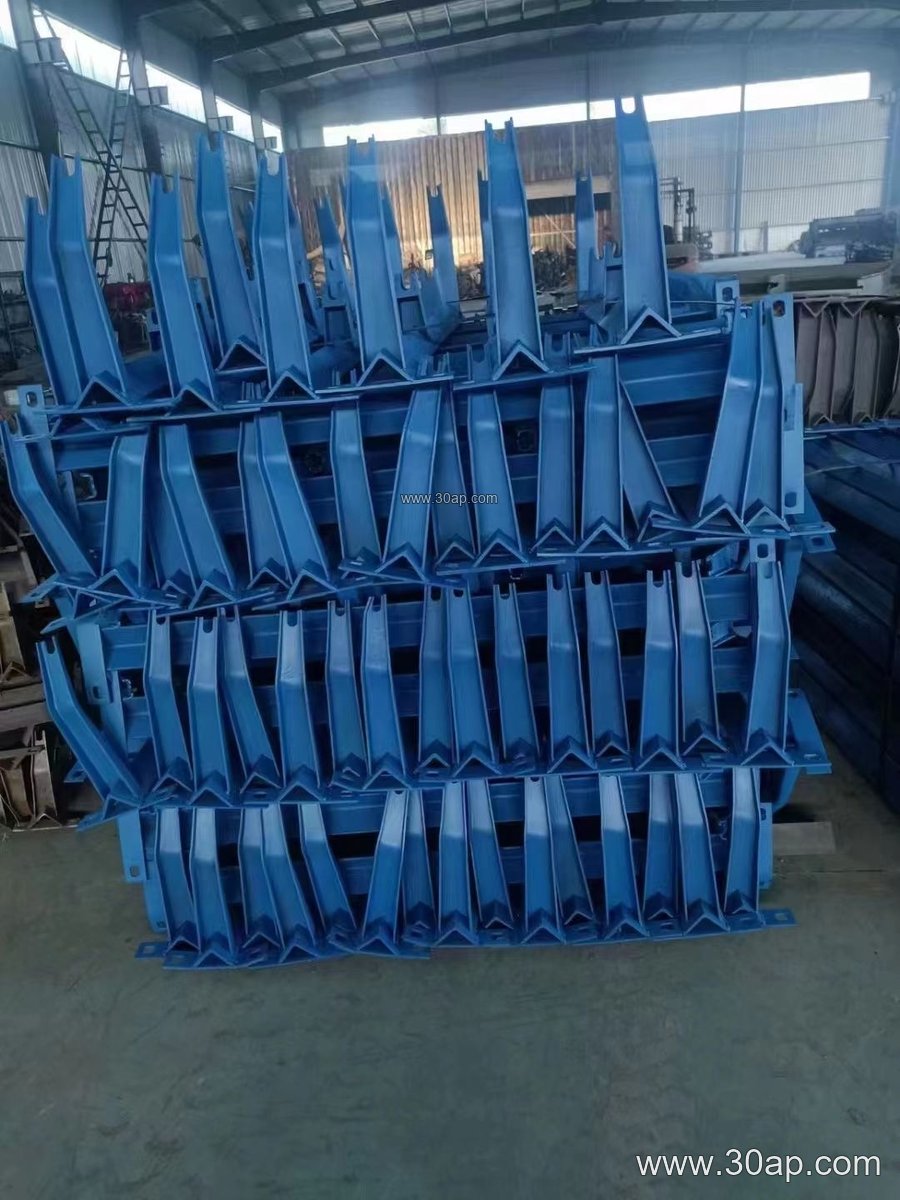
Common build details include:
- Welded or bolted arm assemblies with reinforced gussets
- Slotted holes for field alignment and frame tolerance
- Painted or galvanized finish for dusty and damp service
- Replaceable idler seats so a worn roller can be swapped without cutting the frame
Fitting the Bracket to Belt Width and Roll Diameter
Selection starts with the conveyor belt width and the required trough angle. The bracket span and mounting hole spacing change with both, so a B800 frame and a B1400 frame will not share the same crossbeam length. Roller diameter also matters because the seat height and clearance differ between a Ø89 idler and a Ø159 idler.
The table below shows typical reference combinations, not mandatory matches:
| Belt width | Trough angle | Idler diameter | Typical use |
|---|---|---|---|
| B500 | 20 degrees | Ø89 | Light aggregate or sand line |
| B650 | 30 degrees | Ø89 | Small screening plant |
| B800 | 35 degrees | Ø108 | General bulk handling |
| B1000 | 35 degrees | Ø133 | Coal washing and power plant coal feed |
| B1200 | 45 degrees | Ø133 | High-capacity ore transport |
| B1400 | 45 degrees | Ø159 | Heavy stone crushing circuit |
| B1600 | 35 degrees | Ø159 | Large port or stockyard conveyor |
These values are common references only. A single belt width can work with more than one trough angle and more than one roller diameter, and the final choice depends on load, belt stiffness, and frame design. Never assume a fixed shaft size from belt width alone.
Fixed, Adjustable, and Transition Versions
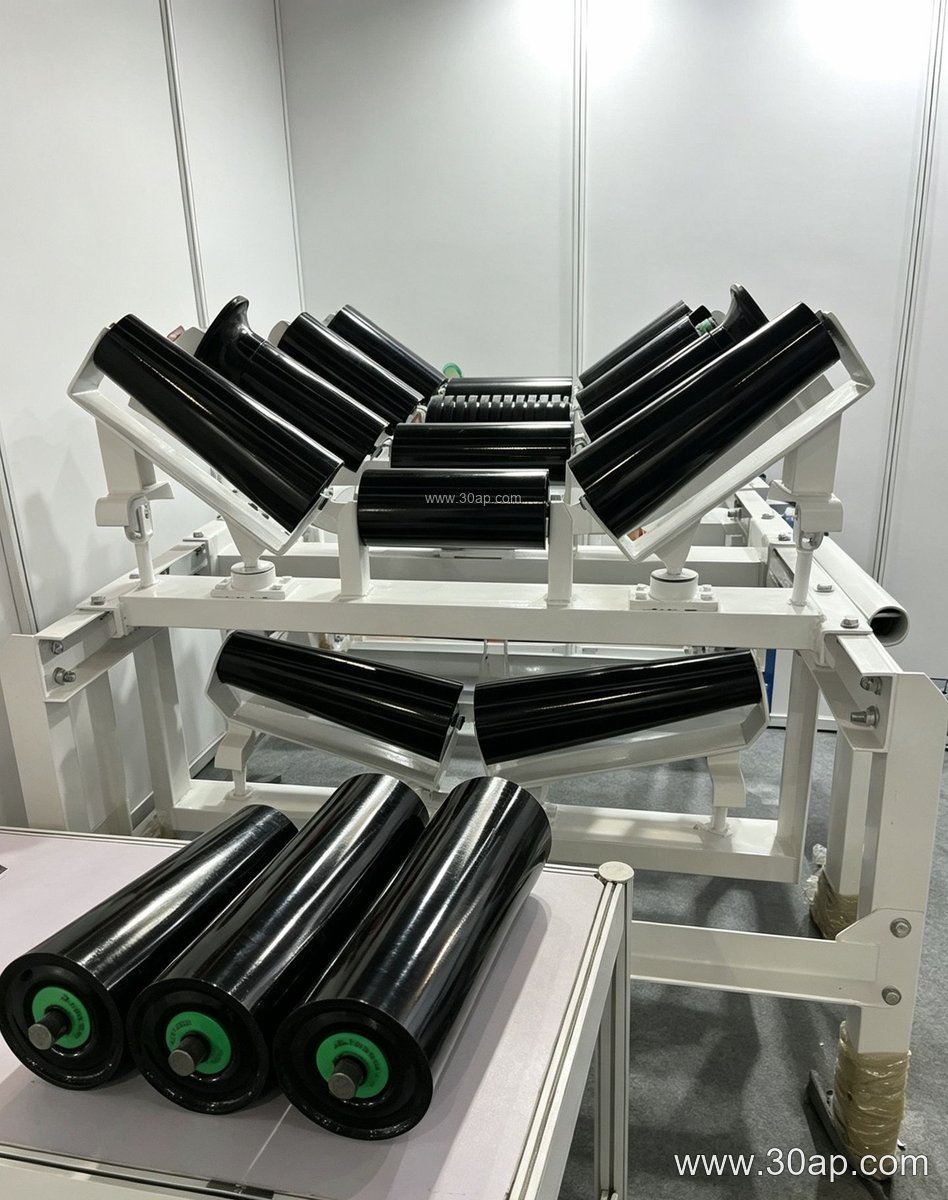
A fixed trough idler bracket holds a set trough angle, usually 20, 30, 35, or 45 degrees. An adjustable bracket lets maintenance staff change the angle within that range to improve belt contact or reduce spillage after a belt change. Transition brackets are placed near the head or tail to gradually shift the belt from flat to troughed, which reduces edge stress.
Forward-leaning brackets, often set about 1.5 to 2 degrees, are used where belt training is a concern. They are still troughing brackets, not a substitute for a self-aligning bracket, and each has its own place on the conveyor.
Where It Is Used
You will find trough idler brackets on carrying runs in limestone mines, iron ore plants, sinter lines, fertilizer handling, grain silos, and tunnel spoil conveyors. In a coal yard or a power station coal feed line, the bracket must tolerate dust and occasional washdown. In a crushing and screening circuit, impact and vibration are the main concerns, so a reinforced bracket under the loading point is common.
Buyer Checklist
- Confirm belt width, trough angle, and idler roller diameter before ordering.
- Ask for mounting hole spacing and crossbeam length to match the existing frame.
- State the material and finish, especially for wet or corrosive sites.
- Check whether the bracket is fixed, adjustable, or a transition type.
- Keep a small spare set, since a bent bracket can damage the conveyor belt and pulley alignment.
A well-matched trough idler bracket keeps the conveyor belt seated, protects the idler roller bearings, and simplifies maintenance. Measure the frame, note the roller size, and order by the actual duty rather than by habit.