What a Return Idler Does on a Conveyor
A return idler is the roller that supports the empty, returning side of a conveyor belt. While the carrying side moves material forward, the belt loops back underneath the structure, and this roller keeps that return strand aligned and rolling smoothly. In a quarry, a coal washing plant, or a cement plant, the return idler is often the hardest-working component that no one watches until it fails. The roller carries the belt’s own weight, any clinging material, and the tension from the drive, so a poorly chosen return idler can wear the belt edge, increase power draw, and cause tracking problems that ripple through the whole conveyor.
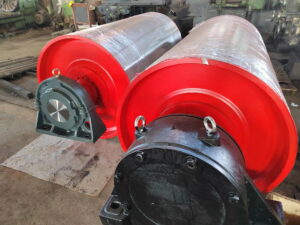
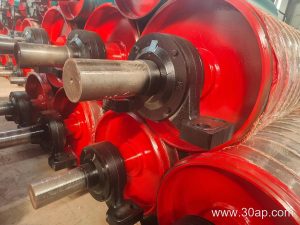
Many people use the term return idler and flat return roller interchangeably, and in practice they describe the same product. The return idler is a complete assembly: a shell, a shaft, bearing housings, seals, and a bracket arrangement that fixes it to the conveyor frame. It is not a drive pulley, tail pulley, or bend pulley, and those components cannot be swapped for a return idler because they transmit power or change belt direction rather than support the return strand.
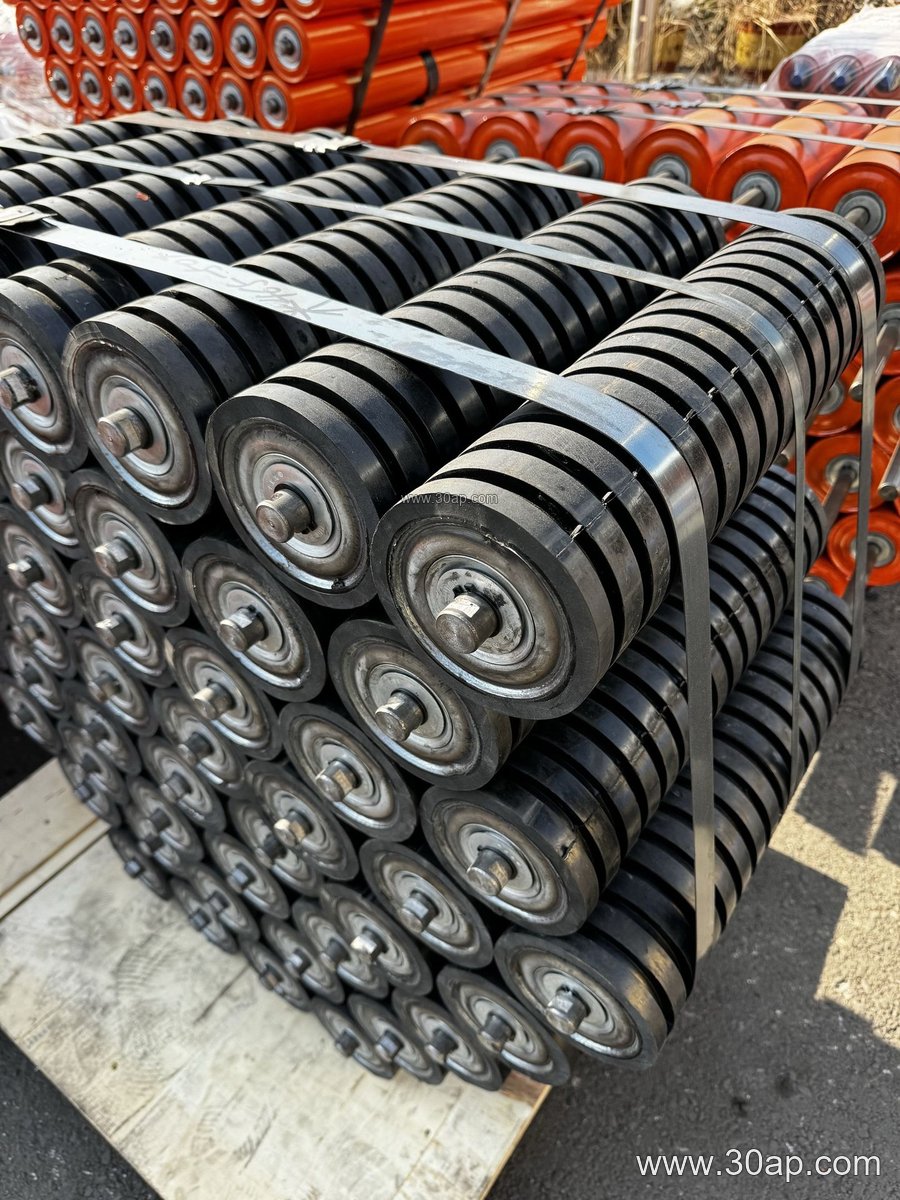
Construction and Common Configurations
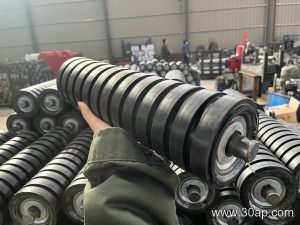
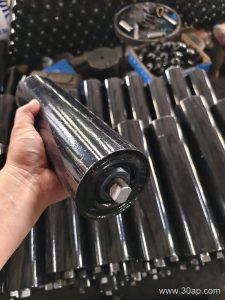
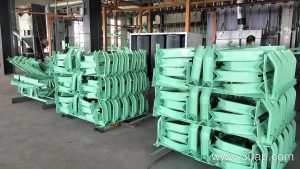
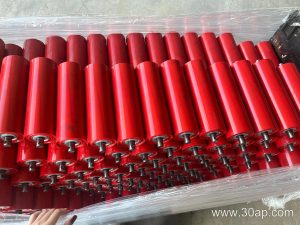
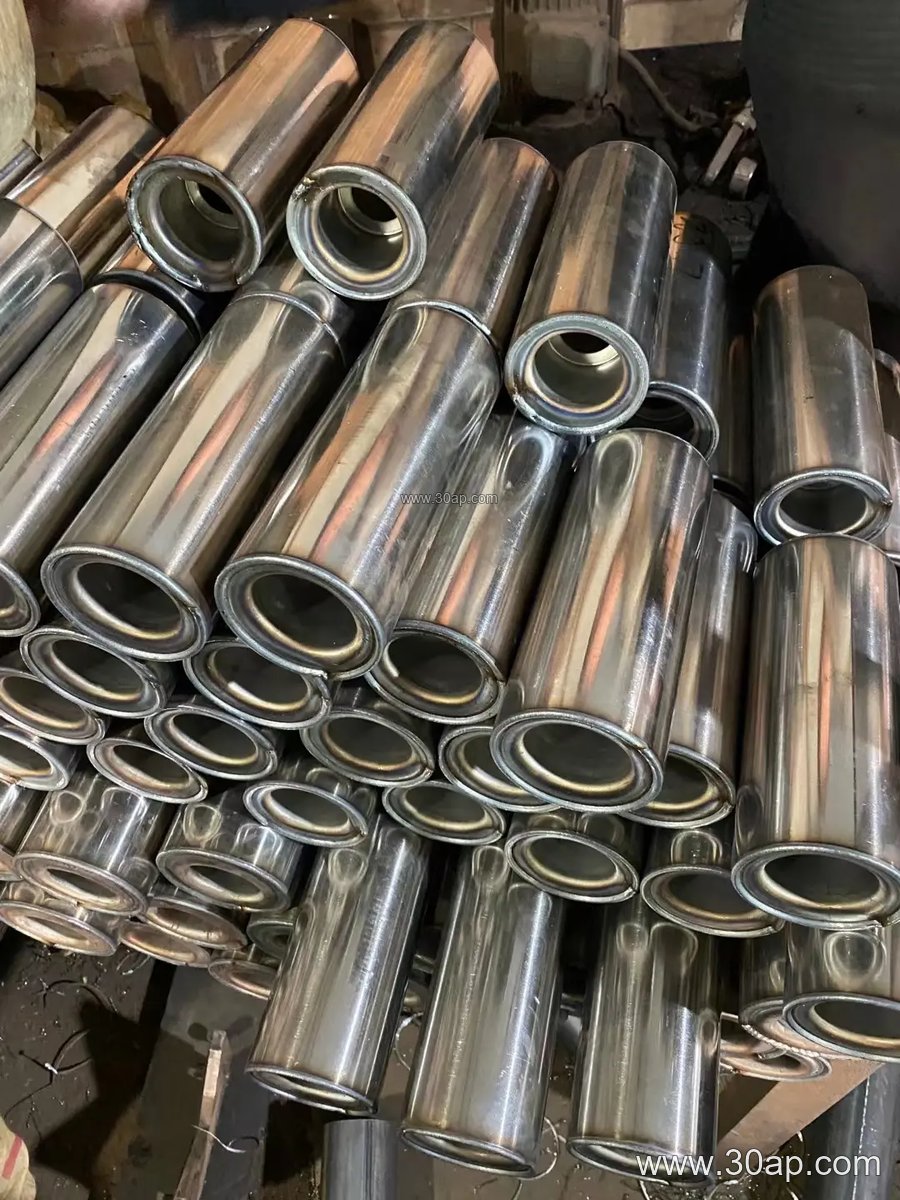
The basic return idler is a steel tube fitted over a through shaft, with sealed bearings at each end. The shell is usually steel, but nylon, ceramic, and rubber-disc surfaces appear where buildup or impact is a concern. A plain flat return roller is the simplest form. A V-type return idler uses two rollers set in a shallow V to center the belt, and it is often chosen when tracking is marginal on a long overland conveyor. Spiral and梳-shaped designs are used to shed sticky material, while rubber-disc return rollers are reserved for areas where the belt carries fines that cling to the surface.
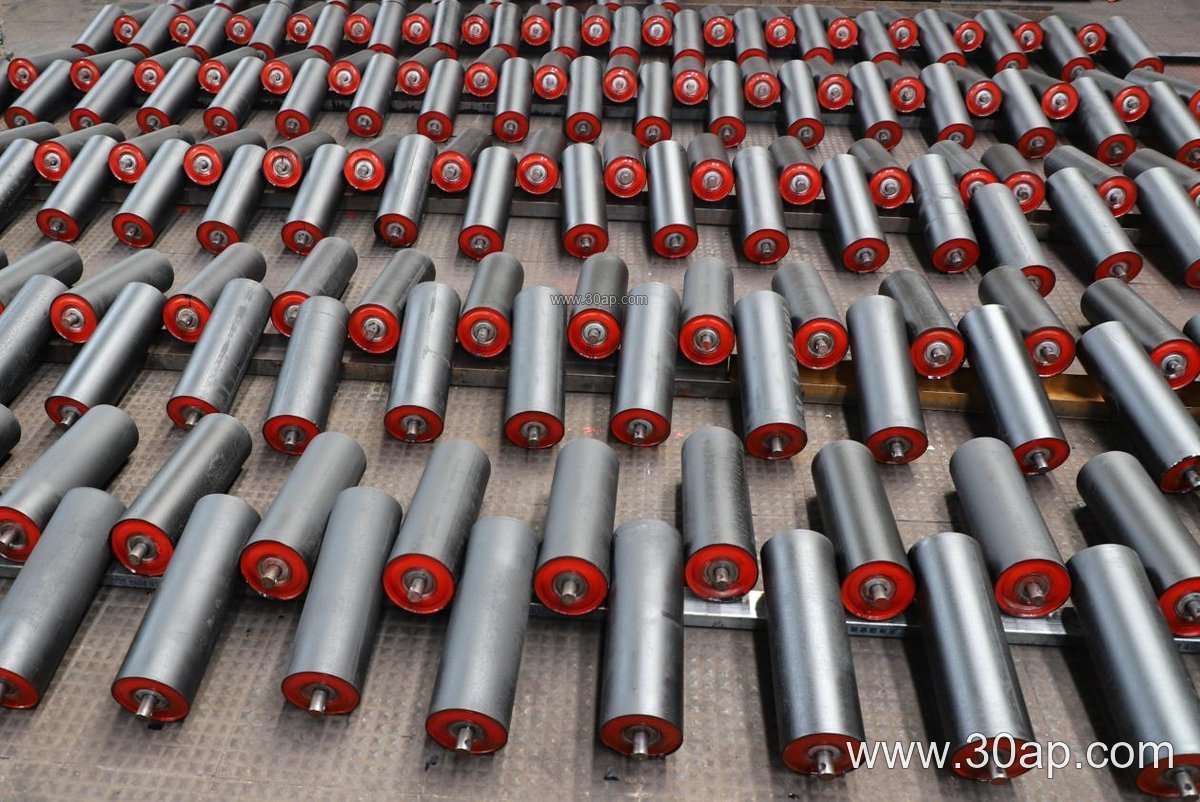
Bearing selection follows the load and speed rather than a fixed rule. Common bearing numbers include 6204, 6205, 6305, 6306, 6308, and 6310, and the same roller diameter can be built with more than one bearing size. Roller diameters typically range from Ø63 to Ø219, with Ø89, Ø108, Ø127, and Ø159 being frequent choices in bulk handling. The roller length depends on belt width, the return idler arrangement, and the frame design; for a three-roll carrying set, common roll lengths might be around 200 mm for B500, 315 mm for B800, 465 mm for B1200, and 600 mm for B1600, but these are examples rather than fixed pairings.
Where Return Idlers Are Used
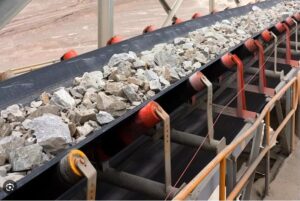
Return idlers appear wherever a conveyor belt runs empty on its way back to the tail. In a limestone mine, they sit under the return strand of a long incline conveyor, often exposed to dust and moisture. In a power plant coal yard, they support the belt after the discharge point, where fine coal can cling to the surface. Aggregate plants and crushing circuits use them beneath screens and transfer points, and tunnel spoil conveyors rely on them to keep the belt centered in cramped conditions. In each case, the return idler is part of a conveyor system that includes the conveyor belt, idler rollers, conveyor pulleys, and conveyor brackets, and its job is to keep the return strand quiet and stable.
Specification Notes for Buyers
When specifying a return idler, buyers should confirm the belt width, the return strand load, the ambient conditions, and the frame mounting dimensions. The bracket type must match the conveyor structure, and the shaft ends should fit the existing slots or bolts. A common mistake is to order a return idler by belt width alone; the roller diameter, bearing size, and shell thickness also affect life and rolling resistance. The table below shows typical reference ranges, not universal specifications.
| Parameter | Common range or example |
|---|---|
| Roller diameter | Ø63, Ø76, Ø89, Ø102, Ø108, Ø127, Ø133, Ø159, Ø178, Ø194, Ø219 |
| Belt width | B400 to B2400 |
| Roller length (three-roll set example) | 200 mm for B500, 315 mm for B800, 465 mm for B1200, 600 mm for B1600 |
| Bearing numbers | 6204, 6205, 6305, 6306, 6308, 6310 |
| Surface options | Steel, nylon, ceramic, rubber disc |
| Arrangement | Flat return, V-type return, spiral, rubber-disc |
These values are reference data; actual selection should follow the conveyor design, belt tension, and site conditions. A return idler that is too light for the load will fail early, while an oversized one adds unnecessary weight and cost. Buyers should also ask about seal type and lubrication because dust ingress is the most common cause of return idler seizure in mining and cement plants.
Maintenance and Replacement
Return idlers are wear items, and a planned inspection routine saves unplanned downtime. Listen for squealing bearings, watch for a belt that wanders on the return strand, and check for material buildup on the shell. A seized return idler can flatten a spot on the belt or wear through the cover, so replacing it early is cheaper than replacing the conveyor belt. Keep a small stock of common sizes for critical conveyors, and record the roller diameter, bearing number, and bracket type so replacements match the original design. In a sand and gravel line or a fertilizer plant, a few spare return idlers on the shelf often prevent a full shift of lost production.