What a Wear-Resistant Lagged Pulley Does
A wear-resistant lagged pulley is a conveyor pulley whose shell carries a durable rubber or ceramic lagging layer to protect the drum and improve grip on the belt. In a quarry, cement plant or coal handling system, the pulley is the point where the conveyor belt wraps around a rotating cylinder; if that surface wears smooth or polishes, traction drops and belt slip begins. The lagging is the sacrificial surface that takes the abrasion, impact and grit instead of the pulley shell.
This is not a single-position product. A wear-resistant lagged pulley can be a drive pulley at the head, a tail pulley at the loading end, or a bend pulley that changes belt direction. The lagging is what these positions share; their duties are quite different, and the correct surface and thickness should be matched to the duty rather than copied from one position to another.
How the Lagging Is Built
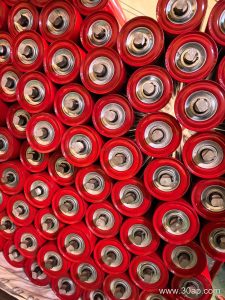
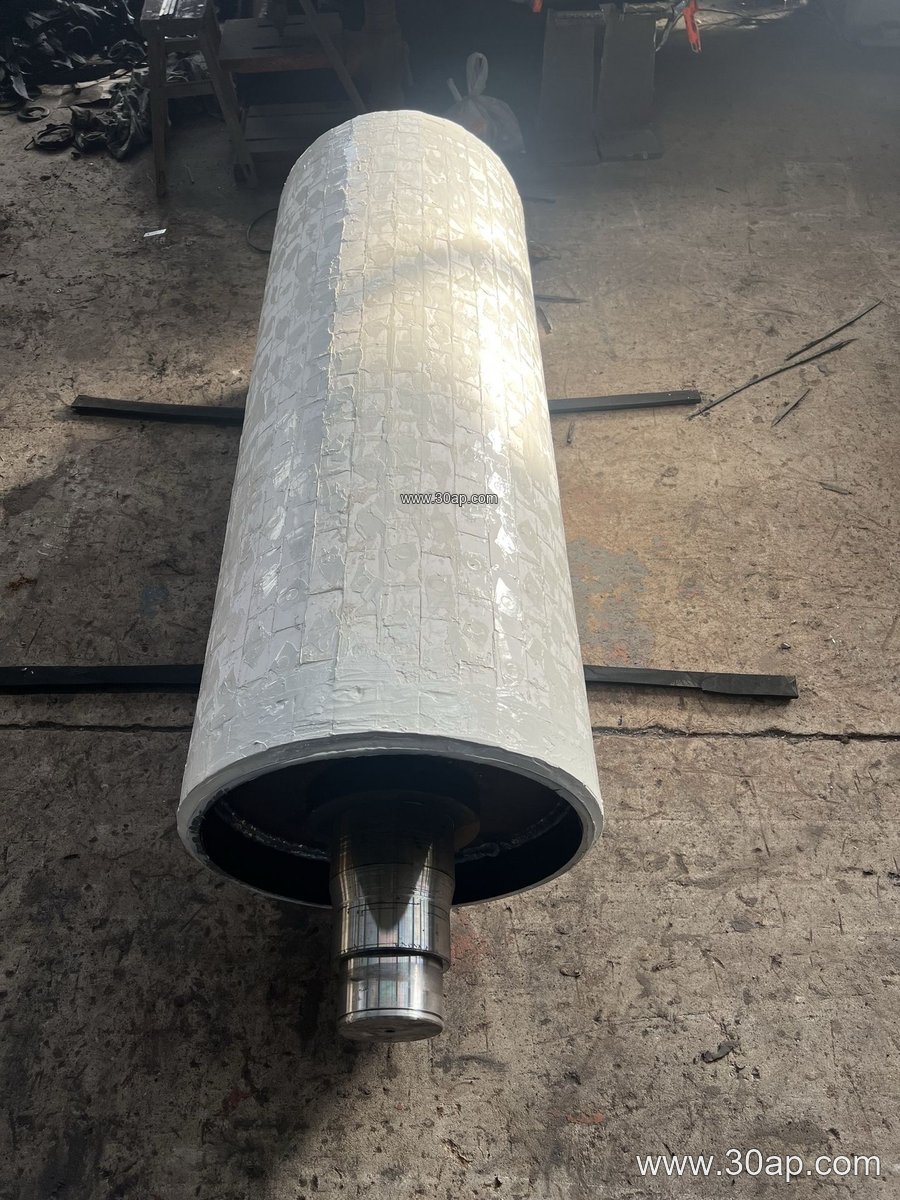
Lagging is bonded to the pulley shell in several common ways. Cold-bonded rubber is applied with adhesive, hot-vulcanized rubber is cured under heat and pressure for a stronger bond, and ceramic tiles set in rubber are used where abrasive grit is the main enemy. Surface patterns include plain, diamond, herringbone and ceramic, with common lagging thicknesses of 8, 10, 12, 15 and 20 mm.
- Plain lagging: general grip with simple cleaning
- Diamond lagging: better traction where moisture is present
- Herringbone lagging: promotes self-cleaning and lateral centering
- Ceramic lagging: high abrasion resistance for gritty, high-slip duty
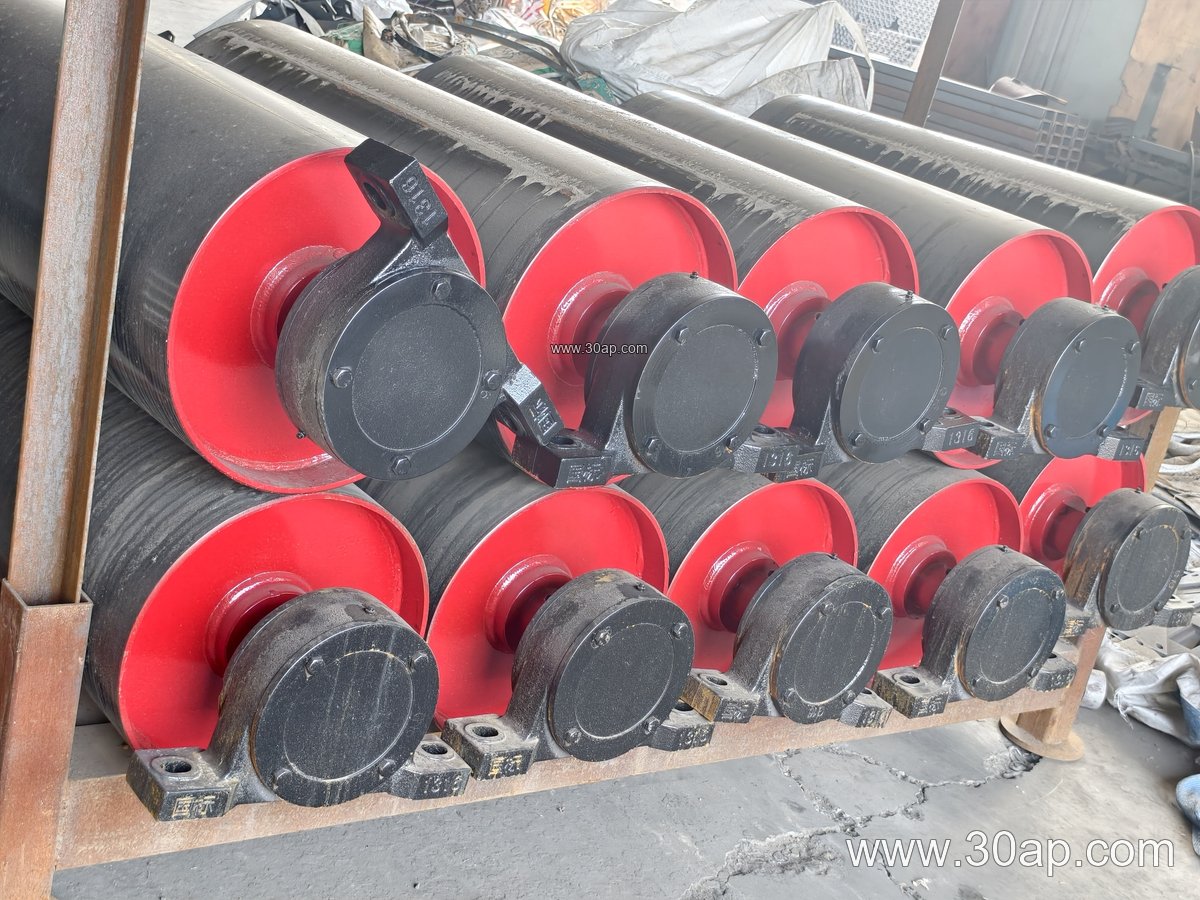
The shell itself is usually welded steel with a machined face, fitted with a shaft, hubs, bearing housings and end discs. A conveyor bracket or bearing support at each end holds the assembly in the conveyor frame. The shaft diameter is determined by torque and load, not by belt width alone, so a B800 pulley may carry different shaft sizes on different conveyors.
Where It Fits in a Conveyor
In a limestone quarry or aggregate line, a wear-resistant lagged pulley is often the head drive, pulling an abrasion resistant conveyor belt loaded with crushed stone. At a coal handling plant or power plant coal yard, flame retardant conveyor belt grades are common, and the tail pulley may also be lagged to resist fines and moisture. In a cement plant, the same pulley type handles clinker and raw meal on an EP conveyor belt or steel cord conveyor belt, depending on tension and distance.
At a ship loading terminal or port bulk facility, a bend pulley with diamond lagging helps keep a long conveyor belt tracking through direction changes. In a sand and gravel plant, a tail pulley with ceramic lagging reduces wear from sharp grit. The choice of position and lagging should follow the material, the belt tension and the environment.
Reading Dimensions Together
Pulley face width is normally wider than the belt. Typical references are shown below; these are common values, not fixed pairings, and the final combination is set by conveyor design.
| Belt width | Typical pulley face width | Common diameter range |
|---|---|---|
| B500 | about 600 mm | Ø250 to Ø400 |
| B650 | about 750 mm | Ø315 to Ø500 |
| B800 | about 950 mm | Ø400 to Ø630 |
| B1000 | about 1150 mm | Ø500 to Ø800 |
| B1200 | about 1400 mm | Ø630 to Ø1000 |
| B1400 | about 1600 mm | Ø800 to Ø1250 |
| B1600 | about 1800 mm | Ø1000 to Ø1400 |
A combination such as B1200 × Ø1000 or B800 × Ø500 is common, but no single diameter is mandatory for a given belt width. Shaft sizes commonly fall in the Ø50 to Ø200 range, again set by load calculations. The conveyor belt, idler roller and conveyor pulley work as a system, so the lagging grade should suit the belt cover and the material being carried.
Buyer Checklist
- Confirm the pulley duty: drive, tail, bend or tension position
- State belt width, pulley diameter and face width, plus shaft size from the conveyor design
- Specify lagging type and thickness, and whether cold-bonded, hot-vulcanized or ceramic
- Match the lagging to the belt: an abrasion resistant conveyor belt may pair with ceramic lagging in gritty duty
- Check that the pulley fits the conveyor bracket and bearing arrangement
For high-abrasion mining conveyor belt circuits, a high abrasion resistant conveyor belt and a well-chosen wear-resistant lagged pulley together reduce slip and downtime. Buyers should ask for the lagging bond method, surface pattern and thickness in writing, and treat all dimensions as design inputs rather than catalog defaults.