What a Rubber-Lined Pulley Does on a Conveyor
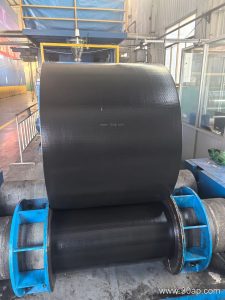
A rubber-lined pulley is a conveyor pulley whose shell carries a bonded rubber layer to improve grip on the belt and protect the shell from wear. In many plants it is simply called a lagged pulley or rubber lagging pulley, and it remains the same product under those names. The rubber cover raises friction between drum and belt, which matters most at the drive position where torque must be transferred without slip. It also cushions the shell against abrasive material and reduces the chance of belt damage when fines migrate between belt and drum.
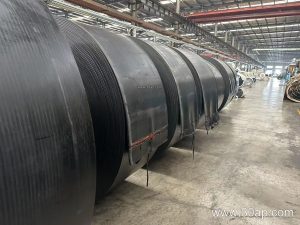
Because the rubber layer changes the contact behaviour, this component is usually specified together with the belt it will run with. A heavy abrasion resistant conveyor belt in a quarry line and a flame retardant conveyor belt in a coal handling system may both use lagged drums, but the lagging compound and surface pattern should suit the local conditions.
How the Lagging Is Built
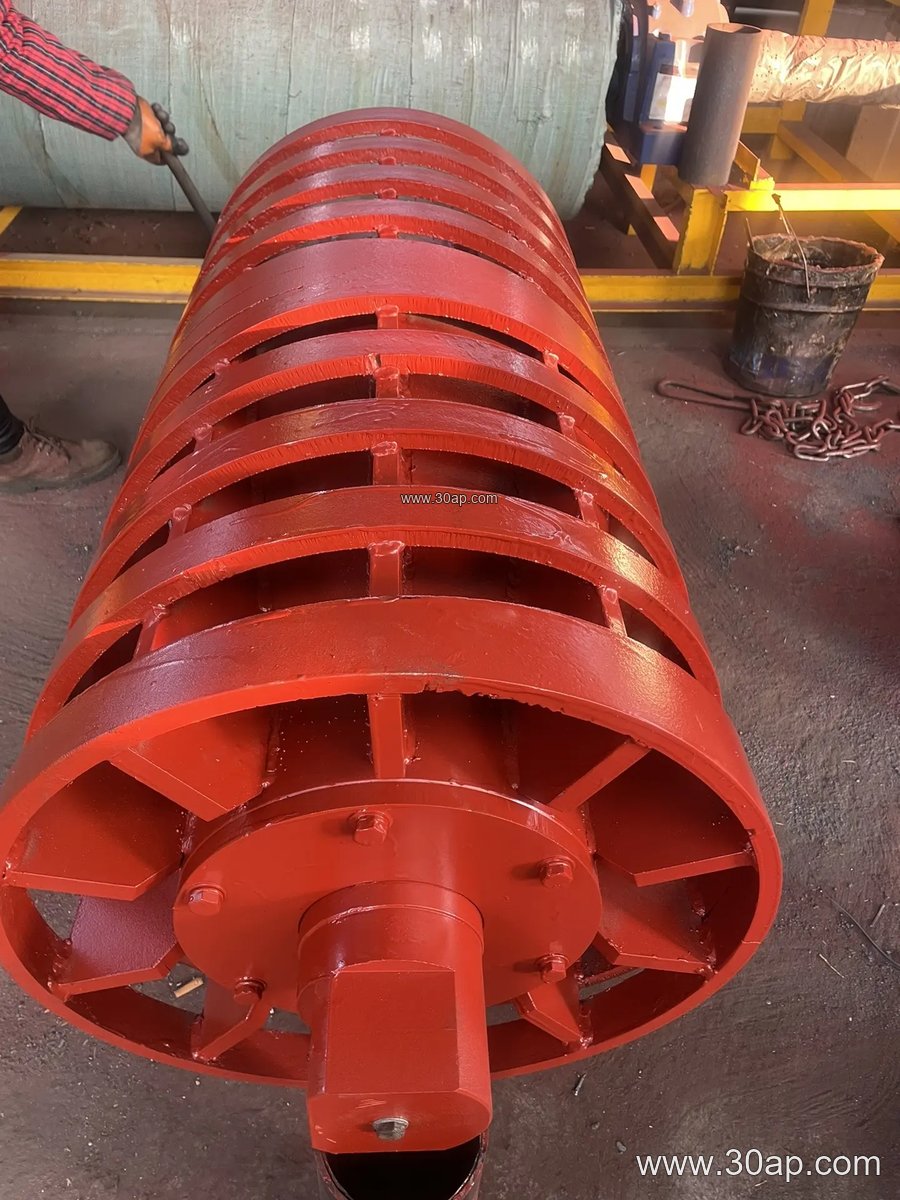
The core is a welded steel shell with shaft, hubs and end discs. Rubber is applied either as cold-bonded sheet or as hot-vulcanised rubber that cures onto the prepared shell. Hot vulcanised lagging generally gives a stronger bond and is common on drives that see continuous load. Thickness commonly ranges from 8 mm to 20 mm, with 10 mm and 12 mm often chosen for general duty and thicker covers used where impact or slip risk is high.
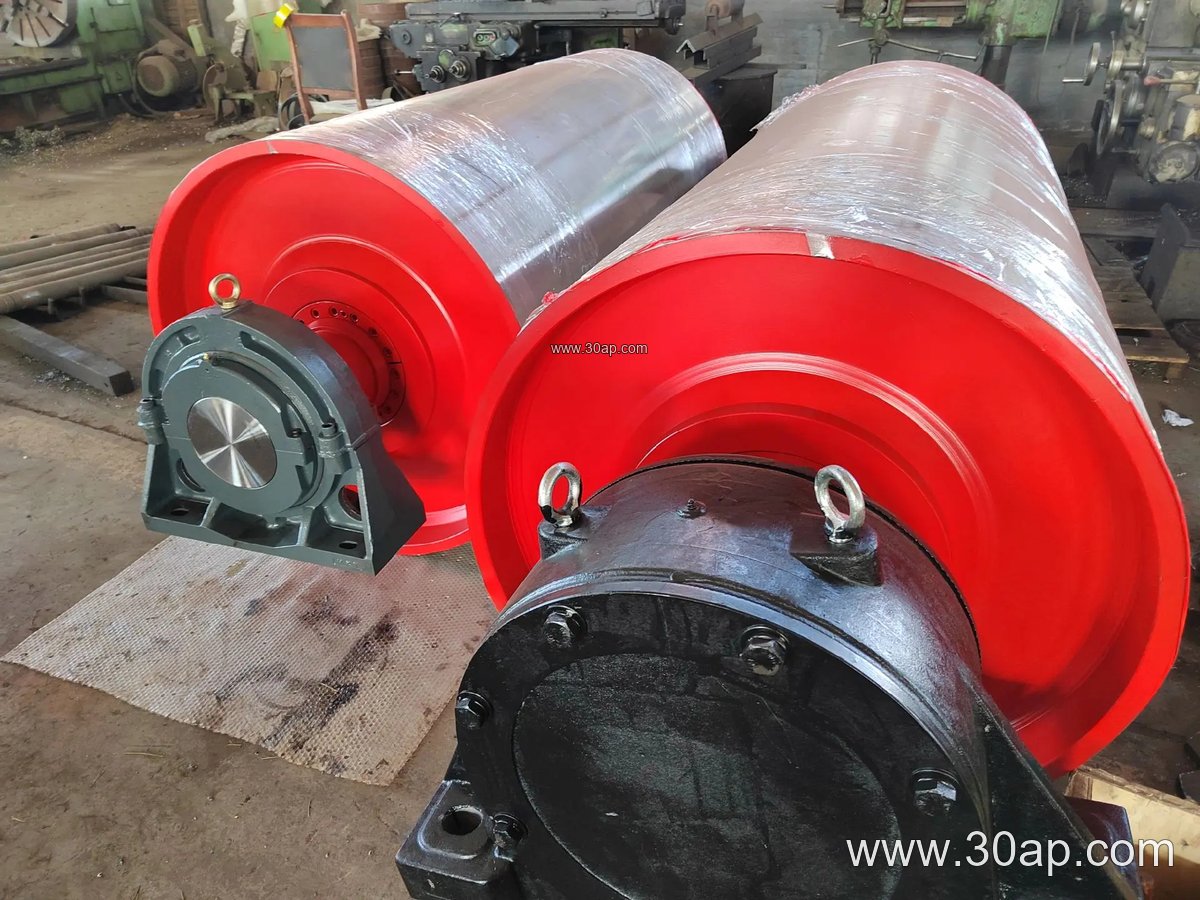
Surface form is a separate decision from thickness. Plain lagging gives uniform contact; diamond lagging helps water and fines escape from the nip; chevron lagging channels material sideways. Ceramic lagging is used where abrasive carry-back is severe, though it is a different wear solution rather than a substitute for rubber in every case.
Where It Fits in the Conveyor Layout
Drive pulleys are the classic application, since the rubber layer multiplies available traction. Tail pulleys may be lagged to protect the shell from dirty return belt, and bend or snub pulleys can be covered when belt wrap and tracking need steadier contact. These positions are not interchangeable, and a drive pulley cannot simply be swapped with a tail pulley of the same diameter. A quarry or aggregate line, a cement plant clinker circuit, a power plant coal yard or a port bulk terminal each place different demands on the same basic component.
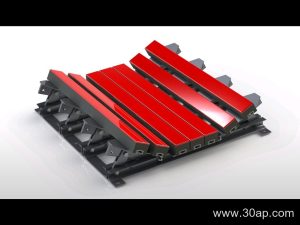
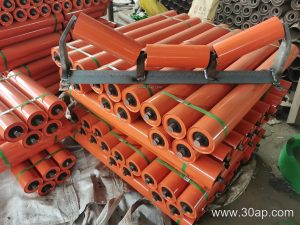
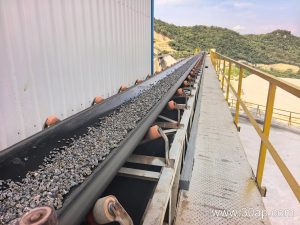
The pulley works alongside the conveyor belt, conveyor idler rollers and conveyor brackets, so alignment across the whole frame affects how long the lagging lasts. A misaligned belt will wear one edge of the rubber long before the rest of the cover is finished.
Common Size References
The table below shows typical combinations seen in catalogue and drawing references. They are reference data, not fixed rules, and final dimensions follow the conveyor design.
| Belt width | Typical shell face width | Example pulley combination | Common lagging thickness |
|---|---|---|---|
| B500 | about 600 mm | B500 x Ø400 | 8-10 mm |
| B650 | about 750 mm | B650 x Ø500 | 10 mm |
| B800 | about 950 mm | B800 x Ø500 | 10-12 mm |
| B1000 | about 1150 mm | B1000 x Ø630 | 12 mm |
| B1200 | about 1400 mm | B1200 x Ø1000 | 12-15 mm |
| B1400 | about 1600 mm | B1400 x Ø800 | 15 mm |
| B1600 | about 1800 mm | B1600 x Ø1000 | 15 mm |
| B1800 | about 2000 mm | B1800 x Ø1250 | 15-20 mm |
Shaft diameter is set by torque and bearing load, not by belt width alone. Common shaft sizes run from Ø50 up to Ø200, and a wide drum with modest power may use a smaller shaft than a narrow high-torque drive.
Buyer Checklist
- Confirm the pulley position: drive, tail, bend, take-up or snub, since each has different traction and wear requirements.
- State the belt type and duty, for example an EP conveyor belt, steel cord conveyor belt or multi-ply fabric core belt, so lagging hardness and pattern can be matched.
- Give belt width, pulley diameter, face width and shaft size from the actual drawing.
- Specify lagging thickness and surface form, and say whether hot vulcanised or cold bonded application is required.
- Describe the environment: wet washing areas, dusty crushing circuits, oily transfer points or cold outdoor yards all change the choice.
- Ask about balance, runout and inspection access, because lagging condition is easier to monitor when the drum can be reached safely.
For a full conveyor drum range and matching belt options, see conveyor pulley and rubber conveyor belt pages, or compare lagging styles with conveyor roller guidance before ordering.