What a Belt Conveyor Self-Aligning Idler Does
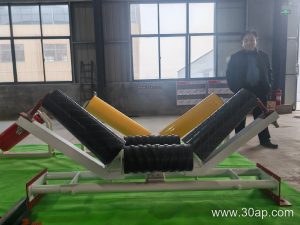
A belt conveyor self-aligning idler is a specialized roller assembly designed to automatically correct belt misalignment along the conveyor path. Unlike fixed troughing or return idlers, this self-aligning roller (also called a self-training idler) pivots slightly when the belt drifts, using the friction and lateral force of the moving belt to steer it back to center. In bulk material handling—whether in a sand and gravel plant, a cement kiln line, or a coal handling system—keeping the belt centered reduces spillage, edge damage, and premature wear on the conveyor belt and pulleys.
The self-aligning idler is not a substitute for a drive pulley, tail pulley, or bend pulley; those components serve entirely different functions in the conveyor drive and tensioning system. It is also distinct from a standard carrying idler or impact idler, though it may be installed near transition zones where belt tracking is most critical.
How the Self-Aligning Idler Is Built
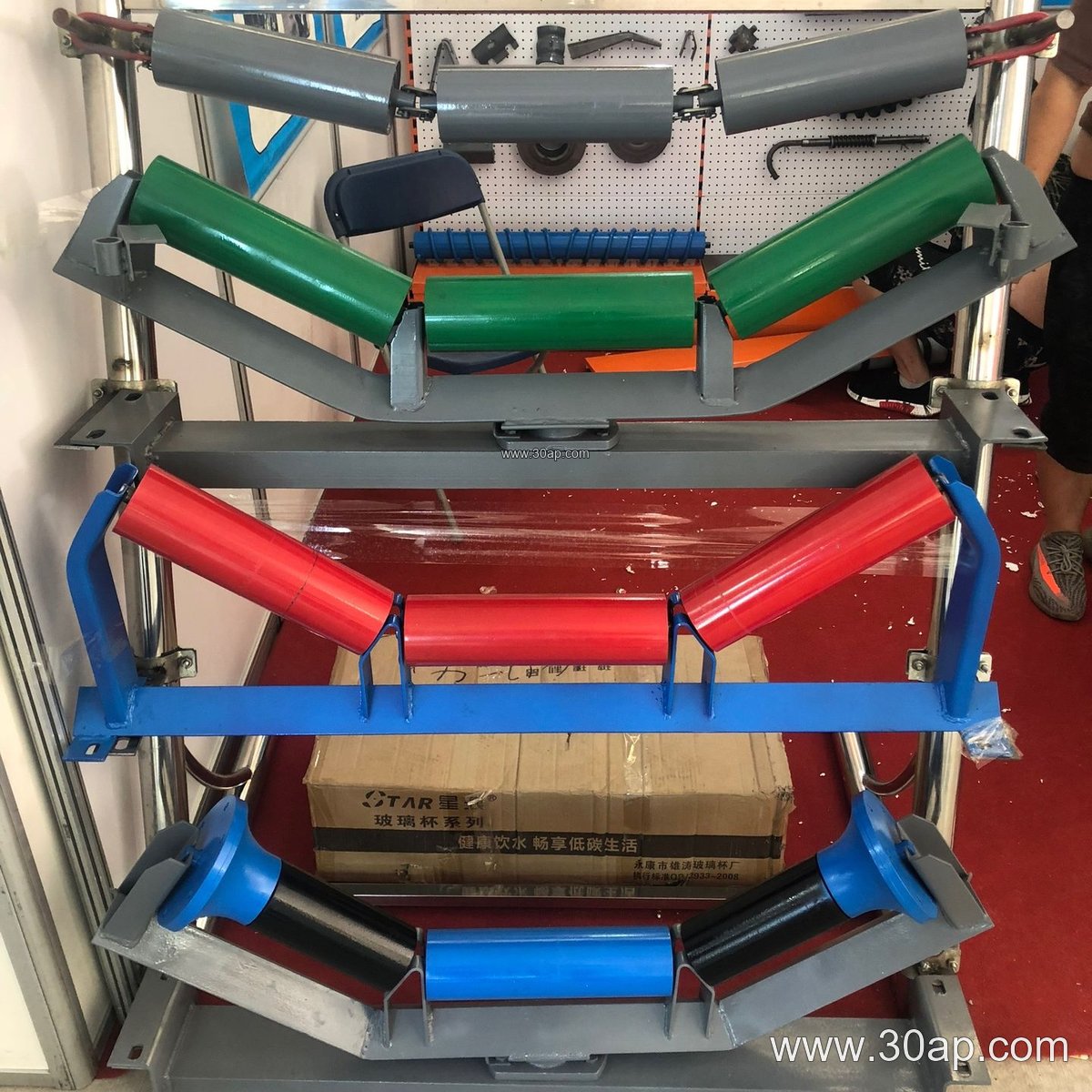
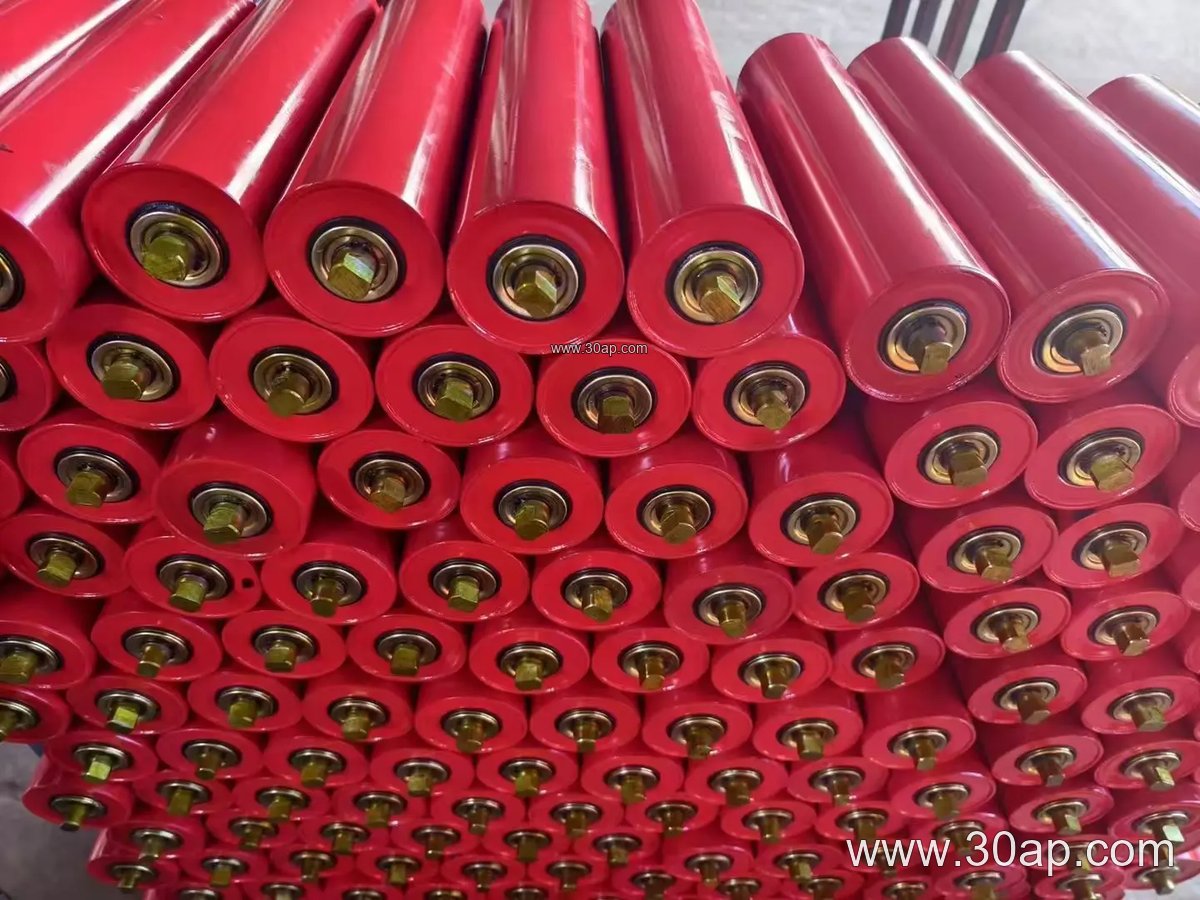
Most self-aligning idlers use a sturdy frame that allows the roller set to rotate slightly around a vertical pivot. The idler roller itself typically features a steel tube shell, with optional nylon, ceramic, or rubber lagging depending on the application. Common roller diameters for this type include Ø89, Ø108, Ø127, Ø133, and Ø159 mm, though larger sizes such as Ø178 or Ø194 mm may be used on high-capacity conveyors. Bearing sizes like 6205, 6305, 6306, and 6308 are frequently fitted, selected according to load and speed requirements rather than a fixed rule.
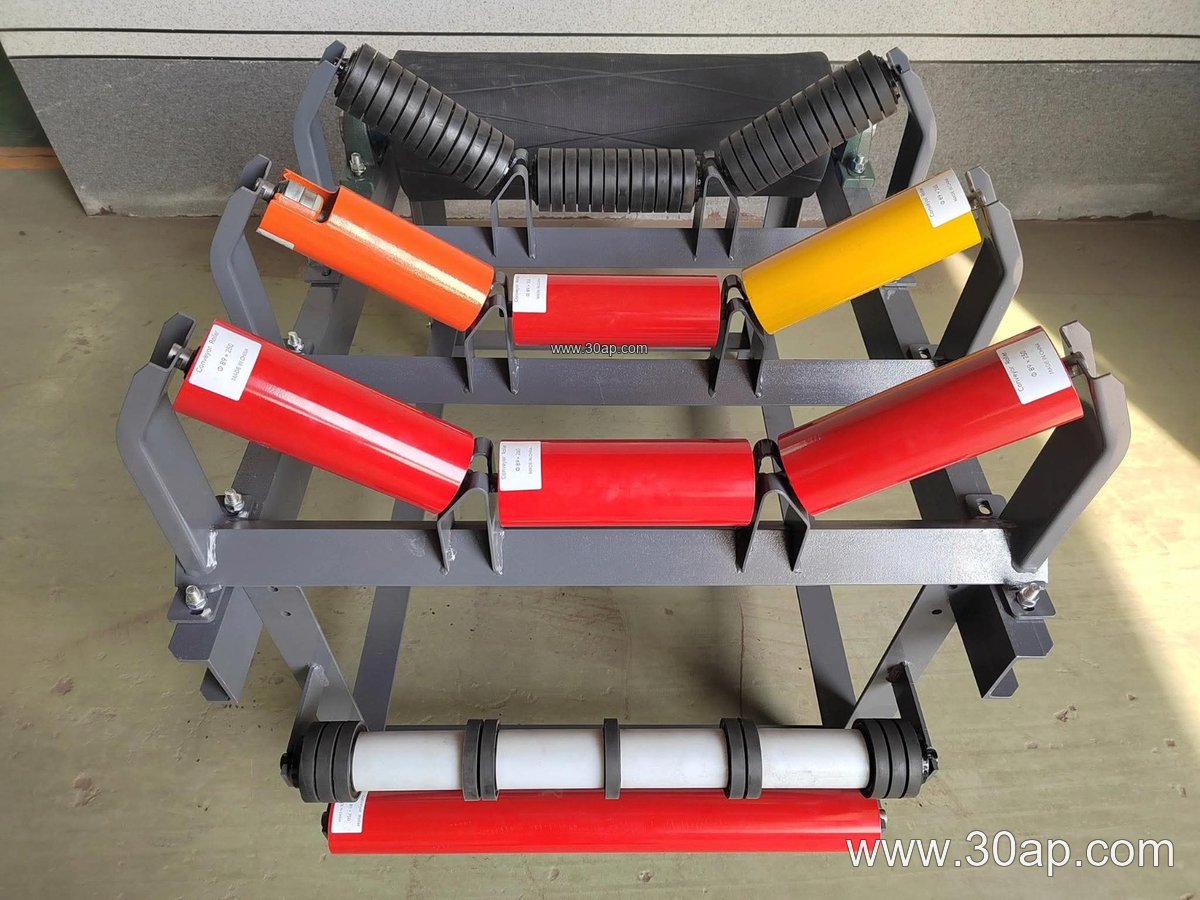
The pivot mechanism may include a friction disc or a tapered roller design. A friction self-aligning idler relies on controlled friction to resist sudden swings, while a conical self-aligning idler uses tapered rollers to generate a stronger corrective force. The frame is usually mounted on a conveyor bracket that allows easy installation and adjustment.
Where Self-Aligning Idlers Are Used
These tracking idlers are common in quarry conveyors, iron ore and copper ore handling lines, power plant coal conveying, and aggregate crushing circuits. They are often placed on the carrying side just after the tail pulley, before the head pulley, and at intervals along long overland conveyors. In underground coal mining, flame retardant conveyor belts and self-aligning idlers work together to maintain safe, centered operation in confined spaces.
On the return strand, a V-shaped return self-aligning idler may be used to keep the belt from wandering. For very wide belts, such as 1800mm or 2000mm wide conveyor belts, self-aligning idlers with correspondingly longer rollers and heavier frames are selected. The roller length varies with belt width and trough angle; for example, a three-roll troughing set on a B1000 belt commonly uses rollers around 380 mm long, but side rollers and center rollers can differ. These values are typical examples, not fixed pairings.
Selection and Maintenance Notes
Buyers should match the self-aligning idler to the belt width, trough angle (20°, 30°, 35°, or 45°), and the material being conveyed. A 1.5° to 2° forward tilt is sometimes used in self-aligning designs to assist tracking. The idler should be compatible with the conveyor belt type—whether an EP conveyor belt, NN conveyor belt, steel cord conveyor belt, or a specialty belt such as heat resistant conveyor belt or oil resistant conveyor belt. In dusty or wet conditions, sealed bearings and corrosion-resistant finishes extend service life.
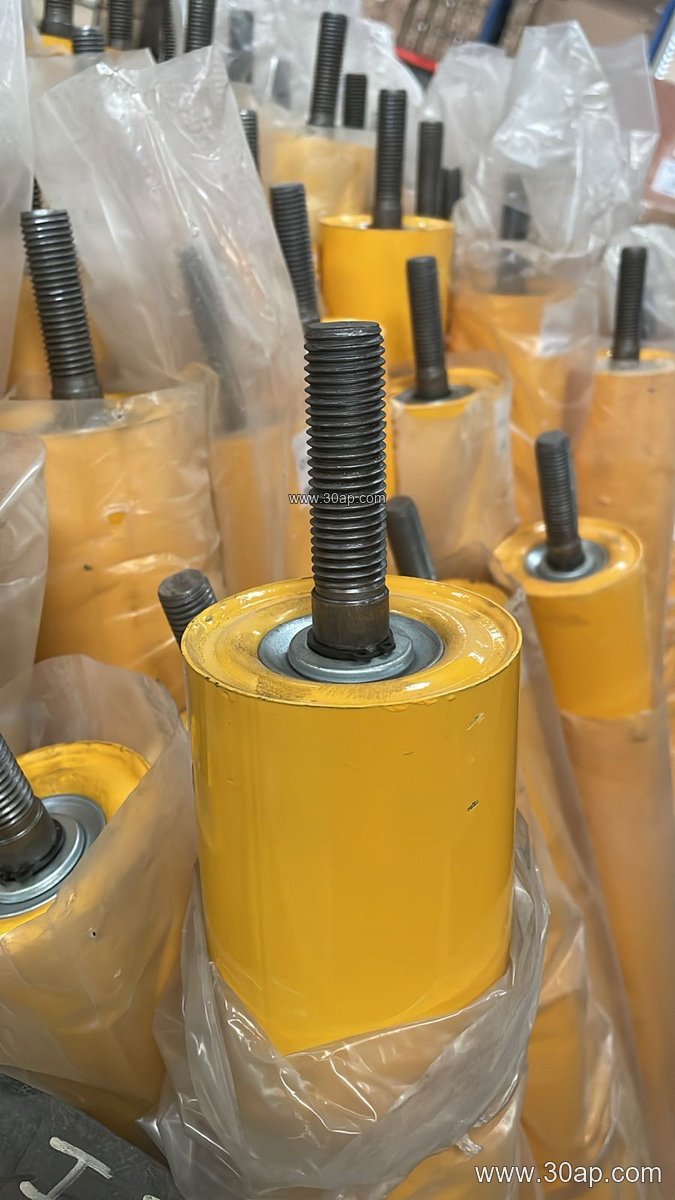
Regular inspection of the pivot mechanism, roller rotation, and frame alignment helps prevent belt damage. Worn rollers or seized bearings reduce the self-aligning effect and can cause the belt to mistrack. Keeping the conveyor pulley and idler roller surfaces clean also supports consistent tracking.
Typical Reference Parameters
| Parameter | Common Range / Example |
|---|---|
| Roller diameter | Ø89, Ø108, Ø127, Ø133, Ø159, Ø178 mm |
| Belt width | B500 to B2000 (e.g., B800, B1000, B1200, B1400) |
| Trough angle | 20°, 30°, 35°, 45° |
| Bearing | 6204, 6205, 6305, 6306, 6308, 6310 |
| Roller surface | Steel tube, nylon, ceramic, rubber lagging |
For more information on compatible conveyor belts and idler rollers, visit conveyor idler and conveyor belt resources. A well-chosen self-aligning idler supports the performance of your entire conveyor system, from the tail pulley to the discharge point.