What a Plain Lagged Pulley Does
A plain lagged pulley is a conveyor pulley whose cylindrical shell is covered with a smooth rubber or elastomer layer, without grooves, diamonds, or herringbone patterns. This covering, called lagging, improves friction between the pulley face and the conveyor belt, protects the shell from wear, and helps shed fine material. In many bulk handling circuits, this pulley serves as the drive or tail unit where a straightforward, non-patterned surface is preferred. Unlike a wing pulley, which is built for self-cleaning at slower speeds, the plain lagged design focuses on consistent grip and a smooth release of the belt.
The term is sometimes written as plain rubber lagged pulley or smooth lagged pulley, and it refers to the same product. It is not a substitute name for a drive pulley, tail pulley, or bend pulley; those are position-based roles that any suitable pulley type may fill.
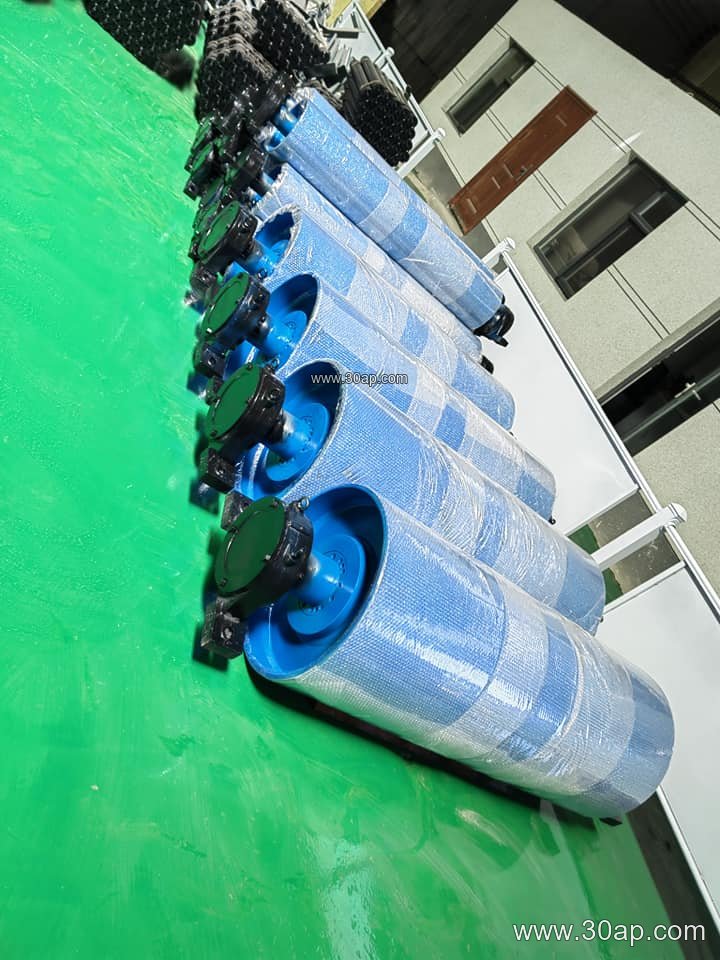
Construction and Surface Options
The core is typically a welded steel shell with end discs and a shaft, machined for balance. Lagging is applied either as a cold-bonded sheet, hot-vulcanized rubber, or cast elastomer. Common lagging thicknesses are 8, 10, 12, 15, and 20 mm. A plain surface is chosen when material build-up is not severe and when a uniform contact patch is desired.
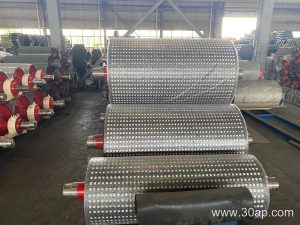
For comparison, a diamond or herringbone lagged pulley offers extra grip in wet or oily conditions, but those patterns are different surface forms, not alternative names for the plain lagged type. The plain version remains the reference product here.
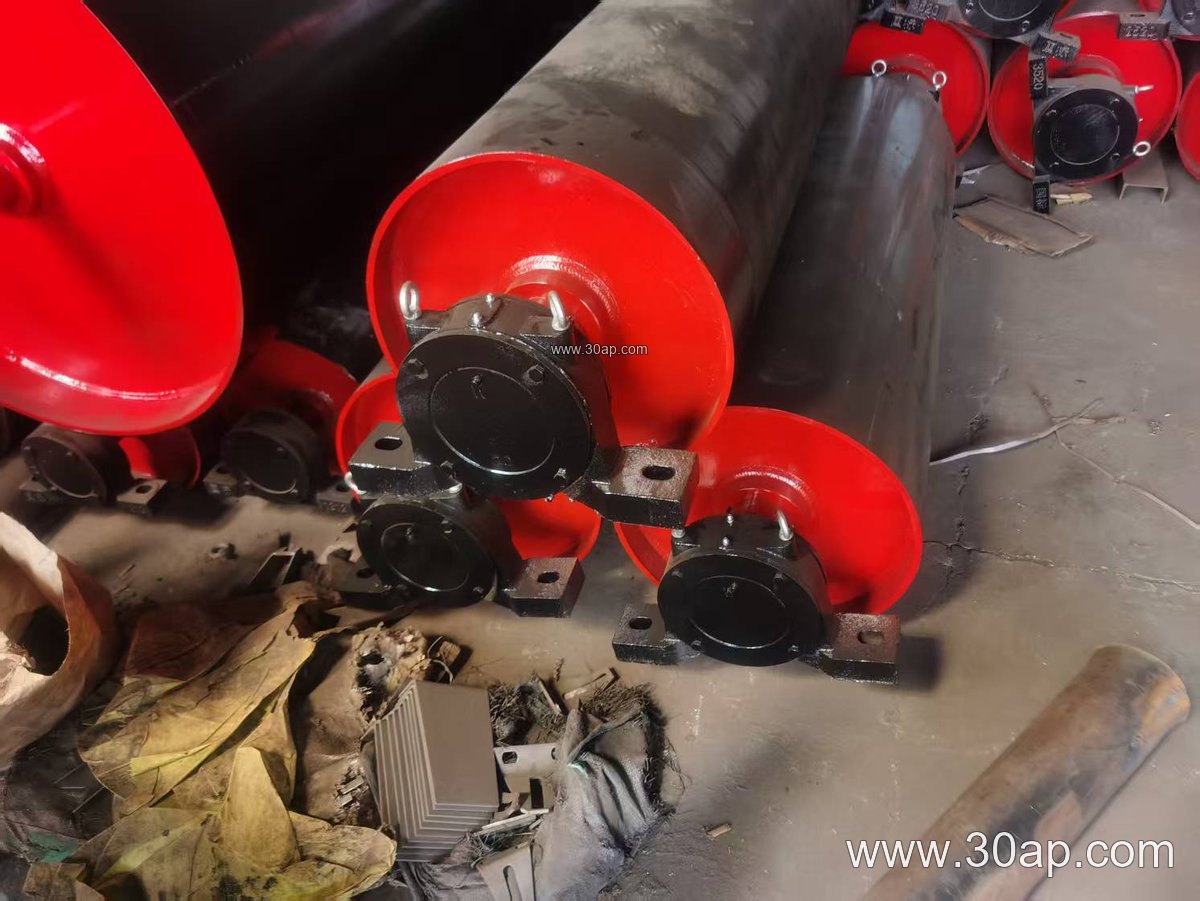
Typical Sizes and Configurations
Plain lagged pulleys are made in a wide range of belt widths and diameters. The table below shows common reference combinations; actual selection depends on belt tension, torque, and shaft load. No single belt width is tied to one diameter.
| Belt Width (B) | Typical Pulley Face Width | Common Diameter Range |
|---|---|---|
| B500 | ≈600 mm | Ø250–Ø400 |
| B650 | ≈750 mm | Ø315–Ø500 |
| B800 | ≈950 mm | Ø400–Ø630 |
| B1000 | ≈1150 mm | Ø500–Ø800 |
| B1200 | ≈1400 mm | Ø630–Ø1000 |
| B1400 | ≈1600 mm | Ø800–Ø1250 |
| B1600 | ≈1800 mm | Ø1000–Ø1400 |
Shaft diameters are usually Ø50 to Ø200 mm, determined by torque and bearing load rather than belt width alone. Examples such as B800 × Ø500 or B1200 × Ø1000 are common reference points, not fixed rules.
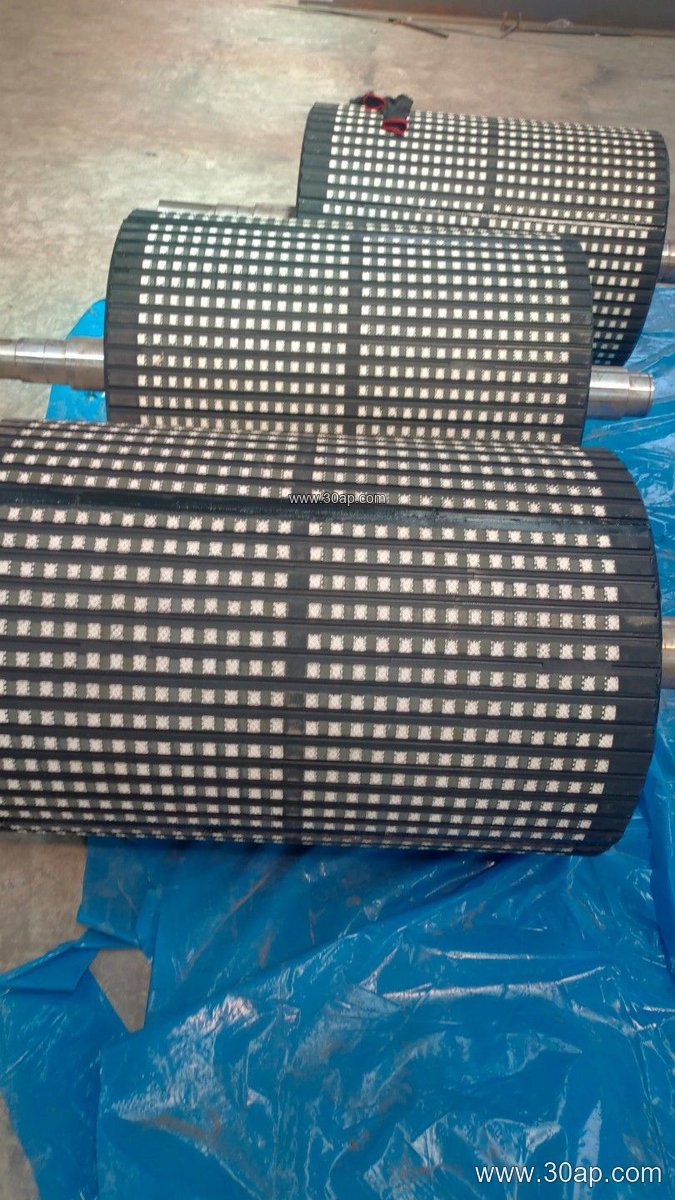
Where It Fits in a Conveyor
In a quarry or aggregate line, a plain lagged pulley often acts as the tail pulley, guiding the return side and maintaining belt tracking. In a coal washing plant or power plant coal yard, it may be the drive pulley on a medium-duty conveyor. The smooth lagging helps prevent material from packing into grooves, which can happen with patterned surfaces in sticky conditions.
Whether the pulley is installed at the head, tail, take-up, or bend position, the plain lagged shell works with the conveyor belt, idler rollers, and conveyor brackets to keep the system aligned. The pulley is one component; the belt, rollers, and frame must be matched for reliable operation.
Buyer Checklist
- Confirm the pulley role: drive, tail, take-up, or bend. The plain lagged surface suits many of these, but the shaft and bearing assembly must match the duty.
- Specify belt width and required face width; face width is usually slightly larger than the belt.
- State the lagging thickness and material. Plain rubber is standard; oil-resistant or fire-resistant compounds may be needed in specific plants.
- Provide the calculated shaft diameter from torque and load, not from belt width alone.
- Check compatibility with the conveyor belt type, such as EP conveyor belt or steel cord conveyor belt, and with the surrounding idler roller and bracket dimensions.
For harsh industries such as iron ore, copper ore, or cement clinker handling, the plain lagged pulley can be paired with abrasion resistant conveyor belt or heat resistant conveyor belt as the application demands. The pulley itself does not replace those belt choices; it supports them.