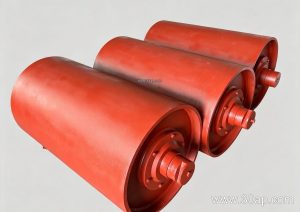
What a Drive Rubber Lagged Pulley Does
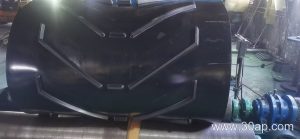
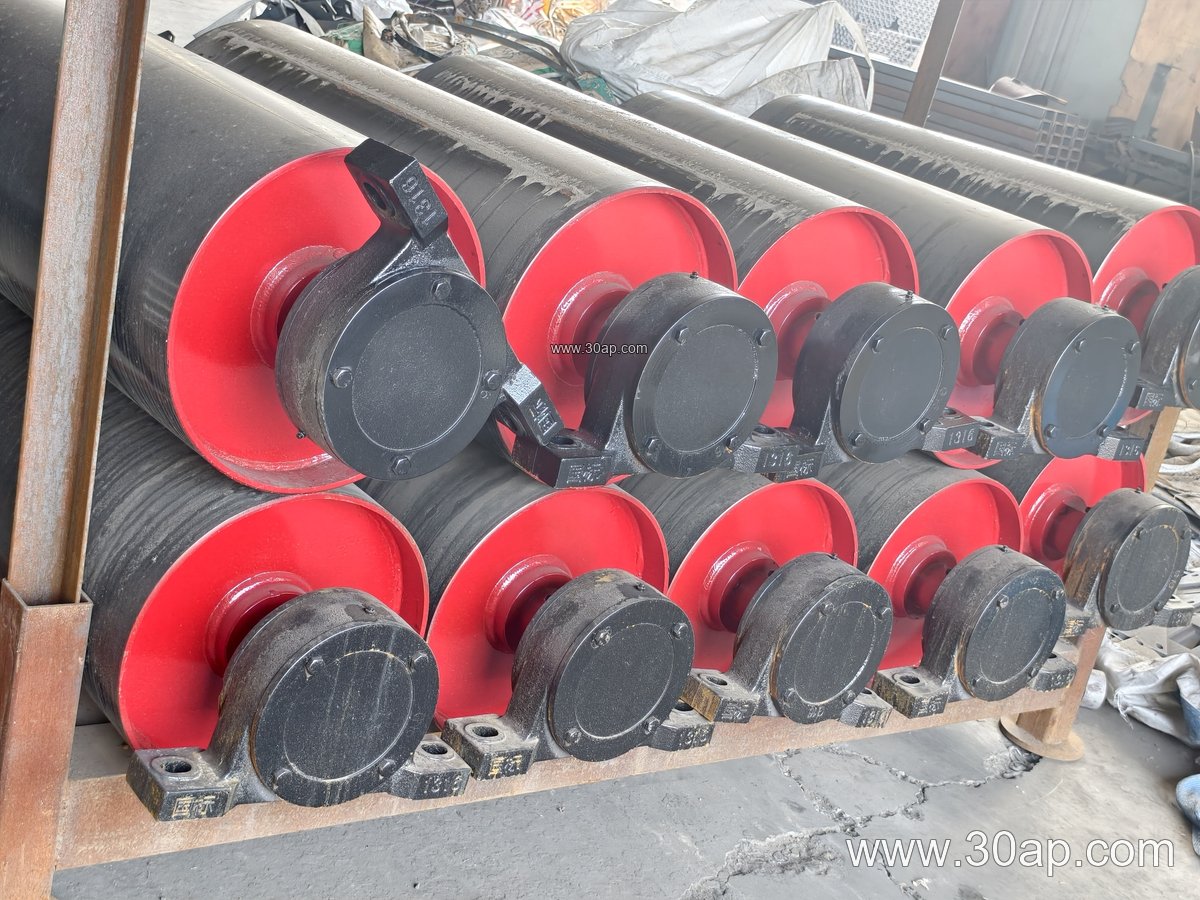
A drive rubber lagged pulley is the powered drum at the head of a belt conveyor. It transfers torque from the gearbox to the conveyor belt, and the rubber cover on its shell raises friction so the belt can move without slipping. In a quarry, a coal washing plant or a cement clinker line, this single component decides how much of the motor’s power actually reaches the load. The same product is also called a lagged head pulley or a rubber-covered drive drum, and these names describe the same item.
The rubber layer matters because bare steel offers limited grip, especially when the belt is wet, dusty or oily. A properly bonded lagging also protects the pulley shell from abrasive material and can be renewed when it wears, which extends the life of the drum itself.
Construction and Surface Options
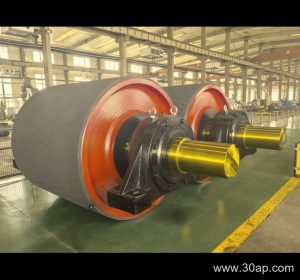
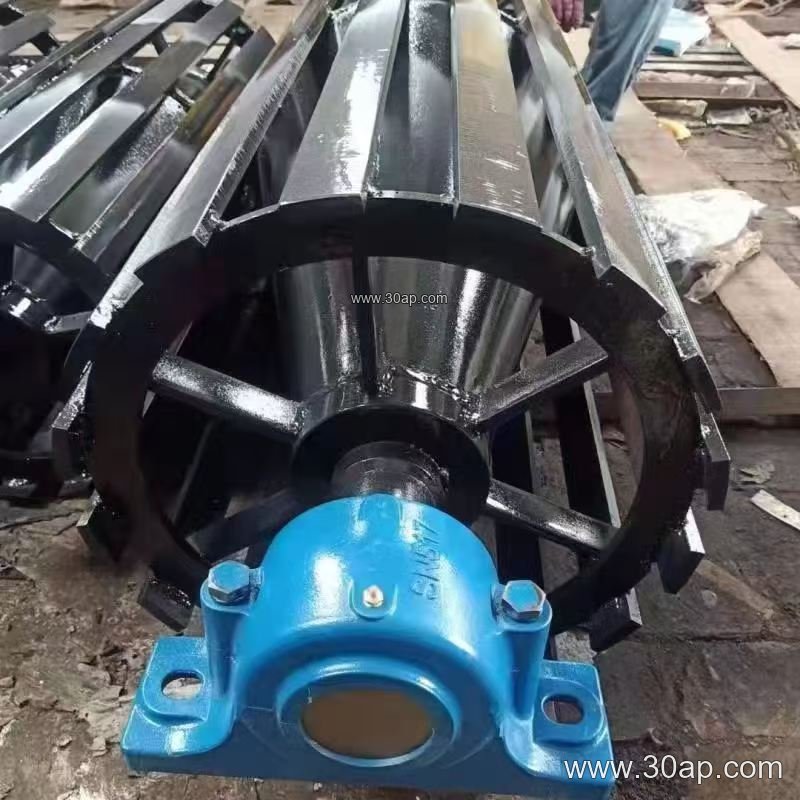
A typical unit combines a steel shell, end discs, a shaft, bearing housings and a rubber cover. The lagging can be applied in different ways: hot vulcanized rubber, cold bonded rubber, cast rubber, or ceramic lagging for very high traction demands. Surface patterns include plain, diamond and herringbone profiles. Diamond lagging helps shed water and fines, while herringbone lagging can assist with belt tracking on reversing conveyors.
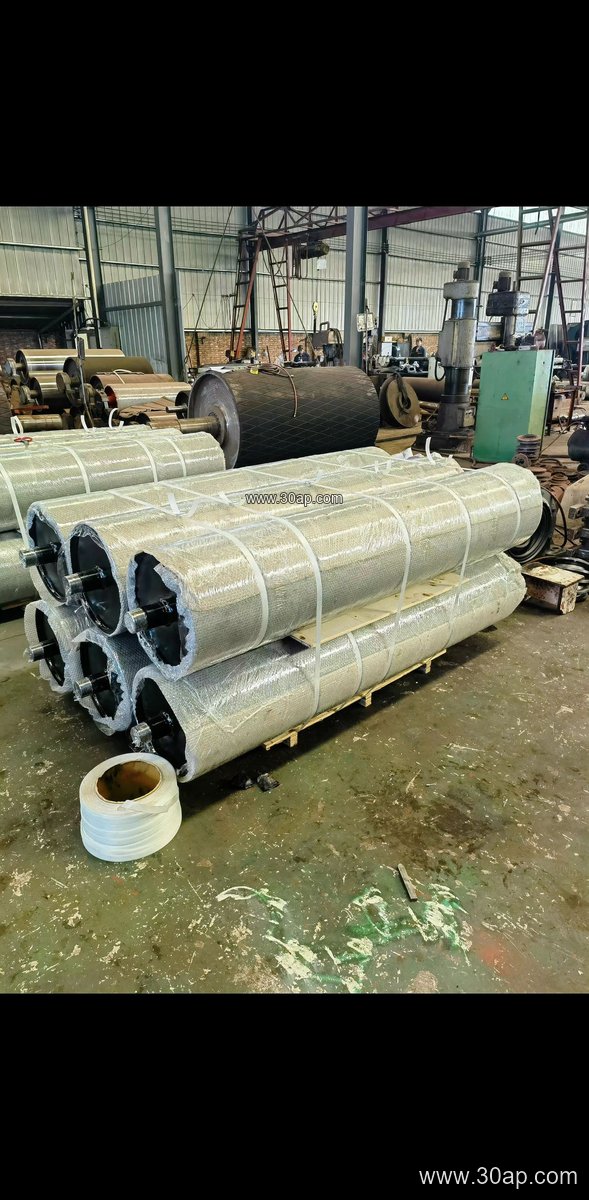
Common lagging thicknesses are 8, 10, 12, 15 and 20 mm, chosen according to torque and expected wear. The shell width is normally slightly wider than the belt it carries. A B800 belt might run on a shell of about 950 mm, and a B1200 belt on roughly 1400 mm, but the final figure follows the conveyor design rather than a fixed rule.
Typical Reference Dimensions
The values below are common ranges for planning discussion, not a supply promise. Diameter and shaft size must be confirmed against torque, belt tension and bearing load.
| Belt width | Typical shell width | Common pulley diameter | Common shaft diameter |
|---|---|---|---|
| B500 | about 600 mm | Ø250 to Ø400 | Ø60 to Ø80 |
| B650 | about 750 mm | Ø315 to Ø500 | Ø70 to Ø90 |
| B800 | about 950 mm | Ø400 to Ø630 | Ø80 to Ø100 |
| B1000 | about 1150 mm | Ø500 to Ø800 | Ø90 to Ø120 |
| B1200 | about 1400 mm | Ø630 to Ø1000 | Ø100 to Ø140 |
| B1400 | about 1600 mm | Ø800 to Ø1250 | Ø120 to Ø160 |
| B1800 | about 2000 mm | Ø1000 to Ø1600 | Ø160 to Ø200 |
Do not assume that one belt width can only match one diameter. A B1200 × Ø1000 drive drum and a B800 × Ø500 unit both exist in real projects, because speed, tension and space all shape the choice.
Where It Fits in a Conveyor
The drive position is usually at the head, where material is discharged. A tail pulley, by contrast, is normally an unpowered return drum, and a bend pulley only redirects the belt. These are different roles and should not be swapped in a specification. In a long overland line serving an iron ore mine or a power plant coal yard, the drive pulley may be paired with a take-up pulley to keep tension stable.
Rubber lagging is especially useful when the belt carries wet aggregate, when the conveyor starts under load, or when the drive drum is exposed to slurry and dust. For very abrasive bulk material, a wear-resistant rubber cover and a sturdy conveyor pulley shell are more important than a fancy tread pattern.
Matching the Pulley to the Belt
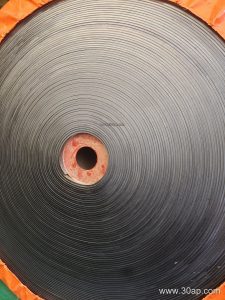
The drive drum does not work alone. Its friction depends on the belt construction, the wrap angle and the tension provided by the take-up system. A heavy-duty steel cord belt on a long haul needs a larger diameter and a more robust shaft than a short fabric belt line. On a crusher discharge or a screen feed, a Rubber Conveyor Belt with good flexibility may run on a smaller drum, while an EP Conveyor Belt handling abrasive stone often benefits from a thicker lagging.
When selecting, confirm the belt type, the belt width, the maximum tension and the duty cycle. Ask for the lagging hardness and bonding method, the bearing type, and the shaft material. A supplier who asks about torque and load is more useful than one who quotes a diameter from belt width alone.
Buyer Checklist
- Confirm the drive position and whether the conveyor reverses.
- State belt width, belt type and maximum operating tension.
- Choose lagging thickness and pattern for the actual material and moisture.
- Verify shaft diameter from torque and bearing load, not from belt width.
- Check that the shell width suits the belt and that the conveyor bracket and bearing housing fit the frame.
- Plan periodic inspection of lagging wear, bolt tightness and idler roller alignment.
With the right rubber cover and a correctly sized shell, a drive rubber lagged pulley keeps a conveyor productive in demanding sand, stone, coal and cement service.