What a Mining Conveyor Pulley Does in the Belt System
A mining conveyor pulley is the drum that drives, tensions, or redirects the conveyor belt in a bulk material handling system. In hard-rock mines, coal prep plants, and aggregate quarries, these pulleys work under constant load, abrasive dust, and often wet or muddy conditions. The pulley itself is not a standalone machine; it is a carefully matched component that transfers power from the drive unit to the belt and keeps the belt tracking correctly. For anyone specifying or replacing one, it helps to understand how it is built, where it sits in the conveyor, and which details matter most.
Construction and Key Components
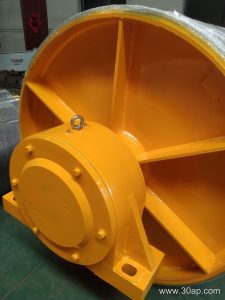
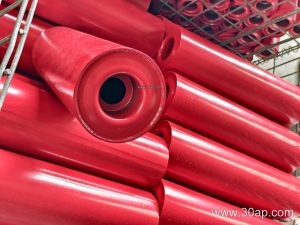
Most industrial pulleys share a common structure: a cylindrical shell, two end discs, a shaft, and a bearing housing on each side. The shell is usually rolled from steel plate and machined to a true diameter. The shaft is sized by torque and radial load, not by belt width alone. Common shaft diameters include Ø50, Ø60, Ø70, Ø80, Ø90, Ø100, Ø120, Ø140, Ø160, Ø180, and Ø200 mm, but the final value depends on the drive calculation and the pulley’s position in the conveyor.
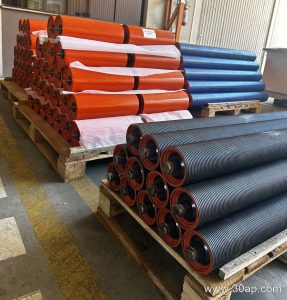
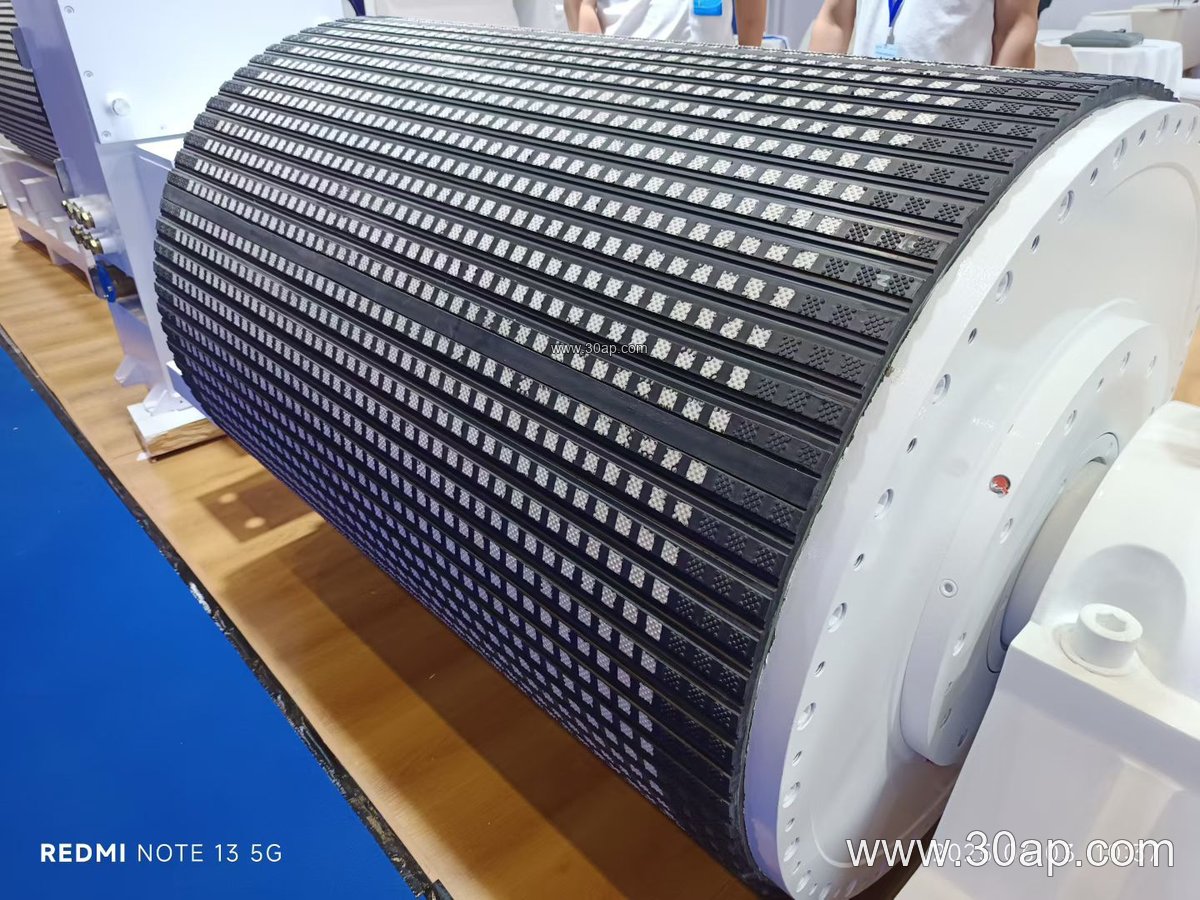
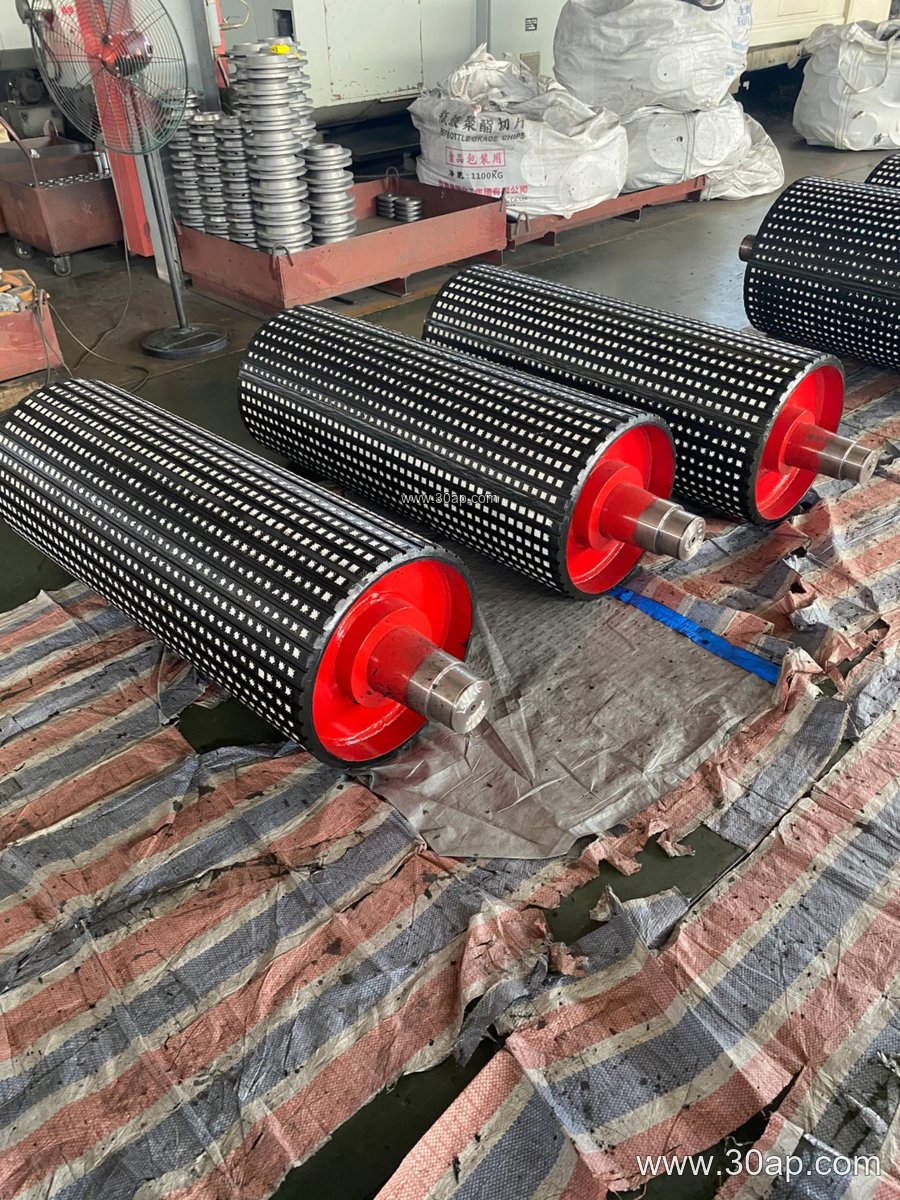
The surface of the shell may be plain, rubber-lagged, or ceramic-lagged. Lagging improves grip between the pulley and the belt, which is especially important on drive pulleys. Common lagging thicknesses are 8, 10, 12, 15, and 20 mm. Surface patterns include smooth, diamond, and herringbone. A diamond or herringbone profile can help shed water and fines in wet or dusty service. The pulley is connected to the conveyor frame through bearing housings and conveyor bracket assemblies, and it must align with the conveyor belt and the idler roller train to avoid edge wear and mistracking.
Common Types and Where They Sit
Drive pulleys, tail pulleys, and bend pulleys are not interchangeable names. A drive pulley is the powered drum at the head or intermediate drive that pulls the belt. A tail pulley is located at the loading end and often serves as a tensioning point. A bend pulley changes the belt direction without driving it. Other subtypes include snub pulleys, take-up pulleys, and wing pulleys for self-cleaning in sticky material. Each position imposes different loads and requires a different design approach. For example, a drive pulley in a coal mine may need a lagged surface and a larger shaft, while a bend pulley in a limestone quarry may use a plain shell and a lighter bearing arrangement.
Typical Sizes and Configurations
Pulley dimensions follow the belt width and the conveyor design. The shell face width is normally wider than the belt. For reference, a B800 belt may use a pulley face around 950 mm, and a B1200 belt may use a face around 1400 mm. Diameters commonly range from Ø200 to Ø1800 mm, with Ø500, Ø630, Ø800, and Ø1000 mm being frequent choices in mining and quarry service. A B800 × Ø500 or B1200 × Ø1000 combination is not a fixed rule; the diameter should be selected from belt tension, wrap angle, and space constraints. The table below shows common reference ranges, not mandatory pairings.
| Belt width (reference) | Typical pulley face width | Common diameter range |
|---|---|---|
| B650 | about 750 mm | Ø315–Ø630 mm |
| B800 | about 950 mm | Ø400–Ø800 mm |
| B1000 | about 1150 mm | Ø500–Ø1000 mm |
| B1200 | about 1400 mm | Ø630–Ø1250 mm |
| B1400 | about 1600 mm | Ø800–Ø1400 mm |
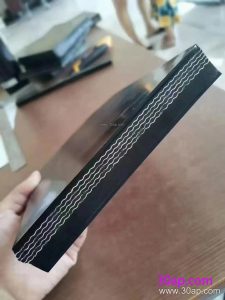
These values are given as general guidance. Actual selection depends on the conveyor profile, the Mining Conveyor Belt type, and the operating environment. A steel cord belt may require a different pulley diameter than a fabric belt of the same width, and an underground coal mining conveyor belt with flame retardant properties may call for specific lagging and bearing protection.
Buyer Checklist for Mining Service
When specifying a mining conveyor pulley, confirm the belt width, the belt type, and the maximum belt tension. Check the shaft diameter against the calculated torque and the bearing life target. Decide whether the surface should be plain, rubber-lagged, or ceramic-lagged, and choose a lagging thickness that suits the drive duty. For abrasive ore or coal, a diamond or herringbone pattern may help. For wet or dirty conditions, consider a wing pulley on the tail. Confirm the pulley face width, the bearing type, and the mounting dimensions with the conveyor bracket and frame. Also review the belt training plan, because a pulley that is slightly out of alignment can cause edge damage and reduce belt life. Finally, ask for the balance grade and the runout tolerance, since a pulley that vibrates will shorten bearing life and affect the entire conveyor.
Maintenance and Long-Term Reliability
Inspect lagging for wear, cuts, and embedded material. Worn lagging reduces grip and can lead to belt slip. Check bearing seals for dust ingress and relubricate according to the duty cycle. Keep the pulley surface clean, especially in coal and cement plants where fines can build up. Verify that the conveyor belt is tracking centrally and that the idler roller frames are aligned. A well-matched pulley will outlast several belt replacements, but it needs the same attention as the belt and the idlers. By focusing on load, lagging, alignment, and bearing protection, a buyer can choose a mining conveyor pulley that keeps the material moving with fewer unplanned stops.