What a Return Idler Bracket Does on a Conveyor
The return idler bracket is the structural support that holds the return-side idler rollers beneath the conveyor belt. While the carrying side gets most of the attention, the return run quietly does its own work: it keeps the belt from sagging, maintains tension, and helps the belt track straight on its way back to the tail pulley. In quarries, cement plants, and coal handling systems, a well-built return idler bracket can mean the difference between steady operation and frequent downtime. Sometimes called a return roller bracket or lower idler support, this component is simple in appearance but important in function.
Construction and Mounting Position
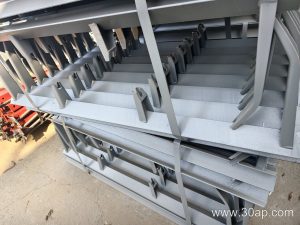
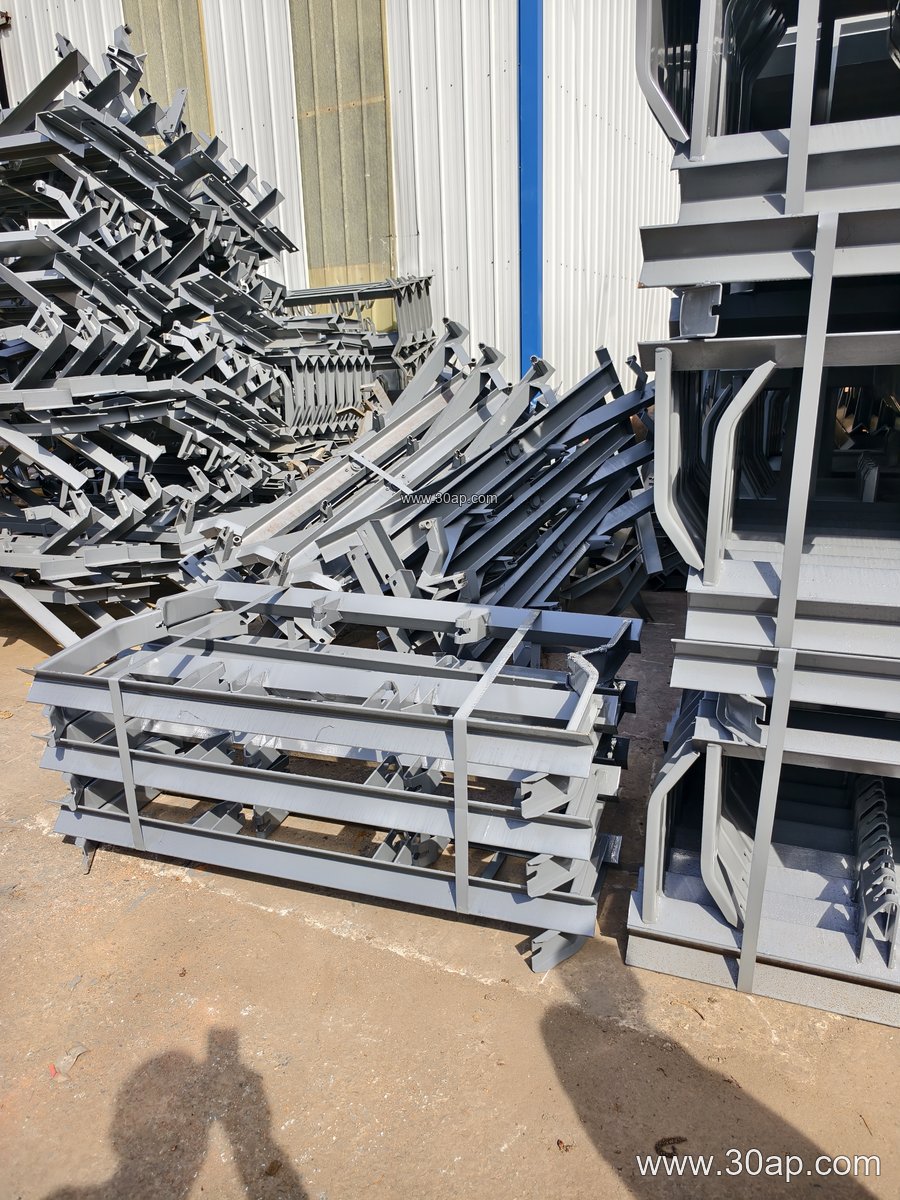
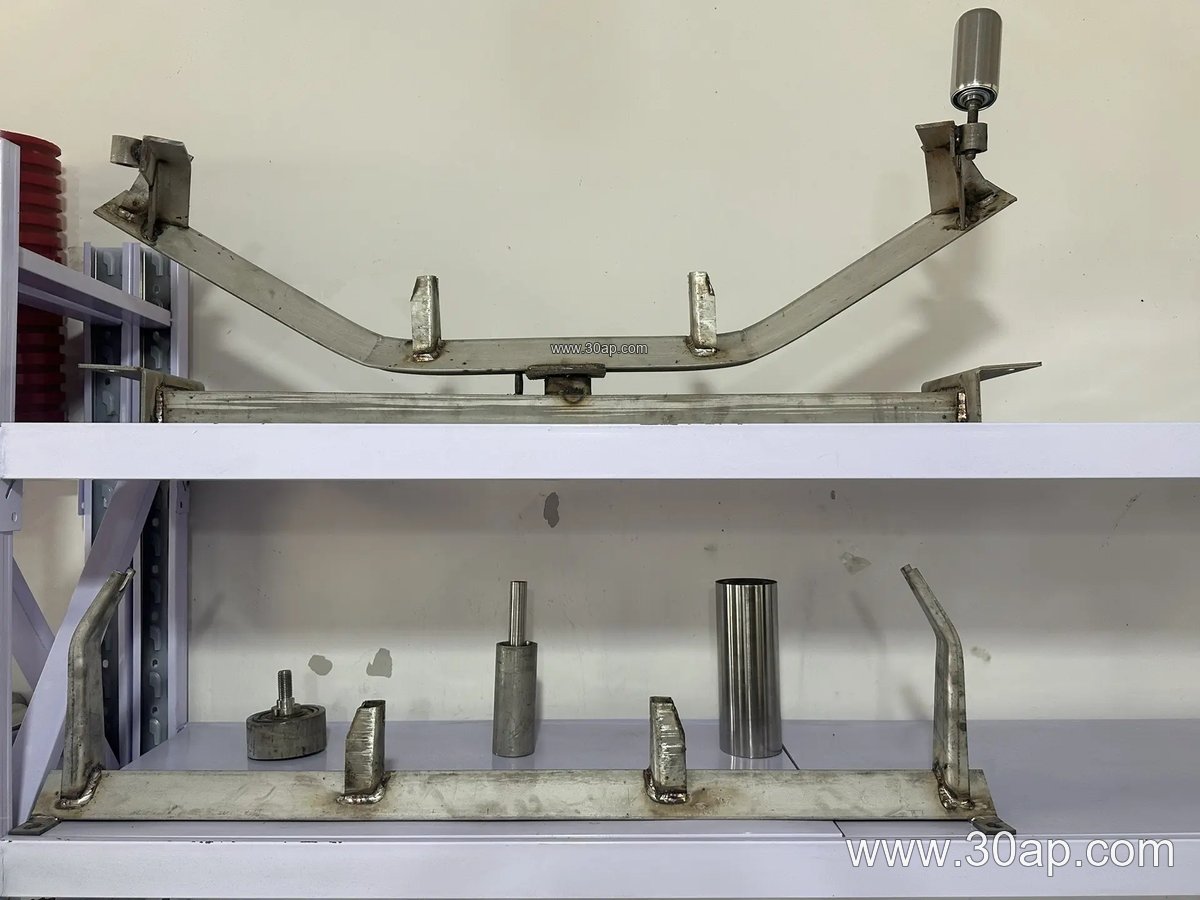
Most return idler brackets are fabricated from angle steel, channel steel, or folded steel plate. The choice of material and thickness depends on the load and the belt width. The bracket typically bolts to the conveyor stringer or frame, and its height and hole spacing are set by the belt width and the idler diameter. A flat return bracket supports a single horizontal idler roller, while a V-return bracket carries two rollers set at an angle to help center the belt. In dusty or wet conditions, such as a lime kiln feed line or a coal washery, the bracket may include slots or adjustable feet to compensate for frame misalignment.
Common Types and Their Roles
- Flat return bracket – holds a single return idler roller under the belt.
- V-return bracket – carries two rollers in a V shape, aiding belt tracking.
- Adjustable return bracket – allows height or angle adjustment during installation.
- Heavy-duty return bracket – built from thicker channel or plate for high-tonnage lines.
These are not interchangeable with drive, tail, or bend pulley supports; each pulley type has its own bearing housing and frame arrangement. A return idler bracket is specifically for the lower run.
Matching Belt Width, Idler Diameter, and Bracket
There is no single bracket size for every conveyor. The bracket must match the belt width, the return idler diameter, and the frame hole spacing. Typical belt widths include B500, B650, B800, B1000, B1200, B1400, B1600, B1800, B2000, B2200. Return idler diameters commonly range from Ø89 to Ø194. For example, a B800 belt with Ø108 return rollers might use a flat bracket with a certain hole spacing; a B1200 belt with Ø133 rollers would need a wider, heavier bracket. These pairings are design choices, not fixed rules—a B800 belt can be paired with different roller diameters depending on load and speed.
| Belt Width | Typical Return Idler Diameter | Bracket Type (example) |
|---|---|---|
| B500 | Ø89 | Flat or V-return |
| B650 | Ø89 – Ø108 | Flat or adjustable |
| B800 | Ø108 | Flat or V-return |
| B1000 | Ø108 – Ø133 | Flat or heavy-duty |
| B1200 | Ø133 | V-return or heavy-duty |
| B1400 | Ø133 – Ø159 | Heavy-duty V-return |
| B1600 | Ø159 | Heavy-duty flat |
| B1800 | Ø159 – Ø194 | Heavy-duty V-return |
Installation hole spacing and crossbeam length vary with belt width and bracket type; they are not universal constants. Buyers should confirm the frame dimensions and idler shaft ends before ordering.
Where Return Idler Brackets Are Used
These brackets appear wherever a conveyor belt runs empty on its return path. In a stone crushing plant, they support the belt under the crusher discharge. In a cement plant, they keep the return side stable on long clinker conveyors. Power plant coal handling, port bulk terminals, and iron ore yards all rely on return brackets to maintain belt alignment. Even in a tunnel boring operation, the return bracket helps manage the belt in confined spaces. The bracket works together with the conveyor belt, idler roller, and conveyor pulley to form a complete support system.
What Buyers Should Check
Before selecting a return idler bracket, confirm the belt width, the return idler diameter, and the frame hole spacing. Check whether a flat or V-return design is needed for belt tracking. For abrasive or heavy loads, consider a reinforced bracket made from thicker channel or plate. Adjustable brackets can simplify alignment on uneven frames. Finally, verify that the bracket material suits the environment—for example, a coal washery may need a coated or galvanized finish, while a dry quarry may not. The bracket is a small part, but matching it correctly to the conveyor saves time and reduces belt wear.