What a 315mm Diameter Conveyor Pulley Is
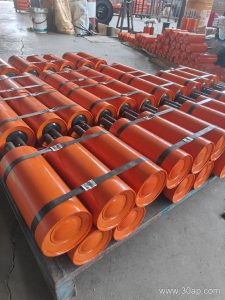
A 315mm diameter conveyor pulley is a mid-sized drum used to drive, tension, or redirect a conveyor belt in bulk material handling systems. The 315 mm diameter (often written Ø315) gives a good balance between wrap angle, belt stress, and space requirements. It is commonly found in secondary and tertiary crushing circuits, aggregate plants, and cement clinker lines where a conveyor pulley must handle moderate belt tensions without taking up excessive room.
This pulley is not a one-size-fits-all item. It can serve as a drive pulley, a tail pulley, a bend pulley, or a tension pulley, and each position changes how the drum is built and how it interacts with the belt. The 315 mm diameter refers to the shell outside diameter; the face width, shaft size, and lagging are selected to match the conveyor design.
Construction and Key Components
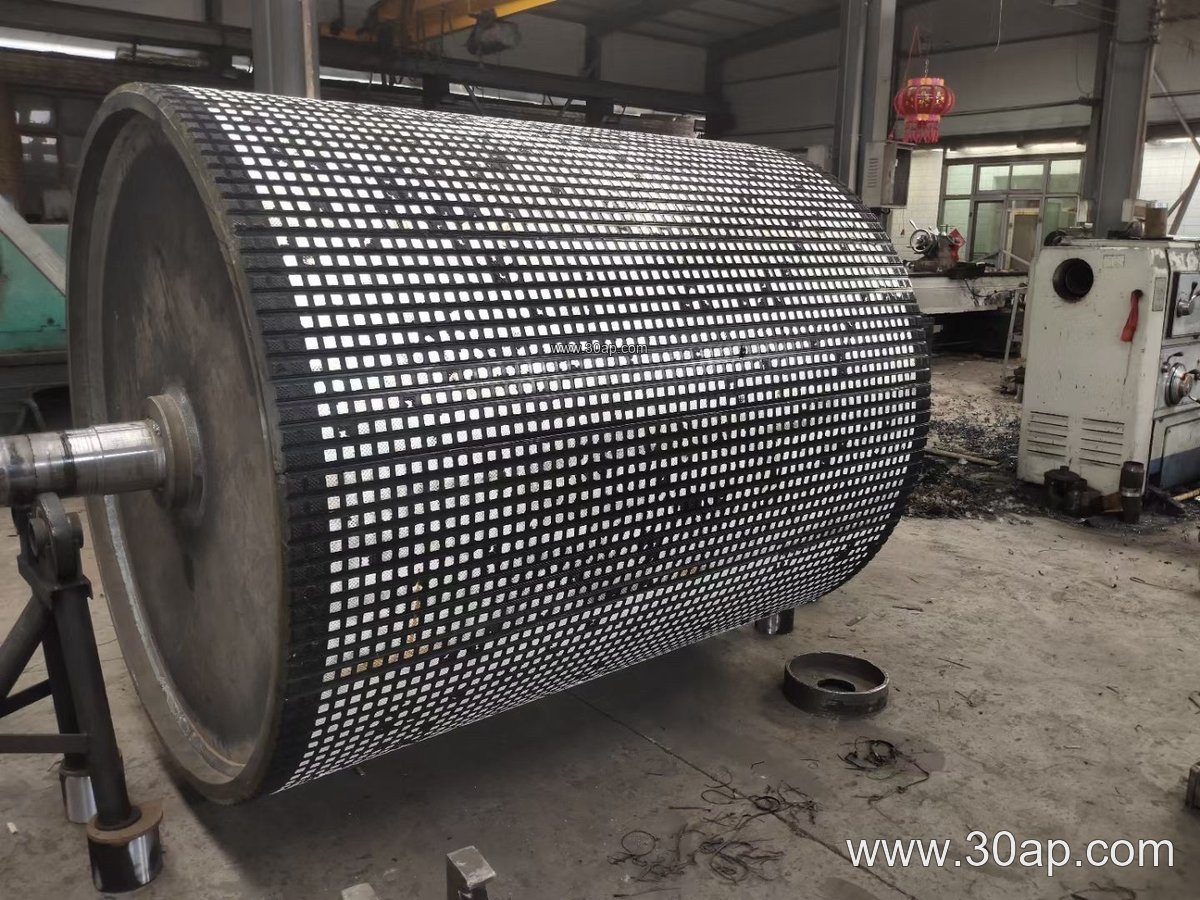
A typical 315mm diameter conveyor pulley is built around a steel shell with welded end discs and a through shaft or stub shafts. The shell is machined to keep runout low, which helps the belt track straight and extends splice life. Common surface options include plain finish, hot-vulcanized rubber lagging, cold-bonded rubber, diamond groove lagging, and ceramic lagging. Lagging thickness is often 8, 10, 12, 15, or 20 mm, chosen according to grip requirements and material conditions.
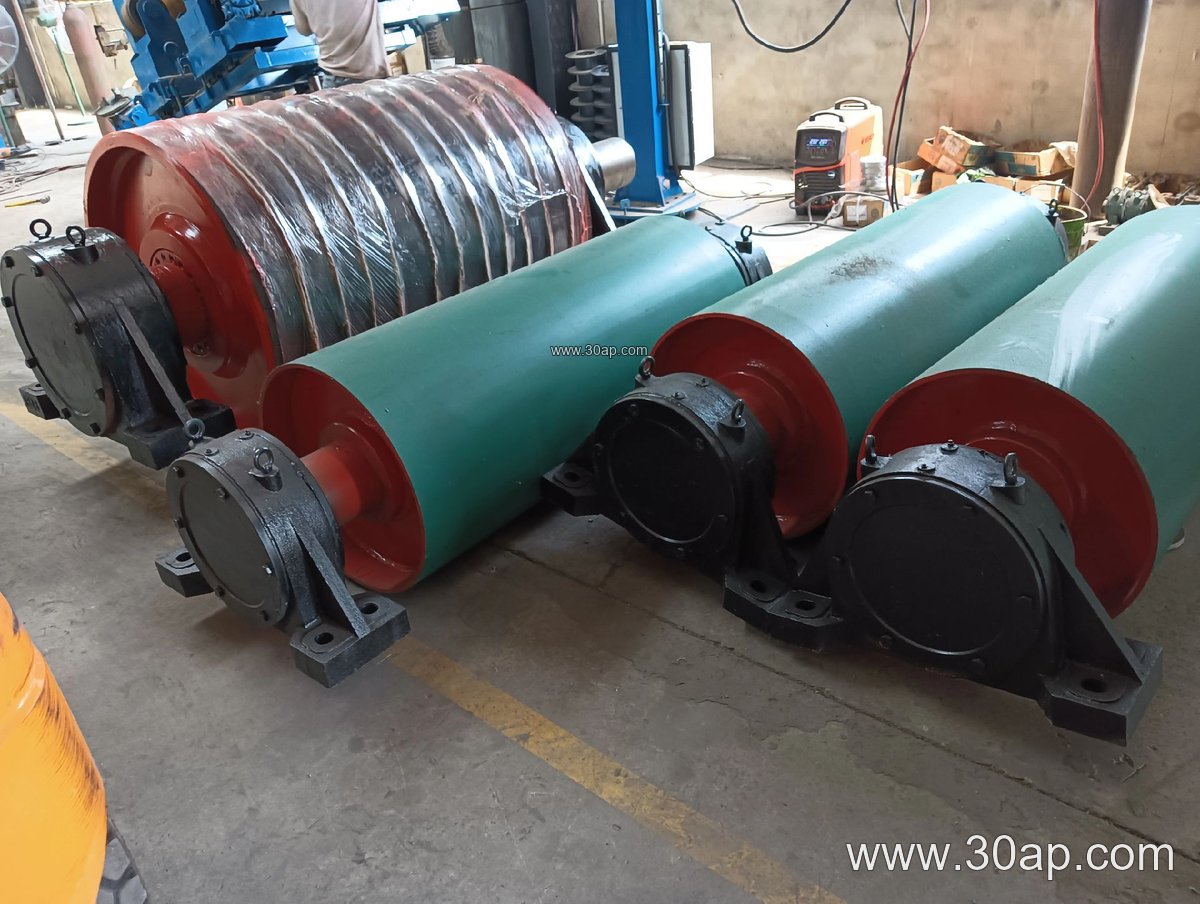
Bearings are usually mounted in pillow blocks or flanged housings that bolt to the conveyor frame. The pulley is paired with a conveyor bracket or tension take-up unit, and the shaft diameter is determined by torque and radial load, not by belt width alone. For a 315 mm drum, shaft sizes in the range of Ø80 to Ø160 are common, but the final value should come from the conveyor designer.
Where It Fits in a Conveyor Line
In a quarry or sand and gravel plant, a 315mm diameter pulley often appears as a bend or tail pulley on a 800 mm or 1000 mm wide belt. In a cement plant, it may be used on clinker or limestone conveyors where dust and heat are present, so a heat-resistant lagging or a plain steel face may be preferred. In a coal washing plant, flame-retardant belting is common, and the pulley surface should be selected to avoid slip without over-stressing the belt.
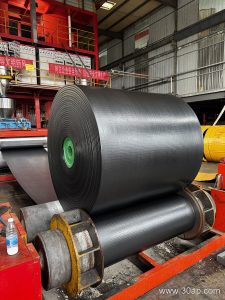
Because the drum is relatively compact, it is also useful in tunnel mucking lines and crusher discharge conveyors where space is tight. It works with a conveyor belt of appropriate tension rating, and it should be aligned with the idler roller frames so the belt enters and leaves the pulley without twisting. When used as a drive pulley, the lagging and wrap angle matter more than the diameter alone; when used as a bend pulley, the bearing load and shaft deflection become the main concerns.
Matching the Pulley to Belt Width and Duty
The 315 mm diameter is not tied to a single belt width. A B650 belt and a B1200 belt can both use a 315 mm pulley if the conveyor design calls for it, but the face width and shaft size will differ. The table below shows common reference combinations; these are examples, not fixed rules.
| Belt width | Typical pulley face width | Common shaft range | Example application |
|---|---|---|---|
| B650 | 750 mm | Ø80–Ø120 | Aggregate transfer |
| B800 | 950 mm | Ø90–Ø140 | Crusher discharge |
| B1000 | 1150 mm | Ø100–Ø160 | Cement clinker line |
| B1200 | 1400 mm | Ø120–Ø180 | Coal washing plant |
For heavy-duty mining conveyors, a larger diameter such as Ø400 or Ø500 may be needed to reduce belt bending stress. Conversely, a 315 mm pulley is often a good fit for medium-duty lines using EP conveyor belt or multi-ply fabric core belting. Steel cord belts usually require larger drum diameters, so the 315 mm size is less common in high-tension mainlines.
Buyer Checklist
- Confirm the pulley position: drive, tail, bend, or tension. Each has different lagging and shaft requirements.
- Check the belt width and the required face width; the pulley face should be wider than the belt.
- Specify lagging type and thickness based on material abrasiveness and moisture.
- Provide the belt tension and torque so the shaft diameter can be calculated correctly.
- Ask for the bearing type, housing style, and mounting dimensions to match the conveyor bracket.
- Consider environmental factors: heat, oil, dust, and flame resistance may affect lagging and bearing seals.
A 315mm diameter conveyor pulley is a versatile component in quarry, cement, and coal handling systems. When the drum is matched to the belt, the load, and the mounting position, it helps keep the conveyor running smoothly with less belt wander and longer splice life.