What a Three-Roll Idler Set Does on a Conveyor
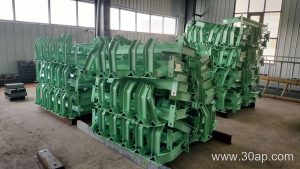
A three-roll idler set is the assembly of three idler rollers mounted on a common frame to support the carrying side of a conveyor belt. The arrangement forms a trough that keeps bulk material centered and reduces spillage. In a quarry, a cement plant, or a coal handling system, this idler group is a workhorse component that directly affects belt life and energy use. Unlike a single-roll or two-roll set, the three-roll design distributes load across three contact points, which is especially useful for wide belts and heavy materials. The set is distinct from the conveyor pulley at the drive or tail end; those components transmit power or change belt direction, while the idler set simply supports the belt along its run.
Construction and Key Parts
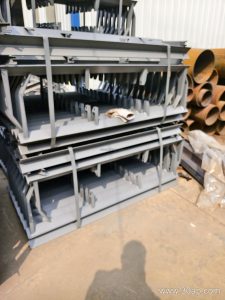
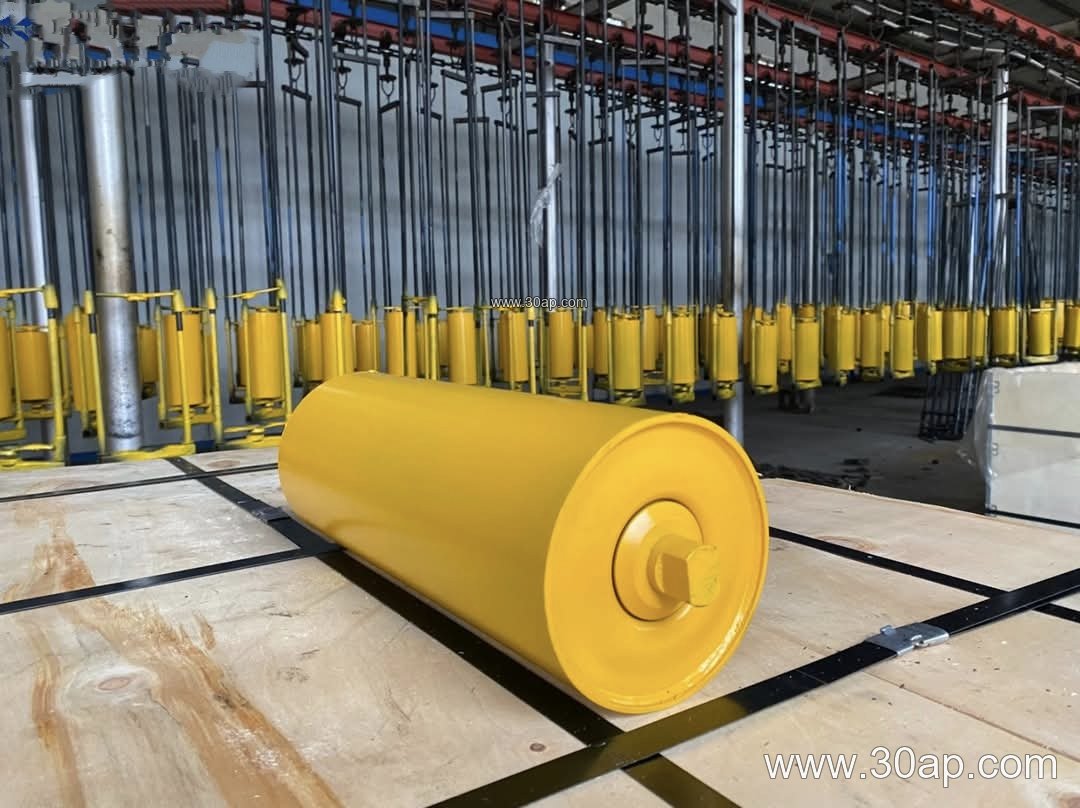
A typical three-roll idler set includes three idler rollers, a sturdy frame, and shaft ends that fit into conveyor brackets. The rollers usually have a steel tube shell, bearing housings, and a sealing system to keep out dust and moisture. Common roller diameters range from Ø63 mm to Ø219 mm, and the choice depends on belt width, load, and speed. The trough angle is another defining feature: 20, 30, 35, and 45 degrees are common, with 35 degrees widely used in aggregate and mining duty. The side rollers are often set at the same trough angle, while the center roller sits flat or slightly inclined. Bearing sizes such as 6204, 6205, 6305, 6306, 6308, and 6310 are frequently used, but the bearing is matched to the roller and load, not to a single belt width. Roll length varies with belt width and trough angle; for example, a three-roll set for a B800 belt often uses side rollers around 315 mm long, while a B1200 set may use 465 mm rollers. These are common references, not fixed rules.
Where Three-Roll Idler Sets Are Used
These idler sets appear in a wide range of bulk handling operations. In a sand and gravel plant, they support the conveyor belt after the crusher and help maintain a steady material profile. In a coal washing plant or a power plant coal yard, the three-roll troughing set keeps coal centered and reduces dust escape. The same component is found in limestone mines, iron ore operations, and port ship-loading conveyors. The set is often used together with a rubber conveyor belt or an EP conveyor belt, and the idler frame must match the belt width and the conveyor bracket spacing. For abrasive materials such as ore, rollers with rubber rings or ceramic surfaces may be selected to extend service life. In underground mining, flame retardant conveyor belt and anti-static properties are important, and the idler set must be compatible with the overall safety design.
How to Choose the Right Set
Buyers should first confirm the belt width, the trough angle, and the expected load. The roller diameter and bearing class should be selected according to the conveyor speed and the material weight, not simply copied from another line. The roller length must match the belt width and the frame design; side rollers and center rollers can have different lengths. The frame should fit the existing conveyor brackets, and the shaft ends should be compatible with the mounting slots. For dusty or wet conditions, sealed bearings and effective labyrinth seals are worth specifying. In high-impact loading zones, a buffer idler set with rubber rings may be a better choice than a standard troughing set, but that is a different subtype used for comparison only. A three-roll idler set remains the main subject here, and its role is steady support along the carrying run.
Common Reference Dimensions
The following table gives typical reference values for three-roll idler sets. Actual dimensions are determined by the conveyor design and should be confirmed with the manufacturer.
| Belt Width | Common Roller Diameter | Typical Side Roller Length | Common Trough Angle |
|---|---|---|---|
| B500 | Ø76 – Ø89 | 200 mm | 20° – 35° |
| B650 | Ø89 – Ø108 | 250 mm | 20° – 35° |
| B800 | Ø89 – Ø127 | 315 mm | 30° – 35° |
| B1000 | Ø108 – Ø133 | 380 mm | 30° – 35° |
| B1200 | Ø108 – Ø159 | 465 mm | 30° – 35° |
| B1400 | Ø127 – Ø159 | 530 mm | 35° – 45° |
| B1600 | Ø133 – Ø178 | 600 mm | 35° – 45° |
| B1800 | Ø159 – Ø194 | 670 mm | 35° – 45° |
| B2000 | Ø159 – Ø219 | 750 mm | 35° – 45° |
These values are examples only. A single belt width can work with more than one roller diameter, and the final selection depends on load, speed, and the conveyor frame. For high-abrasion service, a high abrasion resistant conveyor belt paired with suitable idler rollers can improve overall performance. In cement plants, heat resistant conveyor belt may be needed near kiln areas, while the idler set should be chosen to withstand the same environment.
Maintenance and Buyer Checklist
Regular inspection of the three-roll idler set helps prevent belt damage and downtime. Check for roller seizure, worn shells, and loose brackets. Replace rollers in sets when wear is uneven, and keep the trough angle consistent along the conveyor. Buyers should ask for the roller diameter, bearing type, seal design, and frame dimensions before ordering. The idler set is not interchangeable with a drive pulley or a bend pulley; each has a different function. For projects involving a steel cord conveyor belt or a pipe conveyor belt, the idler set geometry must follow the specific conveyor design. A clear checklist and accurate reference data will help avoid mismatch and keep the conveyor running smoothly.