What a Stone Conveyor Pulley Does
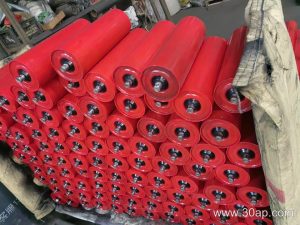
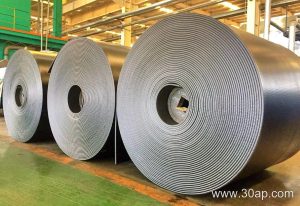
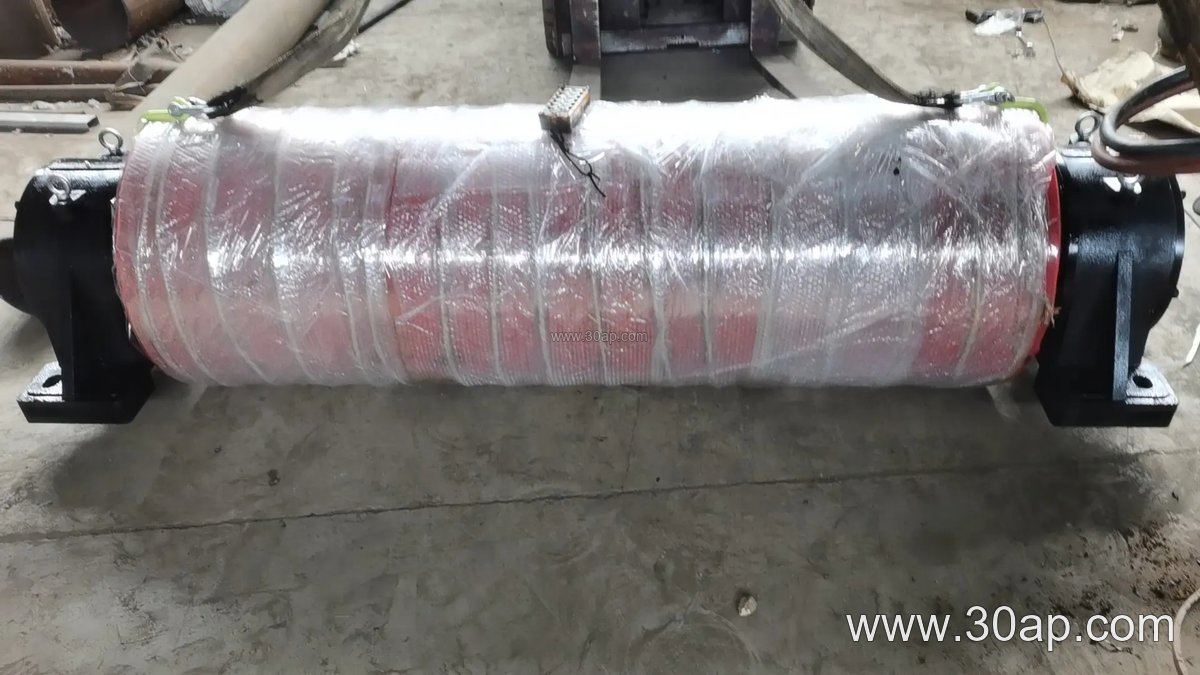
A stone conveyor pulley is the cylindrical component that drives, redirects, or tensions the conveyor belt in a crushing, screening, or bulk handling line. In a quarry or sand and gravel plant, it works alongside the conveyor belt, idler rollers, and conveyor brackets to keep material moving from the primary crusher to the stockpile. Unlike a drive pulley that transmits torque, a tail or bend pulley mainly guides the belt and maintains tracking. These roles are not interchangeable, and each position has its own design priorities.
Construction and Surface Options
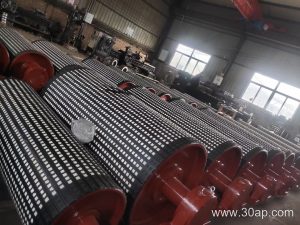
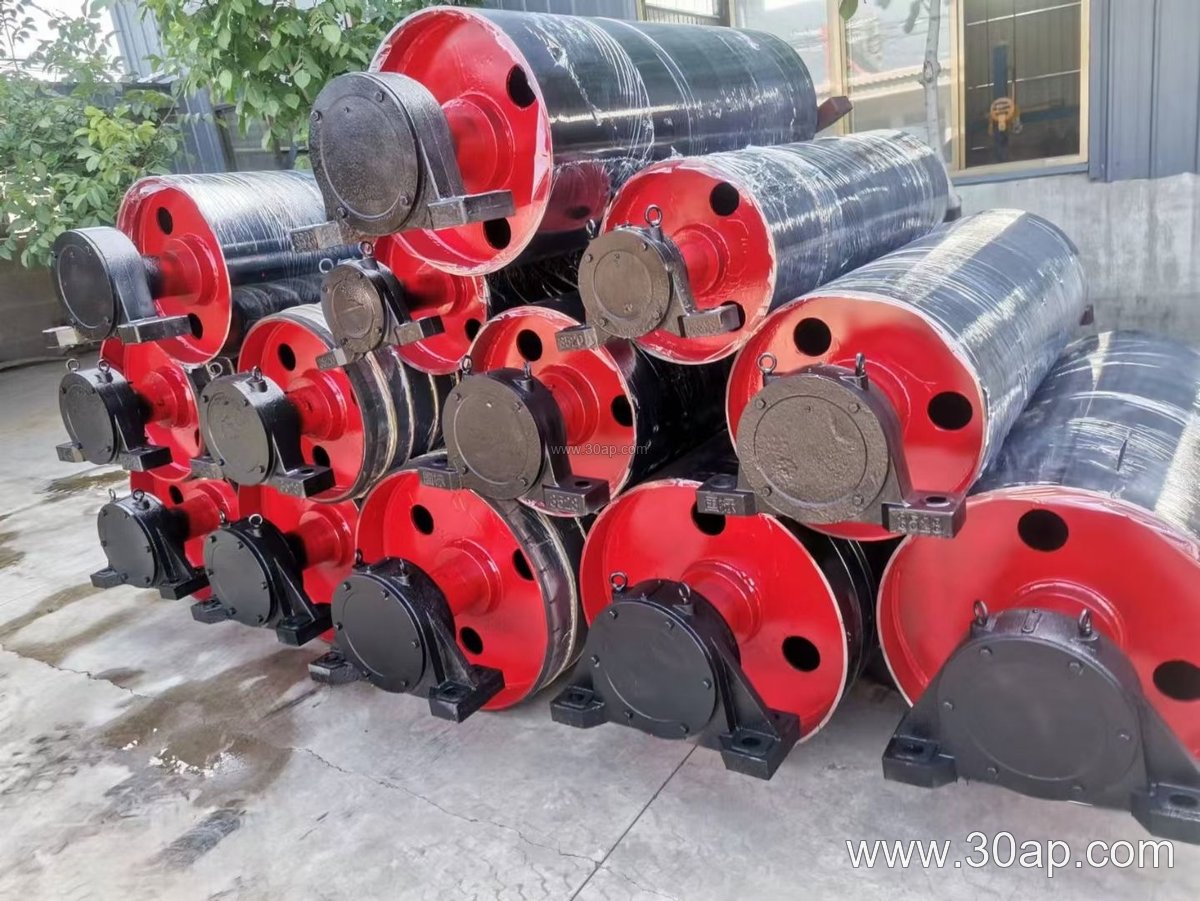
The pulley body is usually a welded steel drum with machined end discs and a shaft. Common surface forms include plain finish, cast rubber, cold-bonded rubber, hot-vulcanized rubber, diamond grooving, herringbone grooving, ceramic lagging, and flat rubber sheet. Lagging thickness often falls in the 8 mm to 20 mm range depending on grip requirements and material abrasiveness.
For a stone conveyor pulley in a dusty quarry, diamond or herringbone lagging helps shed fines and improve traction. Ceramic lagging may suit wet or oily conditions, though it is not mandatory for every installation. A plain steel drum can work in light-duty positions where slip is not a concern.
Where Stone Conveyor Pulleys Are Used
These pulleys appear in limestone mines, iron ore concentrators, coal preparation plants, cement clinker lines, power station coal yards, port bulk terminals, and aggregate crushing circuits. In a tunnel muck removal system, a bend pulley may redirect the belt around a tight curve. In a concrete batching plant, a small tail pulley keeps the belt aligned under the hopper. The duty depends on the position, not on the industry name alone.
Matching Pulley Dimensions to the Conveyor
Belt width and pulley diameter are related but not locked in a one-to-one ratio. A B800 belt might run on a Ø500 pulley in one conveyor and a Ø630 pulley in another, depending on belt tension and wrap angle. The drum face width is usually slightly larger than the belt width to allow tracking. Typical face widths include:
- B400 belt — approximately 500 mm face
- B650 belt — approximately 750 mm face
- B1000 belt — approximately 1150 mm face
- B1400 belt — approximately 1600 mm face
- B1800 belt — approximately 2000 mm face
Shaft diameter is determined by torque and load, not by belt width alone. Common shaft sizes include Ø50, Ø80, Ø120, Ø160, and Ø200. A large pulley does not automatically require a large shaft, and a small pulley does not guarantee a small shaft. The design engineer calculates the required shaft based on the actual conveyor tension and pulley location.
Common Size Combinations
The following combinations are seen in aggregate and mining conveyors, but they are reference examples rather than fixed rules:
- B800 × Ø500 for a tail pulley in a secondary crushing circuit
- B1200 × Ø1000 for a drive pulley on a main overland conveyor
- B1400 × Ø800 for a bend pulley at a transfer point
A stone conveyor pulley with a larger diameter can reduce belt bending stress, while a smaller diameter may fit a compact head or tail section. The choice depends on belt speed, material lump size, and available space.
What Buyers Should Check
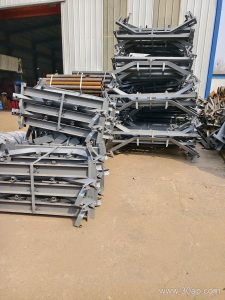
Before ordering, confirm the pulley position: drive, tail, bend, tension, or snub. Each has different load and lagging needs. Check the belt width, required face width, shaft diameter, and bearing type. Ask about lagging material and thickness if the conveyor handles wet stone or fine dust. Verify that the pulley will fit the existing conveyor bracket and that the shaft keyway matches the drive coupling.
For a stone conveyor pulley in a coal mine or cement plant, maintenance access matters. A pulley that is easy to inspect and re-lag saves downtime. Keep spare lagging and bearings on hand if the line runs continuously. Do not assume that a pulley from a different position will drop in without checking the wrap angle and belt tension.
Maintenance Notes
Inspect lagging for wear, cracks, or missing ceramic tiles. Check shaft seals for dust ingress. Listen for unusual noise from bearings. A misaligned stone conveyor pulley can cause belt edge damage and premature idler roller failure. Align the pulley with the conveyor centerline and verify that the belt tracks correctly after any replacement.