What a High Wear-Resistant Ceramic Pulley Is
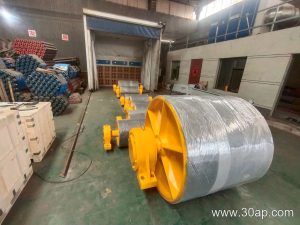
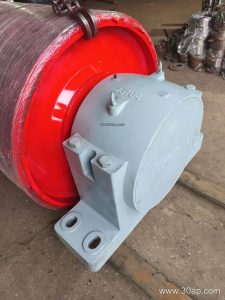
A high wear-resistant ceramic pulley is a conveyor pulley whose shell is protected by ceramic tiles bonded in a rubber matrix, so the contact surface resists abrasion far better than plain steel or ordinary rubber lagging. It is an accurate equivalent of a ceramic-lagged conveyor pulley, and it is usually specified on drive pulleys where slip and wear are both concerns. In a quarry, a coal washing plant or a power plant coal yard, the pulley that turns the belt often wears fastest, because it carries the full wrap of a loaded conveyor belt and transmits the drive torque.
The ceramic is not the whole story. The pulley body, the lagging bond and the shaft all matter, and the ceramic tiles only help when the rest of the assembly is built for the load.
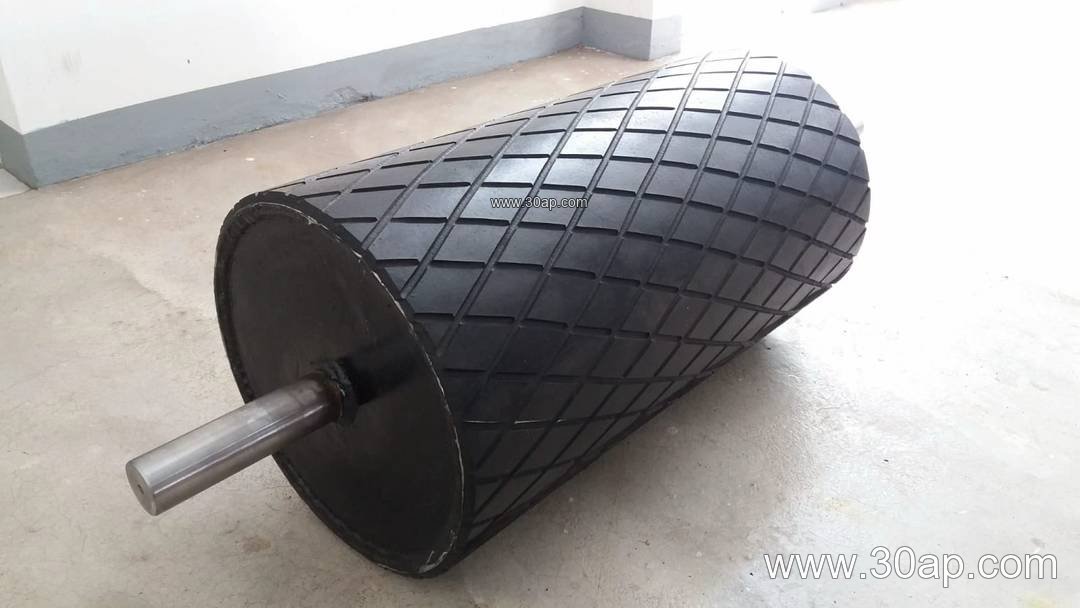
How the Ceramic Lagging Is Built
Most designs start with a steel shell machined to the required diameter, then a rubber layer is applied by hot vulcanisation or cold bonding. Ceramic tiles, often small squares or rectangles with raised studs, are embedded in that rubber so their tips stand proud of the surface. The studs press into the belt cover and improve grip, while the rubber between the tiles absorbs impact and keeps the tiles in place. Tile size, pattern and spacing vary between suppliers, so the drawing matters more than the marketing name.
- Shell: welded or seamless steel tube, machined true
- Lagging: rubber base with embedded ceramic tiles
- Bond: hot vulcanised or cold bonded, selected for the duty
- Surface form: ceramic studded, usually compared with plain, diamond or herringbone rubber lagging
Ceramic lagging is a surface form, not a pulley type. A drive pulley can be ceramic lagged, and so can a bend pulley, but the two are not interchangeable in function. Drive pulleys transmit torque; tail pulleys guide the returning belt; bend pulleys change its direction. Mentioning a tail or bend pulley only helps to show where ceramic lagging is worth the extra cost.
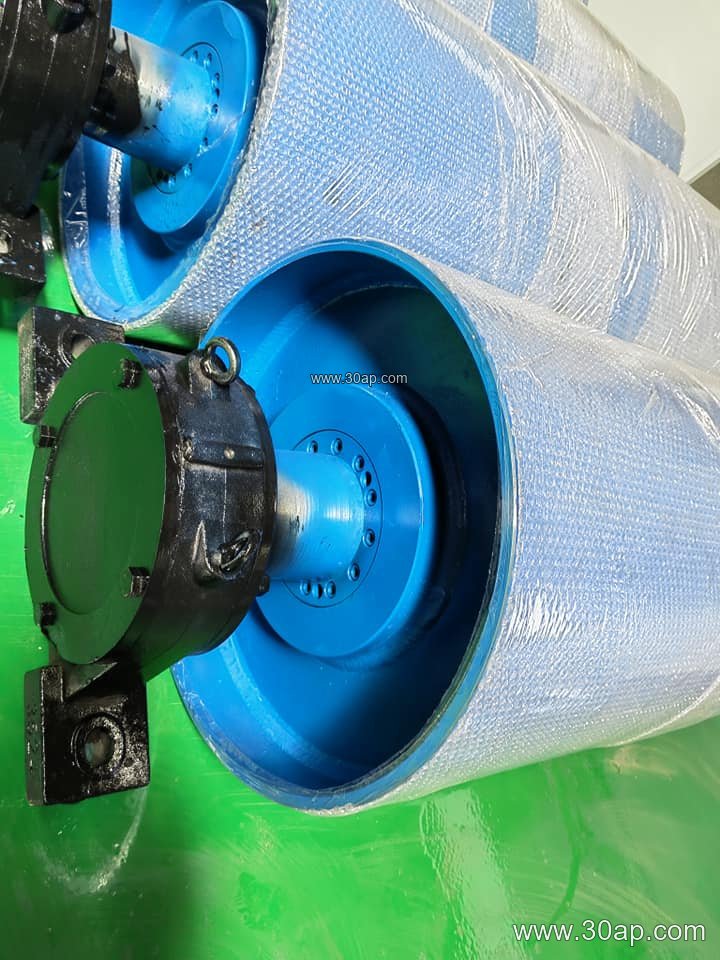
Where It Fits on the Conveyor
The strongest case is the drive or head pulley on a short, high-tension conveyor that handles abrasive bulk material. Sand and gravel lines, iron ore transfer points, cement clinker handling and crushing circuits all produce fine grit that works into ordinary rubber lagging and polishes it smooth. Once the lagging is polished, the belt slips, the shell heats up and wear accelerates. Ceramic studs keep a biting surface longer.
In a coal preparation plant, a ceramic-lagged drive pulley on a coal mining conveyor belt can reduce slip on a wet, dusty belt. In a port bulk terminal, the same approach suits a ship loading conveyor where the belt runs at high tension. Ceramic lagging is less useful on a small tail pulley with a light wrap, where a plain or rubber-lagged surface is often enough.
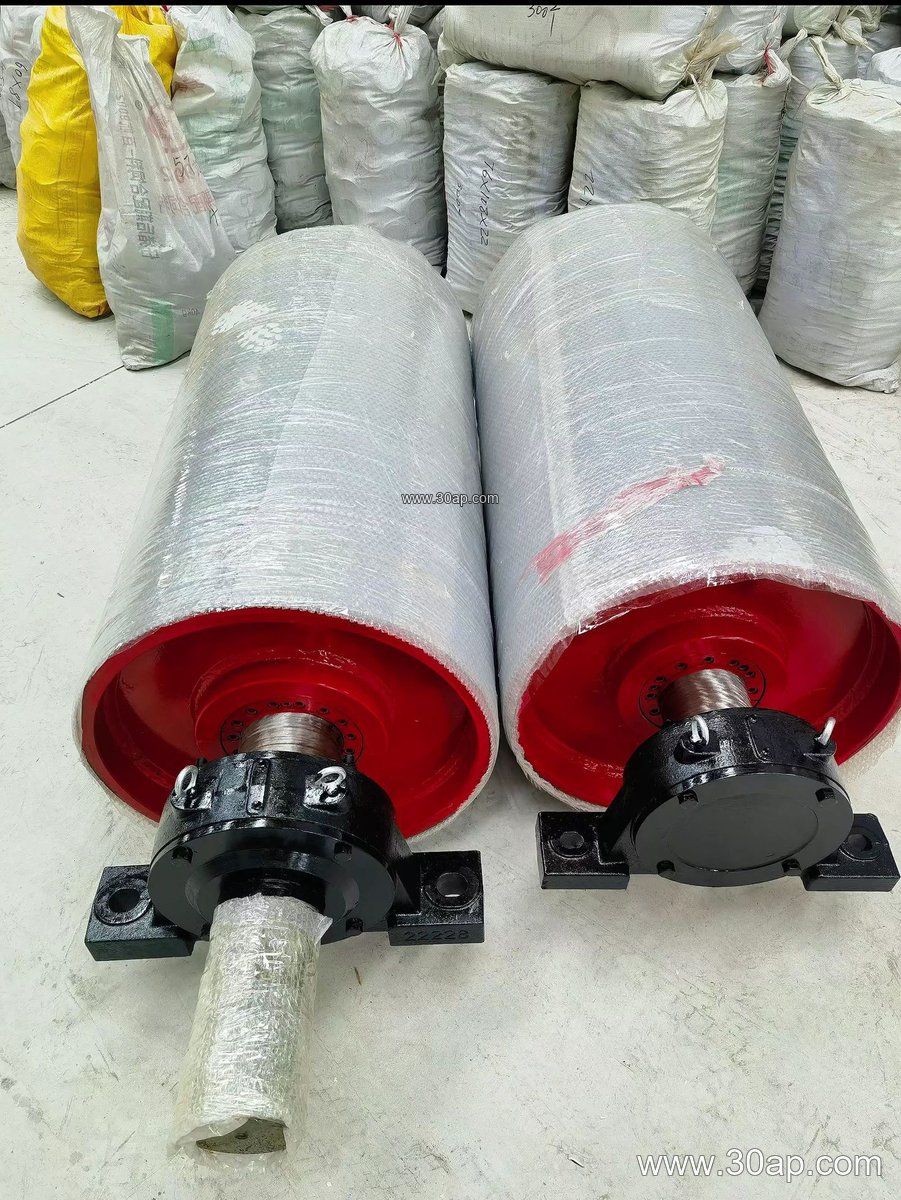
Sizes and Selection Points
Dimensions follow the conveyor design, not a catalogue rule. A common relationship is that the shell face is wider than the belt, so a B800 belt usually runs on a pulley face around 950 mm, and a B1200 belt on about 1400 mm. Diameter is set by belt tension, wrap angle and shaft strength. The examples below are reference combinations only, not fixed pairings.
| Belt width | Typical pulley face | Example diameter | Typical lagging thickness |
|---|---|---|---|
| B500 | about 600 mm | Ø315 to Ø500 | 8 to 12 mm |
| B650 | about 750 mm | Ø400 to Ø630 | 10 to 15 mm |
| B800 | about 950 mm | Ø500 to Ø800 | 10 to 15 mm |
| B1000 | about 1150 mm | Ø630 to Ø1000 | 12 to 20 mm |
| B1200 | about 1400 mm | Ø800 to Ø1000 | 12 to 20 mm |
| B1400 | about 1600 mm | Ø800 to Ø1250 | 15 to 20 mm |
Shaft diameter is determined by torque and bearing load, commonly in the Ø80 to Ø200 range for these sizes, and it should never be picked from belt width alone. A B1200 × Ø1000 drive pulley and a B800 × Ø500 tail pulley may both appear on the same conveyor, with completely different shaft and lagging requirements.
What a Buyer Should Check
- Confirm the pulley role: drive, head, tail, take-up or bend, since each has a different duty.
- Ask for the tile pattern and rubber hardness, and how the lagging is bonded to the shell.
- Check that the face width suits the belt and that the shaft is sized from the actual torque.
- Match the lagging to the belt: an abrasion resistant conveyor belt and a ceramic pulley work well together, but a very stiff belt may need a larger diameter.
- Consider the environment. Wet, dusty or oily conditions change the friction requirement.
- Keep spare conveyor pulley units or lagging sheets for critical drives, and inspect tile loss during shutdowns.
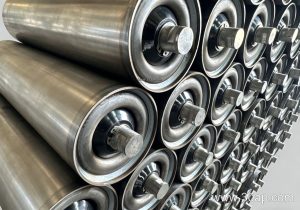
Ceramic lagging is not a substitute for correct alignment. A misaligned conveyor bracket or a worn idler roller can damage the best pulley, so check the whole run, not just the lagging. When the drive is properly sized and the belt is tracked, a high wear-resistant ceramic pulley gives long service in the abrasive duty that wears out ordinary lagging first.