What a Large-Diameter Conveyor Pulley Does
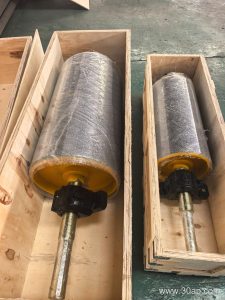
A large-diameter conveyor pulley is the rotating drum that turns the belt, carries the load at a transfer point, or redirects the belt run in a bulk handling system. In practice, the term usually points to a drive pulley or head pulley with a shell diameter from roughly Ø800 mm upward, though tail and bend positions can also use oversized drums where belt stiffness or wrap angle demands it. The larger the drum, the lower the bending stress on the belt carcass and the longer the fatigue life of the splice. That is why quarry, iron ore, and power plant coal handling lines often specify a heavy-duty mining conveyor belt paired with a drum in the Ø1000 to Ø1600 mm range.
How the Drum Is Built
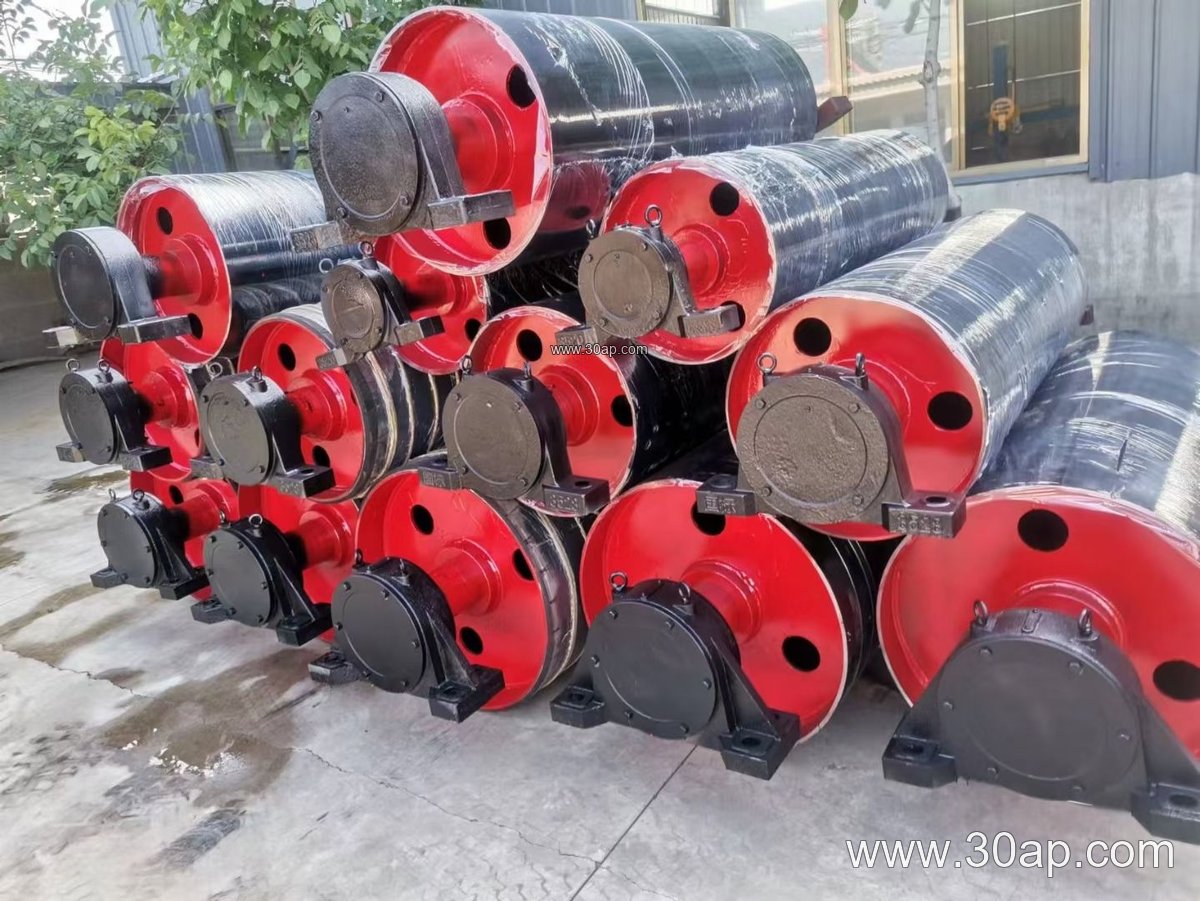
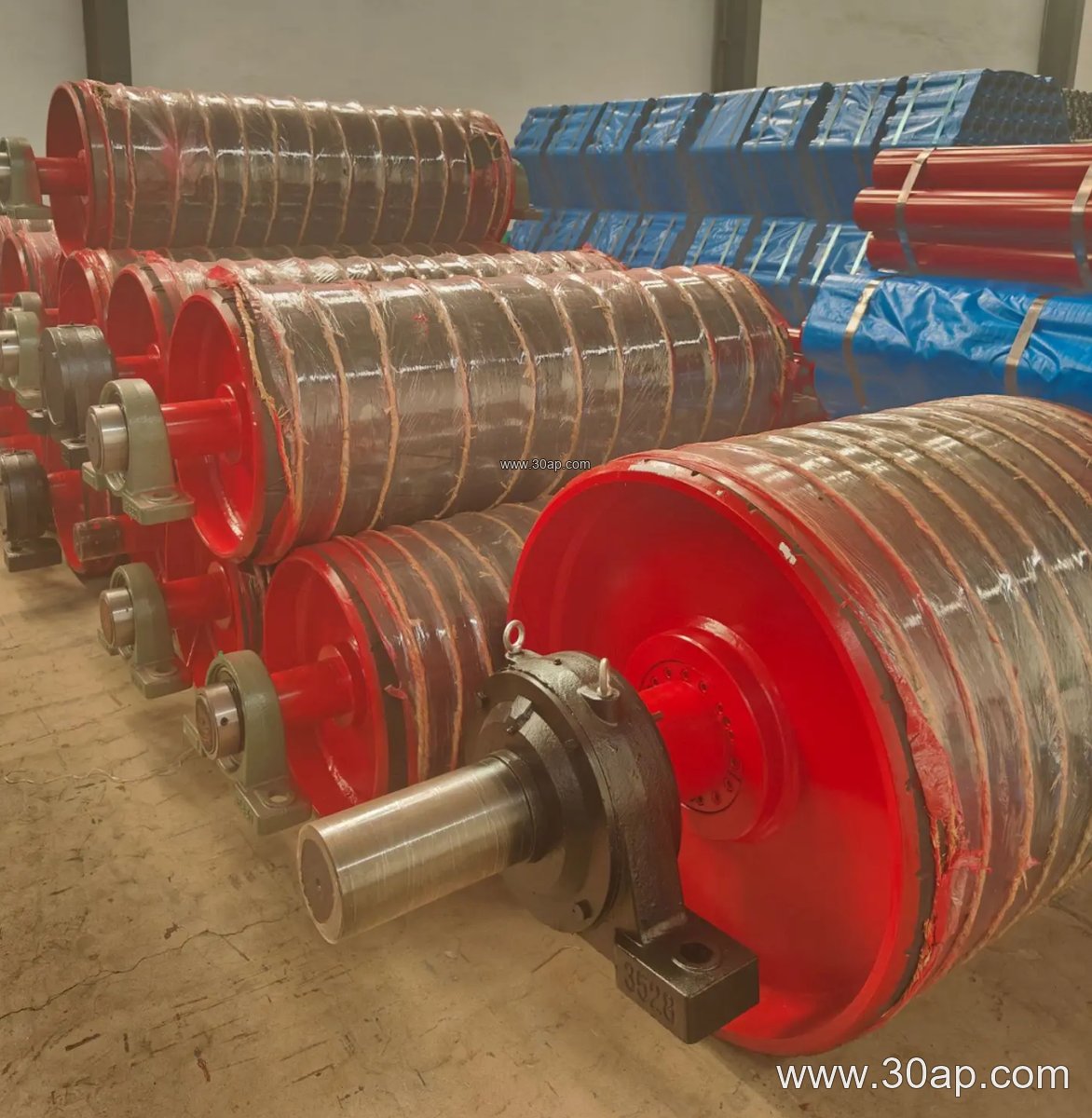
The structure is simple in principle and demanding in execution. A rolled steel shell is welded to two end discs, which are keyed or shrink-fitted to a through shaft. The shaft is supported by bearing housings mounted on a conveyor bracket welded to the main frame. Larger units normally use a welded hub-and-disk design rather than a cast drum, because welded fabrication scales better at big diameters.
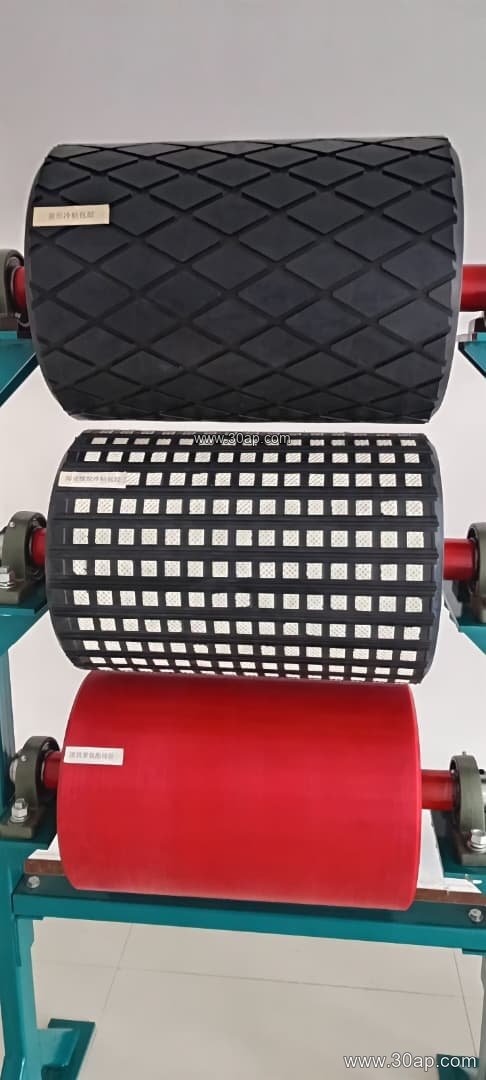
Surface treatment matters as much as the shell. Plain finish is common on bend pulleys where slip is not a concern. Drive and tail positions usually receive rubber lagging, either cold-bonded or hot-vulcanized, in plain, diamond, or herringbone pattern. Ceramic lagging is chosen where abrasive fines and wet conditions would polish a rubber surface quickly. Lagging thickness commonly runs 8, 10, 12, 15, or 20 mm depending on duty.
Where Oversized Drums Fit in the Plant
Two settings show the value clearly. In a limestone quarry primary crushing station, a head pulley of Ø1250 mm or more keeps a thick abrasion resistant conveyor belt from taking a tight bend as it discharges onto the screen. In a coal-fired power plant coal yard, a large-diameter tail pulley reduces material build-up problems because the shell turns slower and the belt wraps more smoothly.
Other typical locations include cement clinker lines, copper and gold ore concentrators, port ship loaders, and tunnel spoil removal conveyors. When the belt carries a steel cord conveyor belt or a high-tension EP conveyor belt, the drum diameter is set by the belt manufacturer’s minimum pulley recommendation, not by convenience.
Reading Diameter Against Belt Width
Belt width and pulley diameter are related but not locked together. A wider belt needs a wider shell face, while the diameter is driven by tension, belt thickness, and the required wrap angle. The shell face is normally slightly wider than the belt, for example a B800 belt on a roughly 950 mm face, or a B1400 belt on a face near 1600 mm. The same B1200 belt might run on a Ø800 mm bend pulley at low tension and a Ø1250 mm drive pulley at the head.
Shaft diameter follows torque and bearing load, so it is calculated from the drive power and belt pull. Common shaft sizes in this class include Ø120, Ø140, Ø160, Ø180, and Ø200 mm, but a buyer should never assume a shaft size from belt width alone.
Reference Data for Early Planning
The table below gives indicative combinations only. Final values come from the conveyor design calculation and the belt supplier’s recommendation.
- Belt width B650, shell face about 750 mm, common diameter Ø400 to Ø630 mm
- Belt width B800, shell face about 950 mm, common diameter Ø500 to Ø800 mm
- Belt width B1000, shell face about 1150 mm, common diameter Ø630 to Ø1000 mm
- Belt width B1200, shell face about 1400 mm, common diameter Ø800 to Ø1250 mm
- Belt width B1400, shell face about 1600 mm, common diameter Ø1000 to Ø1400 mm
- Belt width B1600, shell face about 1800 mm, common diameter Ø1250 to Ø1600 mm
- Belt width B1800, shell face about 2000 mm, common diameter Ø1400 to Ø1800 mm
Lagging thickness is often specified alongside diameter, and a Ø1000 mm drum with 15 mm diamond lagging behaves differently from the same shell with 8 mm plain rubber. Keep both numbers on the drawing.
What to Confirm Before Ordering
Start with the belt data: carcass type, rated tension, and minimum pulley diameter. Then confirm the position in the conveyor, whether the drum is a drive, tail, or bend unit, because the load direction and wrap angle change the bearing selection. Check the shaft diameter and the keyway against the coupling and gearbox. Confirm lagging pattern and thickness, and whether the surface must resist oil, heat, or flame. Finally, verify the mounting dimensions against the existing conveyor bracket and the clearance to the nearest idler roller, since a larger drum can reduce the gap available for belt training.
For related belt and component choices, see EP conveyor belt, steel cord conveyor belt, and conveyor pulley references before finalizing the drum specification.