What a Conveyor Side Guide Roller Does
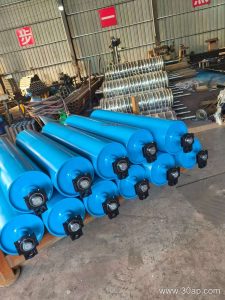
A conveyor side guide roller is a small-diameter roller mounted vertically or at a slight angle along the edges of a conveyor belt, usually just ahead of a loading point, a transfer chute, or a section where the belt tends to wander. Its job is not to carry the main material load. Instead, it contacts the belt edge and keeps the conveyor belt centered on the structure, reducing edge damage and spillage. In a quarry, a cement plant, or a power plant coal yard, a drifting belt can rub against the frame and fray within days, so these guide rollers act as a simple mechanical fence.
The product is also described as a belt edge guide roller or side guide idler. It should not be confused with a return roller, a troughing idler, or a bend pulley; those carry the belt or change its direction, while the side guide roller only limits lateral movement.
Construction and Typical Materials
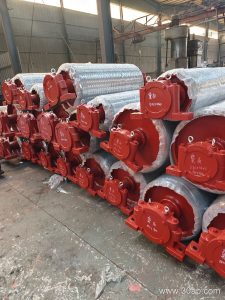
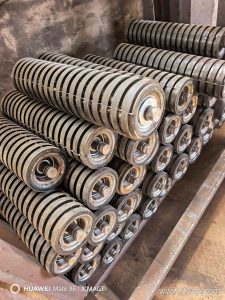
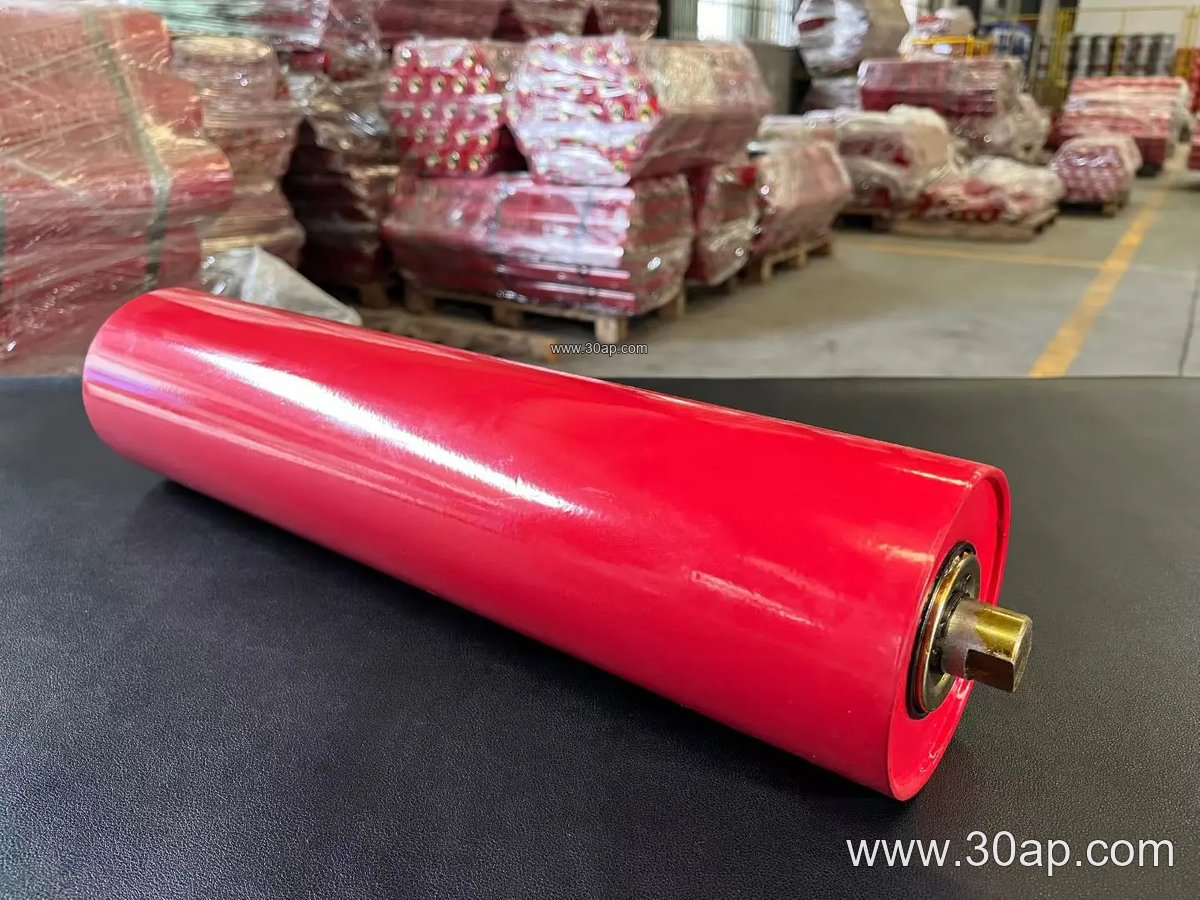
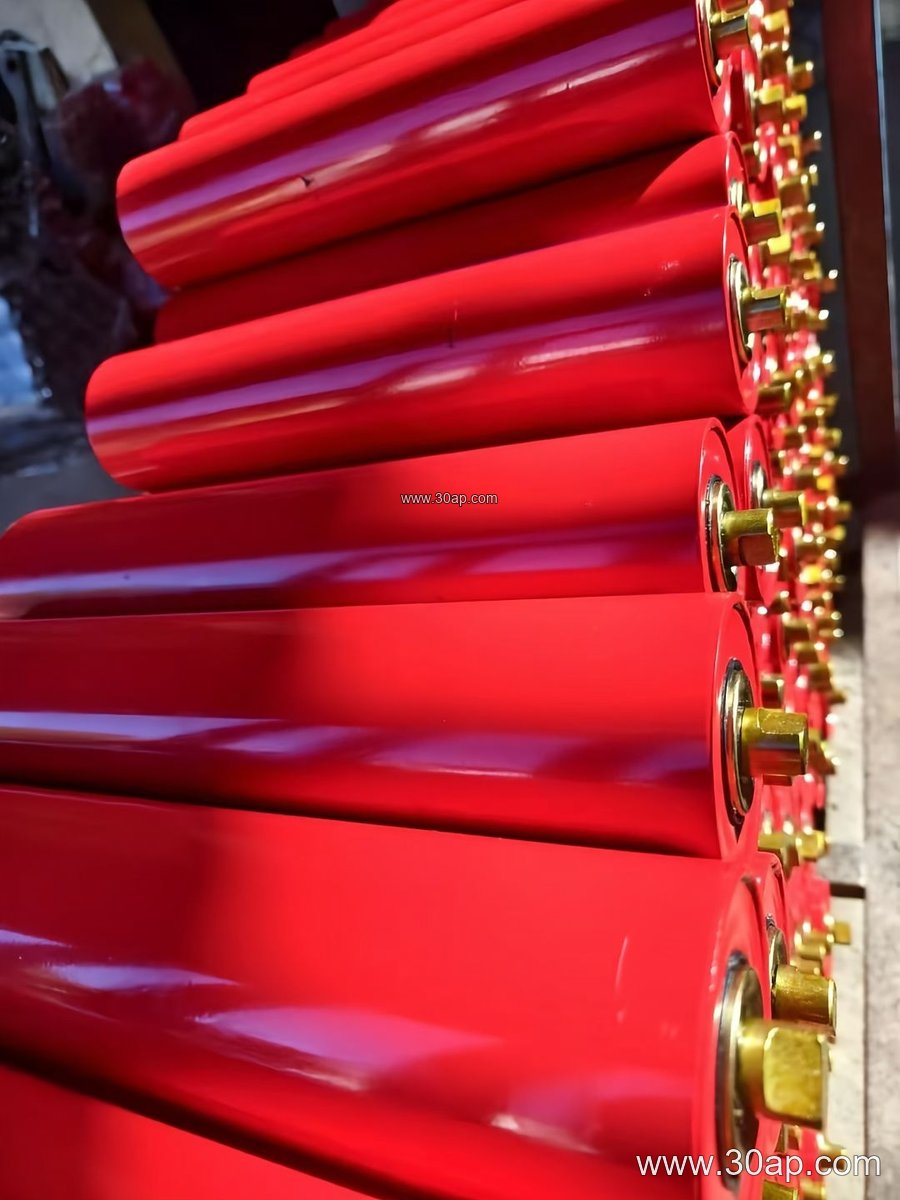
Most side guide rollers use a steel tube body with a sealed bearing inside, similar in principle to an idler roller but shorter and often smaller in diameter. Common body diameters for this duty are Ø63, Ø76, Ø89, and Ø102, though larger sizes may be selected when the belt is heavy and fast. The roller surface may be plain steel, nylon, or covered with a rubber ring to protect the belt edge from abrasion. Bearing sizes such as 6204, 6205, or 6305 are common, but the correct bearing depends on load and shaft design, not on belt width alone.
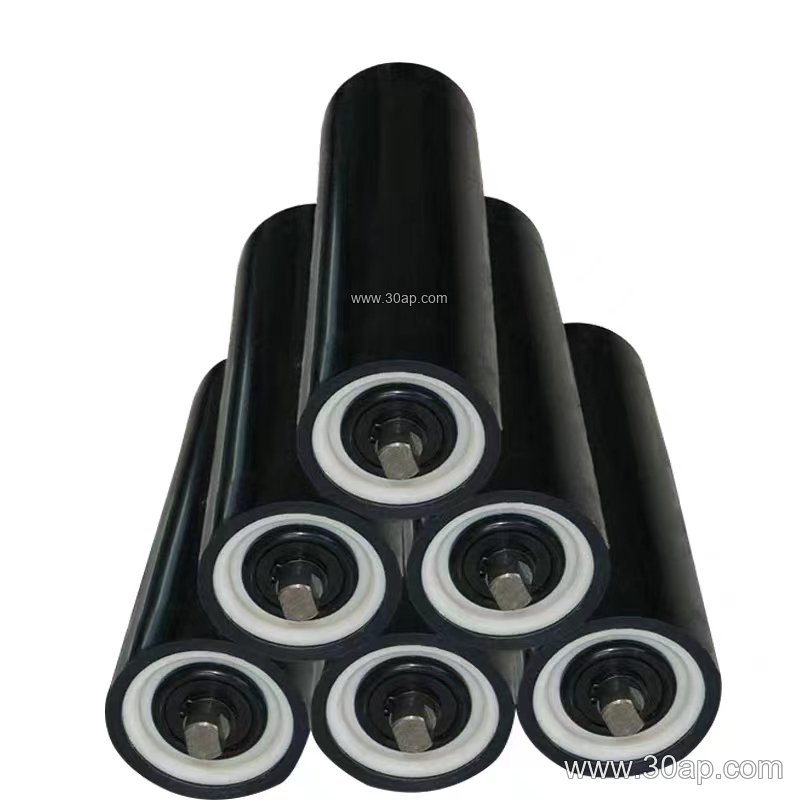
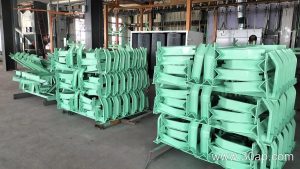
Mounting is usually through a bracket fixed to the conveyor frame. The conveyor bracket allows the roller to be adjusted in and out so the gap to the belt edge can be set accurately. A simple support shaft, a pair of sealed bearings, and a protective cap complete the assembly. Because the roller turns only when the belt touches it, smooth rotation and good sealing matter more than high load capacity.
Where It Fits on the Conveyor
Side guide rollers appear in pairs, one on each side of the belt, and sometimes in short series where alignment is critical. Typical locations include:
- Downstream of a crusher discharge or transfer chute in an aggregate or ore line
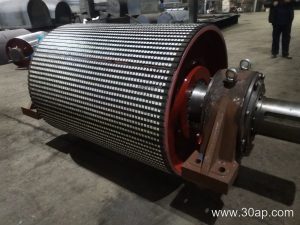
- Before and after a belt splice or a transition zone near a conveyor pulley
- On the approach to a tripper or a loading point in a coal handling system
- Along inclined sections where material shift pushes the belt sideways
They are also used on wider belts, such as 1200mm or 1400mm EP conveyor belt installations, where edge control is harder to maintain by training idlers alone. The guide roller does not replace a self-aligning idler; it complements it by giving the belt a physical limit at the edges.
Selection Points for Buyers
The first question is belt width and edge condition. A roller that is too large may hold the belt too far inboard, while an undersized one may wear quickly. The following reference table shows common combinations, but these are examples and should be confirmed against the actual conveyor design.
| Belt width | Typical guide roller diameter | Typical roller length | Common bearing reference |
|---|---|---|---|
| B500 | Ø63 mm | about 100 mm | 6204 |
| B650 | Ø76 mm | about 120 mm | 6204 / 6205 |
| B800 | Ø89 mm | about 150 mm | 6205 |
| B1000 | Ø89 mm | about 180 mm | 6205 / 6305 |
| B1200 | Ø102 mm | about 200 mm | 6305 |
| B1400 | Ø102 mm | about 220 mm | 6305 / 6306 |
| B1600 | Ø108 mm | about 250 mm | 6306 |
Other factors to check include the roller surface, the shaft fixing method, and the mounting bracket type. For dusty sites such as a limestone mine or a sand and gravel plant, sealed bearings and a rubber-covered surface are often preferred. For a food or fertilizer plant, a smooth nylon or stainless option may be more suitable, and the belt itself may be a food grade or oil resistant type. Buyers should also confirm the available adjustment range, because a bracket with too little travel cannot correct a belt that has already been misaligned.
Maintenance and Common Mistakes
Inspect guide rollers during routine belt checks. A seized roller will wear a flat spot into the belt edge, and a missing roller leaves the edge unprotected. Keep the gap between roller and belt small but not tight; the roller should turn freely when the belt touches it and stay idle otherwise. Replace worn rubber rings before they expose the steel body. Do not use a guide roller to force a badly loaded belt back into line, since persistent misalignment usually points to off-center loading, a worn conveyor pulley, or damaged idlers upstream.
When ordering, state belt width, belt type, mounting position, and the required roller diameter and length. A clear drawing of the bracket saves time. The side guide roller is a small part, but on a busy coal conveyor or a quarry line it protects the most expensive component of all: the belt itself.