What a Carbon Steel Conveyor Bracket Does on a Belt Conveyor
A carbon steel conveyor bracket is the structural support that holds idler rollers in the correct position under or above a conveyor belt. It carries the weight of the belt, the material load and the roller itself, and it sets the trough angle that shapes the belt into a carrying profile. On a quarry conveyor or a cement plant transfer line, these brackets are the quiet workhorses that keep the belt tracking steadily between the head and tail pulleys.
Because the frame is made from carbon steel, it offers a practical balance of strength, weldability and cost. It is typically fabricated from angle steel, channel steel or folded steel plate, then drilled and sometimes galvanized or painted for corrosion protection. The bracket is not a one-piece universal part; the troughing bracket, return bracket and transition bracket each serve a different position along the conveyor.
Common Bracket Types and Where They Sit
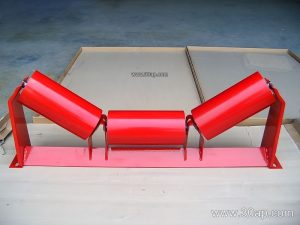
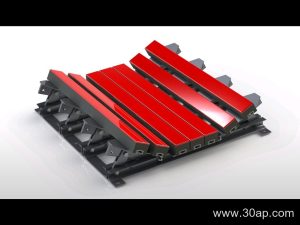
The carrying side of a conveyor usually uses a troughing bracket, which holds three idlers in a trough shape. A transition bracket sits near the head or tail pulley and gradually changes the belt from flat to troughed. On the return side, a flat return bracket or a V-return bracket supports the belt after it has discharged. Impact brackets with cushioning rollers are placed under the loading point, while self-aligning brackets help correct belt drift. Adjustable brackets allow the trough angle to be changed on site.
- Troughing bracket — three-roller carrying support
- Transition bracket — smooths the change in belt profile near pulleys
- Return bracket — supports the empty belt on the lower run
- Impact bracket — absorbs loading shock at the feed point
- Self-aligning bracket — assists belt centering
Each type is matched to the conveyor layout. A bracket used near a bend pulley is not the same as a troughing bracket on a straight run, and the two should not be swapped.
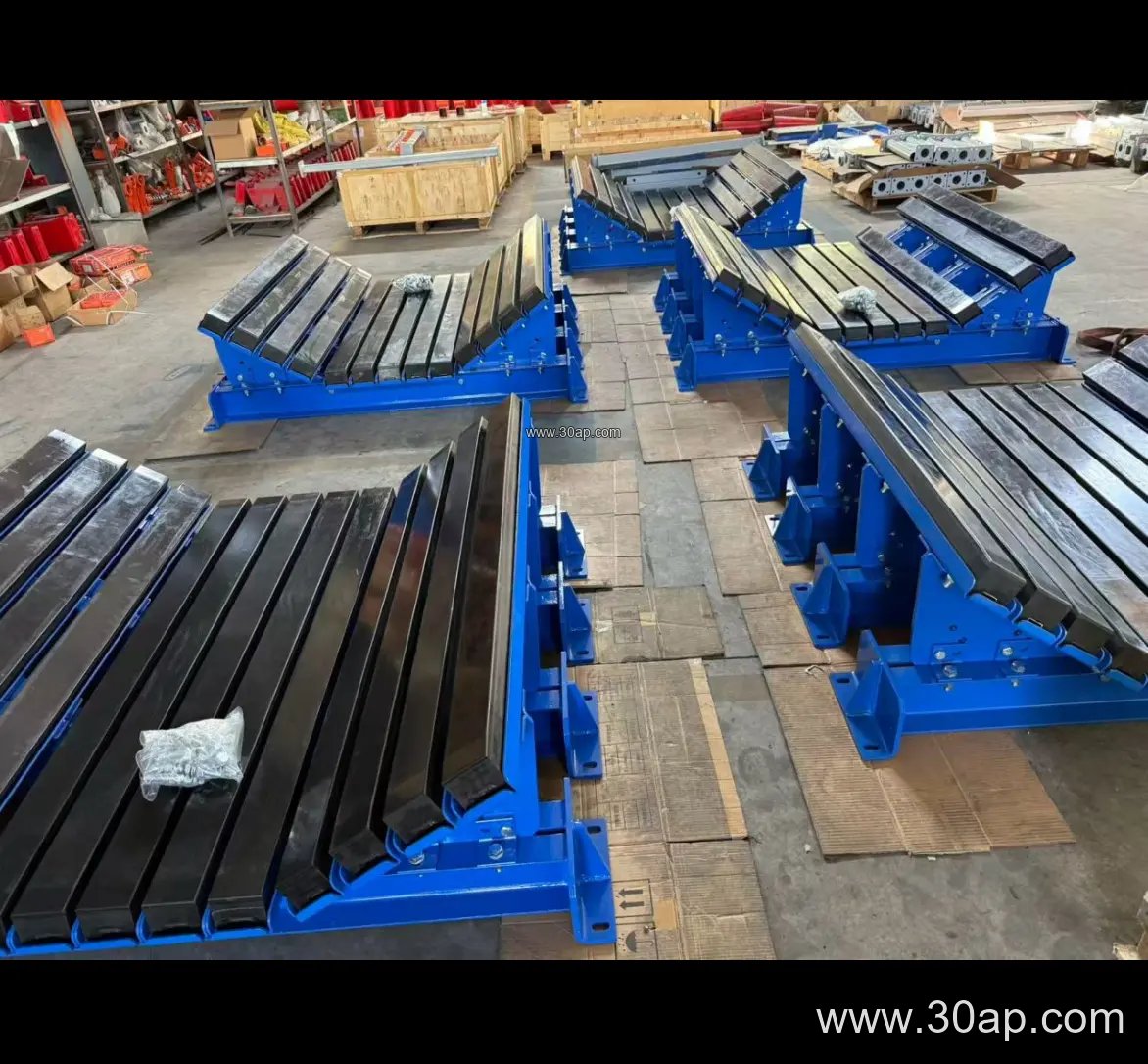
Trough Angle, Belt Width and Roller Diameter
Trough angle and roller diameter are chosen together with belt width and material characteristics. Common trough angles are 20, 30, 35 and 45 degrees. Adjustable brackets can be set within this range, while forward-tilted brackets are often set at about 1.5 to 2 degrees to help belt tracking. Roller diameters such as Ø89, Ø108, Ø133, Ø159 and Ø194 appear across different conveyor sizes.
The table below shows typical reference combinations. These are examples, not fixed rules, and final values should follow the conveyor design.
| Belt Width | Trough Angle | Roller Diameter | Typical Use |
|---|---|---|---|
| B500 | 20–30 degrees | Ø89 | Light aggregate lines |
| B650 | 30 degrees | Ø89 | Small quarry conveyors |
| B800 | 35 degrees | Ø108 | Sand and gravel plants |
| B1000 | 35–45 degrees | Ø108–Ø133 | Cement and power plant coal handling |
| B1200 | 45 degrees | Ø133 | Heavy bulk material transport |
| B1400 | 35–45 degrees | Ø133–Ø159 | Iron ore and large stone crushing |
| B1600 | 35–45 degrees | Ø159 | High-capacity mining conveyors |
| B1800 | 35–45 degrees | Ø159–Ø194 | Port and bulk terminal lines |
A wider belt does not automatically require a single trough angle or roller diameter. Mounting hole spacing and crossbeam length change with belt width and trough angle, so bracket dimensions are confirmed against the conveyor drawing rather than assumed.
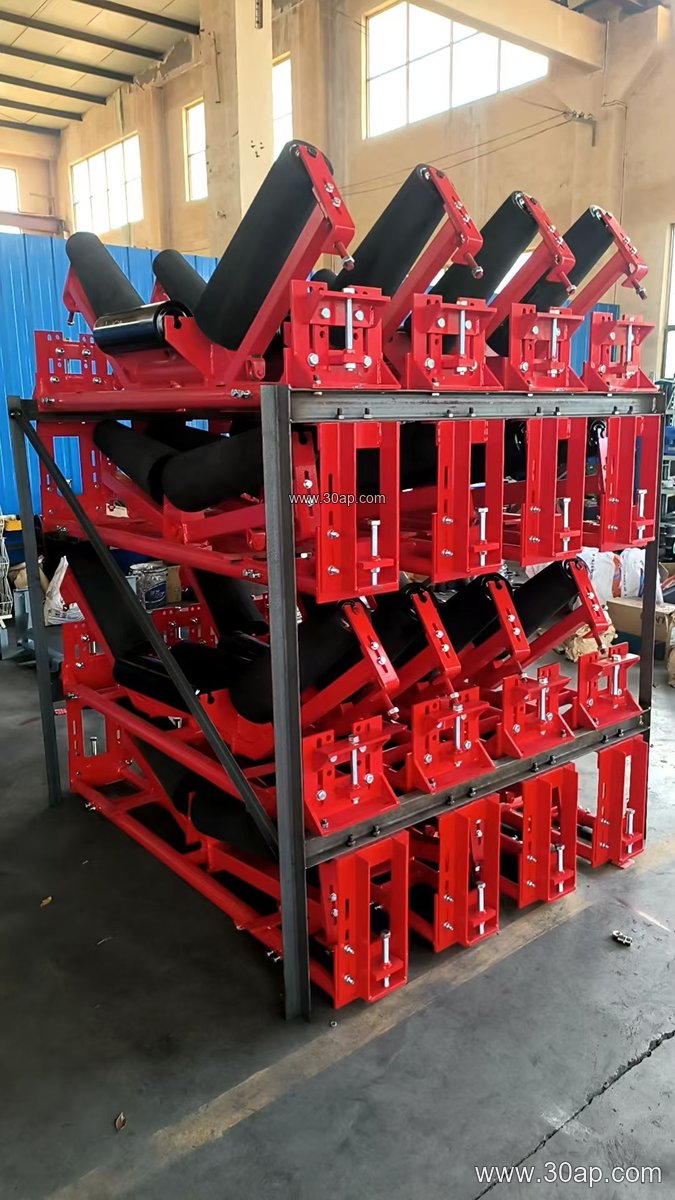
Matching the Bracket to the Belt and Rollers
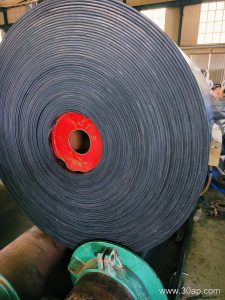
The bracket works as part of a system. A rubber conveyor belt with a heavy carcass may need closer roller spacing, and an abrasion resistant conveyor belt in a crusher discharge area benefits from impact brackets. In coal mining, a flame retardant conveyor belt is often paired with well-aligned troughing brackets to reduce misalignment and frictional heat. Where a steel cord conveyor belt carries high tension, the bracket frame must be stiff enough to keep the rollers square to the belt path.
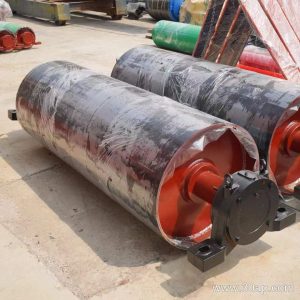
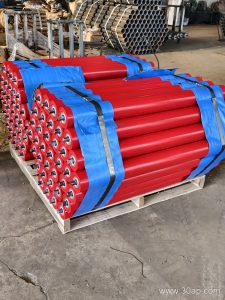
On the return run, an idler roller supported by a flat or V-return bracket keeps the belt from sagging. Near the discharge, the conveyor pulley and the transition bracket must work together so the belt does not fold sharply. In a cement plant or a power plant coal yard, this coordination directly affects belt life and dust control.
Buyer Checklist Before Ordering
Before purchasing carbon steel conveyor brackets, confirm the belt width, the required trough angle, the roller diameter and the mounting dimensions. Ask whether the bracket should be fixed or adjustable, and whether a painted or galvanized finish is needed for the site environment. Check that the bracket type matches its position — carrying, return, transition or impact — because these are not interchangeable. For a mining conveyor belt or a quarry conveyor belt installation, also confirm the hole pattern matches the idler roller frame you plan to use.
Finally, review the drawing for crossbeam length and hole spacing, since these vary with belt width and trough angle. A bracket that fits one conveyor may not fit another, even when both use the same belt width. Clear specification at the ordering stage avoids field modification and keeps the conveyor running smoothly.