What the Head Pulley Does
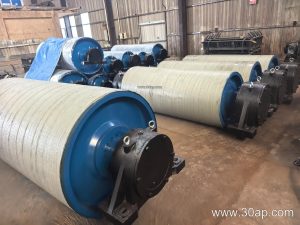
The head pulley sits at the discharge end of a belt conveyor and is normally the drive point. Its shell grips the conveyor belt, turns it, and throws the load into the chute or onto the next machine. Because it transmits the full drive torque, it is usually the largest and heaviest pulley in the system. In a quarry, an iron ore plant, or a cement kiln feed line, the head pulley is the component that decides whether the belt runs smoothly under load or slips and stalls.
Engineers also call this part the drive pulley or the discharge pulley, and the terms are interchangeable for the same assembly. It should not be confused with the tail pulley, which turns freely at the loading end, or with a bend pulley, which only redirects the belt path.
How the Assembly Is Built
A typical head pulley is a welded steel shell with machined end discs, a shaft pressed or keyed into the hubs, and bearing housings bolted to the conveyor bracket. The shell surface is often plain steel, but most heavy service units carry a rubber lagging to raise friction and protect the belt.
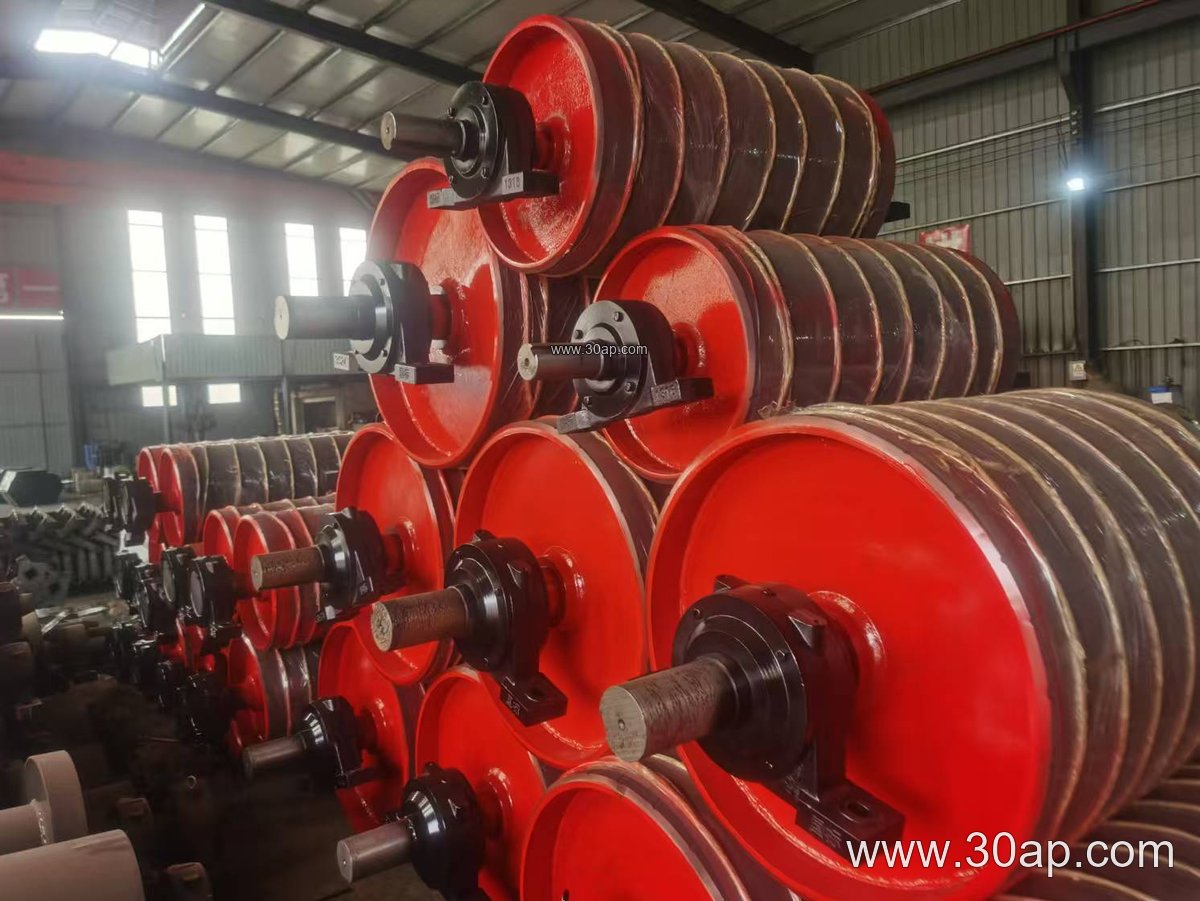
- Shell and shaft — wall thickness and shaft diameter follow the calculated torque and radial load, not the belt width alone.
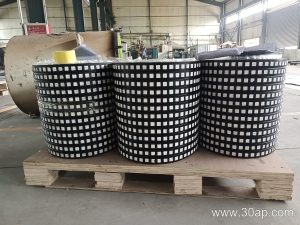
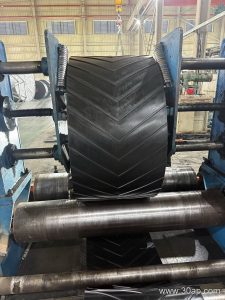
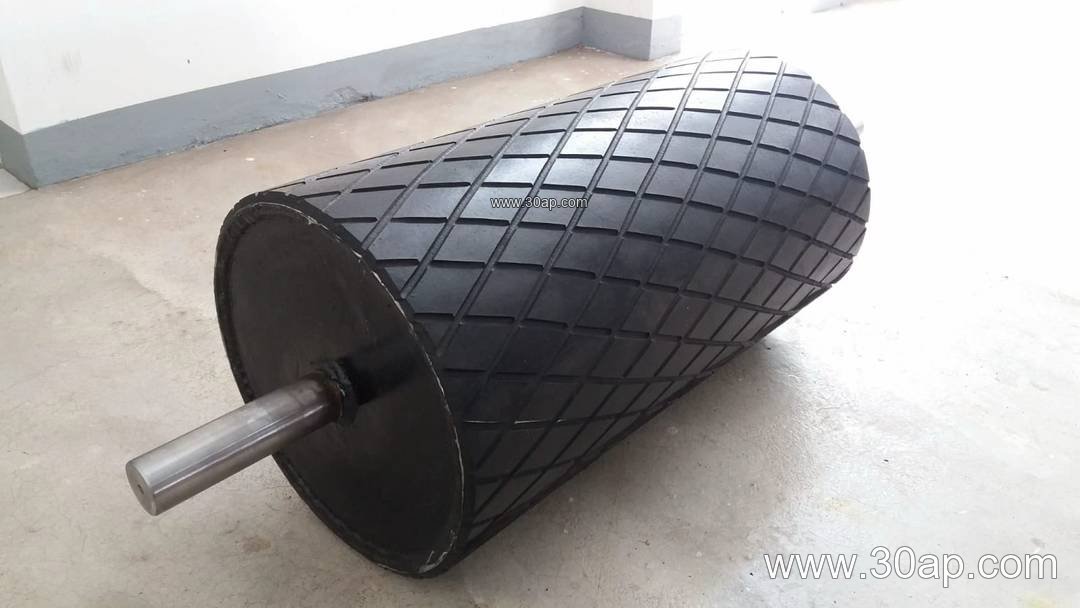
- Lagging — plain, cast rubber, cold-bonded rubber, hot-vulcanized rubber, diamond, chevron, or ceramic; common thicknesses are 8, 10, 12, 15, and 20 mm.
- Bearings — spherical roller bearings in split housings for easy service.
- Drive coupling — keyed hub, ringfeder, or a torque arm on an electric drum version.
Ceramic lagging is worth considering where the belt is wet and the load is abrasive, for example on a heavy-duty mining conveyor belt carrying wet ore. Diamond and chevron patterns help shed water and fines.
Sizing the Shell Against the Belt
Diameter and face width are chosen together. The face is normally wider than the belt so the belt stays supported during slight mistracking. Reference values are shown below as common starting points; final dimensions come from the conveyor design.
| Belt width | Typical face width | Example head pulley |
|---|---|---|
| B500 | about 600 mm | B500 × Ø400 |
| B800 | about 950 mm | B800 × Ø500 |
| B1000 | about 1150 mm | B1000 × Ø630 |
| B1200 | about 1400 mm | B1200 × Ø1000 |
| B1400 | about 1600 mm | B1400 × Ø800 |
| B1800 | about 2000 mm | B1800 × Ø1250 |
Common diameters run from Ø200 up to Ø1800, and shaft ends from Ø50 up to Ø200. Note that one belt width can accept several diameters; a B1200 system may use Ø800 on a short conveyor and Ø1250 on a long, high-tension one. The shaft size must be checked against the actual torque, not guessed from the belt width.
Where It Is Used
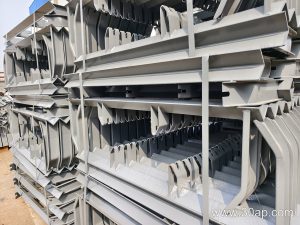
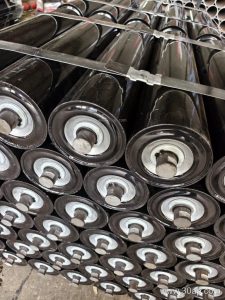
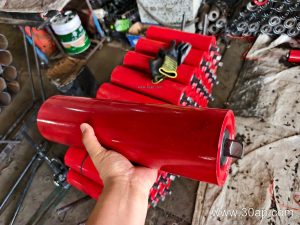
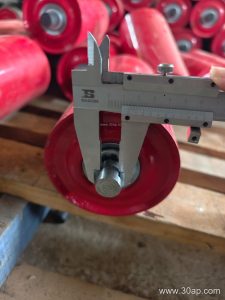
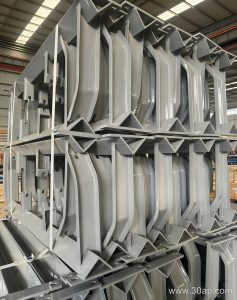
Head pulleys appear wherever bulk material changes direction or leaves the belt. In a limestone quarry they discharge crushed rock onto a screen; in a power plant coal yard they feed the bunker belt; in a sand and aggregate line they work alongside the idler roller set and the conveyor bracket that carry the belt. The same part handles clinker in a cement plant, sinter in a steel works, and ore in a copper concentrator.
The belt itself matters too. An abrasion resistant conveyor belt on a crusher discharge line puts different demands on lagging than a flame retardant conveyor belt in an underground coal mine, where anti-static and fire safety properties are essential. A pipe conveyor belt or a corrugated sidewall conveyor belt may need a special pulley profile to keep the belt centred.
What a Buyer Should Check
- Confirm the drive position: head, tail, or bend. Only the head pulley carries the main drive torque.
- State the belt type and tension so the lagging and shaft can be matched.
- Choose lagging by condition: plain for clean dry service, diamond or ceramic for wet and abrasive duty, hot-vulcanized rubber for high grip.
- Ask for the balancing grade and the shaft keyway detail before ordering.
- Plan maintenance access — a split bearing housing saves hours during a belt change.
For related equipment such as the conveyor belt, idler roller, and conveyor bracket, keep the head pulley drawing and the belt specification on the same page. A well-matched drive point keeps a quarry, a coal washing plant, or a port bulk terminal running without unexpected stoppages.