What an Iron Ore Conveyor Idler Does on the Line
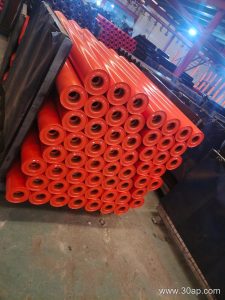
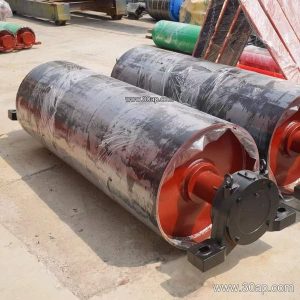
An iron ore conveyor idler is the rotating roller assembly that supports the loaded belt along the carrying side and the empty belt on the return side. In a crushing and screening circuit, or on a long overland run from the pit to the stockyard, these rollers carry a dense, sharp-edged burden hour after hour. The idler roller itself is a simple component, but its condition decides how much power the drive pulls, how straight the belt tracks, and how often maintenance crews stop the line.
The working environment sets the brief. Iron ore is abrasive, heavy, and often damp or dusty. A roller that suits a light aggregate line will not last long here, so buyers usually look at shell thickness, bearing protection, and seal design before anything else.
Construction of the Roller
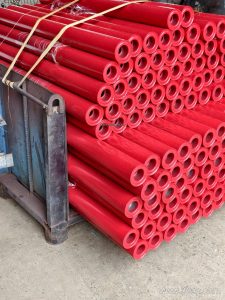
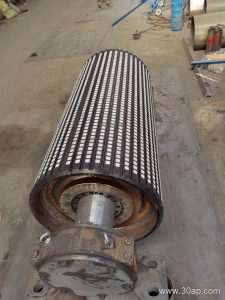
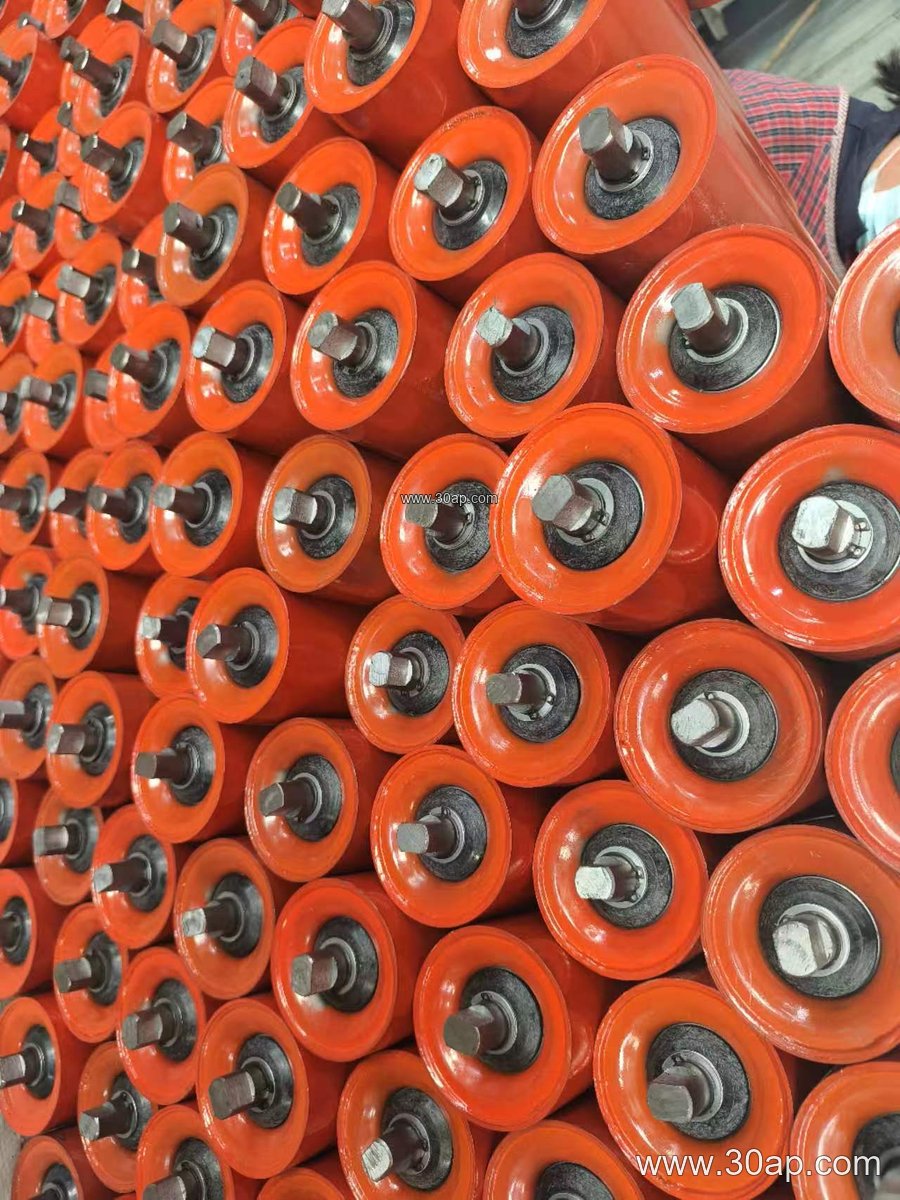
A typical unit is built around a steel tube shell fitted with pressed bearing housings at each end. Inside sit the bearings, normally deep-groove ball bearings in sizes such as 6205, 6305, or 6308, packed with grease and shielded by a labyrinth or contact seal. The shaft is fixed; the shell and bearings rotate. Roller surfaces can be plain steel, nylon, ceramic, or rubber rings, and the choice follows the duty.
- Steel shell with painted or galvanized finish for general duty
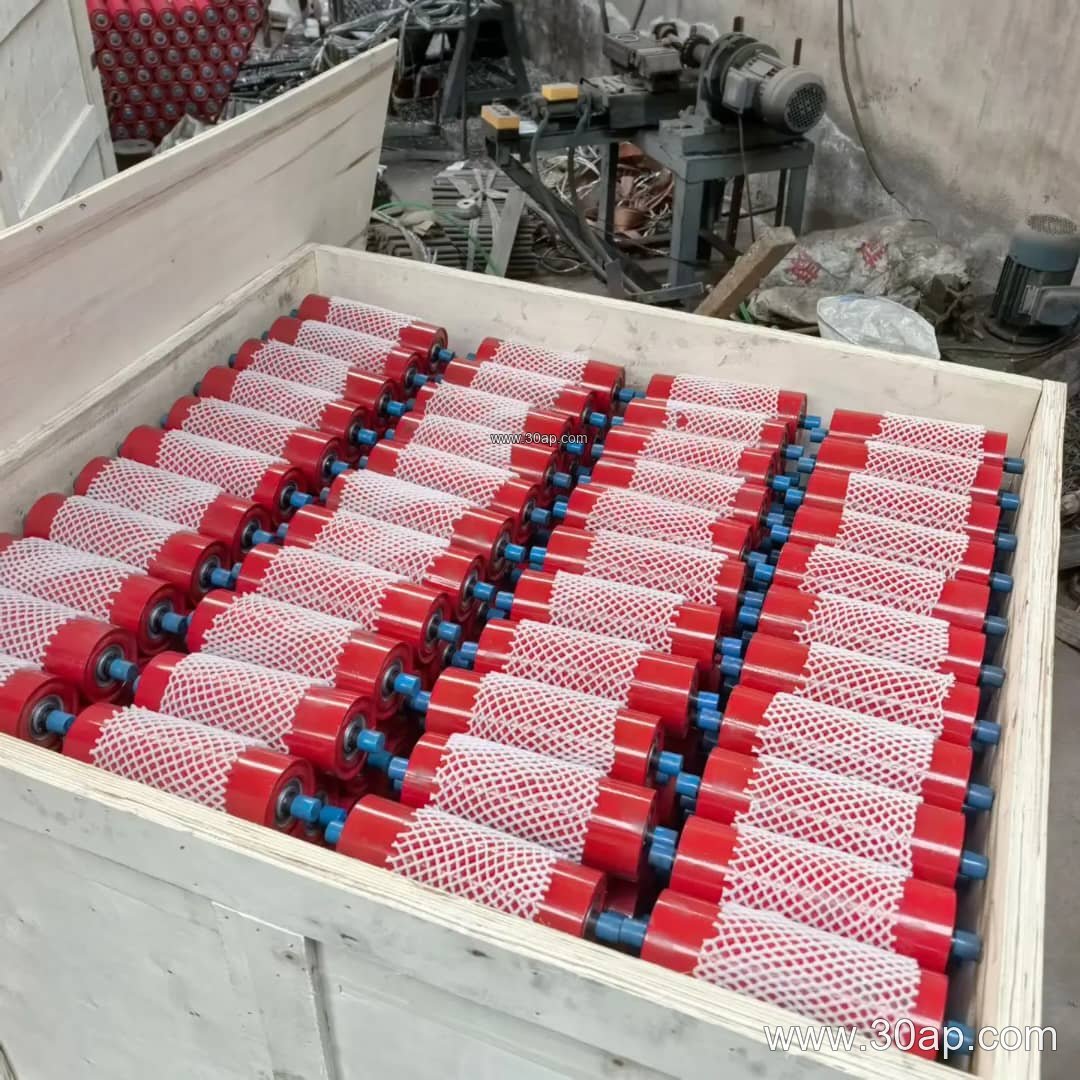
- Rubber ring rollers at load points to soften impact from coarse lump ore
- Ceramic or nylon covers where sticking fines cause build-up
- Sealed-for-life or regreasable bearing arrangements
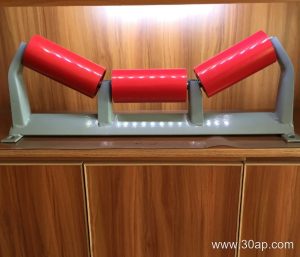
On the carrying side, three-roll troughing sets are the usual arrangement, with a 20, 30, 35, or 45 degree trough angle. Return side rollers are often flat or V-shaped. Transition idlers sit near the head and tail to guide the belt from flat to troughed form, and self-aligning types help correct tracking on long spans.
Where the Idler Fits in the Plant
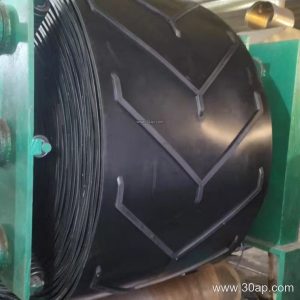
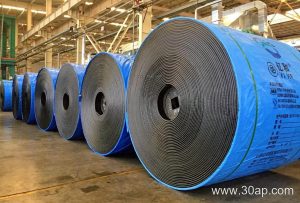
The same roller family appears across the bulk handling chain. In an iron ore beneficiation plant it works under the crusher discharge and along the transfer conveyors. In a cement plant or power plant coal yard, similar troughing idlers support the belt on the stockyard and boiler feed lines. Port terminals use them on ship-loading conveyors, and quarry or sand and gravel operations rely on them on crusher feed and aggregate belts. The belt itself may be an Iron Ore Conveyor Belt with a heavy fabric or steel cord carcass, and the idlers must match its width and speed.
Matching Roller Diameter to Belt Width
There is no single correct pairing of belt width and roller diameter. A 1000 mm belt may run on 108 mm or 133 mm rollers depending on load, speed, and the designer’s preference. The table below shows common reference values only; final sizes come from the conveyor design.
| Belt width | Typical roller length, three-roll set | Common roller diameters |
|---|---|---|
| B500 | about 200 mm | Ø63 to Ø89 |
| B650 | about 250 mm | Ø76 to Ø108 |
| B800 | about 315 mm | Ø89 to Ø133 |
| B1000 | about 380 mm | Ø108 to Ø159 |
| B1200 | about 465 mm | Ø108 to Ø178 |
| B1400 | about 530 mm | Ø127 to Ø194 |
| B1600 | about 600 mm | Ø133 to Ø194 |
| B1800 | about 670 mm | Ø159 to Ø219 |
| B2000 | about 750 mm | Ø159 to Ø219 |
Side rollers and centre rollers often differ in length, so the set should be ordered as a matched group. The same logic applies on the return run, where the roller length follows belt width but the diameter may be smaller to save weight and cost.
Buyer Checklist
Before ordering, confirm the belt width, the trough angle, the roller diameter, the shaft end type, and the fixing centres of the conveyor bracket. Ask about the bearing size and seal class, and state whether the line handles wet ore or dry fines. For very abrasive duty, look at a High Abrasion Resistant Conveyor Belt on the same conveyor, since belt and idler life are linked.
Impact zones deserve separate attention. Rubber-ring impact idlers under the loading chute reduce shock on both the roller and the belt carcass, and they are a common upgrade where lump ore drops from height. Self-aligning rollers are worth considering on long, curved routes where misalignment causes edge wear.
Finally, keep a small stock of the most-used sizes. A seized idler can wear through a belt in a short time, and quick replacement protects the whole conveyor. Buyers who record roller diameter, bearing number, and shell surface for each position make future orders simple and avoid mismatched sets.