What a Conveyor Idler Quotation Covers
A conveyor idler quotation is the priced offer a supplier prepares for the carrying and return rollers that support the belt along a conveyor line. It is not a single part number but a package: idler type, roll diameter, roll length, group arrangement, trough angle, bearing size, roller surface, frame and bracket details, and the quantity needed for each section of the run. In a quarry, a coal washing plant, or a power plant coal yard, the idler set is often the highest-count item on the maintenance list, so the quotation should be readable as a line-by-line schedule rather than a lump sum.
The same product is also called a conveyor roller quotation or idler roller pricing schedule. These are accurate equivalents for the same item. Drive pulleys, tail pulleys, and bend pulleys are separate components with their own quotations and should not be mixed into the idler schedule.
How the Idler Is Built and Why It Matters to the Price
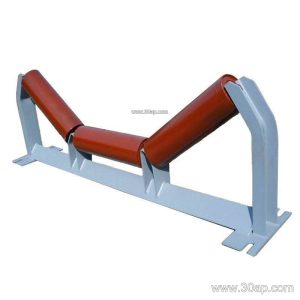
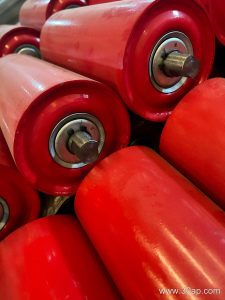
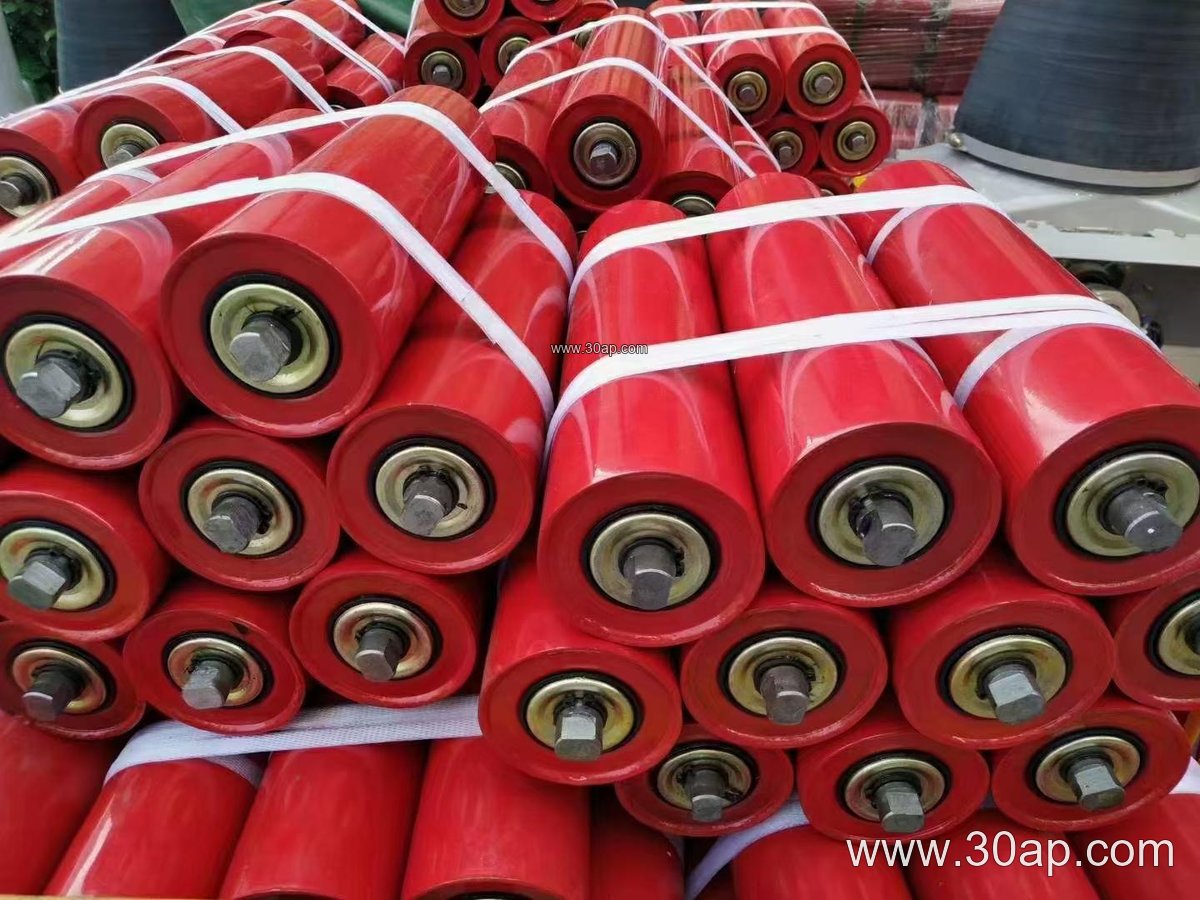
A typical idler has a steel tube shell, a shaft, bearing housings, a sealing arrangement, and a bracket or frame that fixes it to the conveyor stringer. The quality of the seal and the bearing fit usually explains most of the difference between two offers that look similar on paper. Dust from limestone, iron ore, or crushed aggregate is the main enemy, and a labyrinth seal with good grease retention is a practical point to confirm in writing.
Roller surface options change both wear life and cost. Plain steel suits general bulk material; rubber rings help at load points; ceramic lagging is chosen where abrasive fines cause rapid shell wear. The conveyor belt and the idler work as a pair, so the quotation should state the belt width and speed the idlers are intended for.
Common Reference Data for Idler Selection
The values below are common reference ranges, not fixed rules. Final roll length and diameter are confirmed by the conveyor design, belt width, trough angle, and load.
Roll Diameter and Belt Width
- Roll diameters commonly quoted: Ø63, Ø76, Ø89, Ø102, Ø108, Ø127, Ø133, Ø159, Ø178, Ø194, Ø219 mm
- Belt widths commonly quoted: B400, B500, B650, B800, B1000, B1200, B1400, B1600, B1800, B2000, B2200, B2400
- Trough angles: 20, 30, 35, and 45 degrees; forward tilt is often about 1.5 to 2 degrees and is used mainly on training idlers
Typical Three-Roll Trough Set Reference
Roll length varies with belt width, trough angle, and group form. The figures below are common examples only; side rolls and center rolls can differ.
- B500: about 200 mm roll length
- B650: about 250 mm
- B800: about 315 mm
- B1000: about 380 mm
- B1200: about 465 mm
- B1400: about 530 mm
- B1600: about 600 mm
- B1800: about 670 mm
- B2000: about 750 mm
Bearings are usually quoted as 6204, 6205, 6305, 6306, 6308, or 6310. A given bearing size is not tied to one roll diameter, and a given belt width does not dictate one shaft diameter; both follow the calculated load. Do not accept a quotation that implies otherwise.
Idler Types That Appear in a Quotation
A well-structured offer separates the sections of the conveyor. Carrying idlers, impact idlers at the transfer point, return idlers, and training idlers each have a place, and the quantity per section should be visible. A V-return or flat return roll is not a substitute for a troughing set, and a rubber-ring impact roll is not a replacement for a standard carrying roll along the whole run. For comparison only, a spiral return roll is sometimes used to shed sticky material, while a rubber-disc impact roll is chosen under a chute.
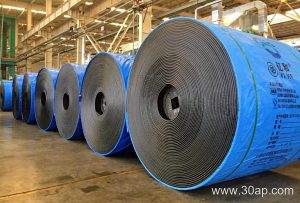
Where the belt itself is special, the idler quotation should note it. A heat resistant conveyor belt in a cement kiln area, a flame retardant conveyor belt in an underground coal mine, or an abrasion resistant conveyor belt on a crusher discharge all affect idler selection and expected service life.
Information a Buyer Should Provide
Send the belt width, belt speed, capacity, material, and the drawing or tag number of each conveyor. List the idler positions by section, with the required trough angle and any training or impact duty. State the environmental conditions: dust, moisture, temperature, and whether the site is underground. Ask for the seal type, bearing brand or grade, shell thickness, and painting or coating. Request the bracket and frame details, since a conveyor bracket that does not match the stringer hole pattern becomes a site problem.
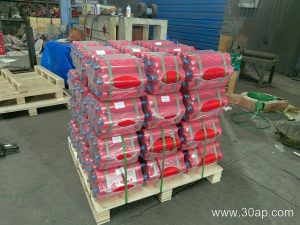
A clear quotation also states the unit, total quantity, lead time, packing method, and whether the price is per piece or per complete set. If spare rolls are recommended, ask for them as a separate line so the maintenance budget stays visible.
Checking the Offer Before You Approve It
Compare quotations on the same basis. Confirm that the roll diameter and length match the drawing, that the bearing and seal are as specified, and that training and impact positions are not quietly replaced with standard rolls. Check that the idler schedule matches the conveyor pulley and belt data already on file, and that the frame and bracket dimensions are consistent across the whole conveyor. A short technical review at this stage is cheaper than a shutdown caused by a mismatched set.