What an Ore Conveyor Pulley Does
An ore conveyor pulley is the rotating drum that drives, tensions, or redirects the belt on a bulk handling conveyor. In a copper mine, a limestone quarry, or a cement plant handling crushed clinker, the pulley is the point where belt tension and motor torque meet. The belt carries the load, but the pulley decides how smoothly that load moves and how long the belt survives the duty.
Buyers often call this component a conveyor pulley; the ore conveyor pulley name simply reflects the harsh service it sees. Abrasive dust, impact from coarse rock, and long operating hours all act on the drum, its lagging, and its bearings.
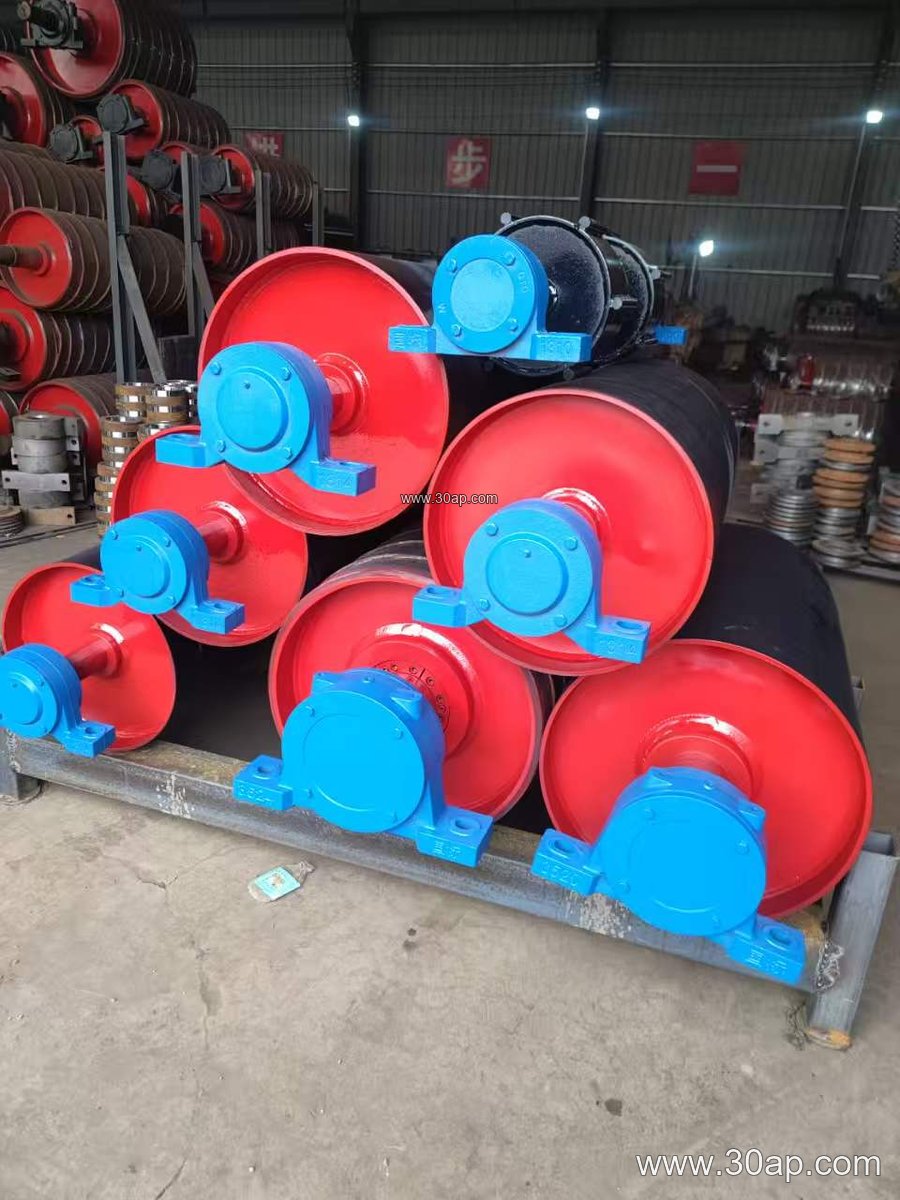
Construction Details That Matter
A typical unit uses a steel shell, end discs, a shaft, bearing housings, and a lagged surface. The shell is machined for balance, and the shaft is sized by torque and radial load rather than by belt width alone. Bearing selection follows the same rule. Common shaft diameters include Ø80, Ø100, Ø120, Ø140, and Ø160, but these are reference values only and should be confirmed by the conveyor designer.
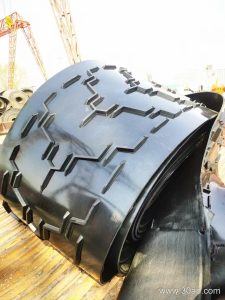
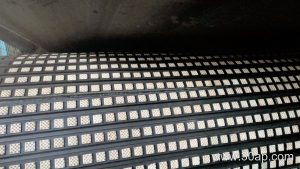
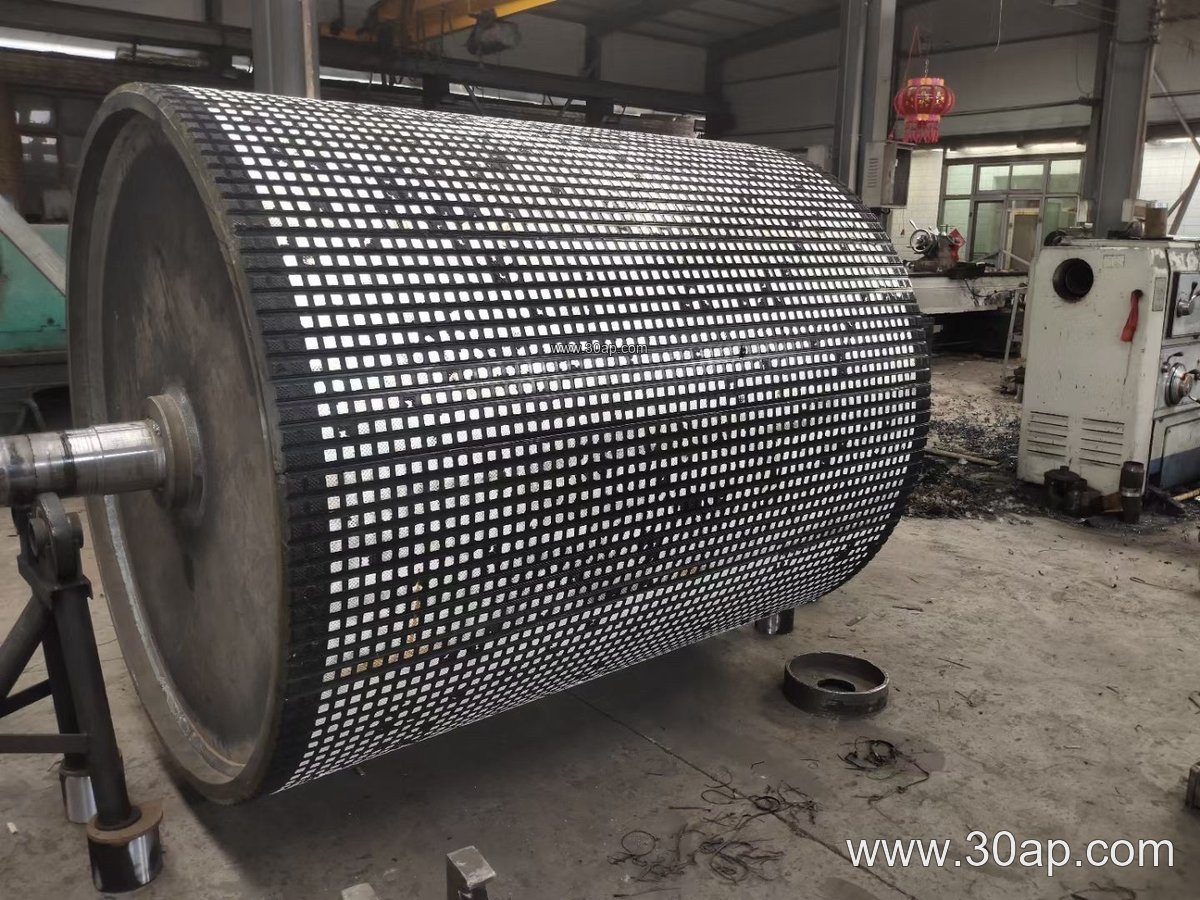
Surface options include plain, cast rubber, cold-bonded rubber, hot-vulcanized rubber, diamond grooving, herringbone grooving, and ceramic lagging. Lagging thickness is often 8, 10, 12, 15, or 20 mm. In a wet, gritty ore circuit, diamond or ceramic lagging can improve grip, while a plain finish may be enough on a clean, lightly loaded tail position.
Matching Pulley to Belt and Duty
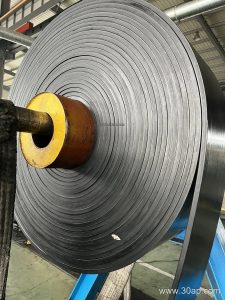
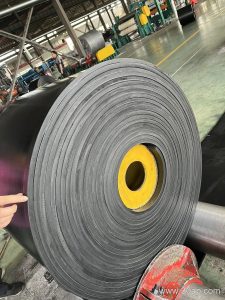
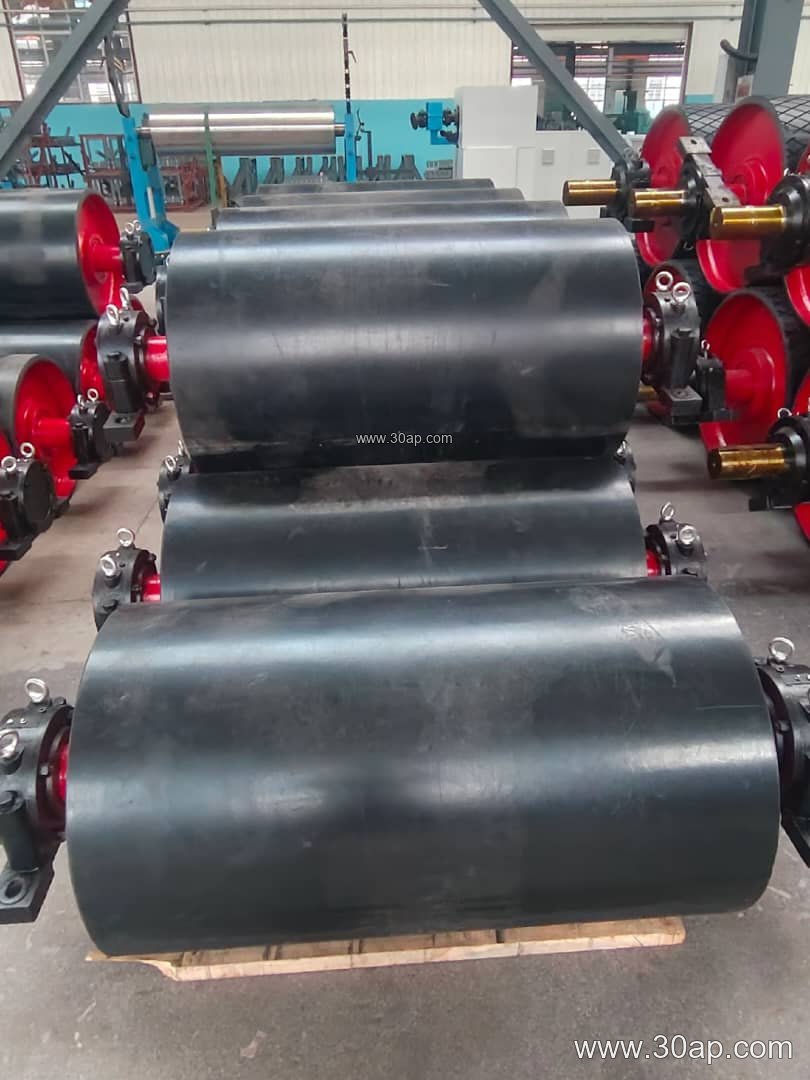
A belt such as an EP conveyor belt or a steel cord conveyor belt needs a drum diameter that limits bending stress in the carcass. Common drum diameters are Ø500, Ø630, Ø800, Ø1000, and Ø1250, and larger sizes appear on high-tension drives. The shell face is usually wider than the belt, for example about 950 mm for B800 and about 1150 mm for B1000.
Do not assume one belt width maps to one pulley diameter. A B1200 × Ø1000 drive pulley and a B800 × Ø500 tail pulley can both be sensible in different circuits. The correct combination depends on tension, wrap angle, belt construction, and space.
| Reference Item | Common Values |
|---|---|
| Belt width (B) | B500, B650, B800, B1000, B1200, B1400 |
| Pulley diameter | Ø315, Ø400, Ø500, Ø630, Ø800, Ø1000 |
| Lagging thickness | 8, 10, 12, 15, 20 mm |
| Shaft diameter | Ø60, Ø80, Ø100, Ø120, Ø140 (by load) |
Where It Fits on the Conveyor
Position changes the job. A drive or head pulley transmits power and often carries the highest tension. A tail pulley at the loading point must tolerate impact and fines. A bend pulley changes belt direction, and a take-up pulley maintains tension as the belt stretches. These are different roles, and they are not interchangeable names for the same part.
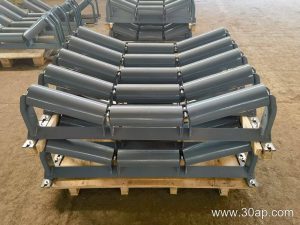
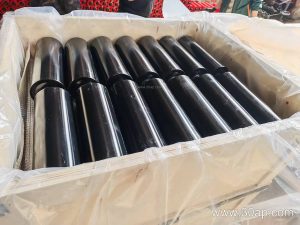
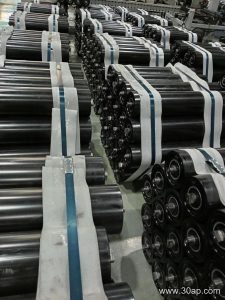
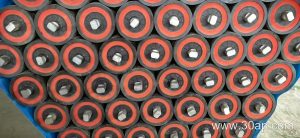
At a power plant coal yard or a port bulk terminal, the drum works alongside the idler roller set and the conveyor bracket that holds the frame. A worn pulley can cause belt mistracking, slip, and edge damage, so alignment and lagging condition deserve routine checks.
Buyer Checklist
- Confirm belt width, belt type, and maximum working tension.
- State the pulley position: drive, tail, bend, or take-up.
- Choose lagging for the real conditions, not the catalog default.
- Check shaft and bearing capacity against calculated loads.
- Ask for the shell face width and confirm it suits the belt.
- Plan lifting, guarding, and access for maintenance.
For an underground coal mining conveyor or a gold mining conveyor, flame-retardant and antistatic requirements may apply to the belt, and the drum design should support reliable tracking. A practical specification gives the designer room to size the ore conveyor pulley correctly rather than forcing a fixed diameter from belt width.