What a Building Materials Conveyor Pulley Does
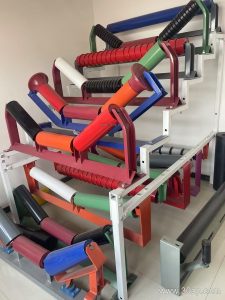
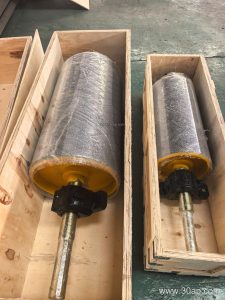
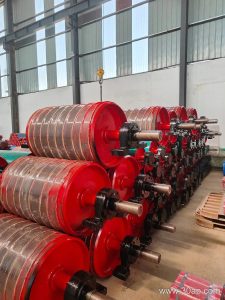
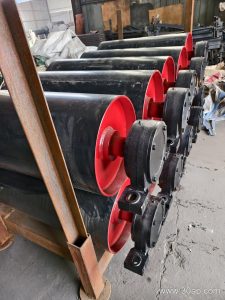
In a quarry or an aggregate crushing line, the belt is only part of the story. The building materials conveyor pulley is the rotating drum that transmits drive force, maintains belt tension, and guides the conveyor belt along its path. It is a complete assembly: shell, shaft, hub, bearing housing, and often a lagging surface. Buyers sometimes call it a conveyor drum or belt pulley, and those terms describe the same component.
The pulley is not a passive roller. On a drive position it transfers torque from the gearbox to the belt through friction; on a tail or take-up position it sets the tension that keeps the belt from slipping. A poorly matched drum shows up quickly as belt tracking problems, premature lagging wear, or bearing failure.
How the Assembly Is Built
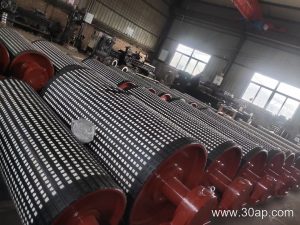
Most units use a welded steel shell with machined end discs, a through shaft or stub shafts, and self-aligning bearing housings mounted in conveyor bracket frames. The shell surface may be plain, or covered with rubber lagging applied by cold bonding, hot vulcanizing, or casting. Diamond and herringbone patterns improve grip and help shed water and fines.
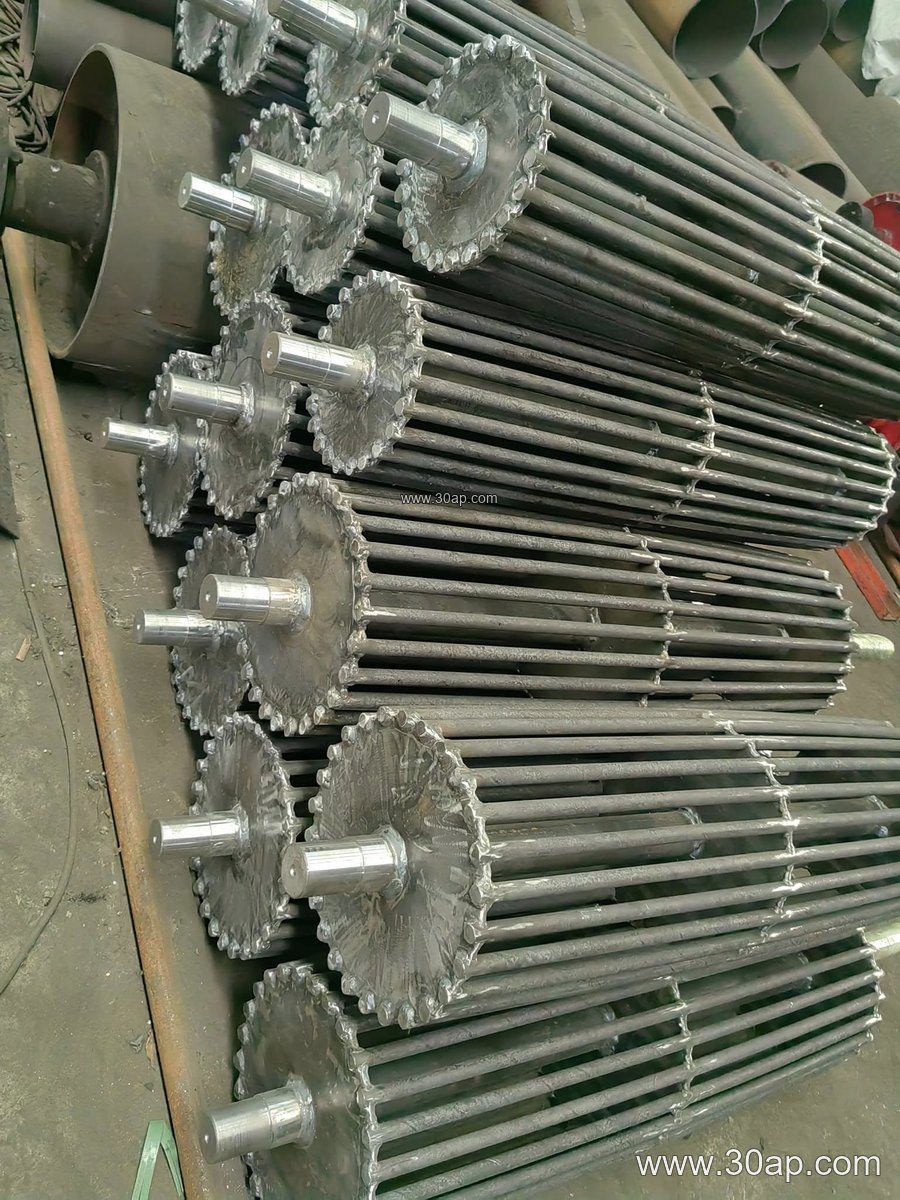
- Shell and discs: welded, then machined for concentricity
- Shaft: sized by torque and radial load, not by belt width alone
- Lagging: plain, rubber, ceramic, or patterned, typically 8 to 20 mm thick
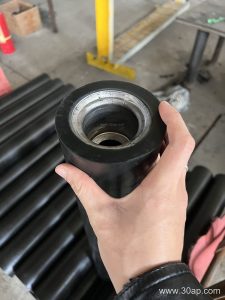
- Bearings: greased or sealed, selected for the duty cycle
For dusty aggregate service, good sealing matters as much as the lagging. Fine stone powder that reaches the bearing cavity shortens service life faster than most other factors.
Where It Fits in a Crushing Circuit
A primary crusher discharge conveyor usually runs a heavy head pulley with thick lagging, while the tail end may use a lighter drum with a take-up. In a screening plant, bend and snub pulleys keep the belt wrapped around the drive without adding another motor. Cement plants and power plant coal handling systems apply the same logic, but with different priorities: dust control, flame resistance in the belt, and reliable starting under load.
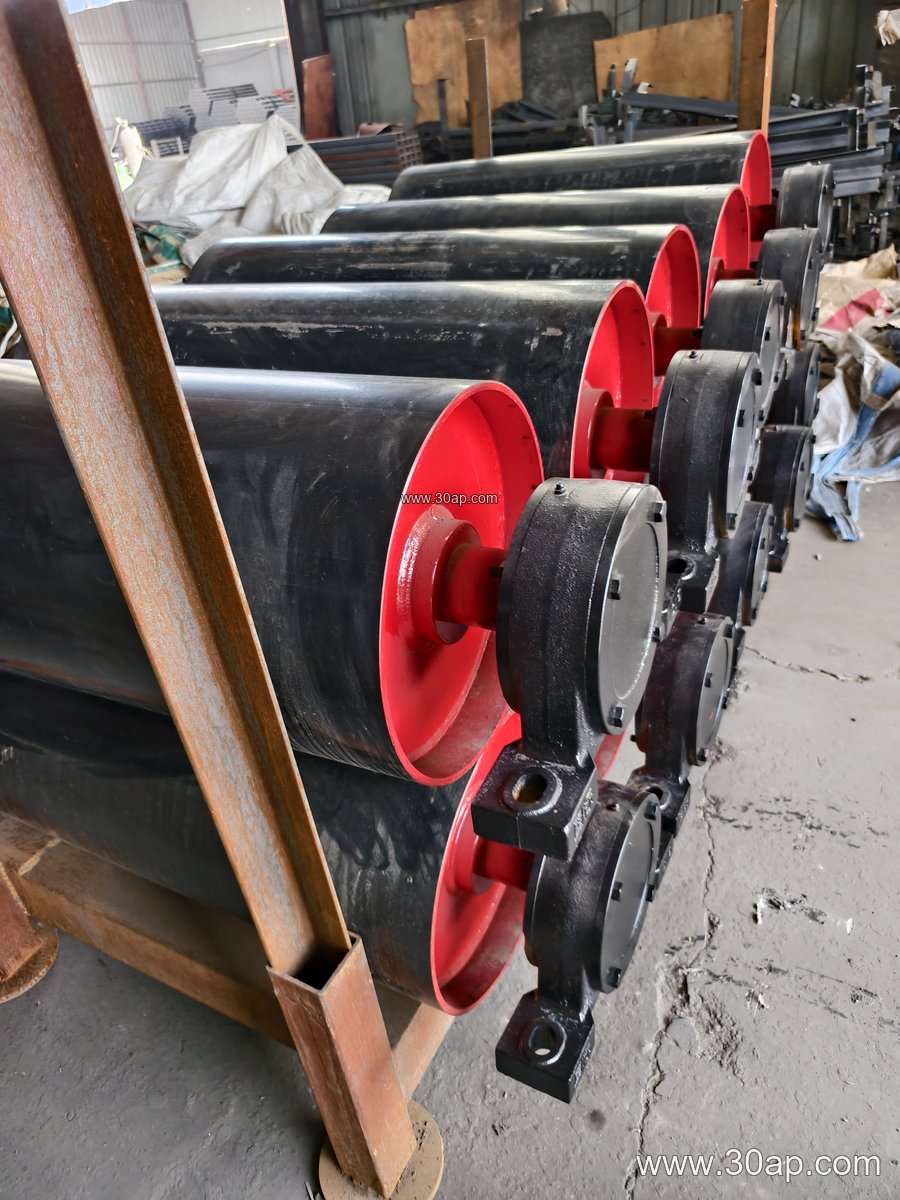
The drum must suit the belt it carries. A 1200 mm wide EP belt on a primary line calls for a wider shell and a larger shaft than a 650 mm belt on a transfer conveyor. Common shell widths run slightly above the belt width, for example about 1400 mm of face for a B1200 belt, and about 950 mm for a B800 belt.
Common Size Combinations
The table below shows reference combinations, not fixed rules. Final selection depends on tension, speed, and load.
| Belt width | Typical pulley face | Common diameter range | Typical shaft range |
|---|---|---|---|
| B500 | about 600 mm | Ø250 to Ø400 | Ø50 to Ø70 |
| B650 | about 750 mm | Ø315 to Ø500 | Ø60 to Ø80 |
| B800 | about 950 mm | Ø400 to Ø630 | Ø70 to Ø100 |
| B1000 | about 1150 mm | Ø500 to Ø800 | Ø80 to Ø120 |
| B1200 | about 1400 mm | Ø630 to Ø1000 | Ø90 to Ø140 |
| B1400 | about 1600 mm | Ø800 to Ø1250 | Ø100 to Ø160 |
| B1600 | about 1800 mm | Ø1000 to Ø1400 | Ø120 to Ø180 |
Two drums with the same face width can carry very different shafts. A B1200 × Ø1000 drive drum on a steep incline may need a larger shaft than the same size used as a bend pulley, because torque and wrap angle differ.
Lagging and Belt Interaction
Lagging choice should follow the belt and the material. A high abrasion resistant conveyor belt running over a plain steel shell may slip on a wet incline, while a diamond rubber cover improves grip without over-stressing the belt cover. In coal mining or underground coal mining conveyors, flame retardant and anti-static belt grades are common, and the drum lagging should be selected to avoid spark risk and static buildup.
Where the belt carries hot clinker or sinter, a heat resistant conveyor belt paired with a heat-tolerant lagging avoids rapid cover degradation. For oily scrap or recycled material, an oil resistant belt and a compatible rubber surface reduce swelling and slip.
Buyer Checklist
- Confirm the pulley position: drive, tail, bend, or take-up. These are different duties and not interchangeable.
- Check belt width, belt type (EP, NN, steel cord, chevron, corrugated sidewall), and tension.
- Specify lagging pattern and thickness based on grip and wear, not habit.
- Ask for shaft and bearing calculations from torque and load, not from belt width.
- Confirm the mounting bracket and bearing housing fit the existing frame.
- Plan greasing intervals and spare lagging for dusty aggregate or cement service.
A well-matched building materials conveyor pulley keeps the belt centered, protects the splice, and reduces downtime in the crusher, screen, and stockpile zones where every stopped hour costs production.