What the Stone Crushing Conveyor Belt Does
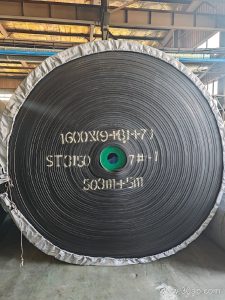
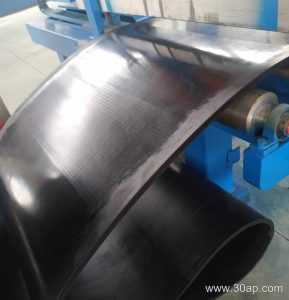
A stone crushing conveyor belt is the heavy-duty carrying element that moves blasted rock, crushed aggregate, and screened stone from a primary crusher toward stockpiles or secondary and tertiary crushing stages. In a quarry, sand and gravel plant, or cement works, the belt is the link that keeps the whole circuit flowing. It is usually specified as a rubber conveyor belt with a textile or steel cord carcass, and its job is to survive sharp edges, drop impacts, and constant abrasion without stretching out of shape.
The product also appears under the accurate equivalent name crusher conveyor belt, and both terms describe the same item. Understanding how it is built helps a buyer match the belt to the duty rather than simply ordering the cheapest roll.
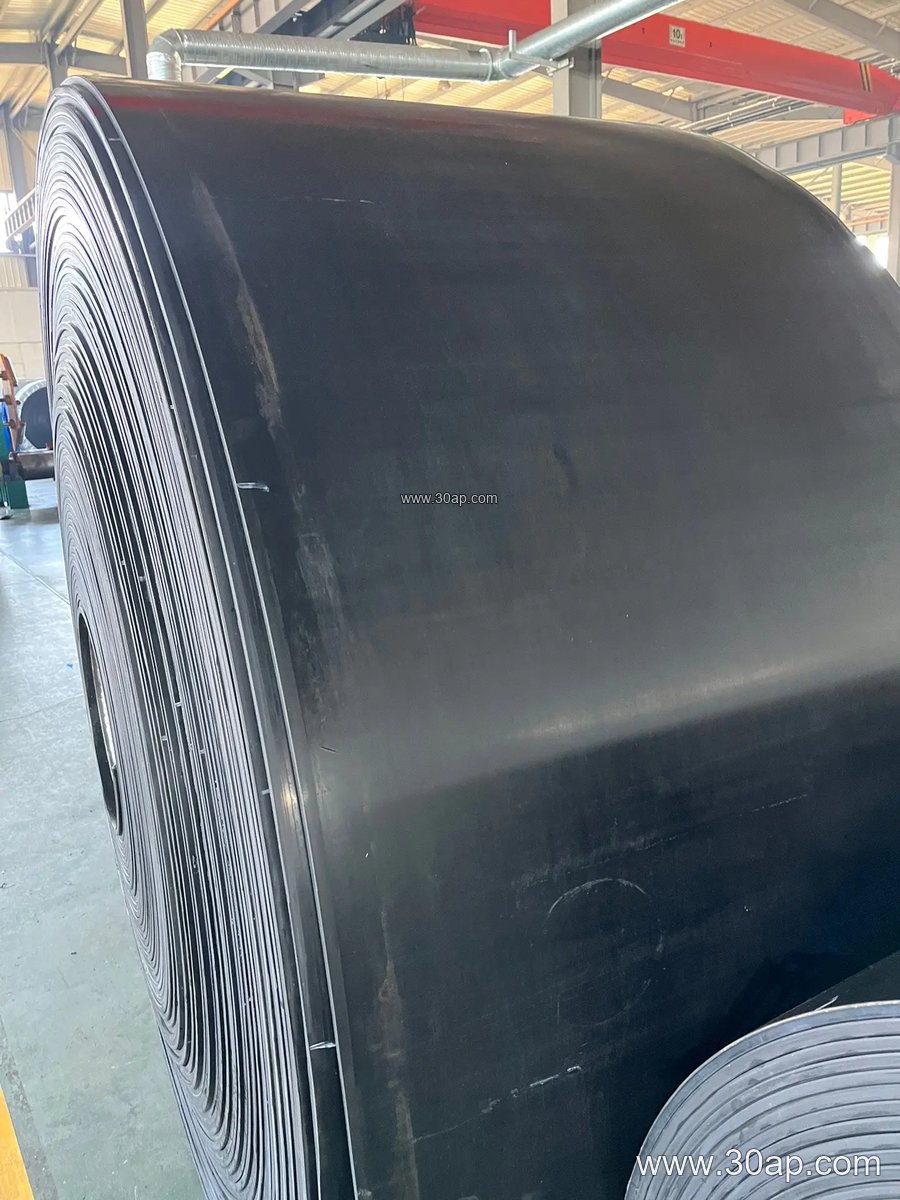
Construction and Key Components
A typical stone crushing conveyor belt is built from three functional layers. The carcass provides tensile strength, the cover rubber protects against wear and cutting, and the bond between them keeps the belt from delaminating under repeated flexing over pulleys.
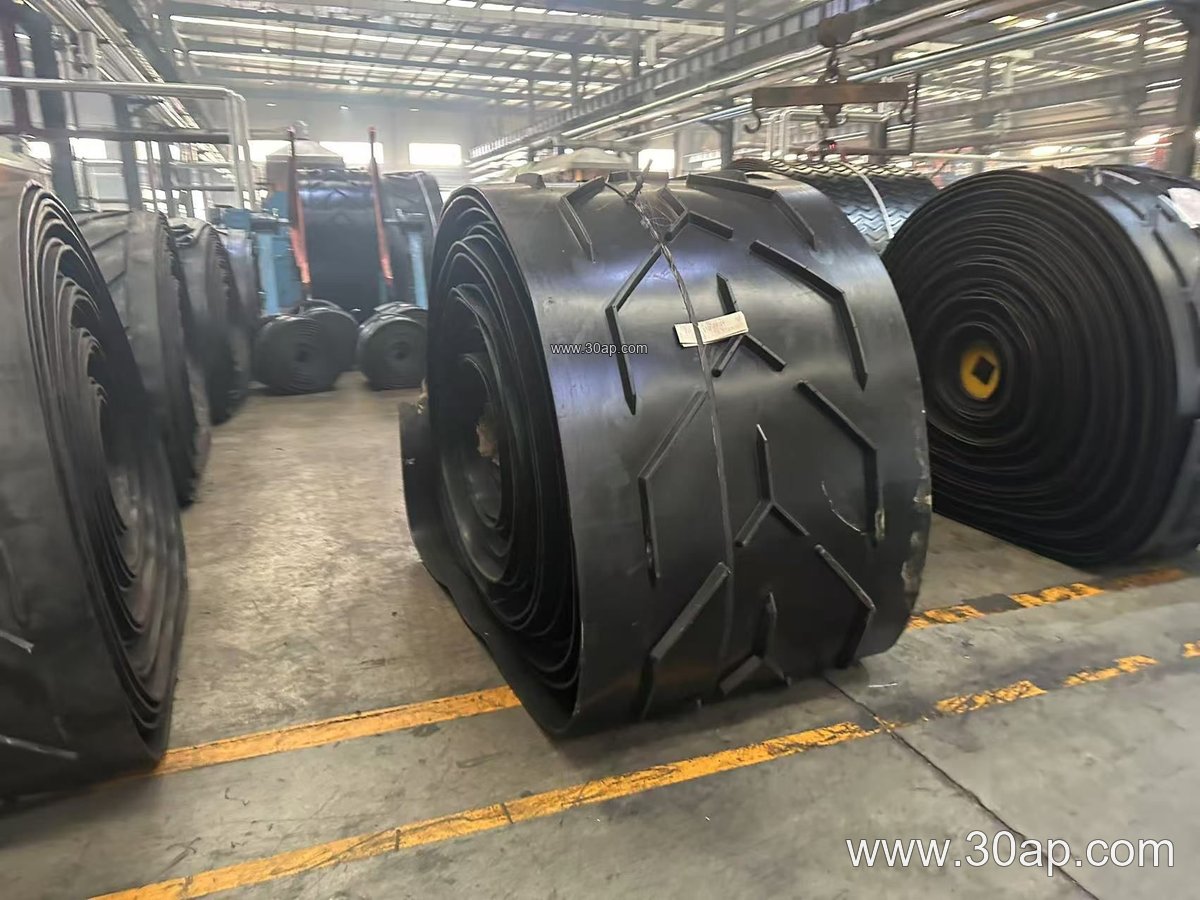
- Carcass: multi-ply fabric (EP or NN) for short to medium centers, or steel cord for long overland runs and high tonnage. An EP conveyor belt with polyester warp and nylon weft is common because it resists stretch and moisture.
- Top cover: abrasion resistant rubber, often 4+2 mm, 5+2 mm, or 6+2 mm, with thicker covers on impact zones below the crusher discharge.
- Bottom cover: usually thinner, sized to run cleanly over idler rollers and bend pulleys.
- Edges: cut or molded, sometimes with a skirted or corrugated sidewall profile when material must be contained on an incline.
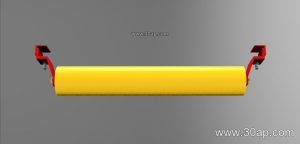
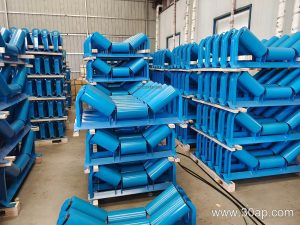
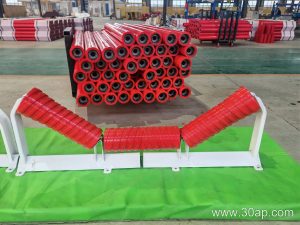
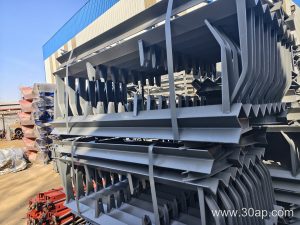
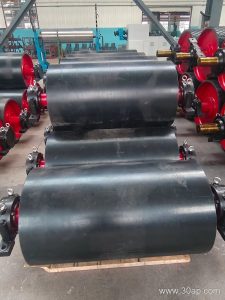
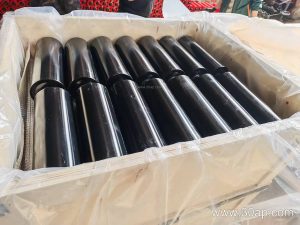
Supporting hardware matters as much as the belt. Troughing idler rollers set the belt profile and absorb load, while the head drive pulley, tail pulley, and bend pulleys control tracking and tension. The conveyor bracket and frame hold these parts in alignment, and a misaligned bracket will wear a belt edge long before the cover is finished.
Where It Is Used
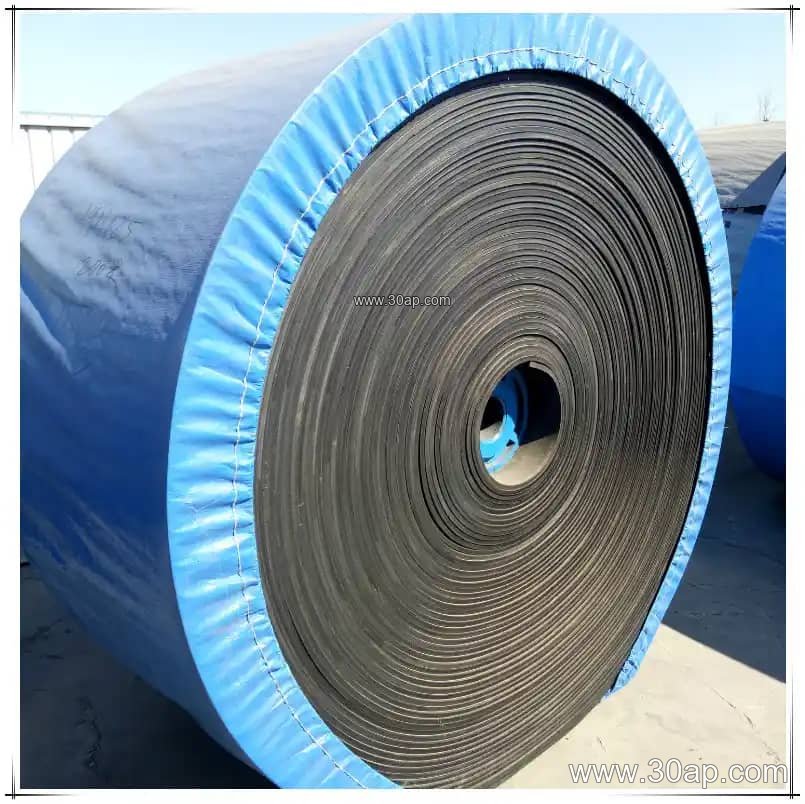
These belts are found across mining, coal, cement, power plant, and construction sites. In an iron ore or copper ore operation, a high abrasion resistant conveyor belt handles sharp, dense feed. In an underground coal mine, a flame retardant conveyor belt or PVG conveyor belt may be required by the site’s safety plan. Aggregate plants moving limestone and granite often use an EP conveyor belt in 800mm, 1000mm, or 1200mm widths, while large port and ship loading systems may call for a steel cord conveyor belt in wider sizes.
Other configurations appear where the layout demands them. A chevron conveyor belt or corrugated sidewall belt helps on steep inclines, and a heat resistant conveyor belt is chosen when crushed clinker or hot material is involved. These are alternatives for specific conditions, not substitutes for the main subject.
Common Reference Sizes
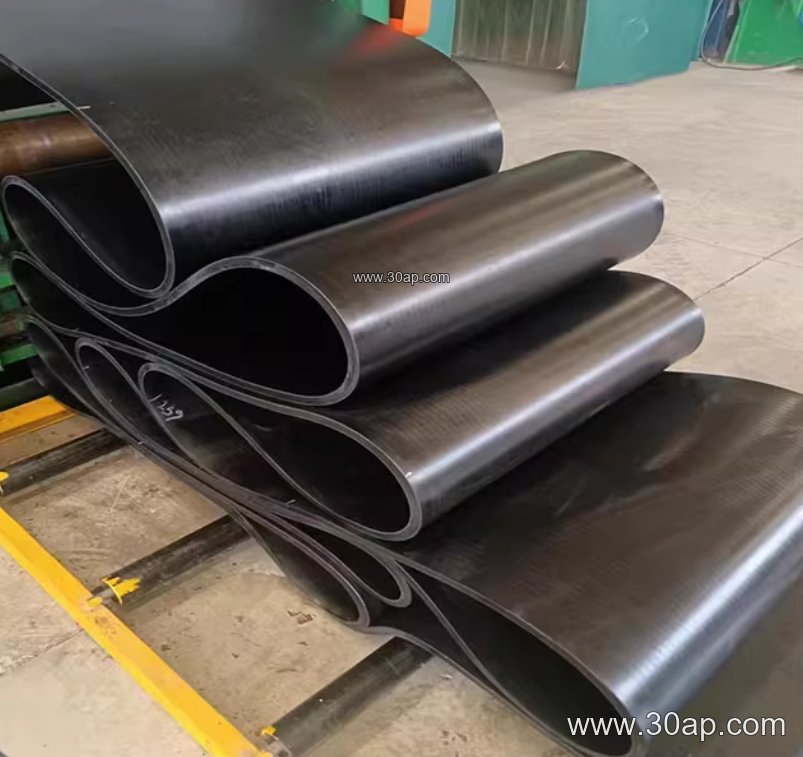
The values below are reference data for orientation only. Actual selection depends on tonnage, lump size, incline, and center distance, and different manufacturers offer different ranges.
| Parameter | Common reference values |
|---|---|
| Belt width | B500, B650, B800, B1000, B1200, B1400, B1600, B1800, B2000 |
| EP strength grades | EP200, EP315, EP400, EP500, EP630, EP800, EP1000, EP1250, EP1600, EP2000 |
| Cover thickness | 3+1.5, 4+2, 5+2, 6+2, 8+3 mm |
| Carcass plies | 2 to 6 layers, multi-ply fabric core |
| Steel cord grades | ST1000 to ST3150, used on long high-tension runs |
Note that belt width and pulley diameter are separate design decisions. A wide belt does not automatically dictate one fixed pulley size, and shaft diameter must be calculated from the actual load case rather than guessed from belt width.
Buyer Checklist
- Material and lump size: sharp, heavy rock needs a thick abrasion resistant cover and impact support at the transfer point.
- Tension and center distance: short plants favor fabric carcass; long overland conveyors often justify steel cord.
- Environment: cold resistant, oil resistant, and anti-static grades exist for specific site conditions.
- Safety requirements: confirm whether the site requires a fire resistant or flame retardant specification.
- Full system fit: check idler roller spacing, pulley lagging, and bracket condition before installing a new belt.
For more product options, browse our rubber conveyor belt range, review EP conveyor belt grades, or check abrasion resistant conveyor belt covers for crushing duty. A correctly matched stone crushing conveyor belt, paired with sound idler rollers and pulleys, keeps a quarry or mine running with fewer stoppages.