What a Conveyor Carrying Bracket Does
A Conveyor Carrying Bracket, also called a carrying idler bracket or troughing bracket, is the structural frame that holds the upper idler rollers in a belt conveyor. It sets the trough angle of the belt, keeps the conveyor belt supported between the head and tail pulleys, and transfers the load of the material into the conveyor stringer. In a quarry, cement plant, or power plant coal yard, these brackets are mounted at regular intervals along the carrying side. They are not the same as a return bracket, and they should not be confused with a bend pulley or a tail pulley, which serve different functions in the drive and tension system.
Construction and Mounting Position
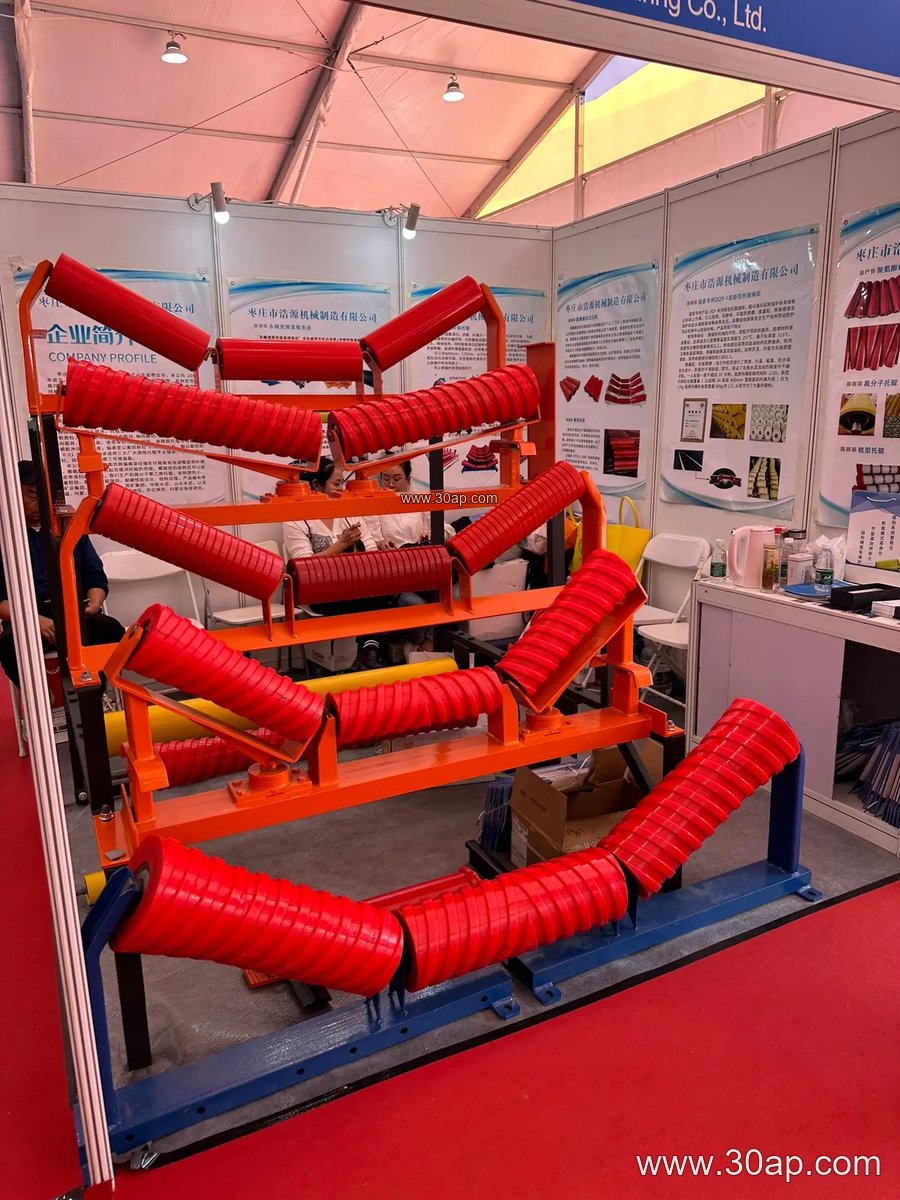
Most carrying brackets are fabricated from angle steel, channel steel, or folded steel plate. The crossbeam length and mounting hole spacing are determined by belt width, trough angle, and the idler roller diameter used in the design. A typical assembly holds two or three idler rollers in a trough shape. The bracket is bolted to the conveyor stringer, and the idler rollers sit in the bracket slots or are fixed with pins. For abrasive bulk material such as iron ore or crushed rock, the bracket should be rigid enough to avoid flexing under load, because movement at the joints accelerates wear on both the frame and the rollers.
Common Types and Where They Fit
Carrying brackets appear in several forms, and each has a place on the conveyor:
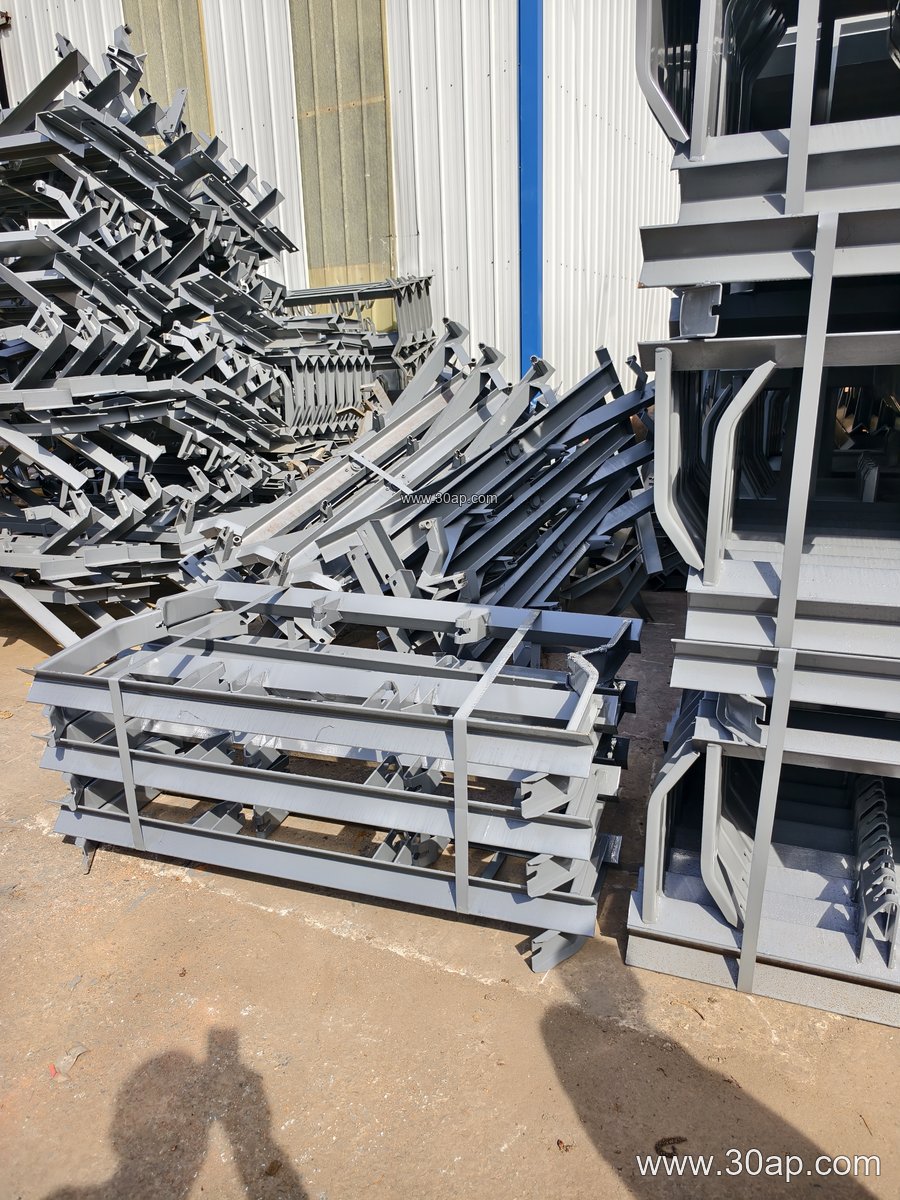
- Troughing bracket – the standard upper bracket that creates the trough profile for bulk material.
- Transition bracket – used near the head or tail to gradually change belt shape and reduce edge stress.
- Impact bracket – placed under the loading point, often with buffer rollers, to absorb shock from falling material.
- Self-aligning bracket – helps correct belt misalignment on long runs.
- Forward-leaning bracket – a slight forward tilt, commonly about 1.5 to 2 degrees, can assist belt tracking.
- Adjustable bracket – allows the trough angle to be changed between positions such as 20, 30, 35, or 45 degrees.
In a stone crushing line, a combination of troughing and impact brackets is common. In a coal mining conveyor, flame retardant and anti-static belt properties matter, but the bracket itself still needs correct roller fit and stable mounting.
Matching Belt Width, Trough Angle, and Roller Diameter
Buyers often ask how to match a bracket to a belt width. There is no single rule that one belt width must use one trough angle or one roller diameter. The bracket is selected by the conveyor designer based on capacity, material lump size, belt speed, and transition requirements. The table below shows common reference combinations, not mandatory matches.
| Belt Width | Trough Angle | Roller Diameter | Typical Use |
|---|---|---|---|
| B500 | 20°–30° | Ø89 | Small aggregate or sand line |
| B650 | 30° | Ø89 | Crushing and screening plant |
| B800 | 35° | Ø108 | Quarry and cement plant |
| B1000 | 35°–45° | Ø108–Ø133 | Coal yard and power plant |
| B1200 | 45° | Ø133 | Iron ore and heavy bulk handling |
| B1400 | 35°–45° | Ø133–Ø159 | Port and ship loading conveyor |
| B1600 | 35°–45° | Ø159 | Large mining conveyor |
| B1800 | 35°–45° | Ø159–Ø194 | High capacity bulk material line |
Larger widths such as B2000, B2200, and B2400 also exist, but they are used only when the conveyor design calls for them. Mounting dimensions should always be confirmed against the actual stringer and idler roller drawing.
Buyer Checklist
Before ordering a Conveyor Carrying Bracket, confirm the belt width, the required trough angle, the roller diameter, the material of the bracket, and the mounting hole pattern. Ask whether the bracket is fixed or adjustable, and whether it will be used at a loading point where impact resistance is needed. For a conveyor handling EP conveyor belt or a steel cord belt, the bracket still needs to match the roller and stringer, because the belt type does not change the bracket mounting. In a cement plant or a sand making plant, dust and fine material can build up around the bracket, so easy cleaning and secure bolting are practical points to check. Finally, keep spare brackets for the loading zone and transition sections, where wear and impact are usually highest.