When a Catalog Pulley Will Not Fit
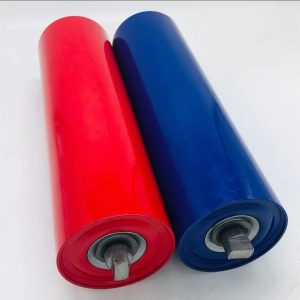
A non-standard conveyor pulley is a custom-built drum that differs from standard production sizes in diameter, face width, shaft diameter, or surface treatment. It is still a conveyor pulley, but it is configured around the actual belt width, load, and mounting space of one conveyor. Instead of forcing a stock drum into a frame that barely accepts it, engineers specify the drum to match the application.
The need usually appears in three places: an existing structure that cannot be modified, a belt width that falls between common sizes, or a duty cycle that demands more torque capacity than a catalog unit provides. The same product is also called a custom conveyor drum or made-to-order pulley. Those terms describe the same component, and they are not interchangeable with drive, tail, or bend pulleys, which are defined by their position and function rather than by whether they are standard or custom.
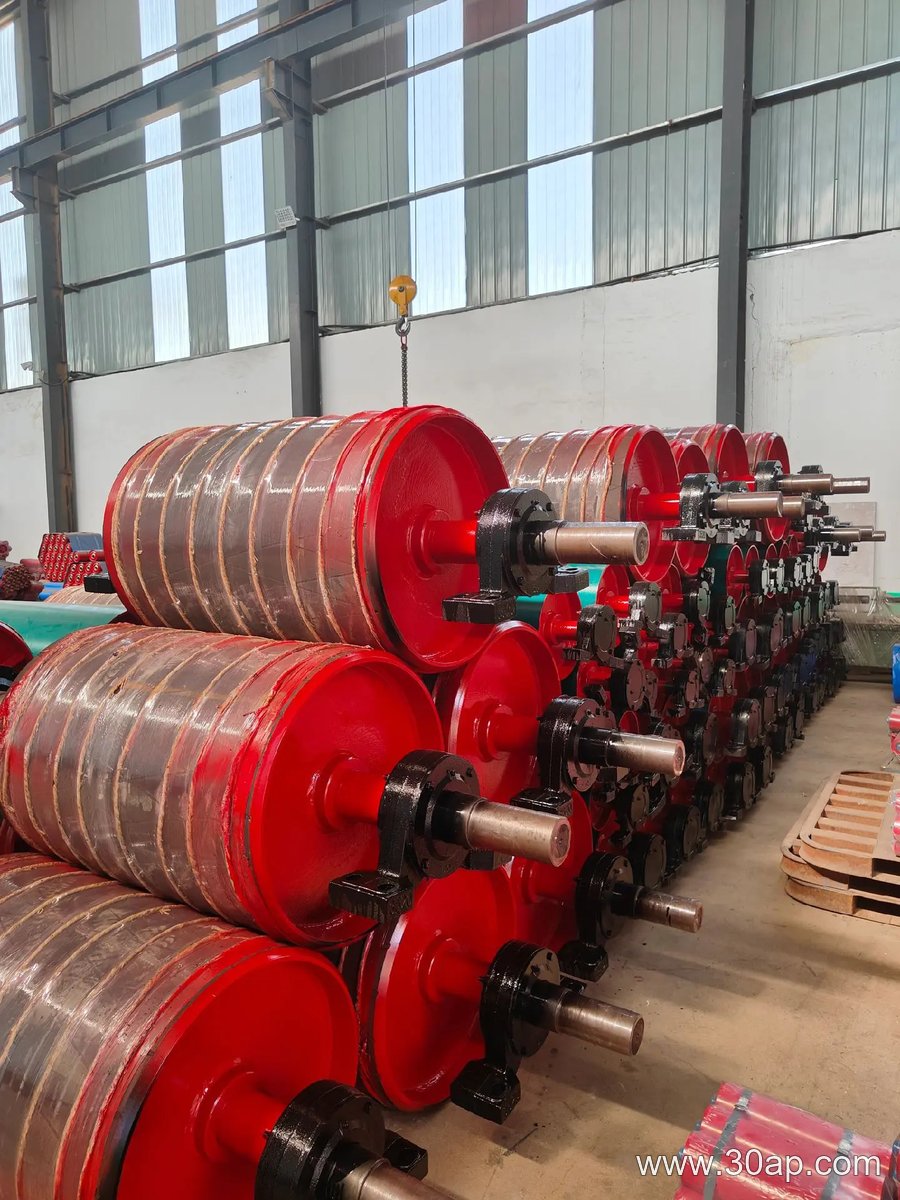
How the Drum Is Put Together
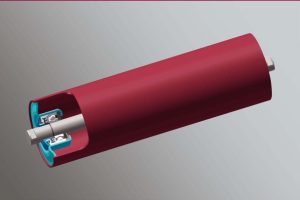
A typical non-standard conveyor pulley has a cylindrical shell, two end discs, a shaft, and a hub connection. The shell may be seamless pipe or rolled plate, and the end discs are welded or bolted to it. The shaft is sized by torque and bending load, not by belt width alone. Common shaft diameters include Ø50, Ø60, Ø70, Ø80, Ø90, Ø100, Ø120, Ø140, Ø160, Ø180, and Ø200 mm, but the final value is determined by calculation for each drive or tension condition.
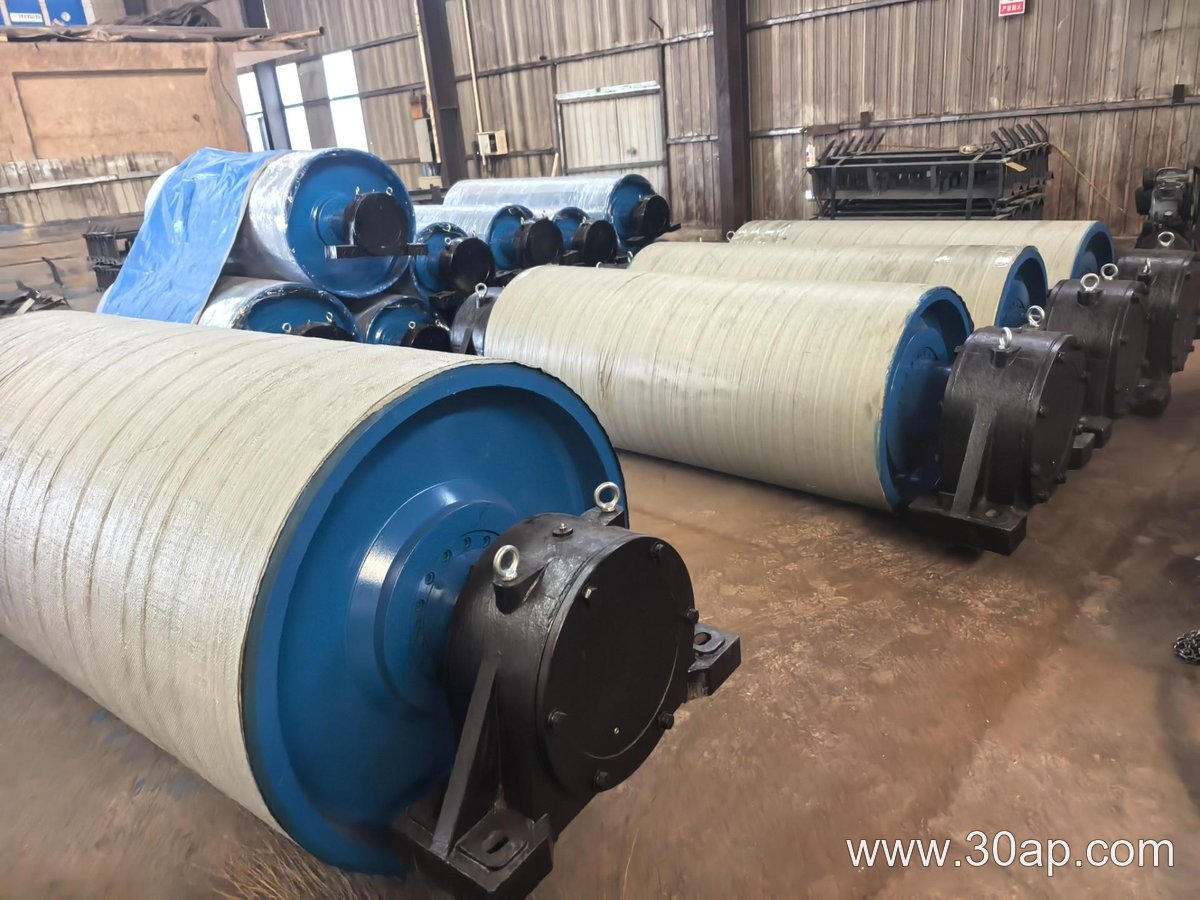
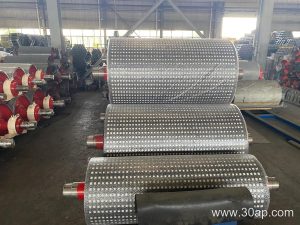
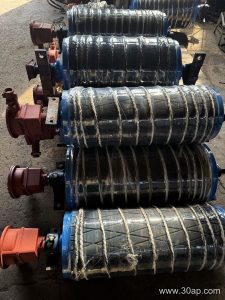
Surface form is another variable. A custom drum may be supplied plain, with cast rubber, cold-bonded rubber, hot-vulcanized rubber, diamond grooving, herringbone grooving, ceramic lagging, or a flat rubber sheet. Lagging thickness is commonly 8, 10, 12, 15, or 20 mm. The choice depends on grip requirements, material carryback, and whether the pulley runs on the clean or dirty side of the belt.
Sizes and Combinations
Because the pulley is non-standard, there is no single size table that covers every case. Diameters frequently range from Ø200 to Ø1800 mm, and face widths are usually wider than the belt. For example, a B400 belt often uses a face around 500 mm, while B1200 may use about 1400 mm. A custom drum could be built as B800 × Ø500 or B1400 × Ø800, but these are examples, not fixed pairings. One belt width can work with several pulley diameters depending on wrap angle, belt tension, and space limits.
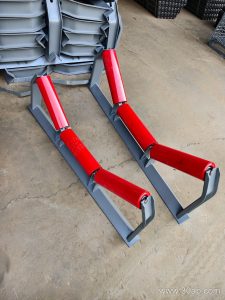
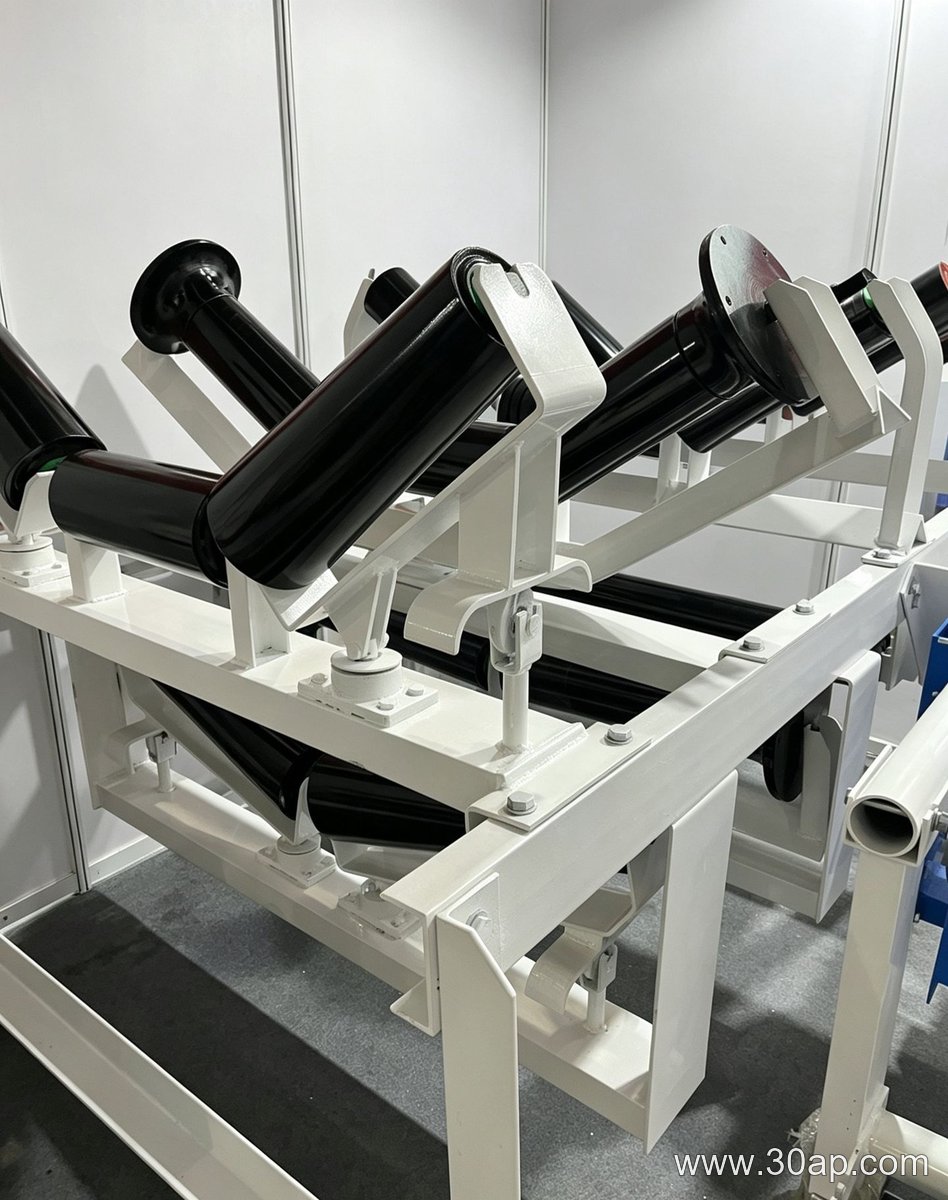
When a buyer requests a non-standard conveyor pulley, the useful information includes belt width, required diameter, shaft diameter, face width, lagging type and thickness, and the position where it will be installed. A drawing or measurement of the mounting bracket and bearing centers is also important. The conveyor bracket and the idler roller layout nearby can affect how much room is available for the drum and its bearing housings.
Where It Fits in the System
These pulleys appear in quarry and aggregate lines, limestone mines, and crushing and screening plants. They also serve in tunnel muck removal and fertilizer handling, where dusty or abrasive material shortens the life of standard components. In such places a custom drum may be specified with thicker lagging or a larger shaft to resist wear and fatigue.
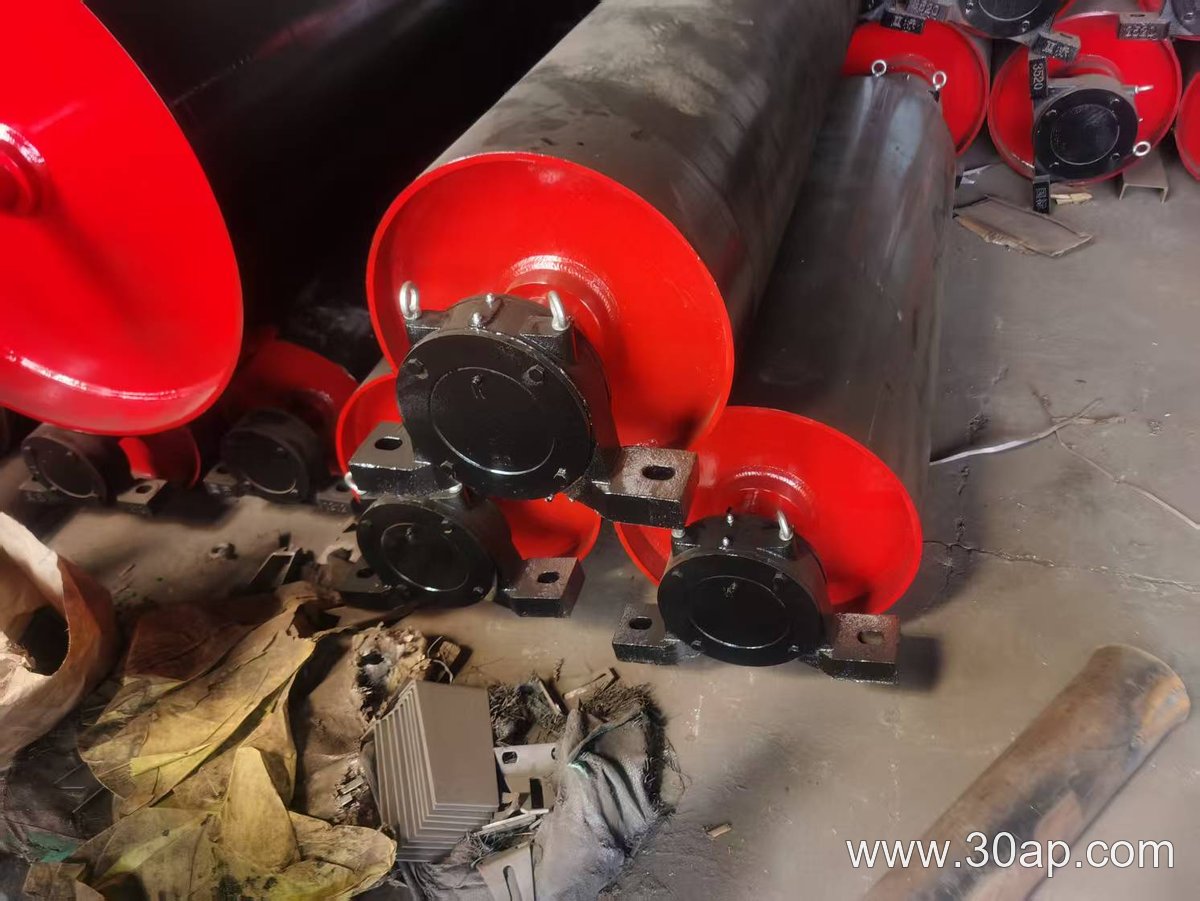
A non-standard pulley can be a drive pulley at the head, a tail pulley at the return end, or a bend pulley that changes belt direction. The function does not change because the pulley is custom. What changes is that the drum is built to the exact face width, shaft size, and surface needed. A drive pulley needs lagging for grip; a tail pulley may need a self-cleaning surface; a bend pulley may need a specific diameter to control belt path. These are position-based differences, not names that can be swapped.
What a Buyer Should Confirm
- Belt width and the required face width, not just a nominal pulley size.
- Duty: drive, tail, bend, take-up, or snub, because each position changes load and grip requirements.
- Shaft diameter based on torque and load, not a guessed value from belt width.
- Lagging type and thickness suited to the material and environment.
- Mounting dimensions, bearing type, and available space near the conveyor bracket.
- Whether the pulley must match an existing shaft, keyway, or bolt pattern.
Accurate drawings and load data let the manufacturer build a non-standard conveyor pulley that fits the first time. Without them, even a well-made drum can arrive with the wrong face, the wrong shaft, or a surface that cannot grip the belt.