What a Plain Lagged Pulley Is
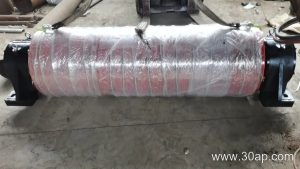
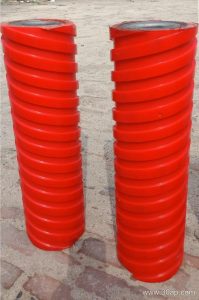
A plain lagged pulley is a conveyor pulley whose shell carries a smooth rubber or elastomer lagging layer without any groove, diamond, or herringbone pattern. The lagging is applied evenly across the face, giving a continuous plain surface. In many workshops this product is simply called a smooth lagged drum or plain rubber lagged pulley, and the two names refer to the same item. It is still a conveyor pulley, not a drive, tail, or bend pulley by definition; those roles describe where the pulley sits in the conveyor, while “plain lagged” describes how its surface is finished.
The distinction matters when specifying a project. A plain lagged pulley can be used as a drive pulley, a tail pulley, or a tension pulley, but the lagging style is chosen for grip, wear protection, and material release rather than for position alone.
How the Pulley Is Built
The core is usually a welded steel shell with end discs and a shaft, machined for balance and runout. Lagging is then bonded to the shell in one of several ways. Cold-bonded rubber is common for general work, while hot-vulcanized rubber gives a stronger bond for heavier duty. Cast rubber lagging is another option on larger drums. Thickness is commonly 8, 10, 12, 15, or 20 mm, selected according to belt tension and abrasion conditions.
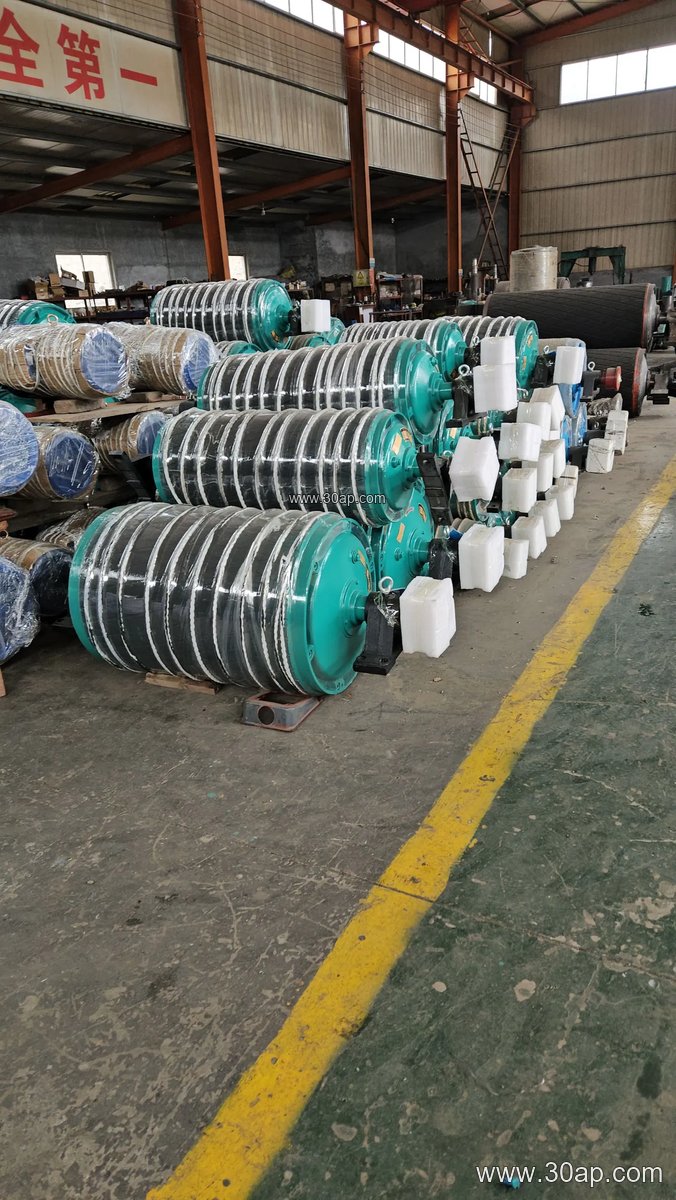
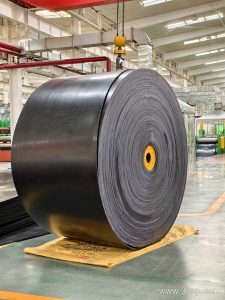
The plain surface has no pattern to trap fines, which helps in sticky or wet service. A smooth finish also reduces the chance of material building up between the lagging and the belt. For abrasive bulk handling, a thicker plain layer can protect the shell, and some buyers pair it with an Abrasion Resistant Conveyor Belt to balance grip and wear life across the whole conveyor.
Where Plain Lagging Fits
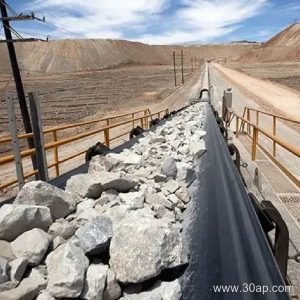
Plain lagged pulleys appear in quarry and aggregate lines, cement plants, power station coal handling, and sand and gravel operations. They are often found on tail pulleys and tension positions where the aim is to protect the shell and keep the belt tracking without aggressive grip. In a crushing circuit, a plain lagged tail drum behind a Crusher Conveyor Belt can tolerate dusty, gritty conditions while keeping the return side clean.
They also suit lines carrying damp or clay-rich material, because a smooth cover sheds fines more readily than a deep pattern. Where extra traction is needed on the drive, a diamond or herringbone lagging may be compared, but that is a different surface choice, not a replacement for the plain version.
Matching Diameter, Face Width, and Shaft
Buyers should treat diameter and face width as design outputs, not fixed pairs. A wider belt does not automatically dictate one diameter, and shaft size follows torque and bearing load rather than belt width alone. The table below shows common reference combinations; final values should be confirmed by the conveyor designer.
| Belt width | Typical pulley face width | Common diameter range | Common shaft range |
|---|---|---|---|
| B500 | about 600 mm | Ø250 to Ø400 | Ø60 to Ø80 |
| B650 | about 750 mm | Ø315 to Ø500 | Ø70 to Ø100 |
| B800 | about 950 mm | Ø400 to Ø630 | Ø80 to Ø120 |
| B1000 | about 1150 mm | Ø500 to Ø800 | Ø100 to Ø140 |
| B1200 | about 1400 mm | Ø630 to Ø1000 | Ø120 to Ø160 |
| B1400 | about 1600 mm | Ø800 to Ø1250 | Ø140 to Ø180 |
| B1600 | about 1800 mm | Ø1000 to Ø1400 | Ø160 to Ø200 |
Face width is normally a little wider than the belt so the belt stays supported during slight misalignment. A B1200 × Ø1000 or B800 × Ø500 arrangement is a common starting point, but projects with high tension or long centres may need a larger drum.
Selection and Maintenance Notes
- Check lagging thickness against abrasion and belt tension; thicker is not always better if the drum is small.
- Confirm the shaft diameter from torque and bearing load, not from belt width.
- Keep the plain surface clean; smooth lagging releases fines well but still needs inspection for cuts and debonding.
- Match the pulley to the belt type, for example a Heat Resistant Conveyor Belt in clinker service or a Flame Retardant Conveyor Belt in coal handling.
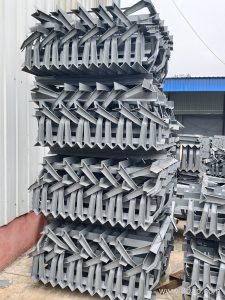
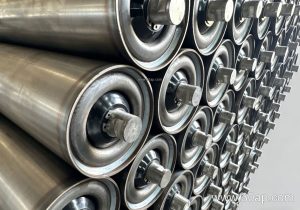
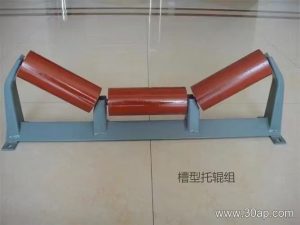
- Check conveyor bracket alignment and idler roller condition during the same inspection, since tracking problems often start away from the drum.
A plain lagged pulley is a simple component, but it works best when the lagging, diameter, face width, and shaft are specified together with the belt and the duty. Buyers who compare these details early avoid rework later.