What a Conveyor Belt Support Frame Does
A conveyor belt support frame is the steel structure that holds the idler rollers in place and keeps the belt running on a steady path. In a quarry, a coal preparation plant, or a cement plant, the belt carries heavy loads, and the frame is what transfers that load to the ground. Without a rigid and well-aligned support frame, even a premium rubber conveyor belt will drift, mistrack, and wear out early.
This component is often called a conveyor idler frame or roller support frame. It is not the same as a conveyor pulley. Drive pulleys, tail pulleys, and bend pulleys each serve a distinct function at the ends or bends of the system, while the support frame runs along the carrying and return sides of the belt line.
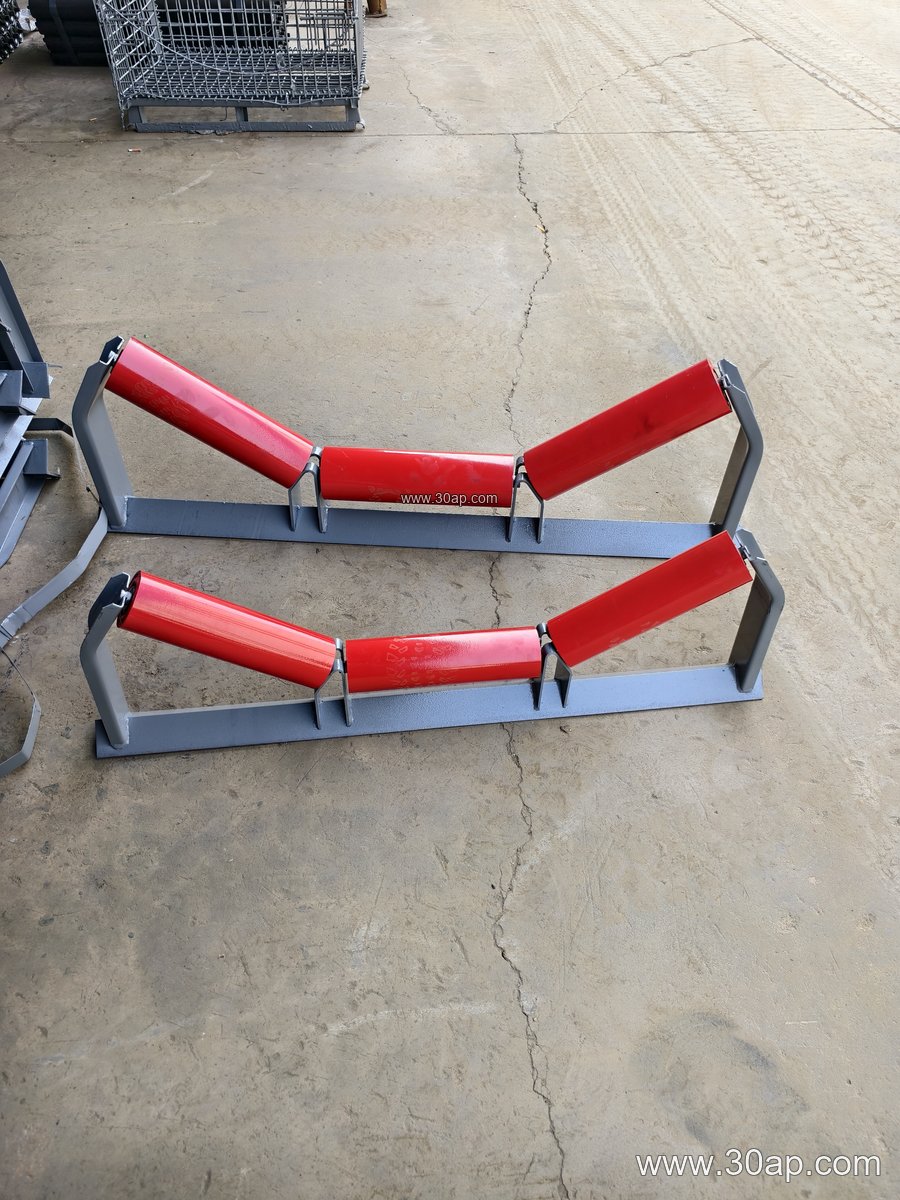
How the Frame Is Built
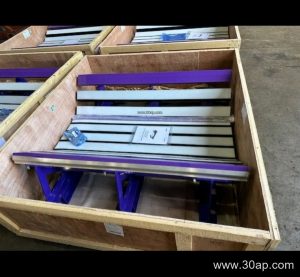
Most frames are fabricated from angle steel, channel steel, or folded steel plate. The crossbeam length and mounting hole spacing are determined by belt width and trough angle, so they are not fixed numbers. A typical assembly includes the crossbeam, idler mounting brackets, and fixing plates that bolt to the conveyor stringer.
Common frame types include trough frames on the carrying side, transition frames near pulleys, return frames, V-return frames, impact frames under loading points, and self-aligning frames. Adjustable frames allow the trough angle to be set between positions such as 20, 30, 35, and 45 degrees, which helps when a line handles different materials.
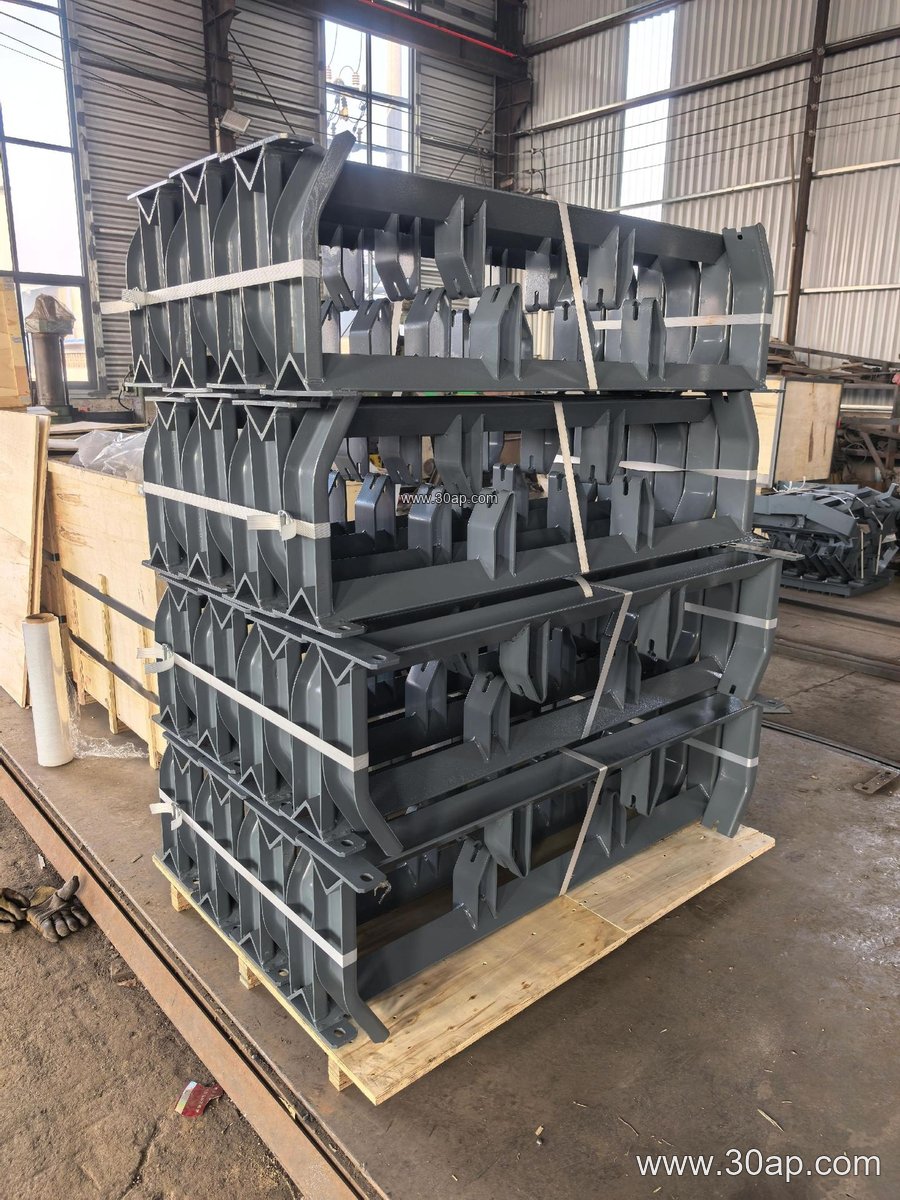
Matching Frame, Belt, and Roller
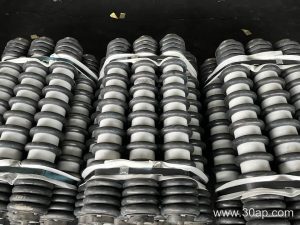
Frame selection starts with belt width and idler diameter. Common belt widths range from B500 up to B2200, and common roller diameters include Ø89, Ø108, Ø133, Ø159, and Ø194. A B800 line at 35 degrees often uses Ø108 rollers, while a B1200 line at 45 degrees may use Ø133. These are typical combinations, not mandatory pairings, and the final choice should follow the conveyor design.
| Item | Common Range | Notes |
|---|---|---|
| Belt width | B500 to B2200 | Frame length follows belt width |
| Trough angle | 20, 30, 35, 45 degrees | Adjustable frames cover several angles |
| Roller diameter | Ø89 to Ø194 | Selected with load and belt speed |
| Forward tilt | About 1.5 to 2 degrees | Used on forward-tilt frames |
| Material | Angle steel, channel steel, folded plate | Coating depends on site conditions |
The frame must also suit the belt itself. A heavy-duty mining conveyor belt or a steel cord conveyor belt carrying iron ore needs a stiffer structure than a light aggregate line. On a long overland system, a steel cord conveyor belt may demand tighter frame alignment to protect the splice and reduce edge damage.
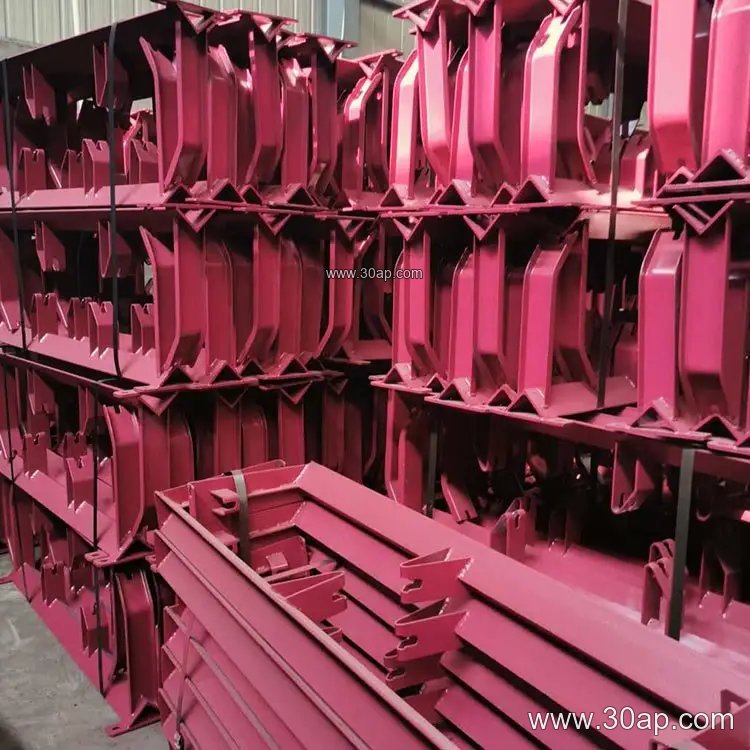
Where These Frames Are Used
Support frames appear wherever bulk material moves. In a limestone mine or stone crushing line, trough frames carry the belt under the crusher discharge. In a power plant coal yard, flame retardant conveyor belts run on frames that must tolerate dust and occasional spillage. In a fertilizer or grain silo facility, the frame and rollers should be selected with corrosion and material build-up in mind.
Impact frames are placed below transfer chutes, where falling rock or ore hits the belt. Self-aligning frames are used on long runs where mistracking is a risk. Return frames and V-return frames support the empty side and help shed sticky material.
Buyer Checklist
- Confirm belt width and required trough angle before ordering.
- Check roller diameter and mounting hole spacing against the existing idlers.
- Match frame strength to the belt type, such as an abrasion resistant conveyor belt in a quarry or a heat resistant conveyor belt near a kiln.
- Decide between fixed and adjustable frames based on how often the setup may change.
- Review coating and drainage for wet or dusty sites.
- Keep spare brackets and fixing plates on hand for quick repairs.
A well-chosen conveyor belt support frame is a quiet investment. It keeps the conveyor idler aligned, protects the belt edge, and reduces downtime in mines, cement plants, and ports alike.