What a Corrugated Sidewall Conveyor Belt Is
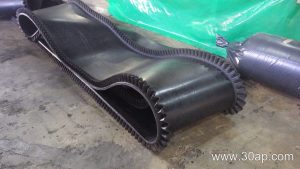
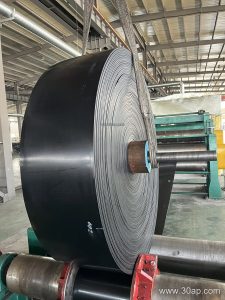
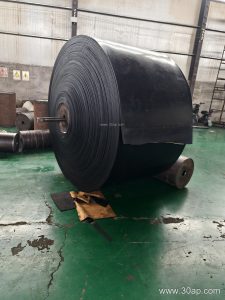
A corrugated sidewall conveyor belt is a heavy-duty rubber belt with raised flexible walls along both edges and, usually, horizontal cleats spanning the width between them. The corrugated profile lets the belt carry bulk material at steep angles, and in some layouts it can run nearly vertically. In many plants this product is also called a skirted conveyor belt or a belt with wave-type sidewalls, and the two names describe the same construction.
The working principle is simple. The sidewalls and cleats form pockets that hold material on the belt surface, so the load does not slide back on a steep slope. That makes the belt useful where a conventional flat conveyor would need too much horizontal run, or where a bucket elevator or truck haul would otherwise be needed.
How the Belt Is Built
A typical corrugated sidewall conveyor belt has three main parts.
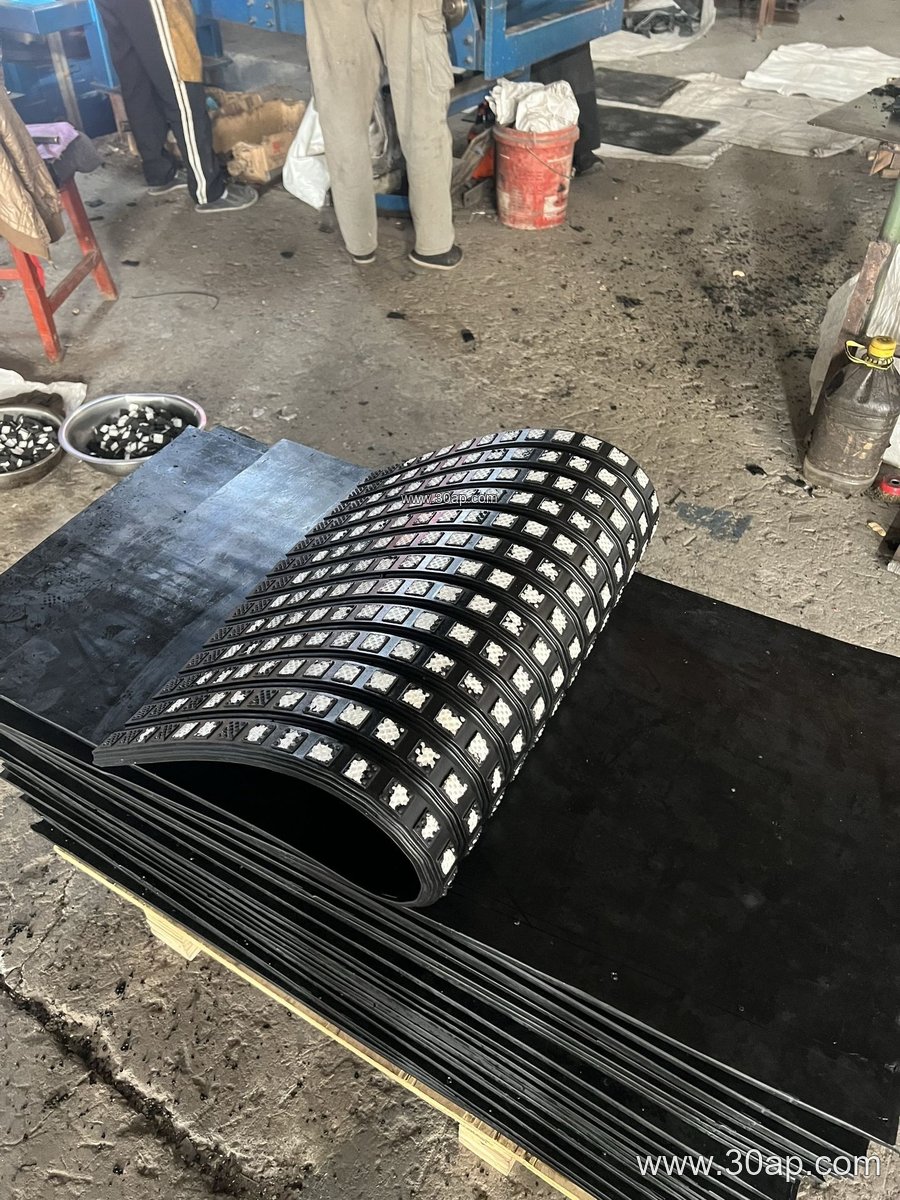
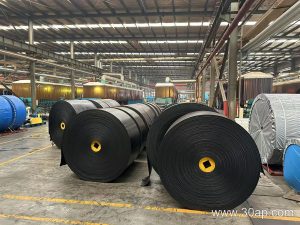
- Base belt – the load-bearing carcass, usually a fabric core such as EP or NN, or a steel cord construction for very high tensions and long lifts.
- Sidewalls – corrugated rubber walls bonded to both edges, available in different heights and shapes depending on the duty.
- Cleats – crosswise ribs fixed between the walls at a set pitch, in profiles such as T, C, TC or cross-rib designs.
Sidewall height and cleat pitch are usually matched to the material and the incline. Fine, dry material may need a tighter cleat spacing, while lumpy rock may need a taller wall and stronger cleat. The bond between wall, cleat and base belt is a critical quality point, because a weak joint can peel under repeated flexing at the pulleys.
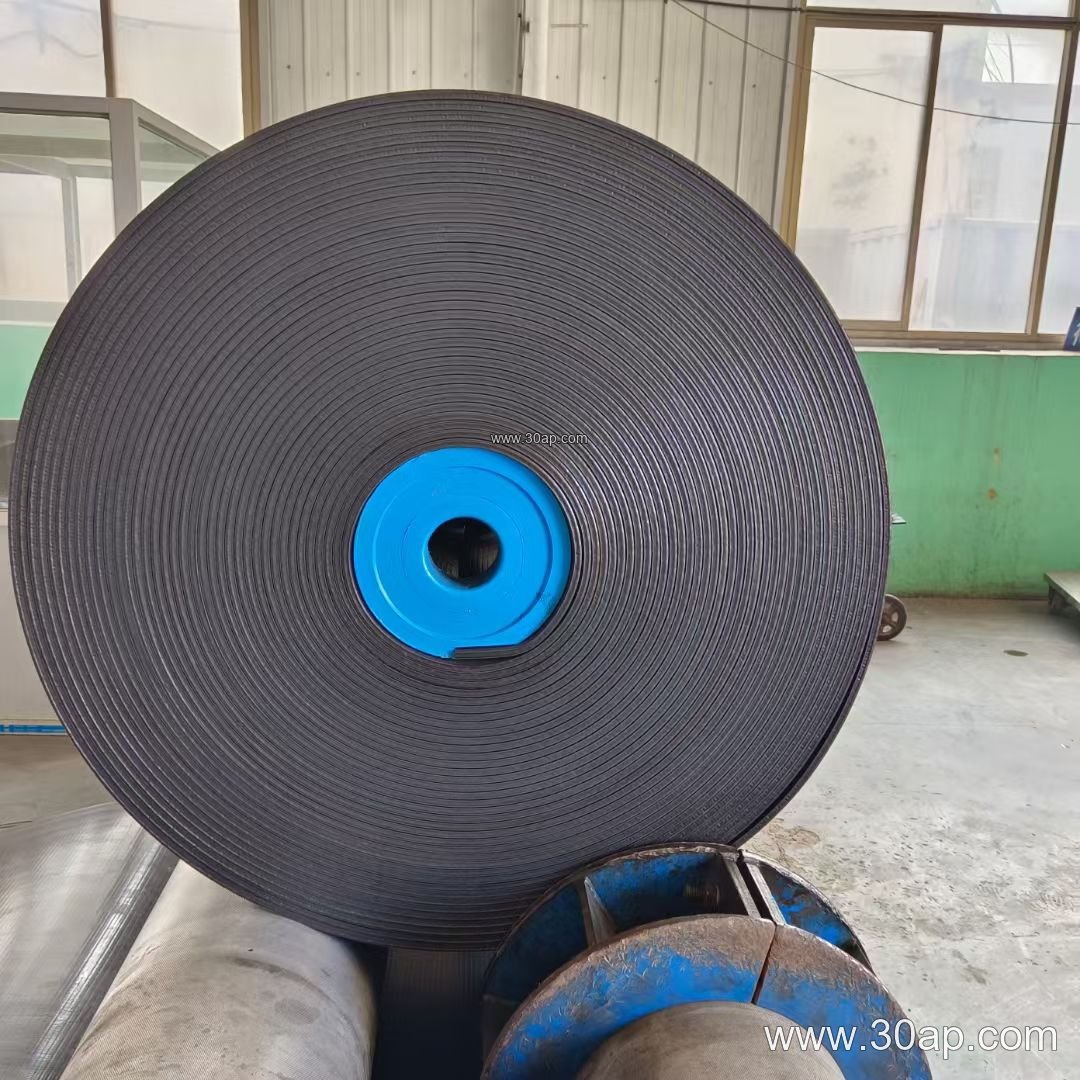
A base belt for this duty is often specified as an abrasion resistant conveyor belt in a multi-ply fabric core construction. In coal mines, a flame retardant conveyor belt grade may be required, and underground coal mining conveyor belt rules often add anti-static properties. For hot clinker or cement, a heat resistant conveyor belt compound may be selected for the cover.
Where It Fits in a Conveyor Line
This belt is common in mining, coal preparation, cement plants, power stations, sand and gravel yards, ports and fertilizer handling. Typical jobs include:
- Steep incline transport from a crusher discharge to a stockpile.
- Vertical or near-vertical lifts inside a confined plant layout.
- Ship loading and barge loading where space is limited.
- Handling of ore, aggregate, clinker, sand and similar bulk material.
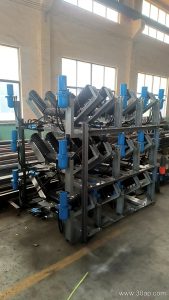
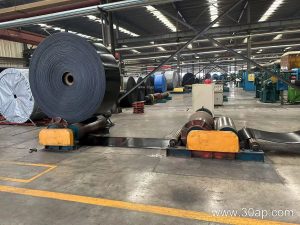
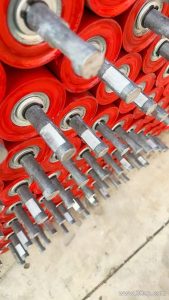
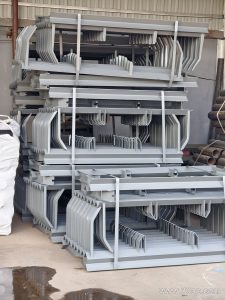
The belt runs on a support frame with a drive pulley, a tail pulley and bend pulleys that guide the return run. Because the sidewalls stand up from the surface, the belt usually needs special pulley profiles and, in many designs, supporting idler rollers under the carrying run. The conveyor bracket and frame must leave clearance for the walls, and the bend pulley arrangement must keep the belt tracking straight.
Common Reference Data
The values below are typical reference ranges, not fixed specifications. Actual figures depend on the conveyor design and the manufacturer.
| Item | Common range or example |
|---|---|
| Base belt type | EP fabric core, NN fabric core, steel cord |
| Strength grade (EP) | EP200, EP315, EP400, EP500, EP630, EP800 |
| Belt width | B500, B650, B800, B1000, B1200, B1400 |
| Cover thickness | 4+2 mm, 5+2 mm, 6+2 mm |
| Carcass plies | 2 to 6 plies, depending on tension |
| Sidewall height | Selected to suit material and incline |
| Cleat pitch | Set by pocket size and belt speed |
A wide conveyor belt such as 1200 mm or 1400 mm may be used where high capacity is needed, while narrower widths suit smaller plants. There is no rule that one belt width must match one pulley diameter; the pulley size is determined by the belt construction, the sidewall height and the conveyor design.
Buyer Checklist
- Confirm the material: lump size, moisture, temperature, abrasiveness and whether dust or gas requires a fire resistant conveyor belt grade.
- State the incline angle, lift height and required capacity in tonnes per hour.
- Give the belt width and strength grade, for example an EP conveyor belt of EP400 or EP630, or a steel cord grade for a long lift.
- Ask how sidewalls and cleats are bonded and whether the cleat profile suits the load.
- Check pulley diameters, bend pulley layout and frame clearance before ordering.
- Plan inspection of wall edges and cleat joints, since these are the first areas to show wear.
For steep inclines in a quarry or a cement plant, a corrugated sidewall conveyor belt can replace a longer flat conveyor and free up floor space. Buyers who compare it with a chevron conveyor belt should note the difference: a chevron belt relies on patterned ribs on a flat surface for moderate slopes, while this belt uses walls and cleats to form pockets for much steeper angles.