What a Welded Pulley Is and Why the Joint Matters
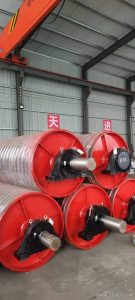
A welded pulley is a conveyor pulley whose shell, end discs and hub assembly are joined by welding rather than by a bolted or cast construction. In a conveyor line, this component carries the conveyor belt, sets its path and transmits or absorbs the tension that keeps material moving. The welded shell is what separates it from lighter fabricated drums: the seam and the disc-to-shell joints become the load path, so weld quality, fit-up and stress control decide how long the pulley survives in a quarry, a coal preparation plant or a cement clinker line.
Buyers often meet this product as a welded conveyor pulley, and the names describe the same item. It is not a drive pulley, tail pulley or bend pulley by definition; those are positions in the conveyor, and a welded pulley can serve in any of them when the design suits the duty.
How the Shell and Hub Are Built
Production usually starts with rolled plate formed into a cylinder, longitudinally seam-welded, then machined or ground at the ends to accept the end discs. The discs are welded to the shell and to the hub, and the hub is bored for the shaft. Larger units may use a through shaft with keyways, while others use a shrunk-on or welded shaft connection. After welding, the shell is often stress-relieved and then machined so that runout stays within tolerance.
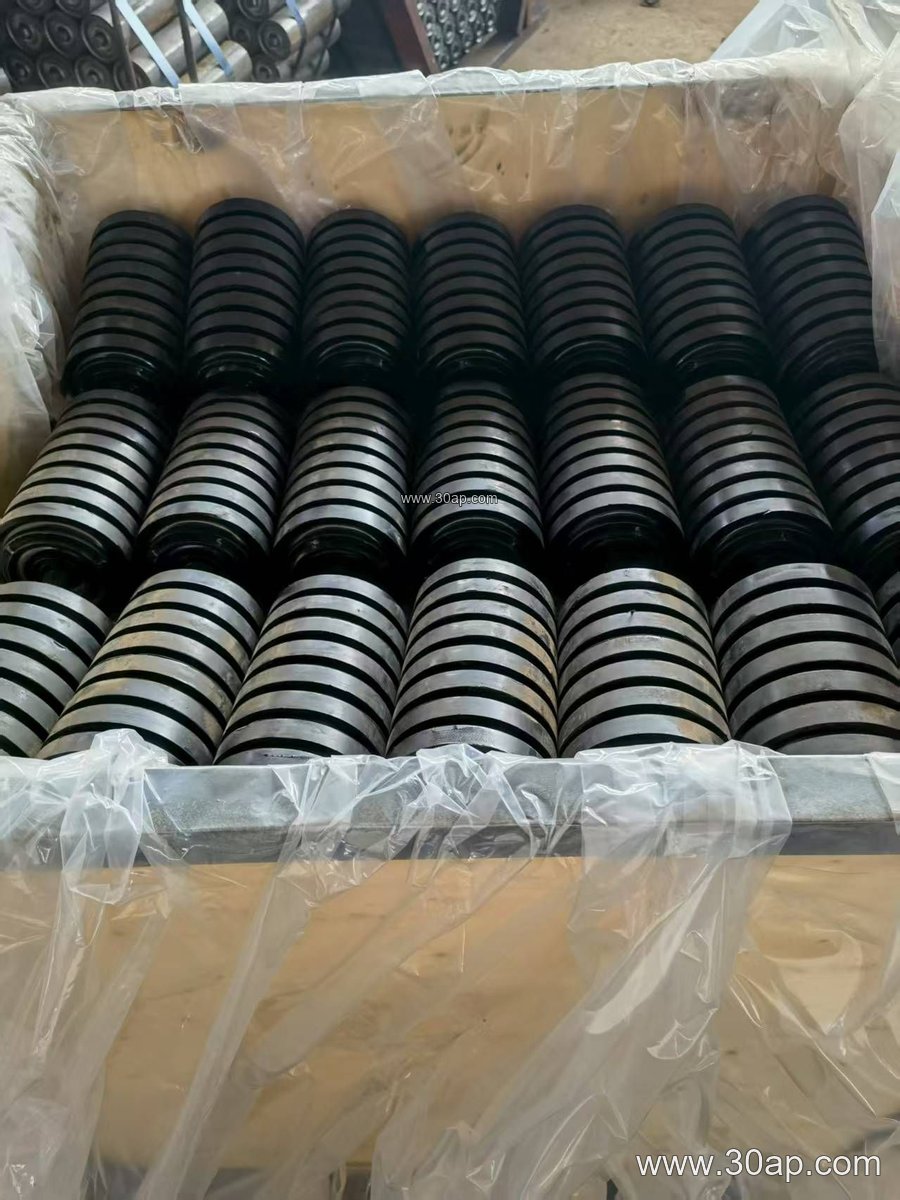
Weld procedure control matters more than the presence of a weld itself. Porosity, undercut or an incomplete fusion zone can turn into a fatigue crack under repeated belt tension, especially where the disc meets the shell. A buyer should ask how the weld is inspected and how the shell is balanced, because an out-of-balance pulley loads the bearings and the conveyor bracket.
Where Welded Pulleys Fit in a Conveyor
These pulleys appear in bulk handling where belt tensions are high and the pulley must resist both radial load and torsion. Typical settings include:
- Aggregate and crushed stone lines feeding screens and crushers.
- Coal handling and wash plants, where dust and moisture demand robust sealing.
- Cement plants moving clinker, limestone and raw meal.
- Power station coal yards and port bulk terminals.
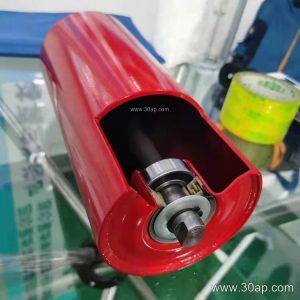
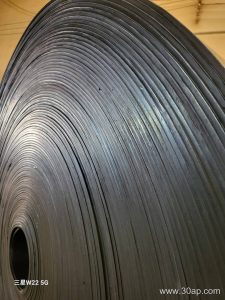
The belt itself interacts with the pulley surface, so the choice of lagging and the condition of the conveyor belt should be considered together. A worn belt edge or a seized idler roller upstream can shorten pulley life regardless of weld quality.
Dimensions, Lagging and Shaft Sizing
Pulley size is normally expressed as belt width plus diameter, such as B800 × Ø500 or B1200 × Ø1000. The shell face is wider than the belt to allow tracking margin. Common face widths are shown below; these are reference figures, not a fixed rule for every conveyor.
| Belt width | Typical shell face | Common diameter range |
|---|---|---|
| B500 | about 600 mm | Ø250 to Ø400 |
| B650 | about 750 mm | Ø315 to Ø500 |
| B800 | about 950 mm | Ø400 to Ø630 |
| B1000 | about 1150 mm | Ø500 to Ø800 |
| B1200 | about 1400 mm | Ø630 to Ø1000 |
| B1400 | about 1600 mm | Ø800 to Ø1250 |
| B1600 | about 1800 mm | Ø1000 to Ø1400 |
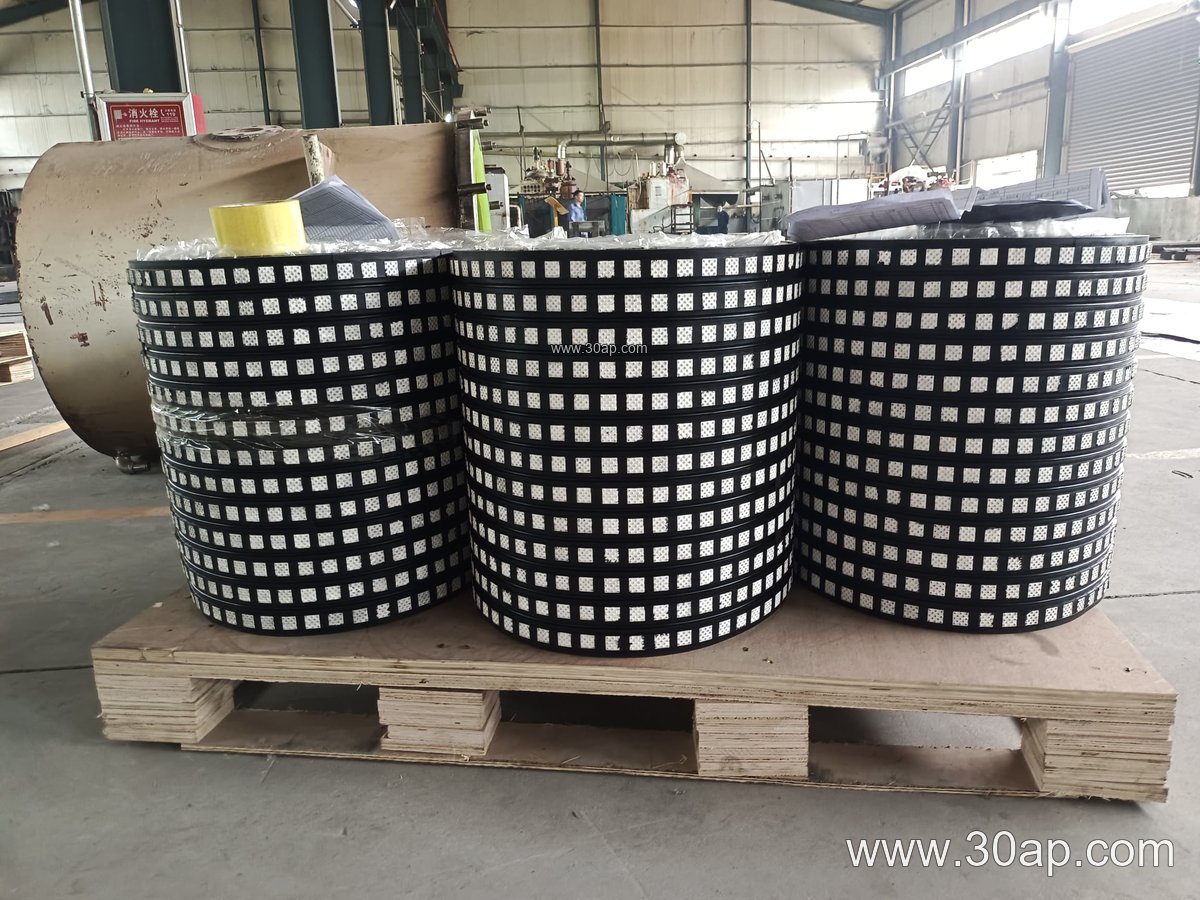
Lagging protects the shell and improves grip. Options include plain, hot vulcanized rubber, cold bonded rubber, diamond and herringbone patterns, and ceramic tiles. Common lagging thicknesses are 8, 10, 12, 15 and 20 mm. In a drive position, diamond or ceramic lagging may be chosen for wet or oily conditions; on a bend pulley, plain or light lagging is often enough. Shaft diameter is determined by torque and bearing load, not by belt width alone, with common values from Ø50 to Ø200.
What to Confirm Before Ordering
A clear specification should state the installation position, belt width, pulley diameter, face width, shaft diameter and lagging type. It should also note the belt speed, the transmitted power and the expected belt tension, since these drive the weld design and bearing selection. Where the conveyor uses an EP conveyor belt or a steel cord conveyor belt, the higher tension can require a heavier hub and shaft arrangement.
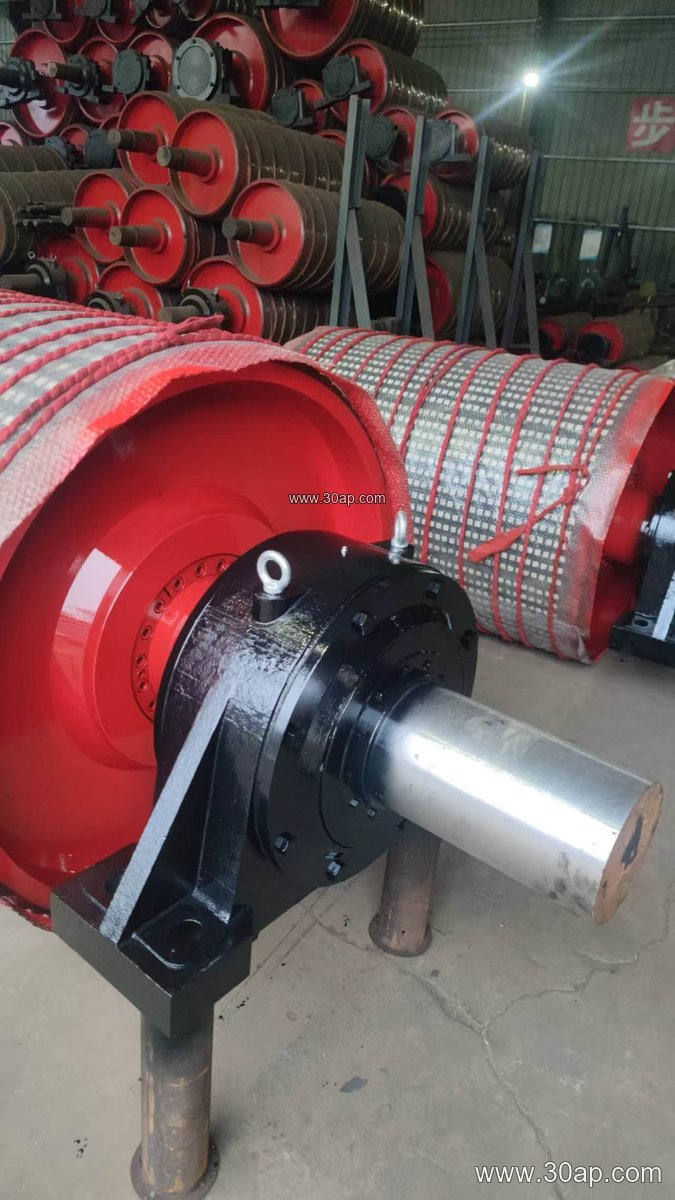
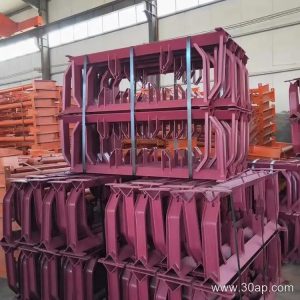
Ask for the weld inspection method, the balancing grade, the bearing type and the sealing arrangement. In dusty plants, a good seal is as important as the weld. Also confirm how the pulley mounts to the conveyor bracket and whether take-up allowance is needed for a tail or tension position.
Maintenance Practice
Inspect welds at each scheduled shutdown, particularly around the disc-to-shell joint. Check lagging wear and look for cracks at the keyway. Listen for unusual noise from the bearings and verify that the pulley turns freely. Replacing a worn idler roller and keeping the belt aligned reduce side load on the pulley. When a weld repair is needed, the pulley should be rebalanced before it returns to service.
Matching the pulley to the real duty, rather than to a catalog shorthand, is the most reliable way to avoid premature failure in a mining, cement or port conveyor system.