What a Heavy-Duty Mining Idler Does Underground and at the Stockpile
In a coal mine or an ore dressing plant, the conveyor structure carries more than just material. It absorbs impact, guides the belt, and keeps the line running between shifts. A heavy-duty mining idler is the roller assembly that supports the conveyor belt on the carrying and return sides where loads are high, dust is constant, and maintenance windows are short. Unlike a standard roller used in a light packaging line, this idler roller is built with thicker shells, reinforced bearing housings, and sealing that resists fine abrasive dust. The same product is often called a heavy-duty conveyor idler, and both names point to the same component in the conveyor frame.
Construction Details That Matter in the Dust
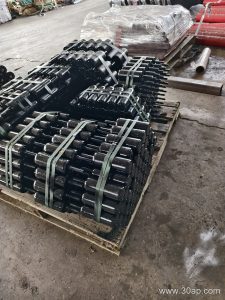
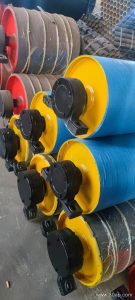
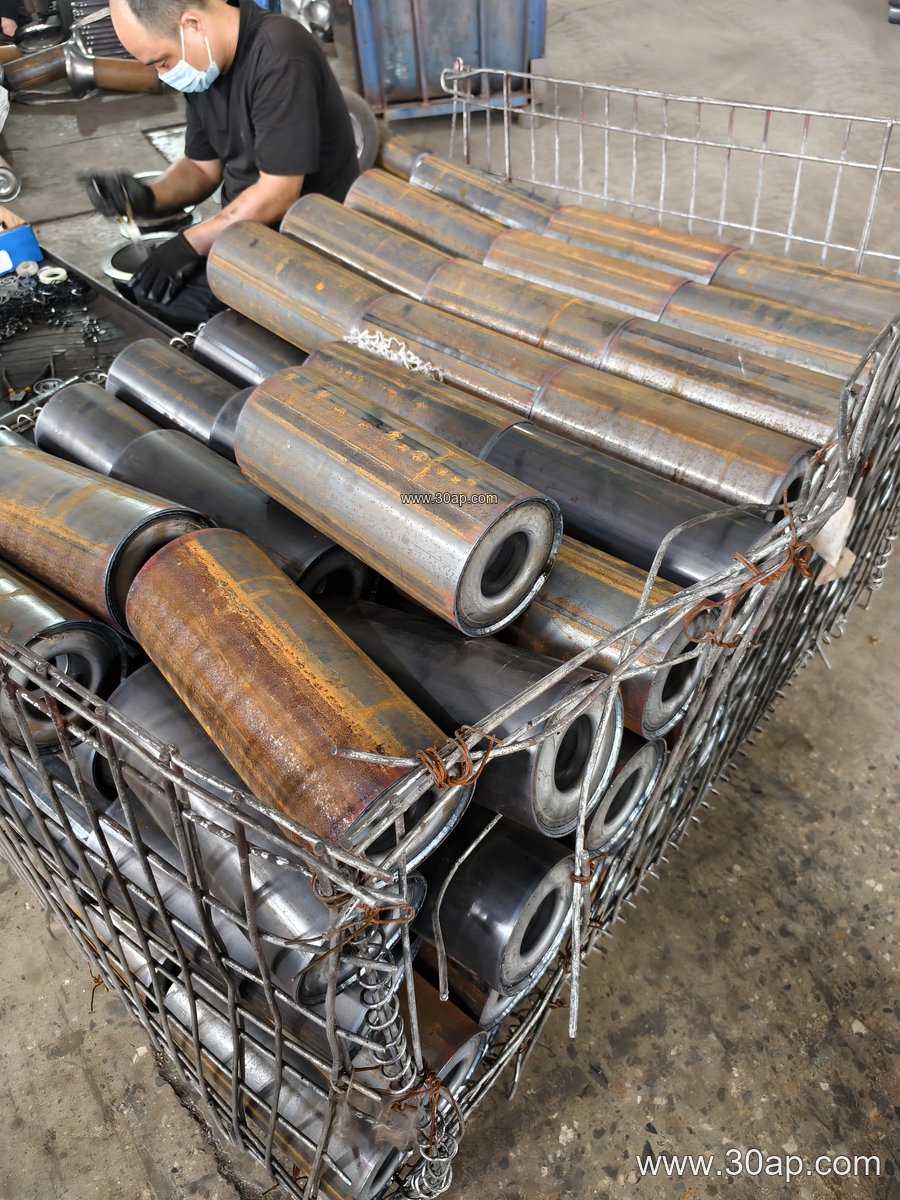
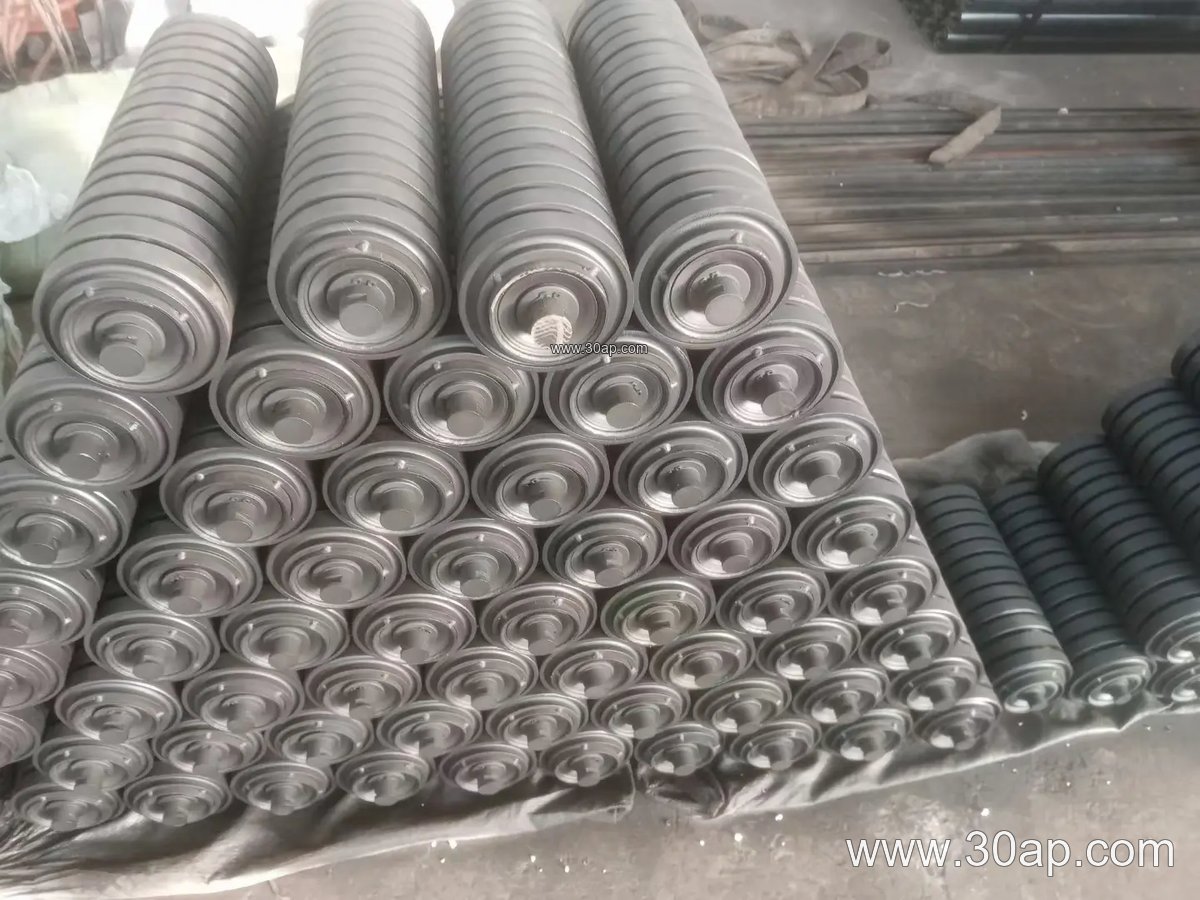
The typical heavy-duty mining idler combines a steel tube shell, a shaft, bearing seats, and a multi-stage seal. Roller diameter is usually chosen from a range such as Ø108, Ø127, Ø133, Ø159, or Ø178 mm, depending on belt width, load, and the space available in the conveyor bracket. Bearing sizes commonly include 6205, 6305, 6306, 6308, or 6310, but no single bearing is tied to one roller diameter. The seal arrangement, grease retention, and shell thickness often separate a mining-duty idler from a general-purpose roller.
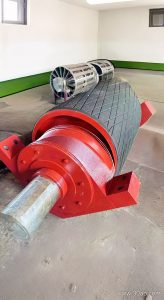
Surface form also changes with the application. A plain steel shell suits clean return runs, while a rubber ring or ceramic lagging can reduce wear or improve grip in wet conditions. For impact zones under a crusher discharge, a rubber-disc impact idler is used, but it is a different subtype and not a substitute for the standard carrying idler.
Where the Idler Fits in the Conveyor Line
In a quarry or limestone mine, three-roll troughing sets at 30 or 35 degrees are common on the carrying side, while V-return or flat return idlers support the empty belt. The heavy-duty mining idler is most often found in the load zone, at transfer points, and on long overland runs where the belt carries coarse rock. In a coal washing plant or a power plant coal yard, the same idler must cope with wet fines and occasional spillage, so the seal and shell finish deserve close attention.
Related components such as the conveyor pulley, conveyor bracket, and the conveyor belt itself are selected together. A heavy-duty mining conveyor belt with a thick cover may require a different idler spacing than a thin fabric belt. Mentioning a steel cord conveyor belt or an abrasion resistant conveyor belt here is only to show that belt construction affects idler load, not to replace the idler as the main subject.
Common Sizes and Arrangements
Roller length follows belt width, trough angle, and roll set design. The table below gives common examples, not fixed rules.
| Belt width | Typical roll length (three-roll trough) | Common idler diameter |
|---|---|---|
| B500 | about 200 mm | Ø89 to Ø108 mm |
| B650 | about 250 mm | Ø89 to Ø127 mm |
| B800 | about 315 mm | Ø108 to Ø133 mm |
| B1000 | about 380 mm | Ø108 to Ø159 mm |
| B1200 | about 465 mm | Ø127 to Ø159 mm |
| B1400 | about 530 mm | Ø133 to Ø178 mm |
| B1600 | about 600 mm | Ø159 to Ø194 mm |
| B1800 | about 670 mm | Ø159 to Ø219 mm |
| B2000 | about 750 mm | Ø178 to Ø219 mm |
Side rollers and center rollers can differ in length. Trough angles of 20, 30, 35, and 45 degrees change the belt profile and the load on each roll. A slight forward tilt of about 1.5 to 2 degrees is sometimes used on training idlers, but it is not a default for every carrying idler.
Buyer Checklist for Mining Duty
- Confirm the actual belt width and trough angle before ordering roll length.
- Match idler diameter and bearing class to the load and speed, not to a catalog headline.
- Ask about seal type, grease retention, and shell wall thickness for dusty or wet service.
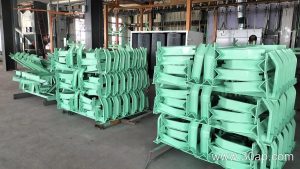
- Check that the conveyor bracket and frame accept the chosen shaft and housing.
- For impact zones, specify impact or rubber-disc idlers separately from standard carrying idlers.
- Review the belt specification, including whether it is a flame retardant conveyor belt, heat resistant conveyor belt, or oil resistant conveyor belt, because belt cover affects idler life.
A heavy-duty mining idler is a small part of the conveyor cost but a large part of uptime. Selecting the right roller diameter, bearing, seal, and roll length for the belt and the duty keeps the line moving in the mine, the cement plant, or the port terminal.