What a Motorized Pulley Is
A motorized pulley is a self-contained conveyor drive in which the electric motor and gear reducer sit inside the pulley shell. Because the drive train is enclosed, the unit needs no external gearbox, chain guard, or exposed coupling. On a belt conveyor, this drum takes the place of a conventional drive pulley plus its separate drive station, while still functioning as the head pulley that transmits motion to the belt. The same product is also called a drum motor or an internal drive pulley. It is distinct from a tail pulley or a bend pulley, which guide the belt but do not drive it.
In a quarry, a cement plant, or a coal handling line, the compact footprint is often the deciding factor. The motorized pulley can be mounted directly in the conveyor frame, so the walkway stays clear and the drive does not intrude into the material flow path.
How the Drive Is Built
Inside the shell, a stator and rotor, a multi-stage gear unit, and bearings are arranged around a fixed shaft. Oil or grease lubricates the gear stage and helps carry heat away from the motor. The shell turns while the shaft stays fixed, and the shaft ends are clamped into the conveyor bracket. Electrical supply enters through one shaft end, and a torque arm or anti-rotation device keeps the housing from spinning.
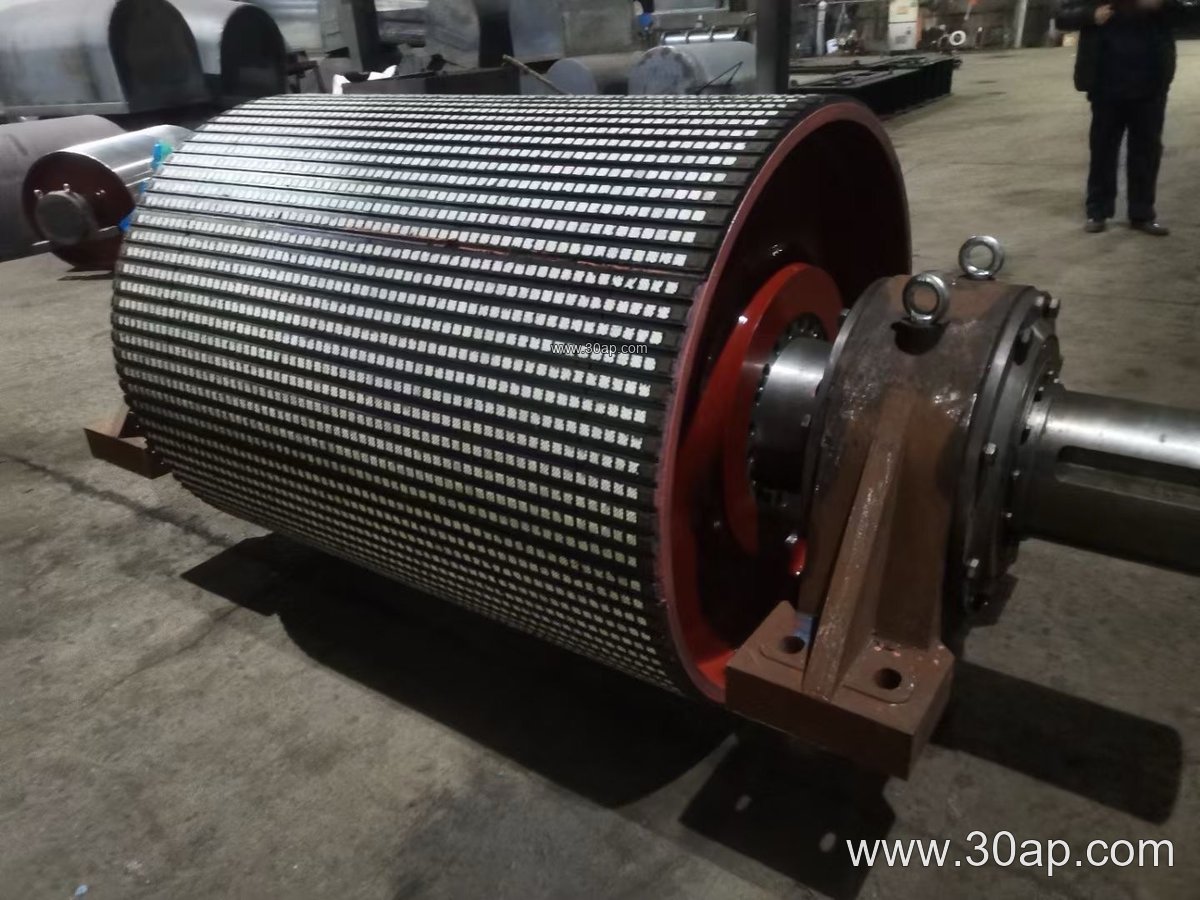
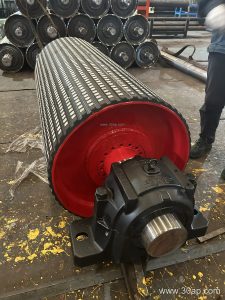
The outer surface can be plain or lagged. Common surface choices include cast rubber, cold-bonded rubber, hot-vulcanized rubber, diamond lagging, and ceramic lagging, with lagging thickness often in the 8 to 20 mm range. Lagging develops grip, which matters when a heavy or wet load is being moved. A belt conveyor handling wet sand or clay often benefits from a textured surface, while a clean fine-material line may run well with a plain drum.
Where It Fits in the Conveyor
The most common position is the head end, where the drum also discharges material. Some layouts use the same unit at an intermediate or tensioning position, provided the design allows the belt to wrap the drum properly. In a port bulk terminal or a power plant coal yard, space around the head chute is usually tight, and removing the external drive frees useful room.
Related parts still have to be coordinated. The conveyor belt, the idler roller strings along the carrying side, and the return idlers all affect belt tension and tracking. A conveyor pulley at the tail or a bend pulley at a vertical curve is not a substitute for the drive drum; those positions keep the belt aligned and are sized for different loads. The motorized pulley must be selected together with the whole drive layout, not as an isolated item.
Sizes and Practical Selection
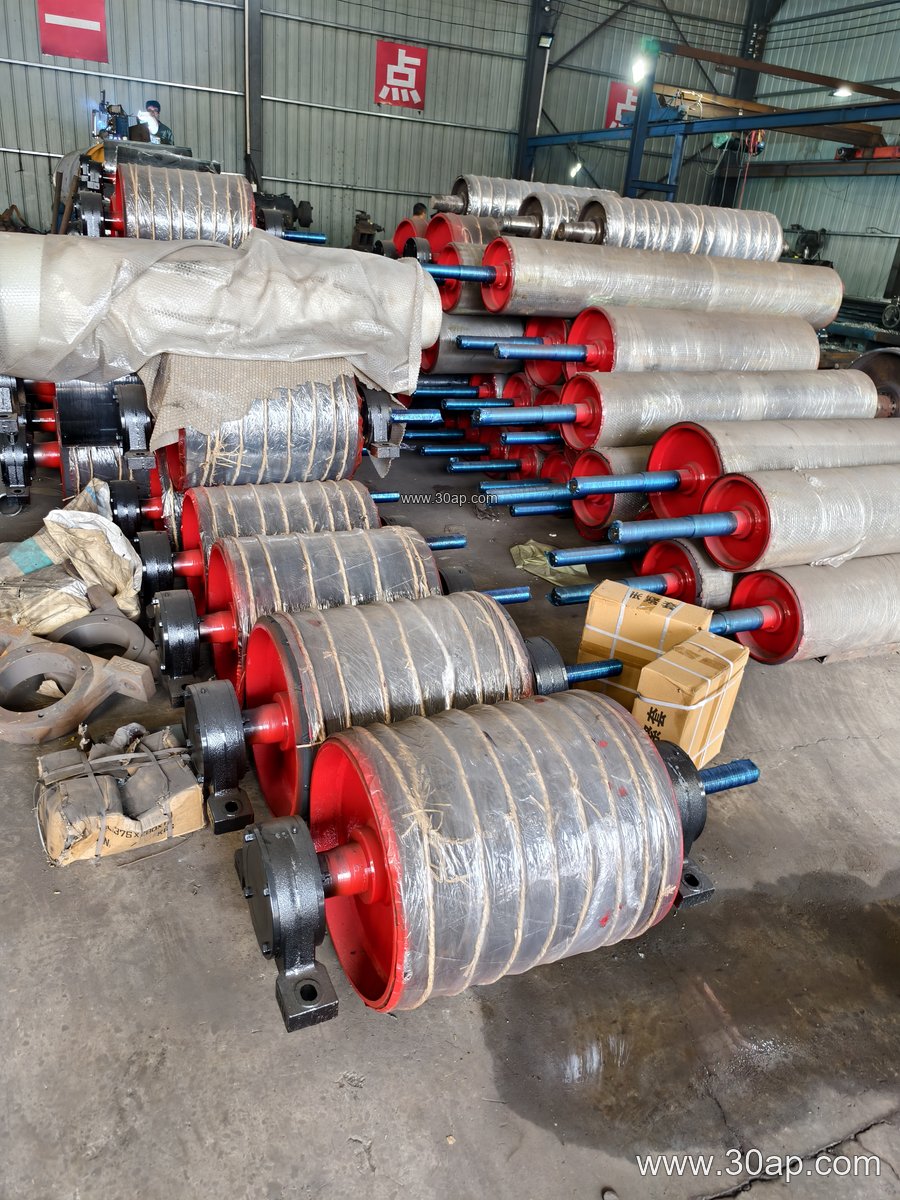
Drum diameter and face width are the first dimensional decisions. Face width usually exceeds the belt width so the belt is fully supported. Common belt widths run from B400 to B2400, with typical face widths such as about 500 mm for B400, about 750 mm for B650, about 950 mm for B800, and about 1400 mm for B1200. Diameter choices commonly include Ø200, Ø250, Ø315, Ø400, Ø500, Ø630, Ø800, and larger sizes for heavy duty duty lines.
| Belt width | Typical drum face width | Example diameter reference |
|---|---|---|
| B400 | about 500 mm | Ø200–Ø250 |
| B500 | about 600 mm | Ø250–Ø315 |
| B650 | about 750 mm | Ø315–Ø400 |
| B800 | about 950 mm | Ø400–Ø500 |
| B1000 | about 1150 mm | Ø500–Ø630 |
| B1200 | about 1400 mm | Ø630–Ø800 |
| B1400 | about 1600 mm | Ø800–Ø1000 |
These figures are reference ranges, not fixed pairings. Diameter depends on the required wrap angle, belt thickness, and the belt’s minimum pulley diameter allowance. A B1200 × Ø1000 combination may suit one duty and be oversized for another. Shaft diameter is set by torque and bearing load, with common values from Ø50 to Ø200, and should never be guessed from belt width alone.
What Buyers Should Check
- Confirm the belt type and duty: an abrasion resistant conveyor belt in a stone crushing line needs different grip and drum size than a smooth food grade belt.
- Check the wrap angle and the position, since a drive at the head and a drive at a tensioning point are loaded differently.
- Match the lagging surface to the material, and choose flame retardant or heat resistant options only where the environment requires them.
- Verify the conveyor bracket dimensions, shaft keyway, and electrical entry before ordering.
- Plan lubrication and inspection access; an internal drive still needs routine oil checks and seal inspection.
For more on matching belts, drums, and frames, see the conveyor pulley and idler roller pages, and review rubber conveyor belt options for abrasive or heavy loads. A well-matched motorized pulley keeps a conveyor line simple, clean, and easier to maintain.