What a Conveyor Drive Pulley Does
The conveyor drive pulley is the powered drum that transmits motion to the conveyor belt. Often called the head pulley or drive drum, it is typically located at the discharge end of the conveyor and is connected to a gearbox or motor. Its primary role is to provide sufficient friction between the pulley surface and the belt to move the loaded belt without slip. In industries such as mining, coal preparation, cement plants, and aggregate quarries, the drive pulley is a critical component for reliable material transport.
Unlike a tail pulley or bend pulley, which serve to redirect or tension the belt, the drive pulley is the only one that inputs power. This distinction is important when specifying replacement parts: a drive pulley cannot be substituted with a wing pulley or a snub pulley without compromising the conveyor’s drive capability.
Construction and Key Components
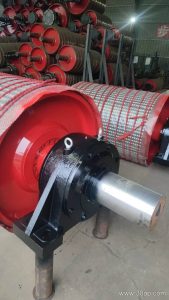
A typical conveyor drive pulley consists of a cylindrical shell, end discs, a shaft, and bearing housings. The shell is usually made from rolled steel and may be machined for balance. The shaft is sized according to the torque and radial loads, not simply by belt width. Common shaft diameters include Ø50, Ø60, Ø70, Ø80, Ø90, Ø100, Ø120, Ø140, Ø160, Ø180, and Ø200 mm, but the final choice depends on the drive power and belt tension.
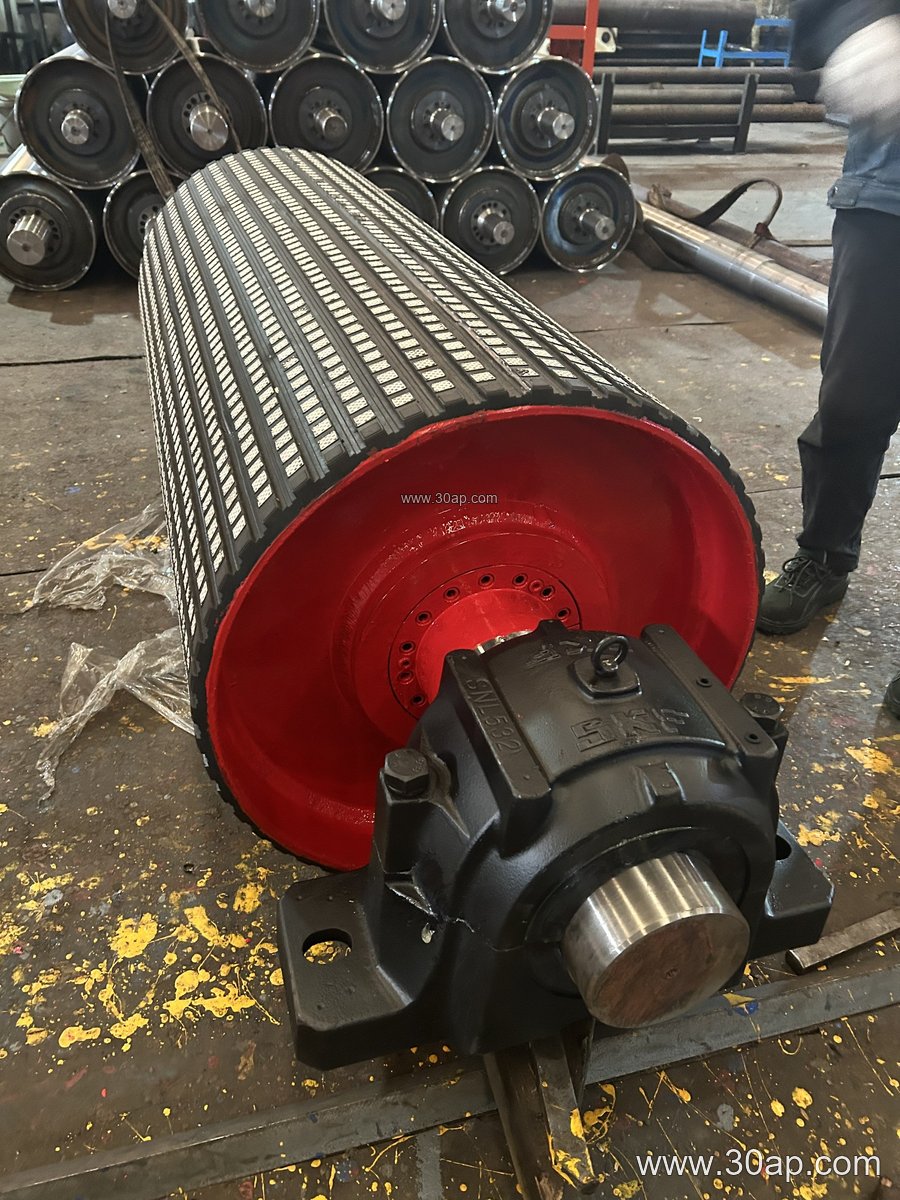
Surface treatment is critical for grip. Plain steel shells are used in light-duty or clean conditions, while rubber lagging—applied by cold bonding or hot vulcanization—improves friction and protects the shell. Lagging patterns include diamond, herringbone, and ceramic tiles. Lagging thickness commonly ranges from 8 mm to 20 mm. The pulley face width is usually slightly wider than the belt; for example, a B800 belt might use a pulley face of about 950 mm, and a B1200 belt about 1400 mm. These are typical references, not fixed rules.
Where It Is Used
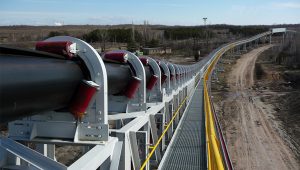
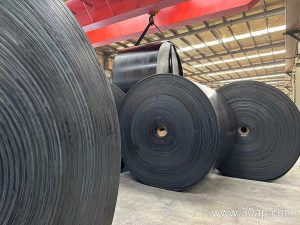
Drive pulleys are found in a wide range of bulk handling systems. In a coal washing plant, they power the main haulage conveyor; in a limestone quarry, they drive the primary crushing feed belt; in a cement plant, they move clinker and raw meal. Other common applications include power plant coal handling, port bulk terminals, and aggregate stockpiling. The drive pulley works in conjunction with the conveyor belt, idler rollers, and conveyor brackets to form a complete conveyor system.
When selecting a drive pulley, consider the belt width, the required power, the environment (dust, moisture, temperature), and the lagging type. For example, a B1000 × Ø800 drive pulley with diamond lagging might suit a medium-duty aggregate conveyor, while a B1400 × Ø1000 pulley with ceramic lagging could be chosen for a high-torque application in a iron ore mine. Again, these are illustrative combinations, not mandatory matches.
Buyer’s Checklist
- Belt width and pulley face: Ensure the pulley face is wider than the belt to allow proper tracking. Common belt widths include B400, B500, B650, B800, B1000, B1200, B1400, B1600, B1800, B2000, B2200, and B2400.
- Diameter: Larger diameters improve belt life by reducing bending stress. Typical diameters range from Ø200 to Ø1800 mm, but the choice depends on belt thickness and speed.
- Shaft size: Do not assume a shaft diameter from belt width alone. Calculate torque and verify with the pulley manufacturer.
- Lagging: Choose plain, rubber, or ceramic based on grip requirements and material abrasiveness.
- Balance and runout: For high-speed conveyors, dynamic balancing is recommended to avoid vibration.
Regular maintenance—checking lagging wear, bearing condition, and shaft alignment—helps extend the service life of the drive pulley and keeps the conveyor system running smoothly.