What a Conveyor Parts Pulley Does on the Line
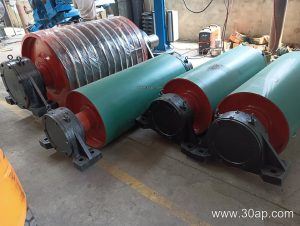
A conveyor parts pulley is the rotating drum that carries and guides the belt at key points along a conveyor structure. It is not a single universal component: the drive pulley at the head transmits torque, the tail pulley at the loading end returns the belt, and bend or snub pulleys redirect it around curves and tensioning zones. Each position asks something different from the drum, so buyers usually select them as separate line items rather than one shared specification.
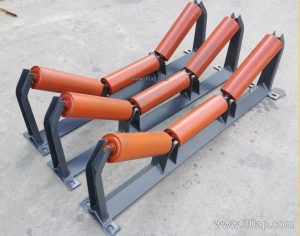
In a quarry, cement plant or port bulk terminal, the pulley works together with the conveyor belt, idler rollers and brackets. A poorly matched drum shows up quickly as belt wander, slippage or excessive cover wear, especially where abrasive stone or clinker is handled.
How the Drum Is Built
The core is a welded steel shell with end discs and a shaft, supported by bearing housings mounted on the conveyor frame. Shell thickness and shaft diameter are determined by the torque and radial load of the application, not by belt width alone. Common shaft diameters include Ø80, Ø100, Ø120, Ø140 and Ø160, but the final value follows the drive calculation.
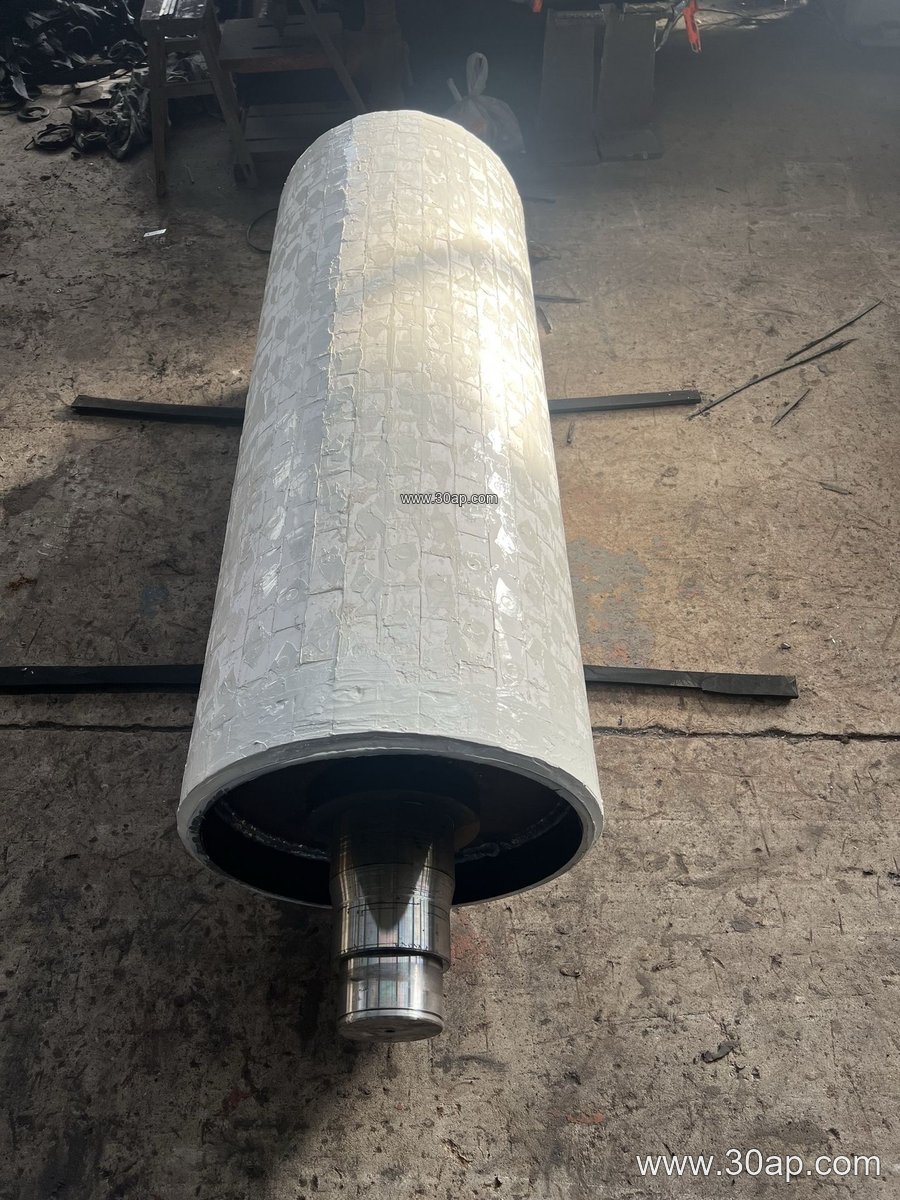
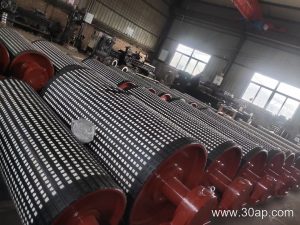
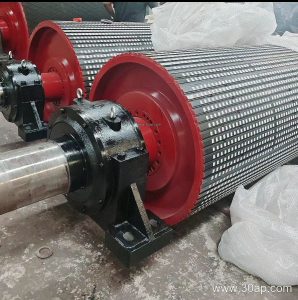
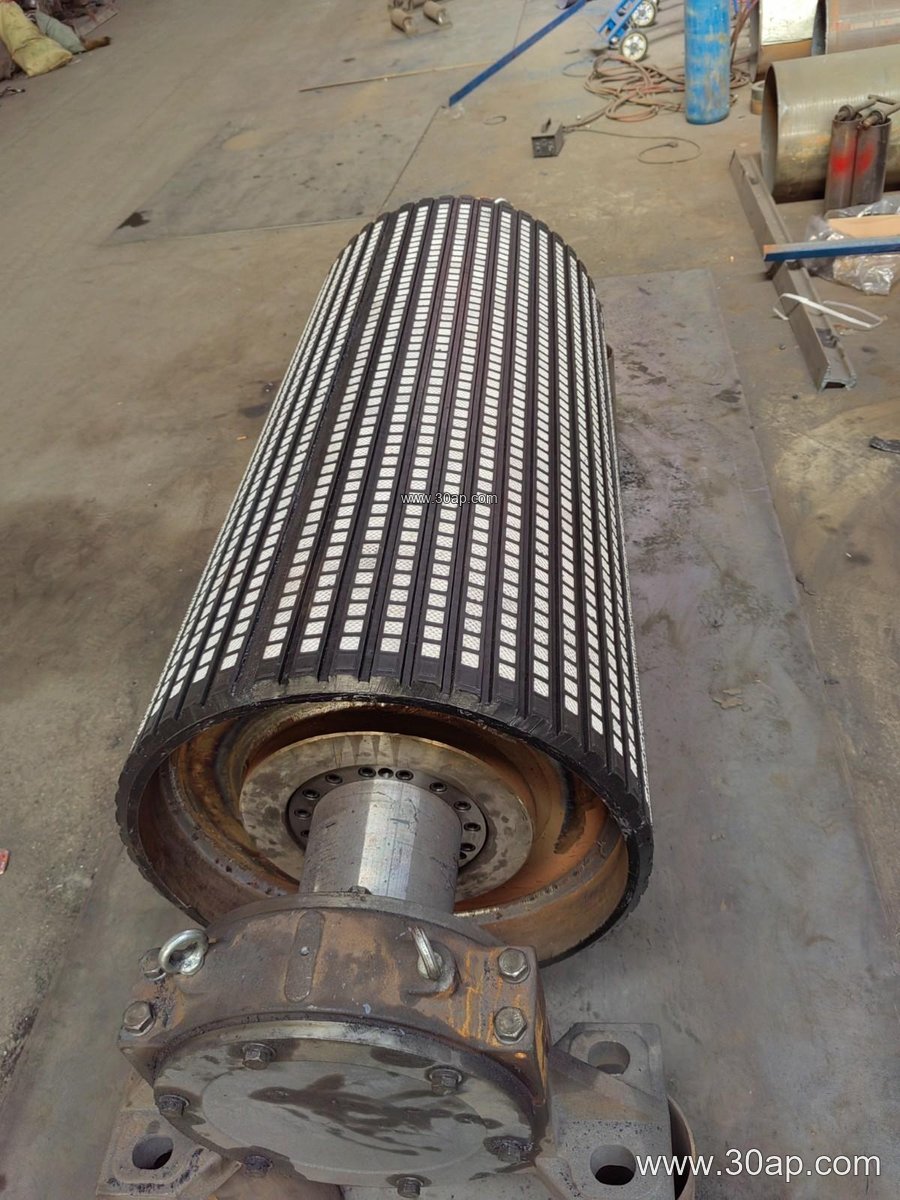
Surface treatment matters as much as the shell. Plain finish suits some non-drive positions, while lagging improves grip at the drive. Available cover forms include hot vulcanized rubber, cold bonded rubber, diamond groove, herringbone groove and ceramic lagging, typically at 8, 10, 12, 15 or 20 mm thickness. Diamond and herringbone patterns help shed water and fines; ceramic tiles resist severe abrasion in iron ore or copper ore duty.
Typical Reference Dimensions
The face width is normally a little wider than the belt so the belt is fully supported. The table below shows common reference combinations; treat them as design starting points rather than fixed rules.
- B500 belt, face about 600 mm, drum Ø250 to Ø400
- B650 belt, face about 750 mm, drum Ø315 to Ø500
- B800 belt, face about 950 mm, drum Ø400 to Ø630
- B1000 belt, face about 1150 mm, drum Ø500 to Ø800
- B1200 belt, face about 1400 mm, drum Ø630 to Ø1000
- B1400 belt, face about 1600 mm, drum Ø800 to Ø1250
- B1600 belt, face about 1800 mm, drum Ø1000 to Ø1400
A drum such as B1200 × Ø1000 or B800 × Ø500 is a common pairing, but one belt width can work with several diameters depending on belt speed, wrap angle and tension.
Position Differences Buyers Should Know
Drive, tail and bend pulleys are not interchangeable. A drive pulley needs enough friction and shell strength to transmit the full belt pull, so it often carries thicker lagging and a larger shaft. A tail pulley mainly guides and supports the returning belt and may use a smaller diameter. A bend pulley changes belt direction with a modest wrap angle, and a snub or take-up pulley increases contact around the drive or maintains tension. A wing pulley is sometimes chosen at the tail of a crusher discharge to shed sticky material, which is a different duty from a lagged drive drum.
Where These Drums Are Used
You will find them in limestone mines feeding a primary crusher, in power plant coal handling, in clinker transport at a cement works, and in port ship-loading conveyors. In these circuits the drum must tolerate dust, moisture and continuous running. Matching the lagging to the material helps: a heat resistant conveyor belt on clinker duty calls for a cover that will not degrade, while a flame retardant conveyor belt in underground coal mining requires attention to the whole assembly, not just the rubber.
Buyer Checklist
- Confirm the duty position: head drive, tail, bend, take-up or snub.
- State belt width, belt type and expected tension so the shell and shaft can be sized.
- Choose lagging by grip and abrasion needs; specify thickness in millimetres.
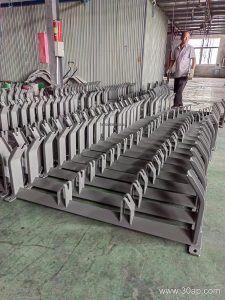
- Check bearing type, housing fit and bracket interface with the conveyor frame.
- Ask for balancing and runout data, since vibration shortens bearing life.
Purchasing a conveyor parts pulley is really a matter of matching the drum to its job. Get the position, load and surface right, and the belt, rollers and structure will run more smoothly from the quarry face to the stockpile.