What a Return Self-Aligning Idler Does
A return self-aligning idler is a training idler mounted on the return strand of a belt conveyor. Its job is to keep the conveyor belt centered as it travels back toward the tail pulley. Unlike a standard flat return idler, this idler is built to pivot or steer slightly when the belt drifts, gently guiding the belt back into line. In plants handling bulk materials—such as a coal handling system in a power plant or a clinker line in a cement works—belt misalignment can cause spillage, edge damage, and premature wear on the conveyor pulley and frame. The return self-aligning idler addresses this without constant manual adjustment.
Construction and Working Principle
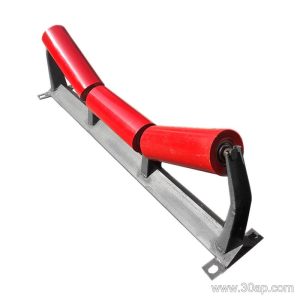
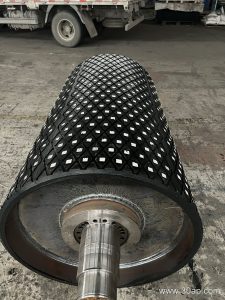
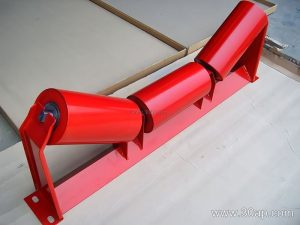
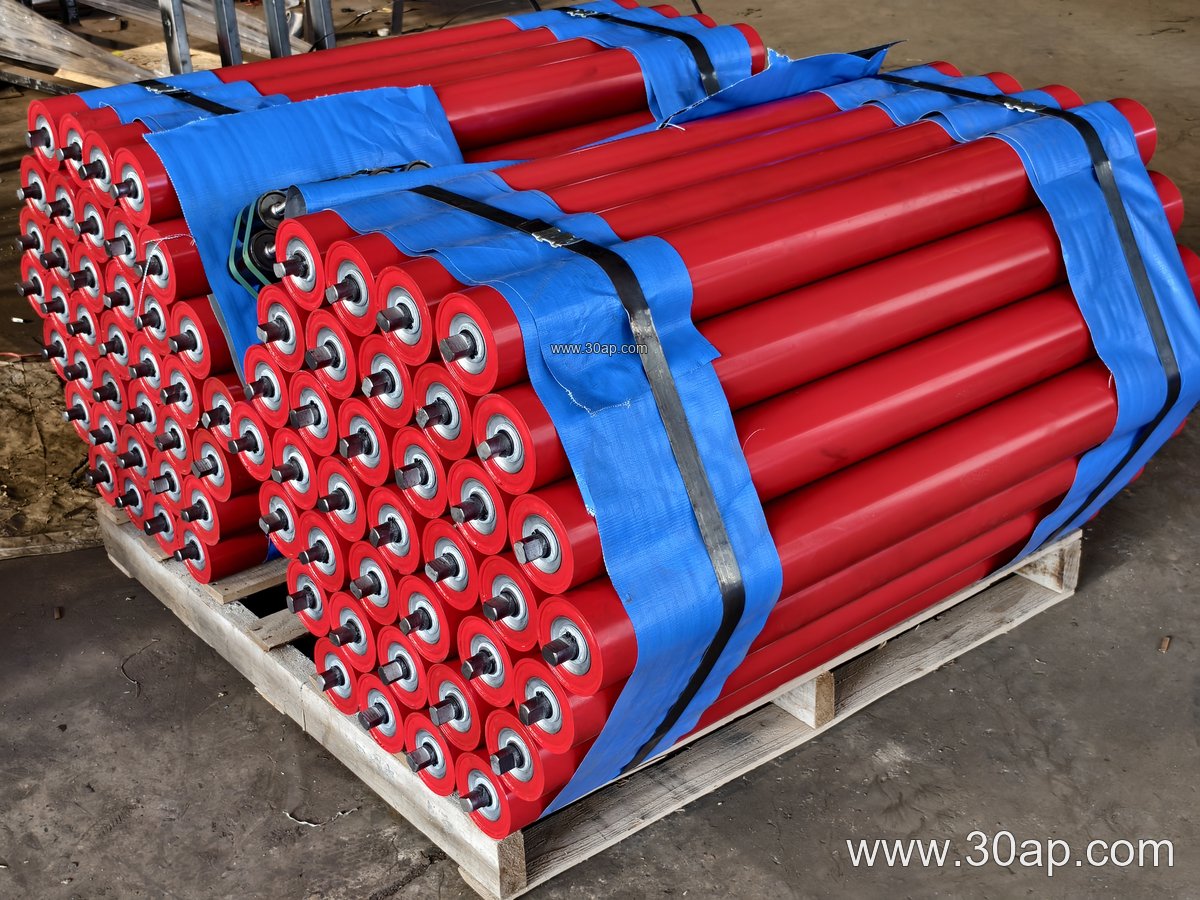
The idler usually consists of two or more rollers mounted on a pivoting frame or a central pivot shaft. Some designs use a V-shaped return arrangement with a vertical pivot axis. When the belt moves off-center, it contacts a vertical guide roller or applies uneven pressure on the idler rollers. This force causes the frame to rotate slightly, which steers the belt back toward the center. The rollers themselves are commonly steel tubes with sealed bearings. Bearing sizes such as 6205, 6305, or 6308 are typical, matched to the roller diameter and load. Roller diameters often range from Ø89 to Ø159 mm for this duty, with larger diameters used on wider, heavier belts. The roller surface can be plain steel, or it may carry rubber discs for extra grip and protection in dirty conditions.
Common Arrangements and Dimensions
Return self-aligning idlers are frequently supplied as two-roller V-type or as a single pivoting roller with side guide rollers. The roller length depends on belt width and the specific frame design. The table below gives common examples—not fixed rules—for reference only.
| Belt Width (mm) | Typical Roller Diameter (mm) | Common Bearing Size |
|---|---|---|
| B500 | Ø89 | 6204 / 6205 |
| B650 | Ø89 – Ø108 | 6205 / 6305 |
| B800 | Ø108 – Ø133 | 6305 / 6306 |
| B1000 | Ø108 – Ø133 | 6306 / 6308 |
| B1200 | Ø133 – Ø159 | 6308 / 6310 |
| B1400 – B1600 | Ø133 – Ø159 | 6308 / 6310 |
These values are common examples. Actual selection depends on belt tension, material weight, and the conveyor design. A larger roller diameter does not automatically mean a larger shaft; the shaft and bearing are chosen from the load calculation.
Where It Fits on the Conveyor
The return self-aligning idler is installed on the lower, carrying-return side of the belt, usually between the tail pulley and the drive pulley. It is often placed at intervals along the return run, especially where the belt is long or where misalignment tends to occur. It works together with the conveyor bracket and the main frame. On a typical aggregate conveyor belt or a quarry conveyor belt, one or two training idlers on the return side can reduce edge wear and keep the belt from rubbing the structure.
It is not a substitute for a bend pulley or a tail pulley; those are separate components with different functions. The return self-aligning idler only guides the belt. In dusty or wet conditions, such as a wash plant or an underground mining conveyor, sealed bearings and a protected pivot are important for reliable operation.
Selection and Maintenance Notes
- Belt width and roller length: Match the idler to the actual belt width. A B800 belt needs a different roller length than a B1200 belt. The frame must allow the belt to be supported across its full width.
- Roller diameter and bearing: Choose a diameter that suits the belt speed and load. Bearings should be sealed for the environment. Do not assume a fixed bearing for a given roller diameter; verify with the idler supplier.
- Pivot condition: The self-aligning action depends on a free-moving pivot. Check for material buildup or corrosion that can lock the frame.
- Roller surface: Plain steel rollers are common. Rubber-disc rollers can help in wet or sticky material, but they are not required everywhere.
- Inspection: Look for belt edge wear, off-center tracking, and unusual noise from the idler bearings. Replace worn rollers before they damage the belt.
For conveyors carrying abrasive bulk material, pairing a well-chosen return self-aligning idler with an abrasion resistant conveyor belt can extend service life. In coal mining or power plant coal handling, a flame retardant conveyor belt is often used, and the idler should be selected to match the same duty. The return self-aligning idler is a small component, but it plays a clear role in keeping the belt centered and the conveyor running smoothly.