What a Tail Bend Pulley Does
A tail bend pulley is a direction-changing roller mounted near the tail end of a conveyor. It guides the return strand of the conveyor belt, helping maintain wrap angle on the tail pulley and keeping the belt aligned as it begins its return journey. Unlike the drive pulley that transmits power or the tail pulley that tensions and redirects the belt at the loading point, the bend pulley simply changes the belt path without driving or tensioning duties. This distinction matters when specifying components: a drive pulley, tail pulley, and bend pulley are not interchangeable, even though they may share similar construction features.
Construction and Surface Options
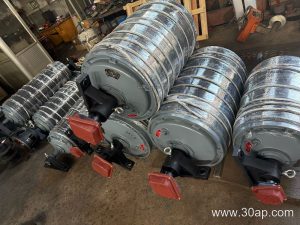
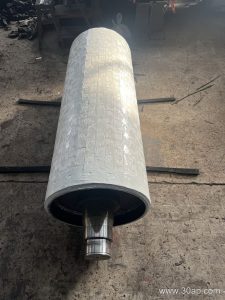
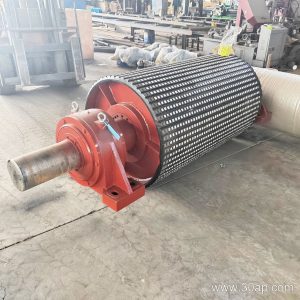
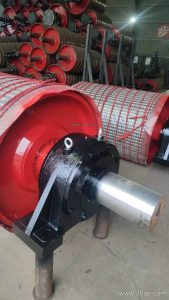
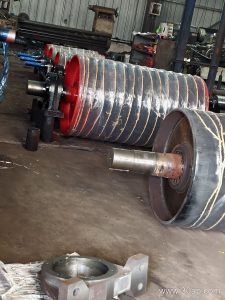
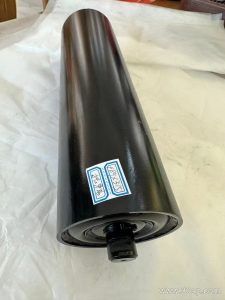
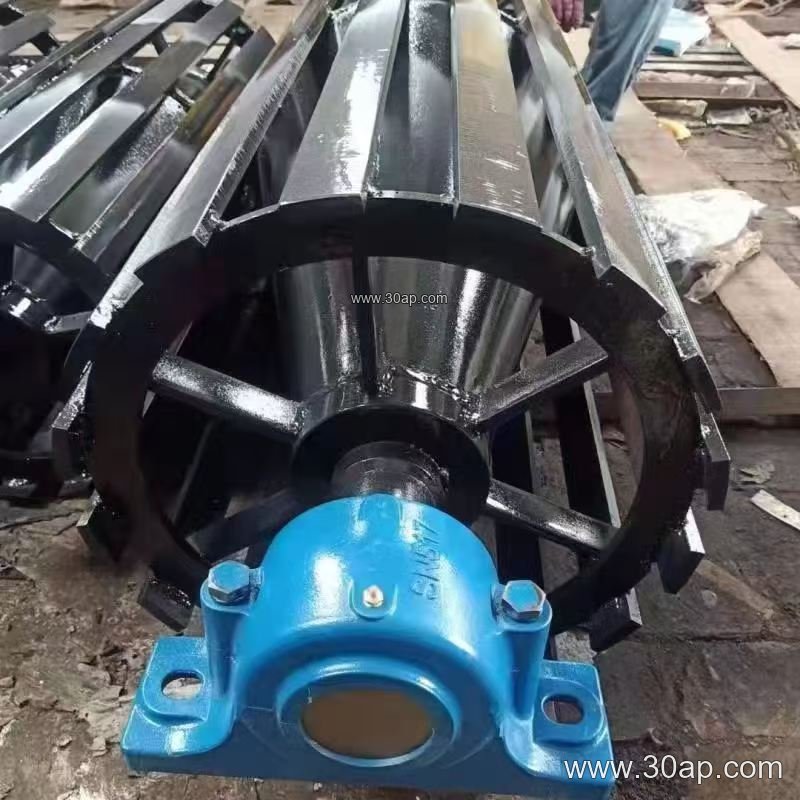
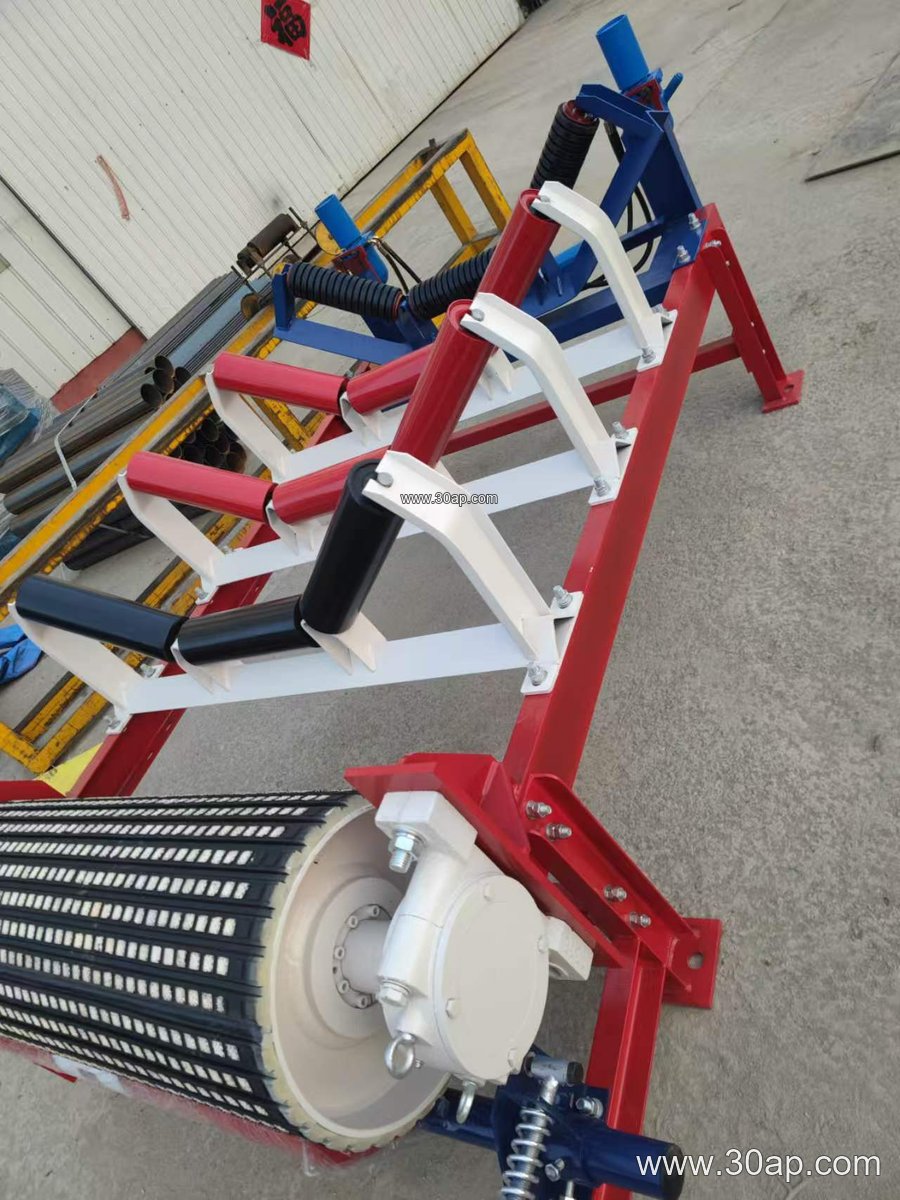
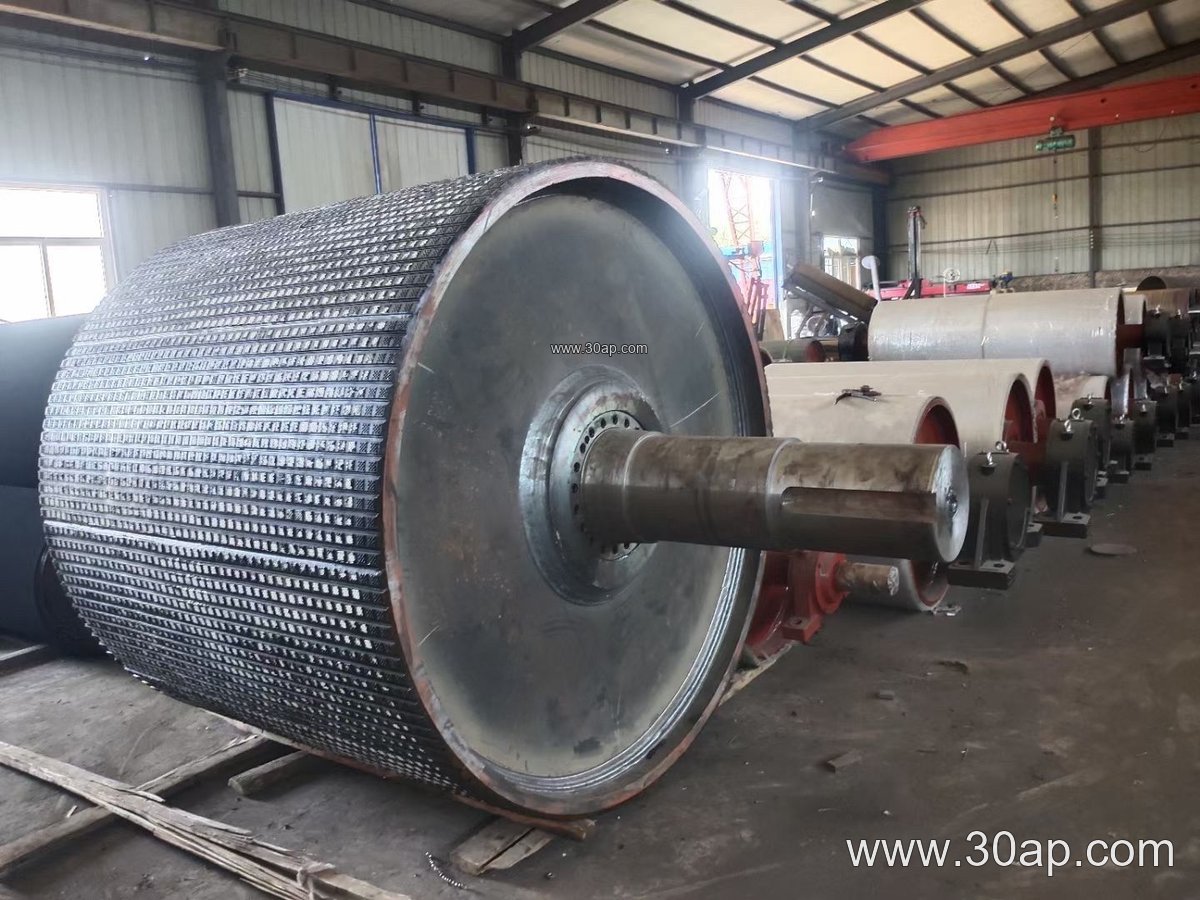
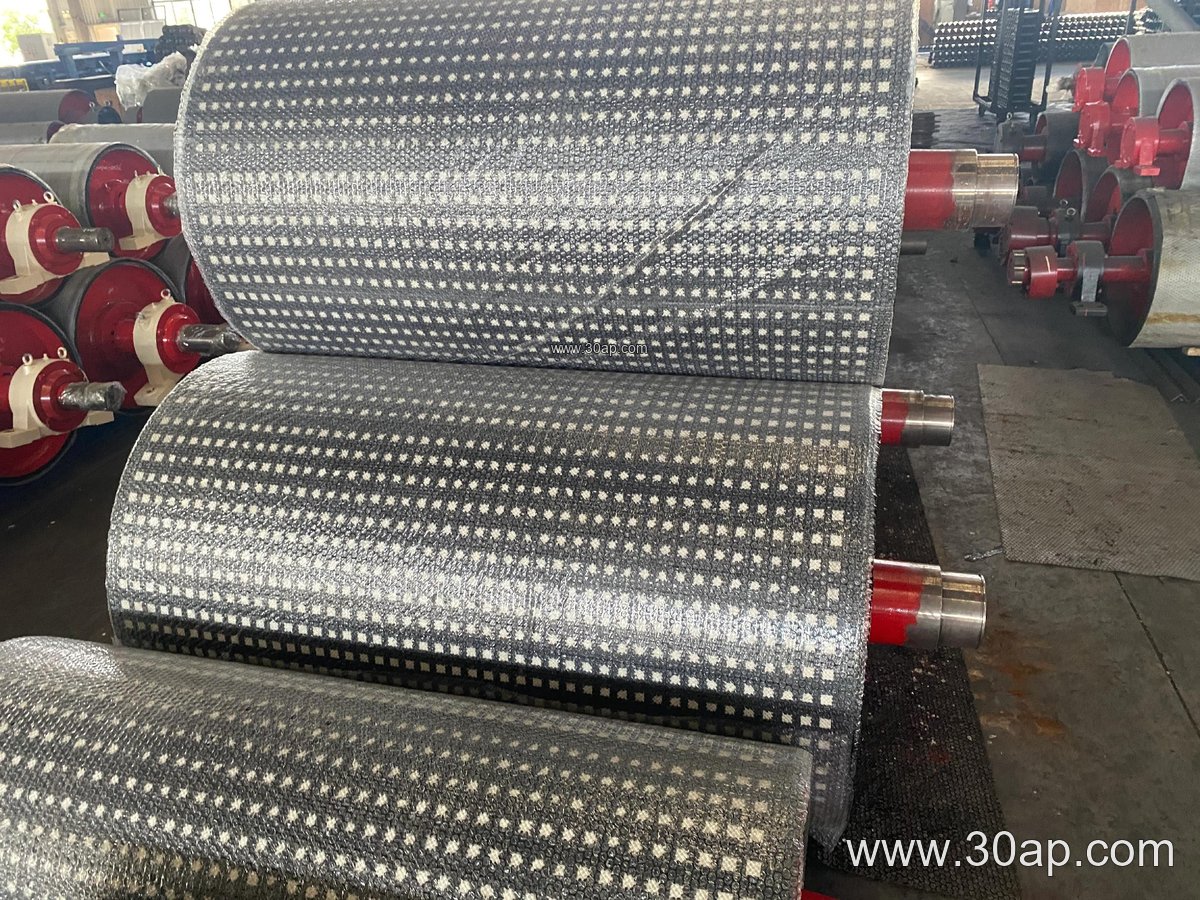
Most tail bend pulleys are built with a welded steel drum, a shaft, bearing housings, and a lagged or plain shell. Common surface forms include plain finish, cast rubber, cold-bonded rubber, hot-vulcanized rubber, diamond lagging, herringbone lagging, and ceramic lagging. Lagging thickness is often 8, 10, 12, 15, or 20 mm depending on the application and belt tension requirements. The pulley face width is usually wider than the belt width to accommodate belt tracking and misalignment. For example, a B800 belt often uses a pulley face around 950 mm, while a B1200 belt may use a face around 1400 mm. These are typical references, not fixed rules, and final dimensions should be confirmed by the conveyor designer.
Common Size References
The table below shows typical combinations of belt width, pulley diameter, and face width. Shaft diameter is determined by torque and load calculations and should not be selected from belt width alone.
| Belt Width | Typical Pulley Diameter | Typical Face Width | Common Shaft Diameter Range |
|---|---|---|---|
| B500 | Ø250–Ø315 | 600 mm | Ø50–Ø70 |
| B650 | Ø315–Ø400 | 750 mm | Ø60–Ø80 |
| B800 | Ø400–Ø500 | 950 mm | Ø70–Ø100 |
| B1000 | Ø500–Ø630 | 1150 mm | Ø80–Ø120 |
| B1200 | Ø630–Ø800 | 1400 mm | Ø90–Ø140 |
| B1400 | Ø800–Ø1000 | 1600 mm | Ø100–Ø160 |
| B1600 | Ø1000–Ø1250 | 1800 mm | Ø120–Ø180 |
| B1800 | Ø1250–Ø1400 | 2000 mm | Ø140–Ø200 |
These values are for reference only. A B1200 belt, for instance, may work with a Ø1000 tail bend pulley in one conveyor and a Ø630 unit in another, depending on belt tension, available space, and the required wrap angle. The shaft diameter must be calculated from the actual torque and radial load, not copied from a table.
Where Tail Bend Pulleys Are Used
Tail bend pulleys appear in a wide range of bulk material handling systems. In a quarry or aggregate line, they help route the return belt beneath the loading zone without interfering with the crusher discharge. In a coal preparation plant or power plant coal yard, they maintain belt tension and alignment on long overland conveyors. Cement plants use them on clinker and raw meal conveyors where dust and heat may call for lagged or heat-resistant surfaces. Port bulk terminals and ship loading conveyors also rely on bend pulleys to keep the belt path compact and stable.
When selecting a tail bend pulley, consider the conveyor belt type as well. A heavy-duty mining conveyor belt or steel cord conveyor belt may require a larger pulley diameter to reduce bending stress. Fabric core belts such as EP conveyor belt or NN conveyor belt often work with smaller diameters, but the belt manufacturer’s minimum pulley diameter recommendation should always be followed. Abrasion resistant conveyor belt and flame retardant conveyor belt used in underground coal mining conveyors may need specific lagging and material choices for safety and durability.
Buyer Checklist
- Confirm the belt width and the required pulley face width, remembering that face width is usually greater than belt width.
- Verify the pulley diameter against the belt manufacturer’s minimum recommended diameter for the specific conveyor belt construction.
- Specify the surface form and lagging thickness based on grip, wear, and environmental conditions.
- Provide the actual shaft load and torque so the shaft diameter can be calculated correctly.
- Check bearing type, housing style, and whether a conveyor bracket or other mounting arrangement is needed.
- Consider the operating environment—dust, moisture, temperature, and fire risk—when choosing lagging and bearing protection.
For related conveyor components such as the conveyor pulley, idler roller, and conveyor bracket, match the duty level and dimensions to the same design criteria used for the tail bend pulley. A well-matched tail bend pulley helps extend conveyor belt life and keeps the return strand running smoothly.