What a Ø133 Conveyor Idler Set Is
A Ø133 conveyor idler set is a complete assembly of rollers built around a 133 mm roller diameter, mounted on a frame and fitted with shafts, bearings and seals. It carries the conveyor belt along the load-carrying or return side of a belt conveyor, keeping the belt in a stable trough so bulk material moves without excessive sag or spillage. In daily talk on site, crews often shorten the name to a 133 idler set or a Ø133 roller set, but it is the same product: a matched group of idlers rather than a single loose roller.
The size sits in the middle-upper range of common idler diameters. It is often chosen for medium to wide belts where the belt and material load need more support than a Ø108 or Ø127 roller can comfortably give, while a Ø159 or Ø178 assembly may be reserved for heavier duties. The right match depends on belt width, belt speed, load and the frame design, not on the diameter alone.
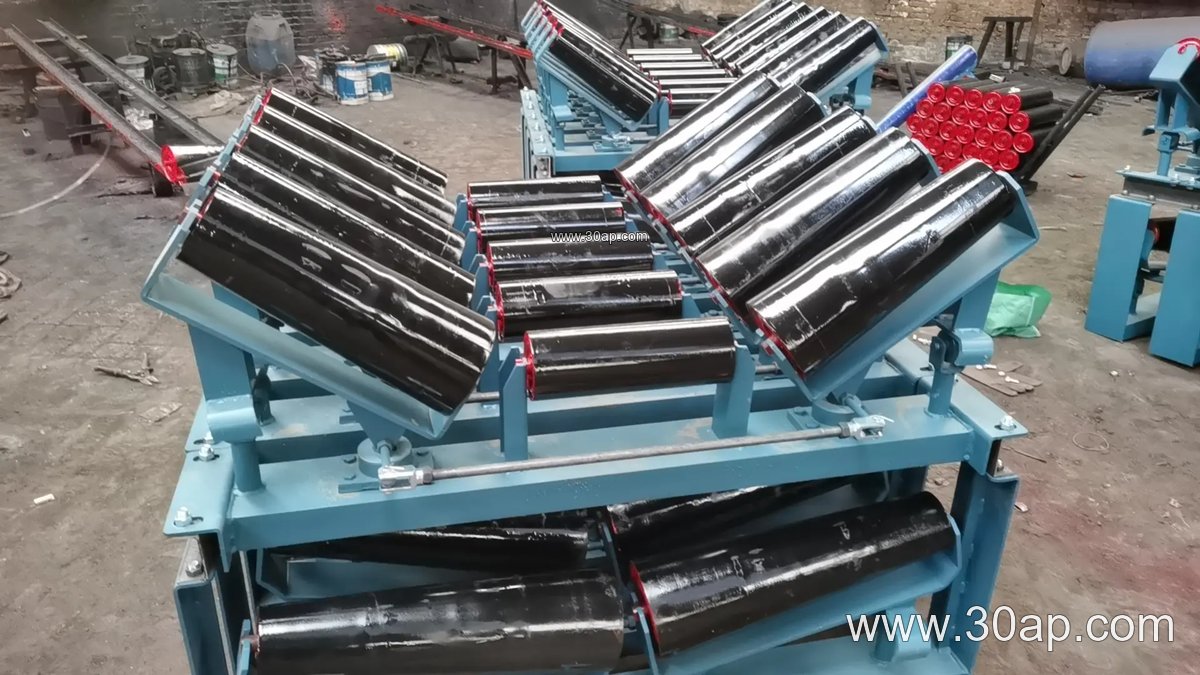
How the Set Is Put Together
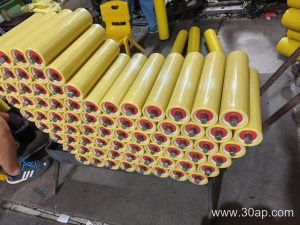
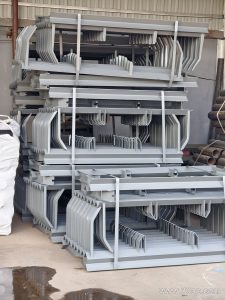
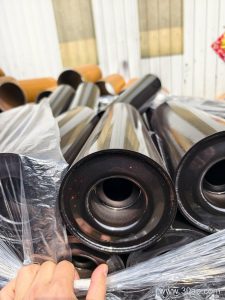
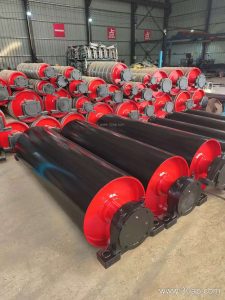
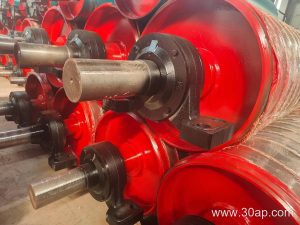
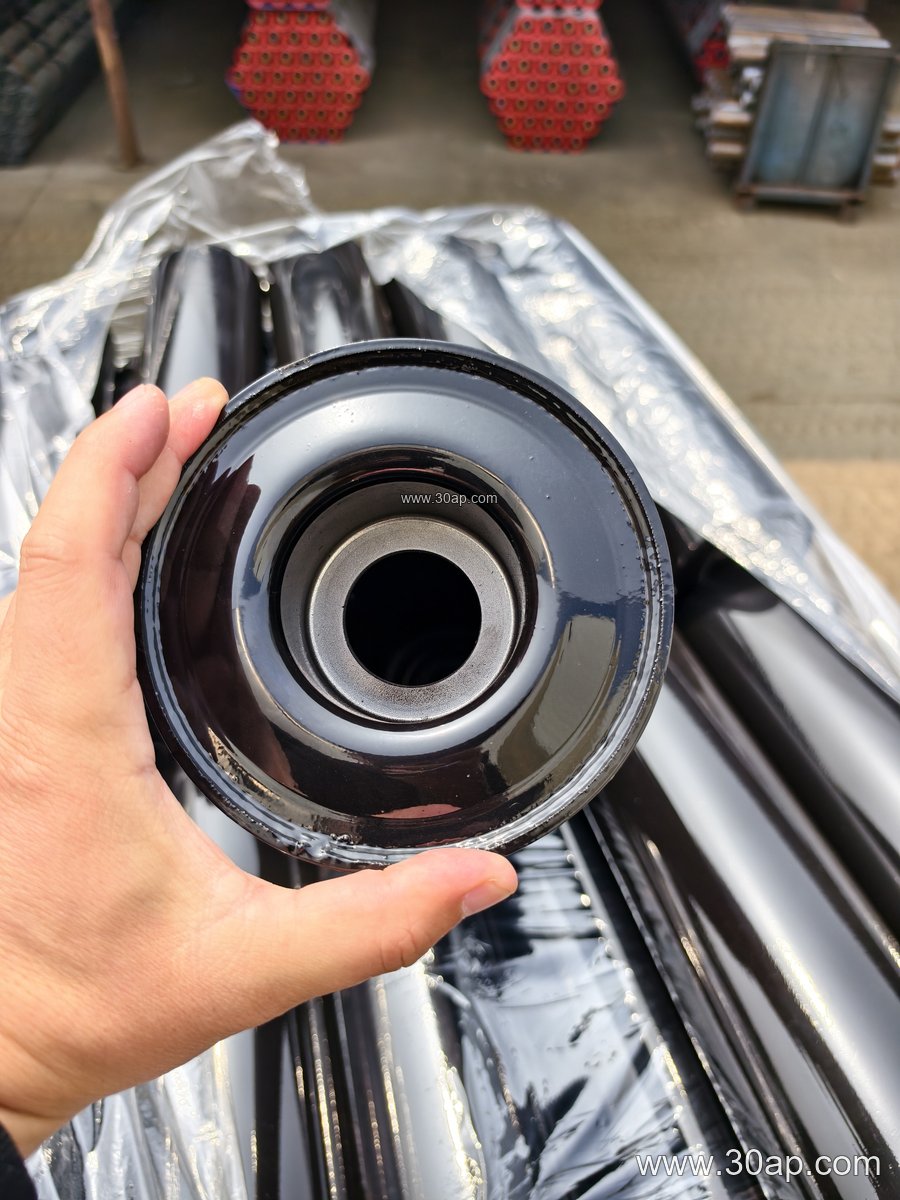
A typical set includes two or three rollers, a supporting frame, shafts, bearing housings, labyrinth or contact seals, and end caps. Roller shells are usually steel tube, with nylon, ceramic or rubber-ring surfaces available where wear, build-up or impact is a concern. Bearings are commonly 6205, 6305, 6306 or 6308, selected by load and shaft design rather than fixed to one roller size. The set is bolted to the conveyor bracket or frame, and the whole assembly can be replaced as a unit when rollers wear out.
Trough angles of 20, 30, 35 and 45 degrees are common. A three-roll trough set at 35 degrees is widely used on bulk lines, while a 45-degree trough gives a deeper bed for fine, free-flowing material. Transition idlers with shallower angles are placed near pulleys to avoid stressing the belt edge. Roller length changes with belt width and trough form, so a B800 belt may use around 315 mm rollers in a three-roll set, and a B1200 belt around 465 mm, but side rollers and centre rollers can differ and the final figure is set by design.
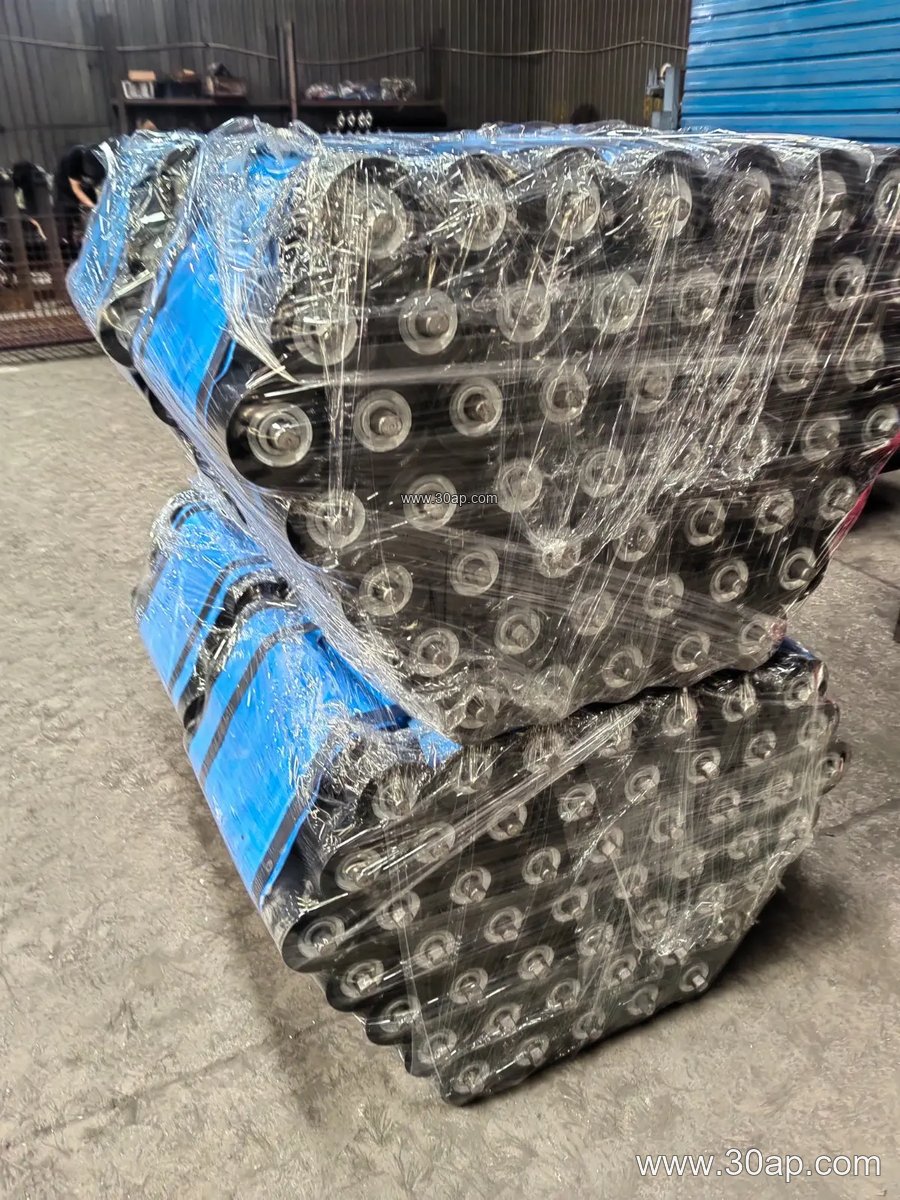
Where These Idler Sets Fit
In a quarry or aggregate line, a Ø133 idler set often supports a loaded conveyor belt moving crushed stone from a crusher to a screen. In a coal preparation plant, the same size can serve on main haulage conveyors feeding a stockpile or a power plant bunker. Cement plants use them on clinker and raw material belts, while iron ore and copper ore operations rely on them where abrasive dust shortens roller life. Port and ship-loading conveyors also use this diameter on long runs where steady belt tracking matters.
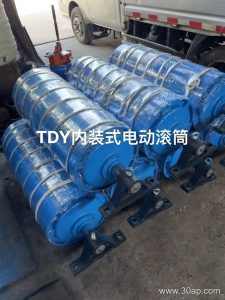
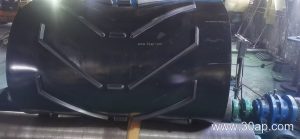
The set works with the conveyor belt, conveyor pulley and conveyor bracket as one system. A drive pulley pulls, the tail pulley returns, and bend pulleys change direction, but none of these can replace an idler set, because each part has a different job. Matching the idler to the belt and frame is what keeps the line running.
Buyer Checklist
- Confirm the belt width and trough angle, then check roller length against the frame drawing.
- Check the load per roller and choose bearing size and shaft accordingly.
- Select the roller surface: plain steel for general service, rubber rings for impact zones, ceramic or nylon where abrasion is severe.
- Ask about seal type, since dust and water ingress are the main causes of early failure.
- Verify mounting dimensions and bolt spacing against the existing conveyor bracket.
Common Reference Values
| Item | Typical Options |
|---|---|
| Roller diameter | Ø133 mm |
| Set form | Single roll, two-roll, three-roll trough |
| Trough angle | 20°, 30°, 35°, 45° |
| Roller surface | Steel tube, nylon, ceramic, rubber ring |
| Bearing | 6205, 6305, 6306, 6308 |
| Belt width examples | B500 to B2400 |
| Roller length examples | About 200 mm at B500 up to 750 mm at B2000 in three-roll form |
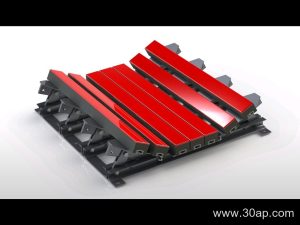
These figures are reference data, not a fixed price list or a supply promise. Final dimensions follow the conveyor design and the material being handled. On a heavy-duty mining conveyor belt, a larger roller or a cushioned set may be needed at transfer points, while a plain trough set is enough on the long carrying run.
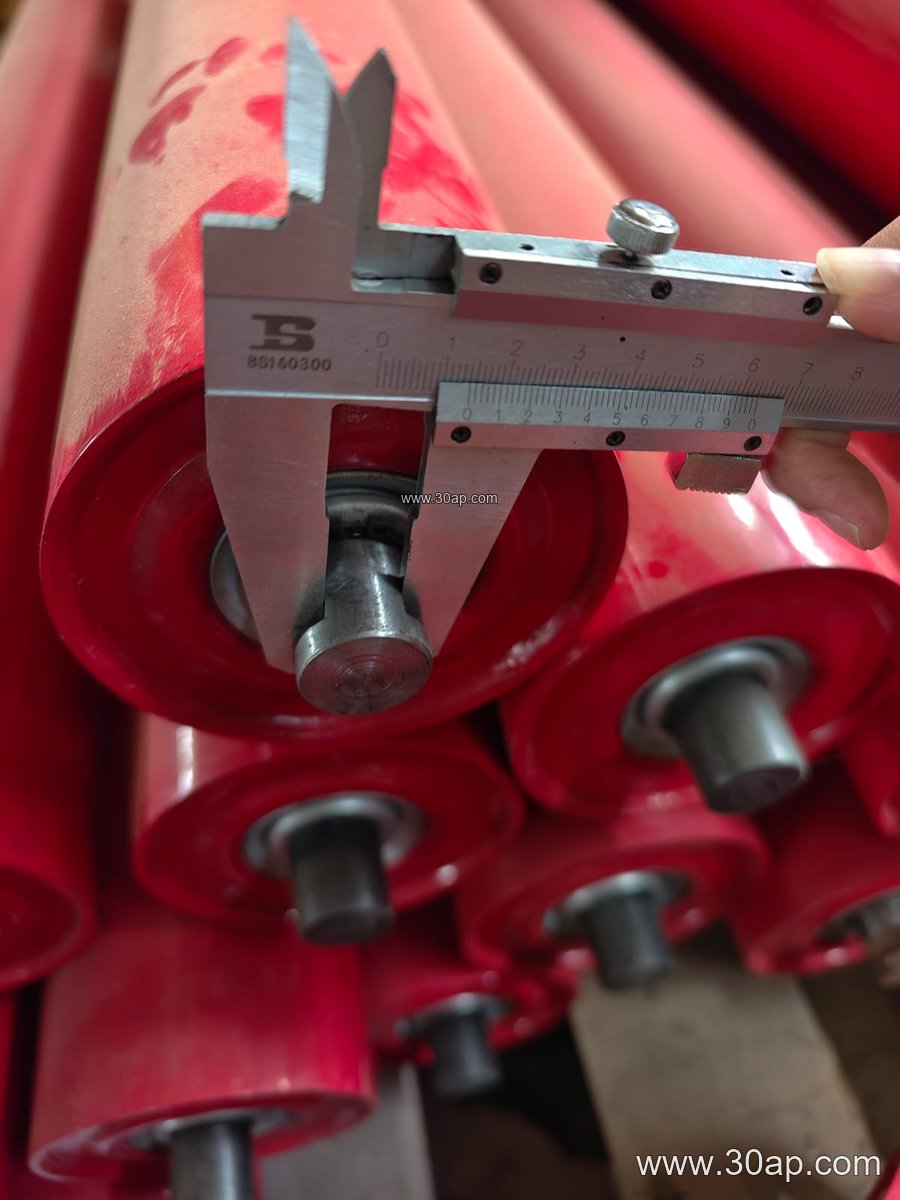
Maintenance Notes
Check for seized rollers, worn shells and loose brackets during routine walk-throughs. A roller that stops turning will rub the belt and can damage the cover. Replace a complete Ø133 conveyor idler set when several rollers in the group are worn, rather than mixing old and new parts. Keep the belt aligned and the frame clean, and the set will usually deliver a long service life.
For related belt and roller information, see rubber conveyor belt, mining conveyor belt and conveyor pulley pages that help buyers match the full conveyor system.