What a Belt Conveyor Ceramic Lagged Pulley Is
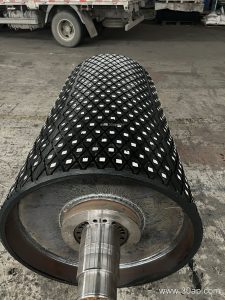
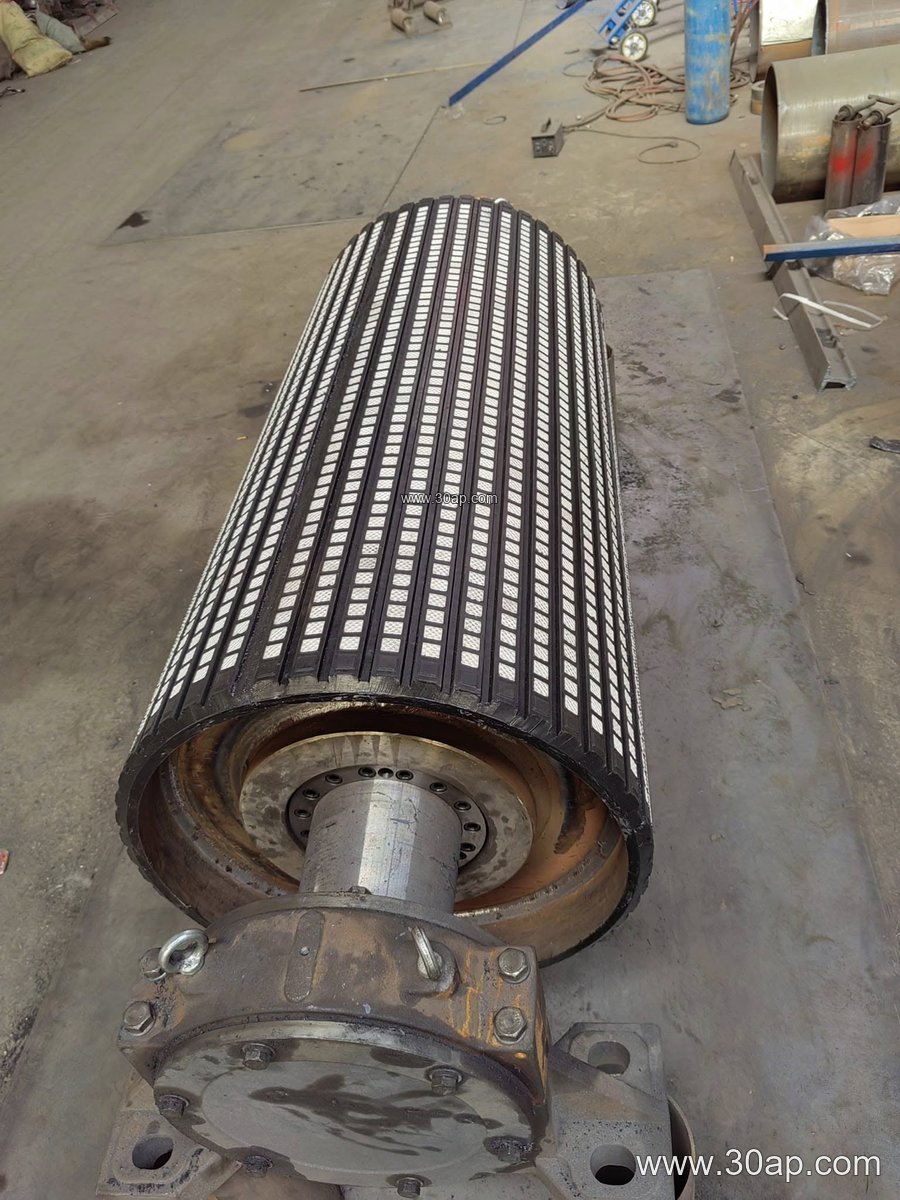
A belt conveyor ceramic lagged pulley is a drive or tail pulley whose shell is covered with ceramic tiles embedded in a rubber or epoxy matrix. This ceramic lagging is engineered to increase friction between the pulley and the conveyor belt, reducing slip and improving traction in harsh conditions. Often referred to as a ceramic pulley lagging or ceramic rubber lagged pulley, it is a specialized solution for bulk material handling where standard rubber lagging may wear too quickly.
Unlike a plain conveyor pulley or a standard rubber lagged pulley, the ceramic version uses small, hard ceramic buttons or tiles that protrude slightly from the surface. These ceramic elements grip the belt even when the surface is wet, muddy, or oily, making it a preferred choice in industries such as mining, coal preparation, cement plants, and power station coal handling.
Construction and Key Components
The pulley body is typically fabricated from steel, with a shaft sized according to torque and load requirements—common shaft diameters include Ø50, Ø60, Ø80, Ø100, Ø120, and larger, but the final size is determined by design. The shell is machined to accept the lagging, which is applied in one of two main ways: hot vulcanized ceramic lagging or cold bonded ceramic lagging. Ceramic tiles, often in diamond or rectangular shapes, are bonded to the rubber layer, and the rubber itself may be natural rubber or a synthetic compound.
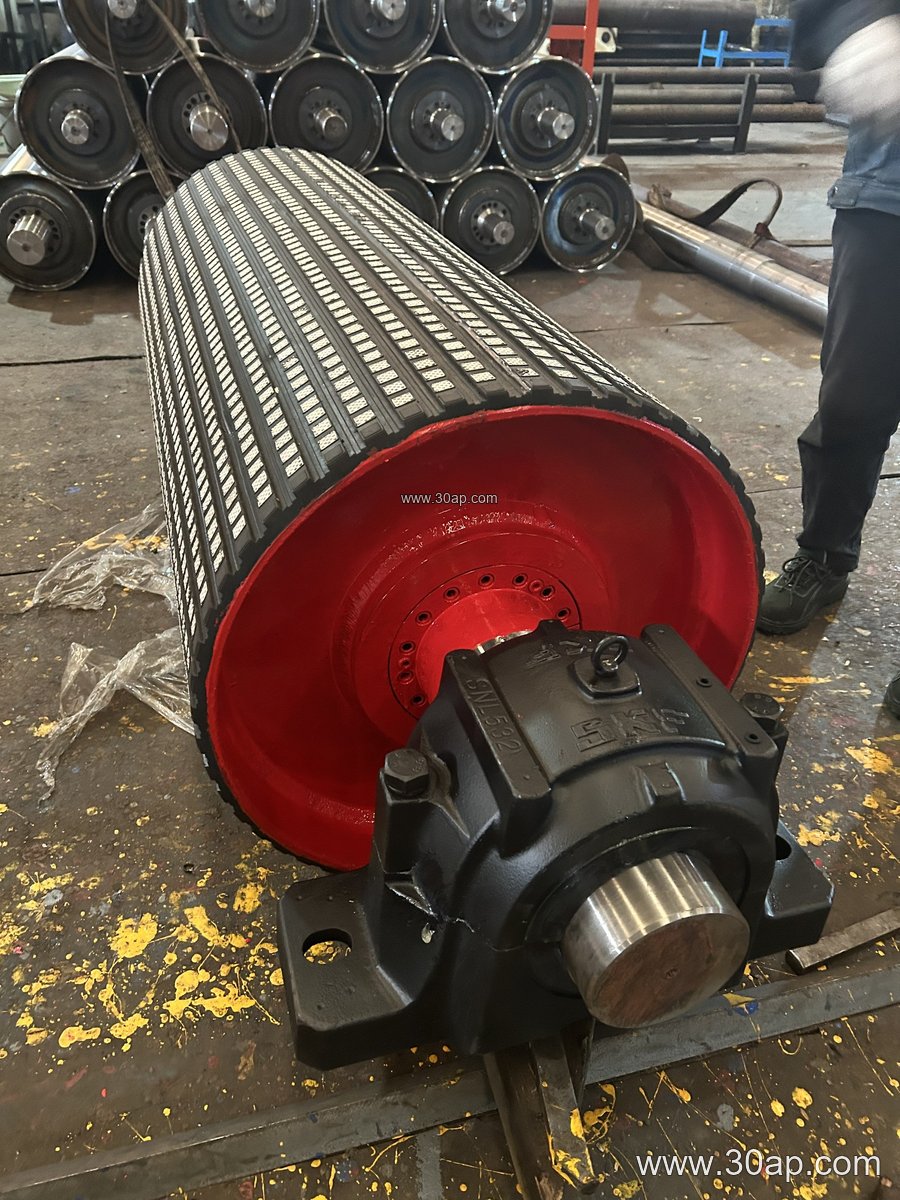
Lagging thickness commonly ranges from 8 mm to 20 mm, with 10, 12, and 15 mm being frequent choices. The ceramic tiles cover a significant portion of the surface, leaving rubber between them to provide flexibility and cushioning. This combination delivers high abrasion resistance and reliable grip. The pulley face width is usually wider than the belt width; for example, a B800 belt might use a pulley face of about 950 mm, and a B1200 belt might correspond to a face width of roughly 1400 mm. These are typical references, not fixed rules.
Where Ceramic Lagged Pulleys Are Used
These pulleys are most often found at the drive position of a conveyor, where maximum traction is needed to move the loaded belt. They are also used on tail pulleys and snub pulleys in wet or dirty environments. In a coal mining conveyor system, for instance, a ceramic lagged drive pulley helps prevent belt slip during startup and under heavy loads. Similarly, in a cement plant handling clinker or limestone, the ceramic surface resists wear from fine abrasive dust.
You might see them paired with a heavy-duty mining conveyor belt, such as an EP200 or steel cord ST1600 belt, in primary crushing circuits. For quarry conveyor belts and aggregate conveyor belts, a ceramic lagged pulley on the head drive ensures consistent power transmission. They are also relevant in port conveyor belts and ship loading conveyors where moisture and salt can degrade standard rubber lagging.
Selection and Sizing Considerations
Choosing the right belt conveyor ceramic lagged pulley involves several factors. First, determine the required traction: ceramic lagging offers a higher coefficient of friction than plain rubber, which can reduce the necessary wrap angle or belt tension. Second, consider the environment: if the conveyor handles wet, oily, or abrasive materials, ceramic lagging is often worth the investment. Third, match the pulley diameter to the belt thickness and the conveyor’s power requirements—diameters such as Ø500, Ø630, Ø800, Ø1000, and Ø1250 are common, but the correct size depends on belt speed, torque, and allowable belt sag.
Belt width and pulley diameter are not locked in a one-to-one relationship. For example, a B800 belt might be used with a Ø500 pulley in one conveyor and a Ø630 pulley in another, depending on the duty. Typical combinations like B1200 × Ø1000 or B1400 × Ø800 are seen, but they are not mandatory. Shaft diameter should be calculated from the actual torque and radial load, not simply copied from belt width.
Maintenance and Compatibility
Ceramic lagged pulleys are durable but not indestructible. Inspect the ceramic tiles periodically for cracks or missing pieces, as these can reduce traction and potentially damage the conveyor belt. Keep the pulley clean and ensure that the belt training is correct to avoid edge wear. When replacing a pulley, verify that the new ceramic lagging profile matches the belt type and the conveyor’s operating conditions.
These pulleys work well with a variety of conveyor belts, including abrasion resistant conveyor belt, flame retardant conveyor belt, and heat resistant conveyor belt grades, provided the temperature limits of the lagging are respected. They are also compatible with conveyor idler roller and conveyor bracket systems from the same conveyor line, but the pulley itself remains the focal point of traction.
For more information on conveyor components and belts, visit Rubber Conveyor Belt and EP Conveyor Belt resources. Proper selection of a conveyor pulley with ceramic lagging can significantly improve the reliability of your bulk handling operation.