What a Conveyor Parts Pulley Does on the Line
A conveyor parts pulley is the rotating drum that gives a conveyor belt its direction, its tension and its drive. In a limestone quarry or a coal washing plant, the same basic component may act as a head drum at the discharge point, a tail drum that returns the belt, or a bend drum that steers it around an obstacle. Each position asks something different of the drum, so buyers who treat all pulleys as one commodity often end up with premature wear or belt tracking problems.
The drum is usually described by three figures: shell diameter, face width and shaft diameter. A typical arrangement might be written as B800 × Ø500, meaning an 800 mm belt running on a 500 mm drum, but the pairing is a design choice rather than a rule. Wider belts do not automatically demand one fixed diameter, and shaft size should follow torque and load calculations rather than belt width alone.
How the Drum Is Built
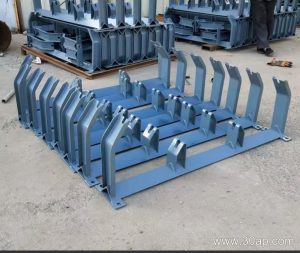
Most industrial pulleys share a common structure. A rolled steel shell carries the belt, and end discs or welded hubs transfer the load to the shaft. The shaft runs in bearing housings mounted on a conveyor bracket at each side of the frame. Lagging, when specified, is bonded to the shell to raise friction or protect the surface.
- Shell: rolled and machined steel, sometimes with a slight crown to assist tracking.
- Hubs and discs: welded construction sized for the transmitted torque.
- Shaft: turned and keyed for coupling or drive connection.
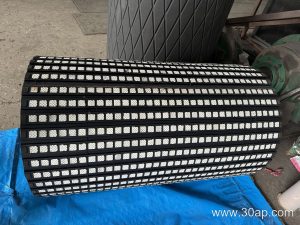
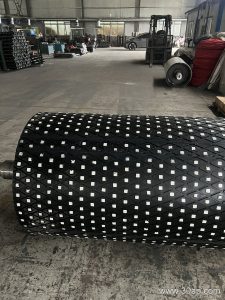
- Lagging: plain rubber, diamond pattern, chevron pattern or ceramic tiles.
- Bearings and seals: selected for radial load, speed and dust exposure.
Surface form matters as much as shell thickness. Plain face is common on bend and tail positions where slip is not the main concern. Diamond or chevron lagging improves grip on the drive drum, while ceramic lagging suits wet or oily conditions. Common lagging thicknesses include 8, 10, 12, 15 and 20 mm, chosen against the duty rather than picked at random.
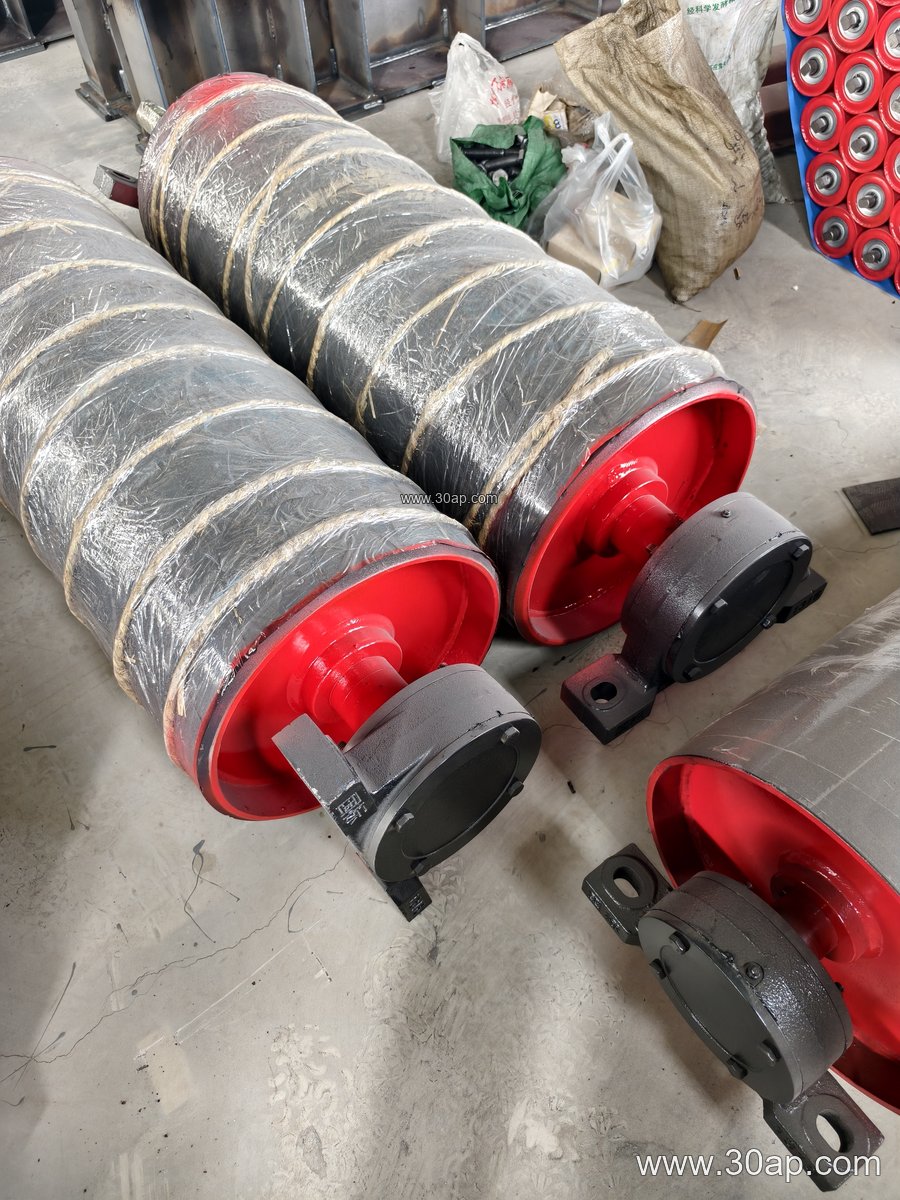
Drive, Tail and Bend Positions Are Not Interchangeable
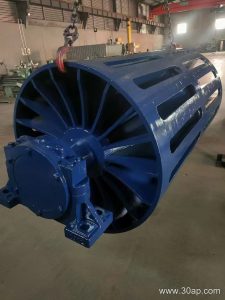
The drive pulley, also called the head or drive drum, transmits motor torque into the belt and usually carries the heaviest lagging. The tail pulley guides the belt at the return end and often runs plain. A bend pulley changes belt direction without driving, and a take-up or tension pulley maintains slack-side tension. Because the loads differ, a drum removed from a bend position should not simply be moved to the drive position. A wing pulley, built from spaced discs, is sometimes used at the tail to shed sticky material, but it is a different design and not a substitute for a lagged drive drum.
Where the belt itself is heavy, such as a steel cord conveyor belt on a long overland run, the drive drum needs a larger diameter and a robust shaft to keep belt bending stress within limits. On shorter lines carrying an EP conveyor belt or a multi-ply fabric core belt, a more moderate drum may be adequate. The belt and the drum are a pair, and selection should consider both.
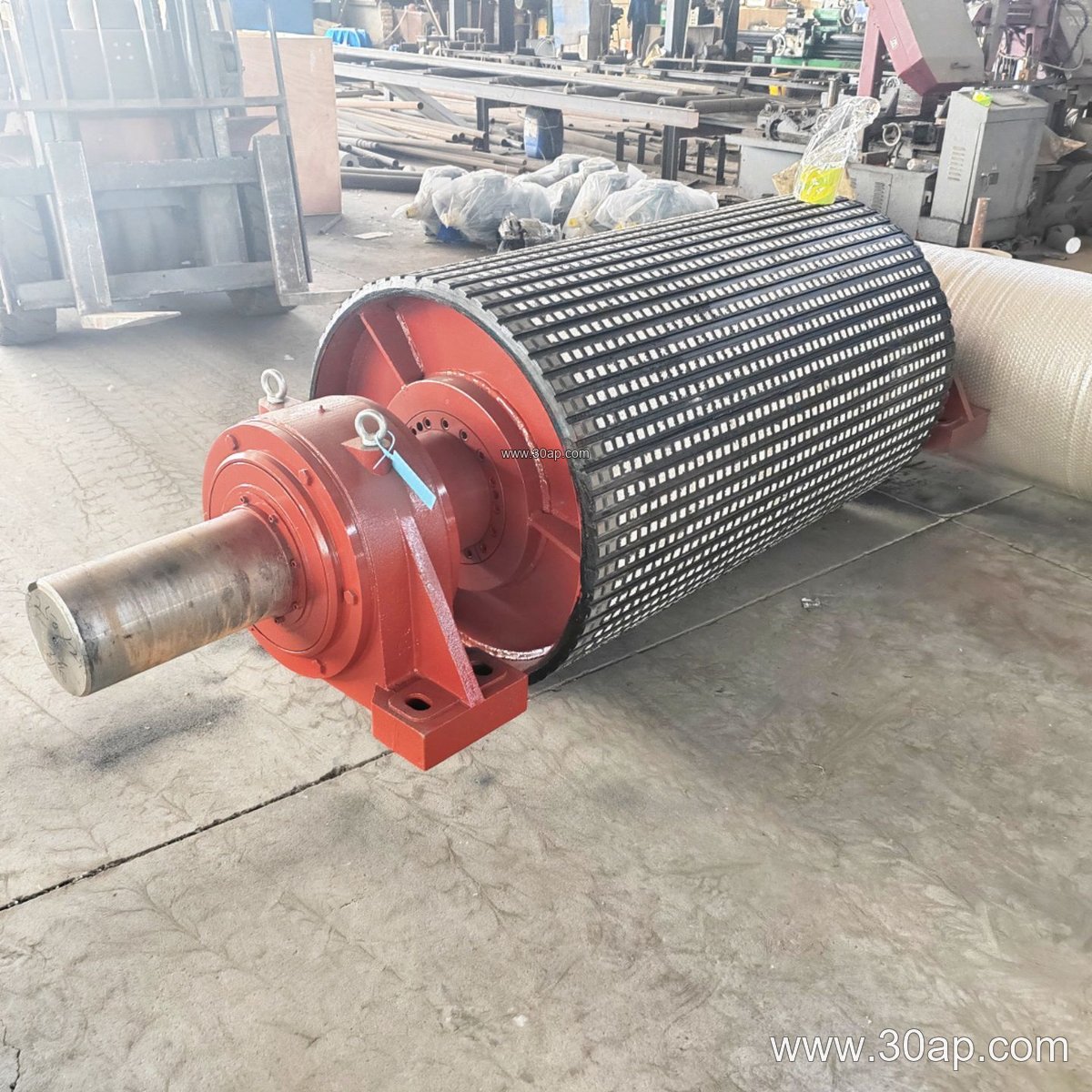
Sizes and Reference Combinations
The table below shows common reference values. They are starting points for discussion, not fixed supply commitments.
| Item | Common reference values |
|---|---|
| Belt width | B400, B500, B650, B800, B1000, B1200, B1400, B1600, B1800, B2000 |
| Drum diameter | Ø200, Ø250, Ø315, Ø400, Ø500, Ø630, Ø800, Ø1000, Ø1250, Ø1400 |
| Face width (approx.) | B400 → 500 mm, B650 → 750 mm, B800 → 950 mm, B1000 → 1150 mm, B1200 → 1400 mm, B1400 → 1600 mm |
| Shaft diameter | Ø50, Ø60, Ø70, Ø80, Ø90, Ø100, Ø120, Ø140, Ø160, Ø180, Ø200 |
| Lagging thickness | 8, 10, 12, 15, 20 mm |
Face width is normally a little wider than the belt so the belt edge is supported without rubbing the frame. A B1200 × Ø1000 drum and a B800 × Ø500 drum can both be correct on different conveyors, and neither width locks the designer to a single diameter.
Where These Drums Are Used
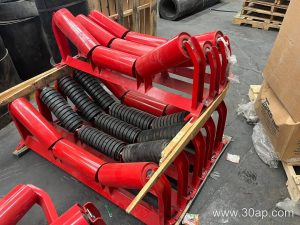
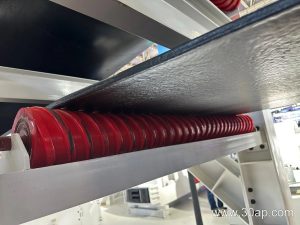
In a cement plant, head and bend drums handle clinker and raw meal on enclosed galleries. In a power plant coal yard, flame retardant and anti-static belt grades run over lagged drive drums that must grip in damp conditions. Sand and aggregate lines use tail drums with wing or plain shells to cope with grit. Port bulk terminals and iron ore handling circuits often rely on large diameter drums paired with a steel cord belt. In each case the pulley, the idler roller set and the conveyor bracket form one mechanical system, and misalignment at any of them shows up as edge wear.
What a Buyer Should Confirm
- Belt width, belt type and belt tension, so the drum diameter supports the belt without excess bending stress.
- Position on the conveyor: drive, tail, bend, take-up or snub.
- Lagging pattern and thickness, matched to grip and wear needs.
- Shaft diameter and bearing size from torque and load calculations.
- Mounting dimensions, including bracket bolt spacing and centre height.
- Environmental factors such as dust, moisture, heat or oil, which may call for a heat resistant conveyor belt or an oil resistant grade nearby.
Regular inspection of lagging wear, bearing temperature and shaft alignment extends service life more reliably than buying oversized drums. Keep spare lagging and bearings on hand for critical drives, and record the drum size on the conveyor drawing so replacements match the original design.