What a Port Belt Conveyor Pulley Does
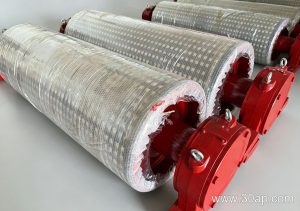
A port belt conveyor pulley is the cylindrical rotating component that drives, redirects, or tensions the belt on a bulk handling conveyor. In a port setting, these pulleys sit under ship loaders, stacker-reclaimers, and long jetty conveyors moving iron ore, coal, fertilizer, or grain. The pulley transmits torque to the conveyor belt through friction, so its shell, lagging, shaft, and bearings all work as one system. A well-built pulley keeps belt tracking stable and reduces downtime on equipment that often runs around the clock.
The same product can be called a conveyor pulley or a belt conveyor drum, and both names refer to the same assembly. Drive, tail, and bend positions are not interchangeable: each has a different duty, bearing arrangement, and lagging requirement.
Construction and Surface Options
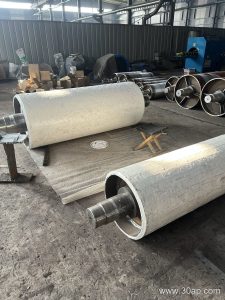
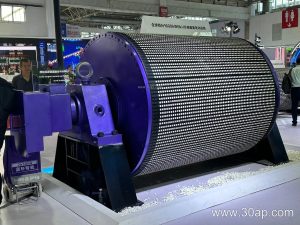
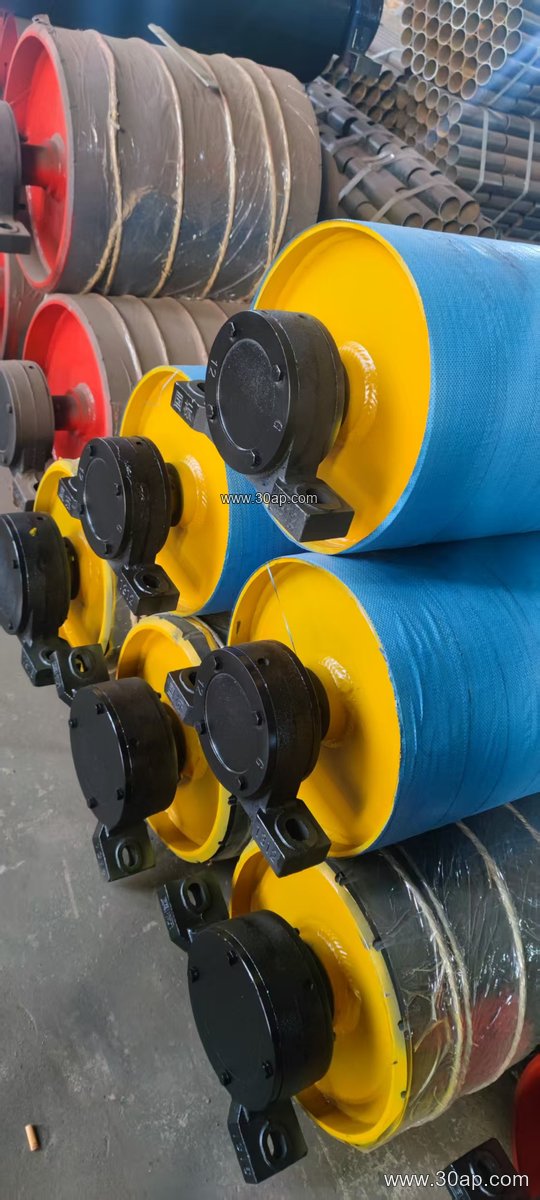
Most port pulleys use a welded steel shell with machined end discs, a through shaft or stub shafts, and spherical roller bearings in cast or fabricated housings. The shell surface may be plain, or it may carry rubber lagging applied by cold bonding, hot vulcanizing, or casting. Diamond and herringbone groove patterns help shed water and fines, while ceramic lagging suits high-traction drives handling abrasive ore. Common lagging thicknesses are 8, 10, 12, 15, and 20 mm, chosen by torque demand and belt speed rather than by habit.
- Shell: rolled and welded steel, machined for concentricity
- Lagging: plain, rubber, diamond, herringbone, or ceramic
- Shaft: usually Ø50 to Ø200 mm, sized by torque and load
- Bearings: spherical roller type in sealed housings
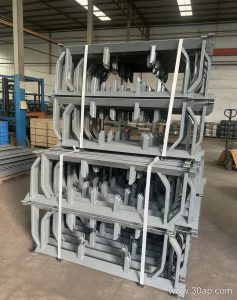
- Accessories: conveyor bracket, keyways, and end caps
Shaft diameter is not derived from belt width alone. A B1200 pulley on a lightly loaded jetty conveyor may use a smaller shaft than a B1200 drive pulley on a stacker boom, because torque, overhung load, and bearing life govern the final size.
Matching Belt Width to Pulley Dimensions
Face width normally exceeds belt width so the belt stays supported across its full span. Reference combinations include B800 × Ø500, B1200 × Ø1000, and B1400 × Ø800, but these are examples, not fixed pairings. A wider belt can run on a range of diameters depending on wrap angle and tension. The table below shows typical reference values.
| Belt width | Typical face width | Common diameter range |
|---|---|---|
| B500 | about 600 mm | Ø250 to Ø400 |
| B800 | about 950 mm | Ø315 to Ø630 |
| B1200 | about 1400 mm | Ø500 to Ø1000 |
| B1600 | about 1800 mm | Ø630 to Ø1250 |
| B2000 | about 2200 mm | Ø800 to Ø1400 |
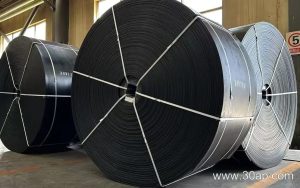
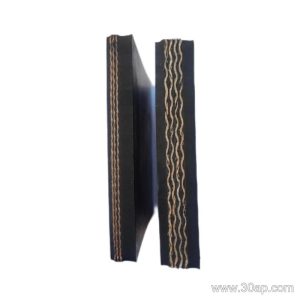
These figures are design references only. Final dimensions follow the conveyor layout, belt tension, and the belt specification itself, whether that is an EP conveyor belt, a steel cord belt, or a flame retardant grade for coal handling.
Where It Fits in Port Handling
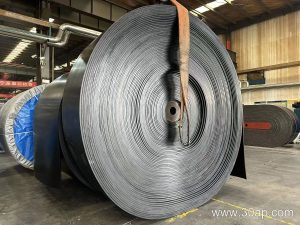
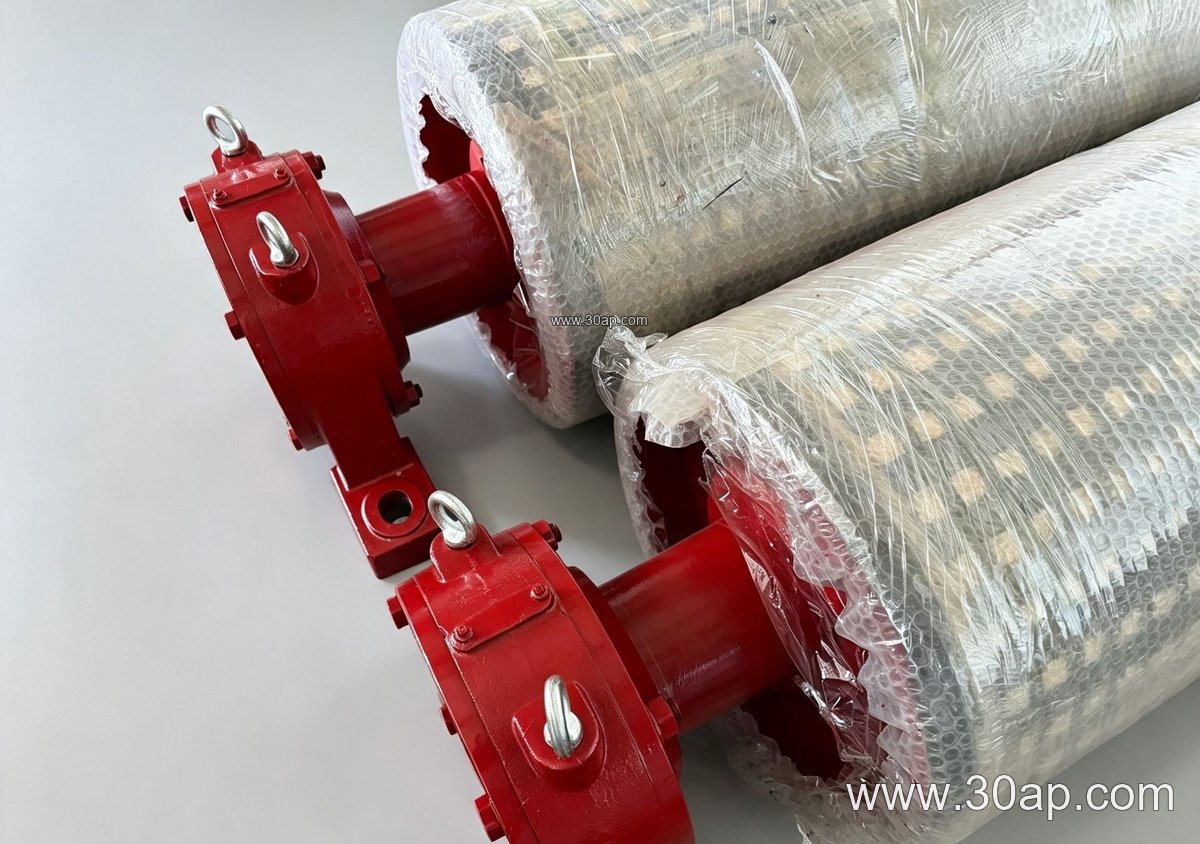
On a ship loader, the head or discharge pulley sits at the boom tip and must resist impact and abrasive dust. At the tail, a tail pulley with a self-cleaning surface keeps fines from building up. Bend and take-up pulleys guide the belt through the loop and maintain tension. In coal terminals, a flame retardant conveyor belt is common, and the pulleys are specified to match its tension rating. In fertilizer and grain terminals, oil resistant or food grade belts may be used, and pulley lagging should avoid contaminating the product.
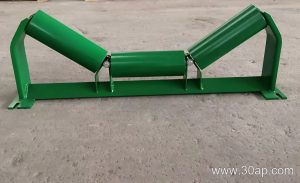
Port conveyors also rely on conveyor idler rollers to support the belt between pulleys. A mismatch between pulley diameter and idler spacing can cause belt sag and tracking problems, so the two are checked together during layout.
Buyer Checklist
- Confirm the position: drive, tail, bend, take-up, or snub
- State belt width, belt type, and maximum working tension
- Provide torque, speed, and wrap angle for drive pulleys
- Choose lagging for traction, wear, and wet conditions
- Check shaft size against bearing life, not belt width alone
- Confirm face width, keyway, and bracket dimensions
- Ask for balancing and runout tolerances
For abrasive ore and quarry duty, an abrasion resistant conveyor belt paired with ceramic or diamond lagging extends service life. For underground or enclosed transfer points, a fire resistant conveyor belt and anti-static pulley components may be required. Buyers should also verify that the pulley shell thickness suits the belt tension and that the bearing housings fit the available conveyor bracket.
Maintenance matters as much as selection. Inspect lagging for wear and glazing, check bearing temperature, and confirm that the belt tracks centrally. A worn drive pulley with polished lagging loses grip and invites slippage, especially in wet port conditions. Re-lagging or replacing the pulley before slip becomes chronic is usually cheaper than repeated belt damage.