What a Single Drive Pulley Does on a Conveyor
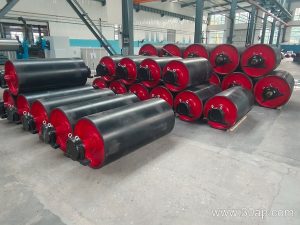
A single drive pulley is the one powered drum that moves the conveyor belt on a belt conveyor. The motor and gearbox turn this pulley, friction between the pulley surface and the belt carries the belt forward, and the belt in turn carries the load. In a single-drive arrangement, one drum provides all the driving force, which keeps the drive station compact and the maintenance routine simple. This differs from a two-pulley or multi-pulley drive, where the duty is shared. It also differs from a tail pulley, a bend pulley or a tension pulley: those drums guide, redirect or tension the belt but do not drive it.
Because the drive pulley transmits torque through the belt, its grip and its shaft are the two elements that matter most. A drive pulley with poor lagging or an undersized shaft will slip or flex, and the whole conveyor suffers.
How the Drum Is Built
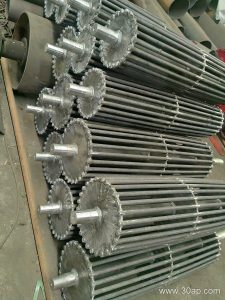
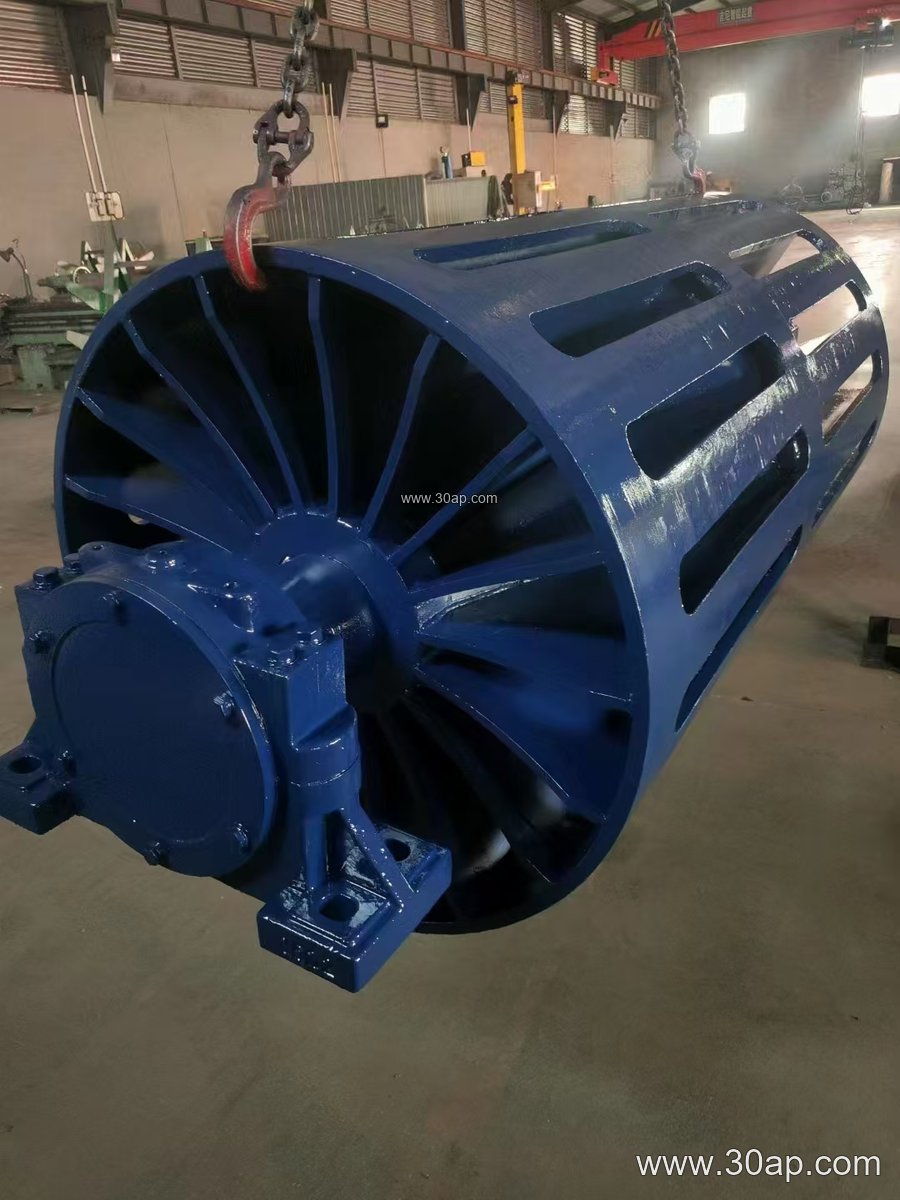
A typical single drive pulley consists of a cylindrical shell, two end discs, a shaft, and bearing housings that sit in the conveyor bracket or frame. The shell is usually machined from steel tube or rolled plate, and the shaft is keyed or shrink-fitted to the end discs. Lagging is applied to the shell surface to raise the friction coefficient between pulley and belt.
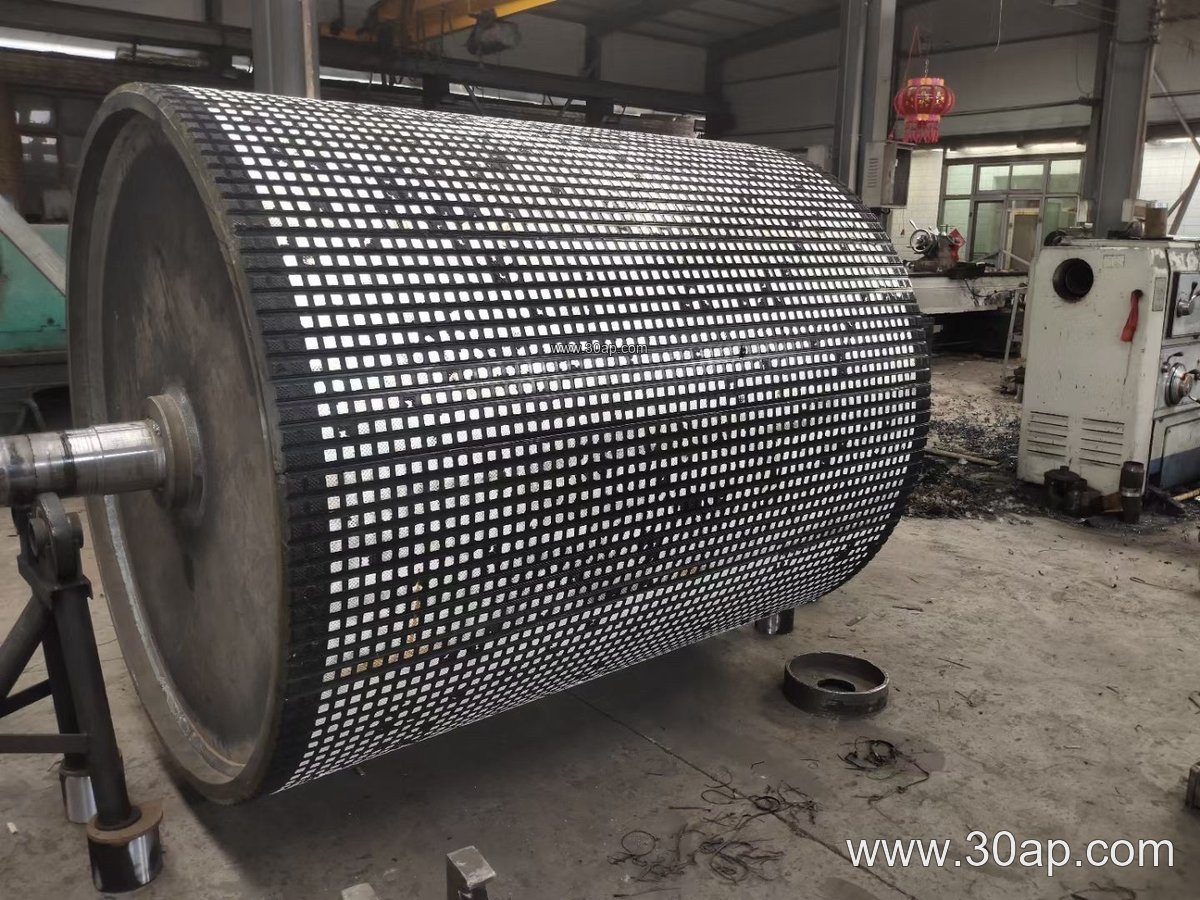
Common surface forms include plain, hot-vulcanized rubber, cold-bonded rubber, diamond grooving, herringbone grooving, ceramic lagging and flat rubber. Lagging thickness is often 8, 10, 12, 15 or 20 mm, chosen according to the duty. In a coal preparation plant or a limestone quarry where the belt may be wet or dusty, grooved or ceramic lagging helps water and fines escape from the contact zone.
Sizes and Reference Data
Drive pulleys are specified by belt width, pulley diameter, face width and shaft diameter. The face width is normally a little wider than the belt so the belt is fully supported. The table below gives common reference combinations; actual values are determined by design.
| Belt width | Typical face width | Common pulley diameters | Common shaft diameters |
|---|---|---|---|
| B400 | about 500 mm | Ø200, Ø250, Ø315 | Ø50, Ø60, Ø70 |
| B500 | about 600 mm | Ø250, Ø315, Ø400 | Ø60, Ø70, Ø80 |
| B650 | about 750 mm | Ø315, Ø400, Ø500 | Ø70, Ø80, Ø90 |
| B800 | about 950 mm | Ø400, Ø500, Ø630 | Ø80, Ø90, Ø100 |
| B1000 | about 1150 mm | Ø500, Ø630, Ø800 | Ø90, Ø100, Ø120 |
| B1200 | about 1400 mm | Ø630, Ø800, Ø1000 | Ø100, Ø120, Ø140 |
| B1400 | about 1600 mm | Ø800, Ø1000, Ø1250 | Ø120, Ø140, Ø160 |
| B1600 | about 1800 mm | Ø1000, Ø1250, Ø1400 | Ø140, Ø160, Ø180 |
These are reference figures, not fixed pairings. A B800 belt may run on a Ø500 or a Ø630 drive pulley depending on belt speed, wrap angle and tension. Shaft diameter follows torque and bearing load, so it should never be guessed from belt width alone.
Where It Fits in the Plant
Single drive pulleys appear at the head of short and medium conveyors, in aggregate crushing and screening lines, in cement clinker transport, in power station coal handling, and in fertilizer or grain silo operations. They are also common on mobile and semi-mobile conveyors where space at the discharge end is limited. When the conveyor is long or the lift is high, the required torque may push the design toward a dual-drive arrangement instead, but many in-plant belts are well served by one drive drum.
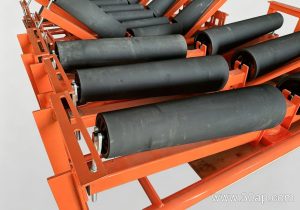
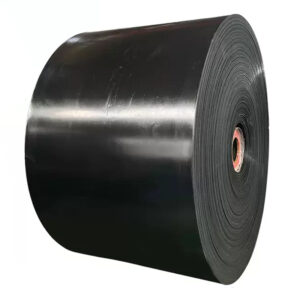
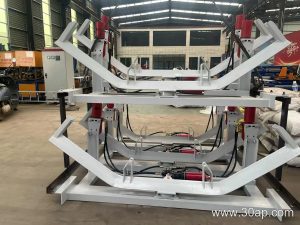
The pulley works together with the conveyor belt, idler rollers and the supporting conveyor bracket, so alignment across the whole frame affects belt tracking. A drive pulley that is not square to the belt centerline will cause the belt to run to one side regardless of lagging quality.
What Buyers Should Confirm
- Belt width, belt speed and the required starting and running torque.
- Pulley diameter and face width, checked against the belt and the available space.
- Lagging type and thickness, matched to whether the belt is wet, oily or abrasive.
- Shaft diameter, keyway and bearing type, based on calculated load rather than belt width alone.
- Whether a bend pulley or tension pulley is also needed nearby to achieve the wrap angle.
- Mounting details that match the existing conveyor bracket and frame.
Balance, runout and surface finish also deserve attention. A well-made single drive pulley should run true, hold its lagging firmly, and be easy to re-lag when the surface wears. Buyers who confirm these points before ordering avoid the common problem of a drum that fits the shaft but slips under load.