What a Conveyor Self-Aligning Idler Does
A conveyor self-aligning idler is a specialized idler roller assembly designed to automatically correct belt misalignment on a conveyor system. Unlike standard carrying idlers, this component uses a pivoting frame or angled rollers that respond to the belt drifting off-center. When the belt contacts the idler’s steering mechanism, the assembly rotates slightly, guiding the conveyor belt back to its proper path. This automatic correction reduces edge damage, spillage, and premature wear in demanding environments such as coal mines, cement plants, and aggregate quarries.
Construction and Key Components
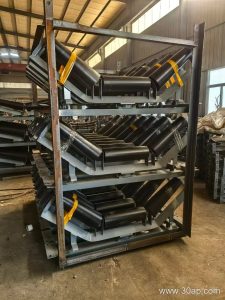
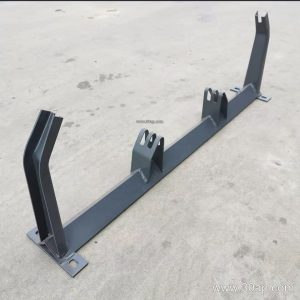
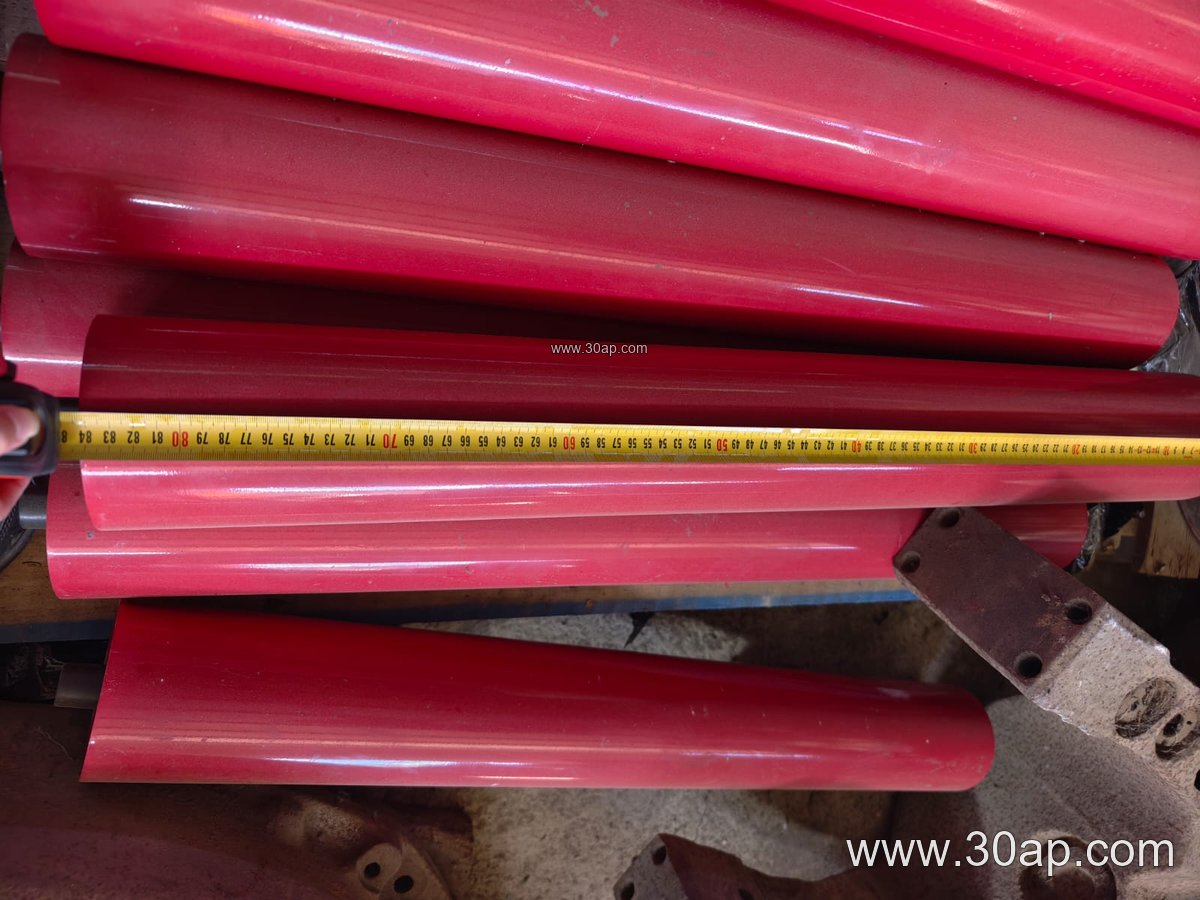
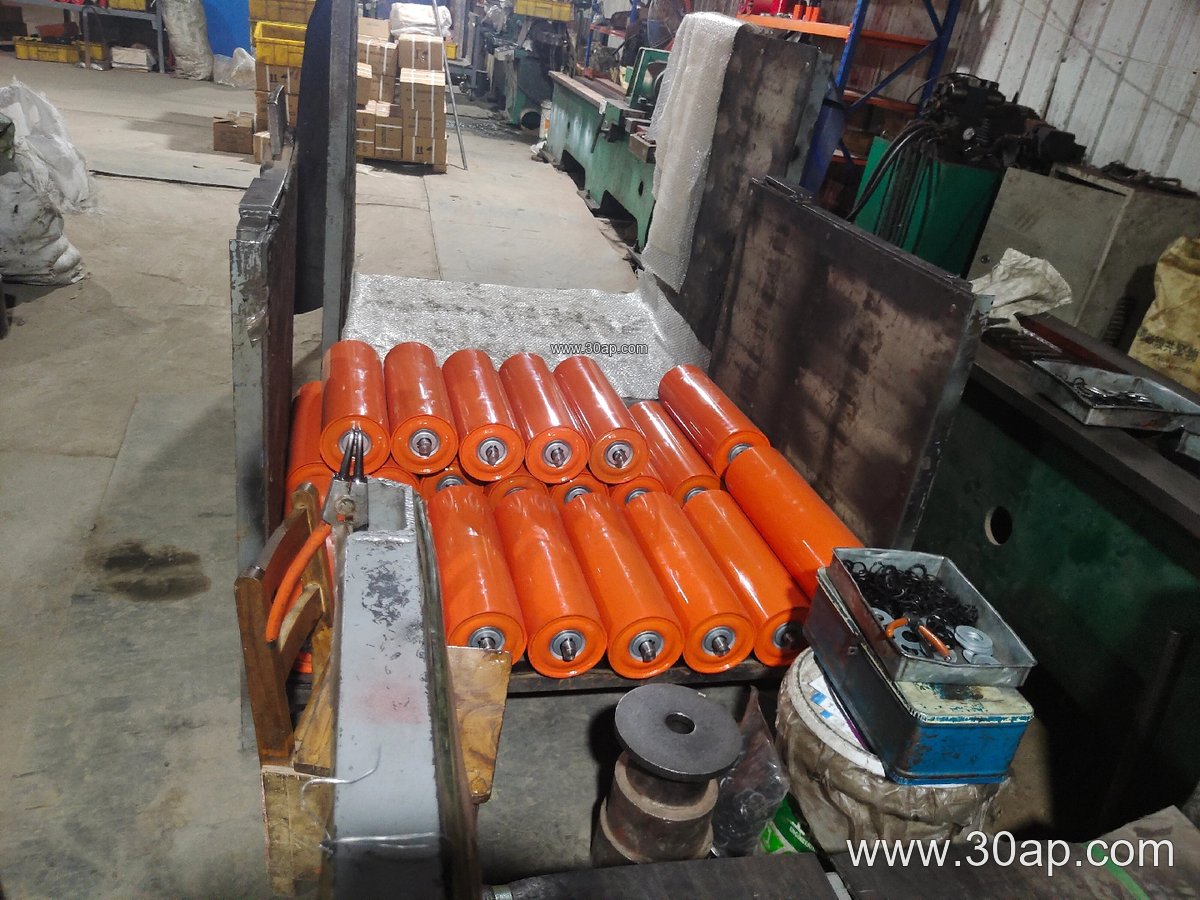
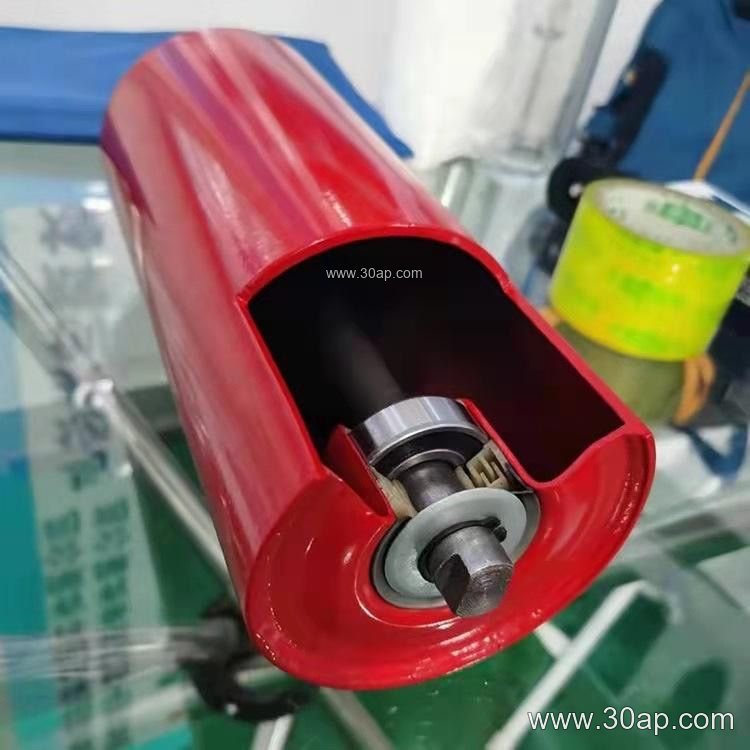
The self-aligning idler typically consists of a sturdy conveyor bracket that pivots on a central shaft, carrying two or three idler rollers. These rollers may be steel, nylon, or rubber-covered, depending on the application. Common roller diameters include Ø89, Ø108, Ø127, and Ø133 mm, with bearing sizes such as 6204, 6205, or 6305 chosen to match the load and speed. The frame often incorporates a vertical pivot axis and angled rollers (e.g., 20°, 30°, or 35° trough angles) that create a steering effect when the belt shifts. Some designs add a friction or conical feature to enhance sensitivity. The entire unit mounts to the conveyor structure and works with the existing conveyor pulley and belt system.
Where It Is Used
Self-aligning idlers are valuable in industries where belt tracking is critical and manual adjustment is impractical. In a limestone mine or iron ore operation, fugitive material and uneven loading can cause the belt to wander; a self-aligning idler corrects this continuously. Similarly, in a coal-fired power plant’s coal handling system or a cement plant’s clinker transport line, these idlers help maintain belt centering through curves and transitions. They are also found in sand and gravel plants, port bulk terminals, and tunnel excavation conveyors. While standard troughing idlers support the belt, the self-aligning type addresses a specific problem: lateral drift.
Common Configurations and Sizes
Self-aligning idlers are available in several forms to suit different belt widths and load conditions. The table below lists typical examples; actual selection depends on the conveyor design, belt speed, and material characteristics.
| Belt Width (B) | Typical Roller Diameter (Ø) | Common Trough Angle | Typical Roller Length (three-roll set) |
|---|---|---|---|
| B500 | 89 mm | 30° | 200 mm |
| B650 | 89–108 mm | 30°–35° | 250 mm |
| B800 | 108–127 mm | 35° | 315 mm |
| B1000 | 108–133 mm | 35°–45° | 380 mm |
| B1200 | 127–159 mm | 35°–45° | 465 mm |
| B1400 | 133–159 mm | 35°–45° | 530 mm |
| B1600 | 159–178 mm | 35°–45° | 600 mm |
| B1800 | 159–194 mm | 35°–45° | 670 mm |
| B2000 | 178–219 mm | 35°–45° | 750 mm |
Note that side rollers and center rollers may differ in length. Bearing selection (e.g., 6206, 6306, 6308) should be based on load calculations, not solely on roller diameter. For comparison, a standard troughing idler does not pivot and therefore cannot correct misalignment; a self-aligning unit adds that capability. Also, drive pulleys, tail pulleys, and bend pulleys are not interchangeable with idlers—they serve different functions in the conveyor drive and return system.
Buyer Checklist
- Confirm the belt width and expected trough angle to match the idler frame.
- Select roller diameter and bearing size based on load, speed, and environment (e.g., dusty, wet, or corrosive).
- Choose roller surface (steel, nylon, rubber) according to material stickiness and impact.
- Verify mounting dimensions and compatibility with existing conveyor brackets.
- Consider the pivot mechanism’s sensitivity and maintenance needs; periodic inspection of bearings and pivot points is recommended.
- Ensure the idler is installed at the correct location—typically after the loading point or before curves—where misalignment is most likely.
By understanding how a self-aligning idler works and matching it to the conveyor’s specifications, operators in mining, cement, power, and bulk handling industries can reduce downtime and extend belt life.