What a 315mm Diameter Conveyor Pulley Is
A 315mm diameter conveyor pulley is a mid-sized drum used to drive, tension, or redirect a conveyor belt in bulk material handling systems. The 315mm outside diameter (often written Ø315) places it in a common range for medium-duty conveyors in industries such as sand and gravel plants, cement plants, and coal preparation facilities. It is not a single fixed product type: the same diameter can be built as a drive pulley, a tail pulley, a bend pulley, or a take-up pulley, each with different shaft, bearing, and surface details.
This pulley works together with the conveyor belt, idler rollers, and conveyor brackets to keep the belt tracking and moving material efficiently. The 315mm size is often chosen when the belt width and load require a drum larger than a small head pulley but not as large as the heavy-duty pulleys seen in high-capacity main lines.
Construction and Key Components
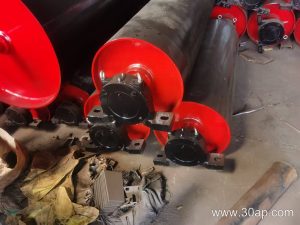
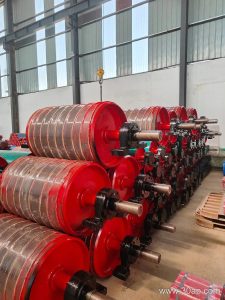
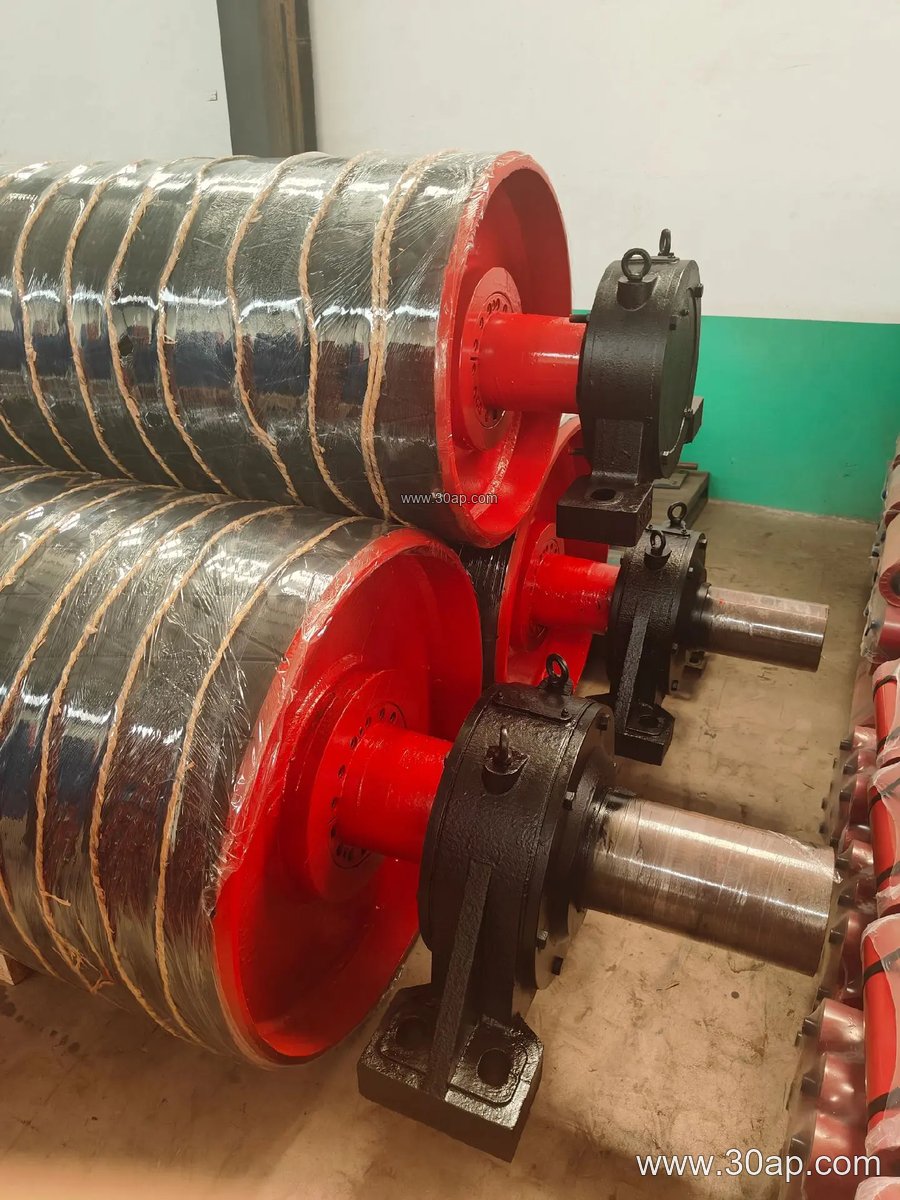
A typical 315mm diameter conveyor pulley consists of a cylindrical shell, two end discs, a shaft, bearing housings, and a surface covering where needed. The shell is usually made from rolled steel, machined to maintain concentricity. The shaft diameter is determined by torque and load requirements, not by belt width alone; common shaft sizes in this class include Ø80, Ø90, Ø100, and Ø120, but the final value must be confirmed by the pulley designer.
The pulley surface may be plain (光面) or covered with rubber. Rubber lagging options include cold-bonded rubber, hot-vulcanized rubber, diamond pattern, herringbone, and ceramic lagging. Lagging thickness commonly ranges from 8 mm to 20 mm depending on the application. For a 315mm pulley, a 10 mm or 12 mm lagging is often sufficient for general conveying, while abrasive materials may call for thicker or ceramic-lagged surfaces.
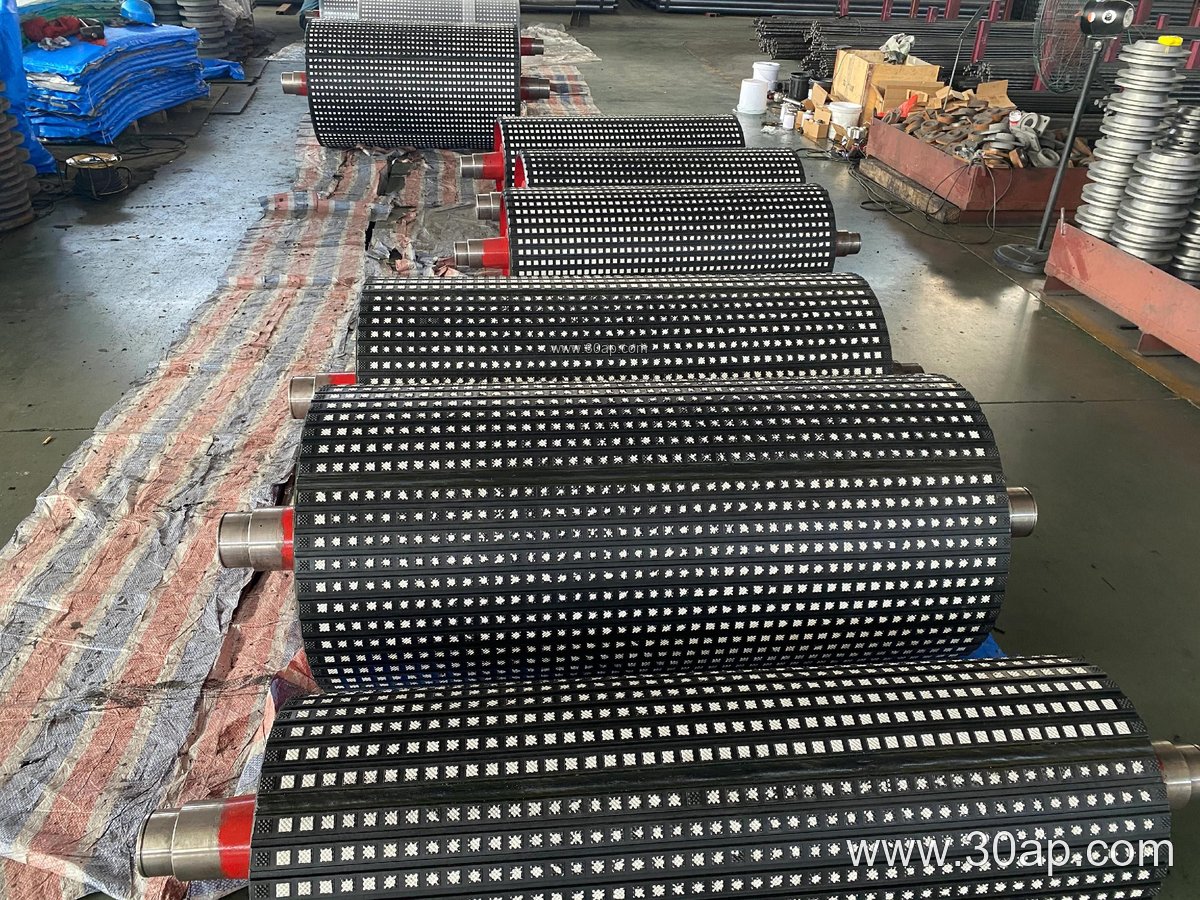
- Shell: rolled steel, machined for balance
- Shaft: sized by torque and bending load
- Bearings: spherical roller bearings in most designs
- Lagging: optional rubber or ceramic cover
Where It Fits in a Conveyor System
The 315mm diameter pulley is frequently used as a bend pulley or tail pulley in medium-width belt conveyors. In a sand and gravel line, it may redirect the return belt or serve as the tail pulley at the loading point. In a cement plant, it can be found on clinker or raw material conveyors where space is limited. The same diameter is also used on drive pulleys for smaller belt widths, provided the drive calculations confirm adequate torque capacity.
It is important to distinguish the subtypes: a drive pulley transmits power, a tail pulley changes belt direction at the tail end, and a bend pulley simply redirects the belt without driving. These roles are not interchangeable, and the 315mm diameter can be applied to any of them with the appropriate design.
Common Belt Width and Pulley Face Combinations
The pulley face width is usually wider than the belt to allow for belt tracking. The table below shows typical reference combinations for a 315mm diameter pulley. These are examples, not fixed rules; the final face width and shaft size must be confirmed by the conveyor designer.
| Belt Width (mm) | Typical Pulley Face Width (mm) | Example Shaft Diameter (mm) |
|---|---|---|
| B500 | 600 | Ø60–Ø80 |
| B650 | 750 | Ø70–Ø90 |
| B800 | 950 | Ø80–Ø100 |
| B1000 | 1150 | Ø90–Ø120 |
| B1200 | 1400 | Ø100–Ø140 |
Note that a single belt width can match more than one pulley diameter, and shaft diameter is never derived from belt width alone. The 315mm diameter is one option among many, and it should be selected based on belt tension, wrap angle, and available space.
Buyer Checklist for a 315mm Diameter Conveyor Pulley
When specifying a 315mm diameter conveyor pulley, gather the following information before contacting a supplier:
- Belt width and type (e.g., EP, steel cord)
- Pulley function: drive, tail, bend, or take-up
- Required shaft diameter and bearing size
- Lagging type and thickness, if needed
- Face width and any special machining
- Operating environment (dust, moisture, temperature)
Also consider the conveyor bracket dimensions and the idler roller spacing to ensure the pulley fits the existing structure. A 315mm pulley is a versatile component, but it must be matched to the belt and load rather than chosen by diameter alone.
Maintenance and Installation Notes
Proper alignment during installation helps prevent belt mistracking and premature lagging wear. Check bearing lubrication intervals and inspect the lagging surface for cuts or wear. For a 315mm diameter pulley used in dusty environments such as a coal preparation plant or limestone quarry, regular cleaning of the pulley face and nearby idler rollers reduces buildup that can damage the belt.
If the pulley is a drive pulley, verify that the lagging provides adequate friction for the required torque. For bend and tail pulleys, confirm that the bearing seals suit the site conditions. These checks help the 315mm diameter conveyor pulley deliver reliable service in sand and gravel, cement, and other bulk handling operations.