What a Five-Roll Idler Bracket Does
A five-roll idler bracket is the support frame that carries a five-roller trough set under a conveyor belt. Instead of the usual three rolls, this bracket holds a center roll and two pairs of side rolls, giving the belt more support points across the full width. On a five-roll troughing set, the outer rolls can also be angled upward to form a deeper trough at the edges, which helps keep material centered. In a quarry, a coal preparation plant, or a cement plant handling abrasive bulk material, that extra support can reduce belt sag between rollers and spread the load over more bearings.
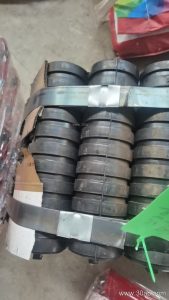
It is also called a five-roller idler support or five-roll troughing frame. The name refers to the same assembly, not to a different product. The bracket is only the frame; the idler rollers and the conveyor belt sit in it and do the work of carrying the load.
Structure and Build
Most brackets are fabricated from angle steel, channel steel, or folded steel plate. The crossbeam carries the mounting slots or brackets for each roll, and the two end sections are set at the trough angle. Some designs use a fixed welded frame, while an adjustable version lets maintenance staff change the trough angle to suit the material and belt condition. The mounting hole spacing and beam length are set by the belt width and trough angle, so they are determined by design rather than fixed for every conveyor.
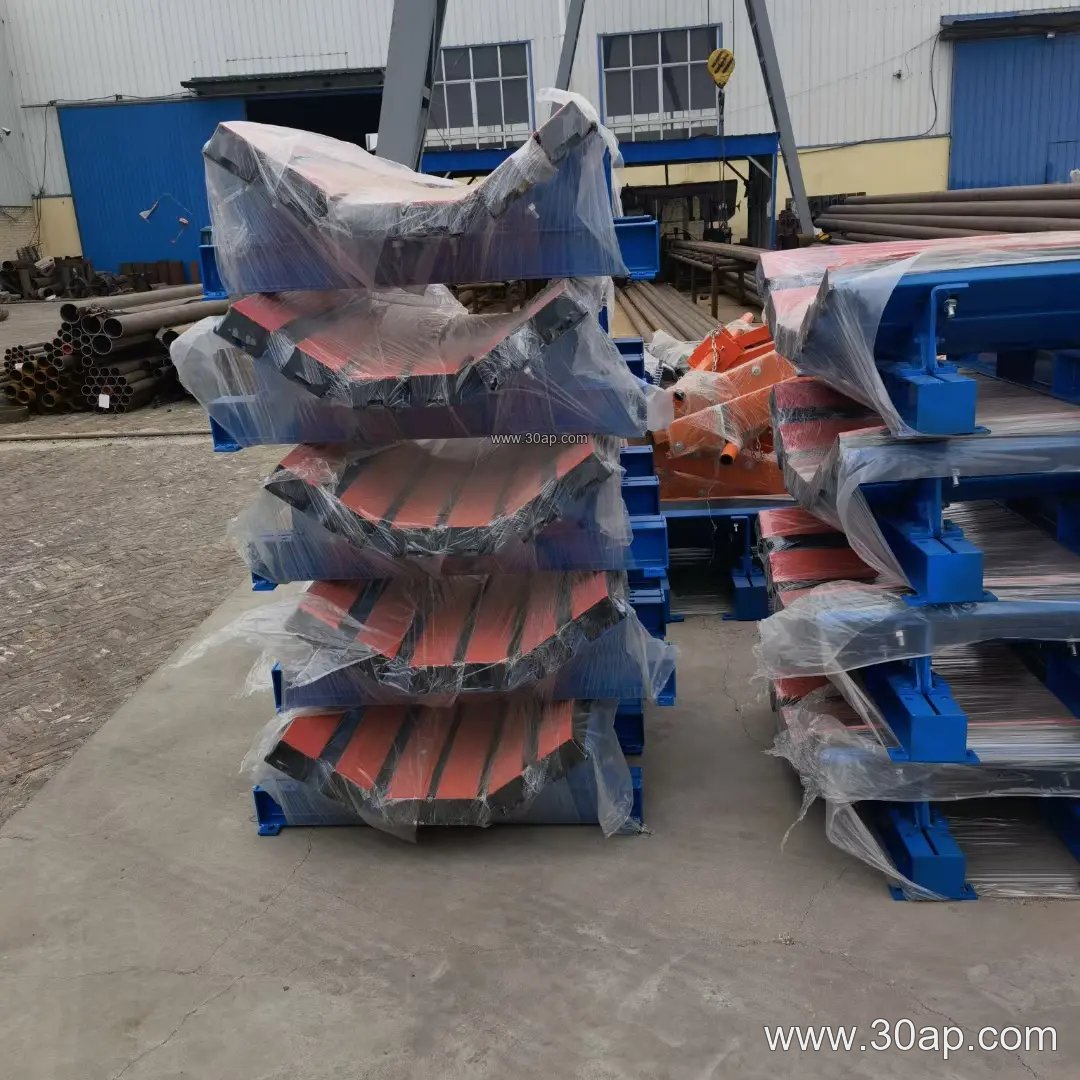
Typical reference data for a five-roll bracket, to be confirmed against the actual design:
| Item | Common range |
|---|---|
| Belt width | B800, B1000, B1200, B1400, B1600, B1800, B2000 |
| Trough angle | 20°, 30°, 35°, 45° (adjustable versions cover a range) |
| Roll diameter | Ø89, Ø108, Ø133, Ø159, Ø194 |
| Frame material | Angle steel, channel steel, folded plate |
| Finish | Painted or galvanized, according to specification |
A wide belt such as B1600 or B1800 may use a five-roll set with Ø159 rolls at a 35° or 45° trough, but the same belt width can also be run with other roll diameters and angles depending on load and speed. There is no single fixed match between belt width, trough angle, and roll diameter.
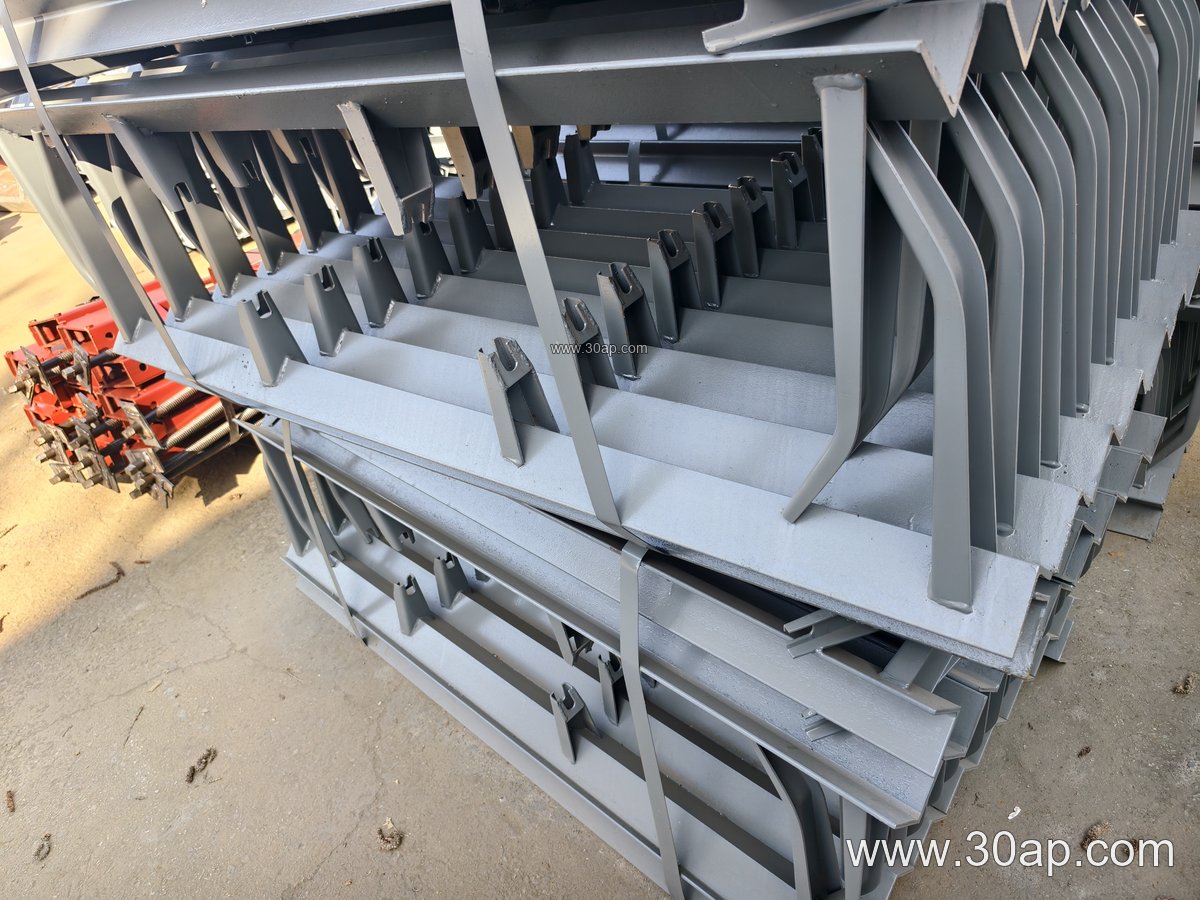
Where Five-Roll Sets Fit
Five-roll brackets are most often found at loading points and along the carrying side of wide conveyors. In a limestone mine or an iron ore transfer station, the belt receives large lumps and needs a smooth trough with no sharp change in profile. A five-roll layout gives a gentler curve than a three-roll set, which can help the belt track better and reduce edge stress. In a power plant coal yard, the same frame can hold impact or cushion rolls near the chute and standard rolls further along the line.
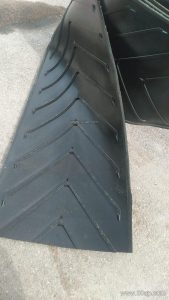
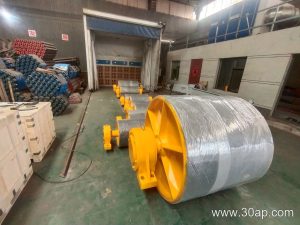
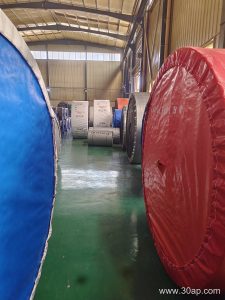
They are not a replacement for a bend pulley or a drive pulley, which turn the belt, nor for the return-side frames. A five-roll bracket belongs to the carrying side of a troughed conveyor, and it works together with the conveyor belt, the idler rollers, and the pulleys to keep the line running.
Selection Points for Buyers
- Confirm the belt width and the actual trough angle required; do not assume a bracket for B1200 will fit a B1400 belt.
- Match the roll diameter and roll length to the idler set that will be installed.
- Check the mounting hole spacing and beam length against the conveyor stringer dimensions.
- Decide between fixed and adjustable frames based on whether the trough angle may need changing.
- For high-impact loading zones, ask for a reinforced frame and consider cushion rolls.
- Confirm the surface finish and material thickness for the site conditions, such as dust, moisture, or corrosive air.
In a sand and gravel line or a mixing plant, a five-roll bracket is a practical way to support a wide belt with a stable trough. Buyers should treat the sizes above as reference values and confirm the final frame dimensions with the conveyor design before ordering.