What an EP Fabric Core Conveyor Belt Is
An EP Fabric Core Conveyor Belt is a rubber conveyor belt whose strength member is made from polyester (E) warp yarns and polyamide or nylon (P) weft yarns, woven into plies and bonded with rubber. This construction is often called an EP conveyor belt or polyester-nylon fabric belt, and it is one of the most widely used carcass types in bulk material handling. The fabric core carries the tension, while the rubber covers protect the carcass from abrasion, impact and moisture.
Compared with a steel cord conveyor belt, an EP fabric belt is lighter and more flexible, which suits medium-duty lines and systems with relatively small pulleys. Compared with an NN nylon conveyor belt, the EP carcass usually offers lower elongation under load, so it holds tensions more predictably on long or heavily loaded runs. These are general tendencies; the final behavior depends on the manufacturer and the belt design.
How the Belt Is Built
The carcass is built from multiple fabric plies, commonly 2 to 6 layers, embedded in rubber. Each ply contributes tensile strength, and the plies are bonded so they act together rather than slipping. Top and bottom rubber covers are then applied, with the top cover typically thicker for the carrying side. Cover thickness is usually written as a pair, such as 4+2 mm or 6+2 mm, meaning top cover plus bottom cover.
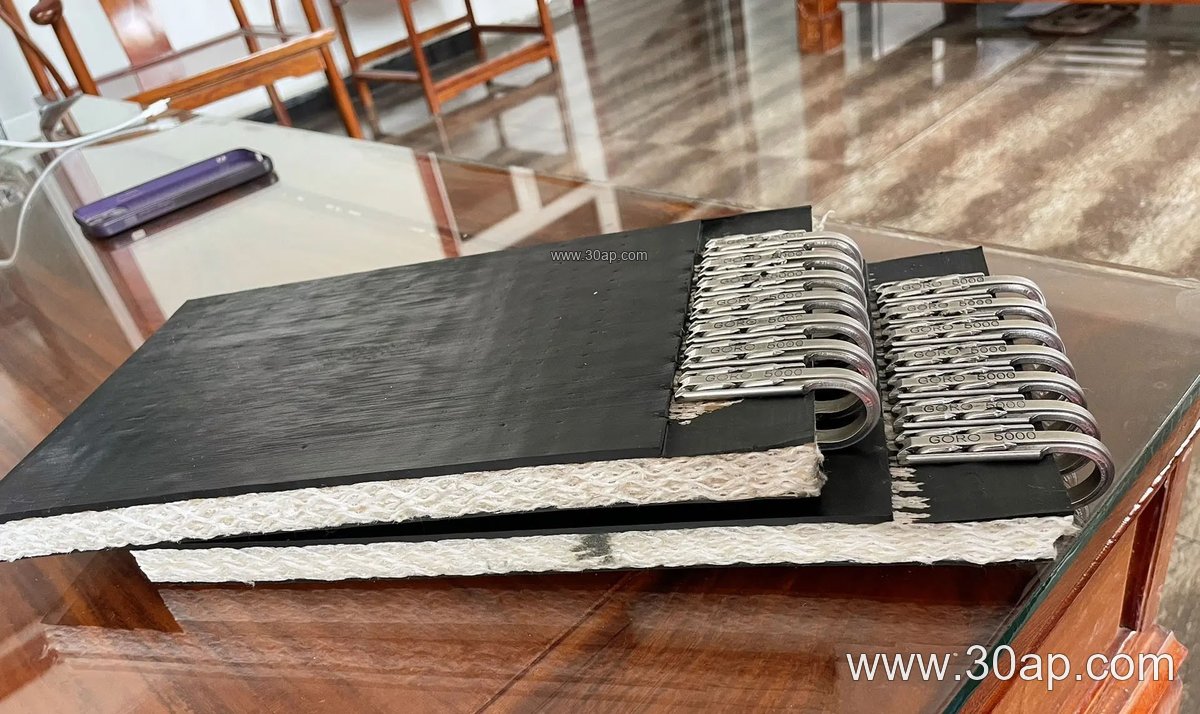
The strength grade is expressed as an EP number, which relates to the nominal tensile strength of the carcass. Common grades include EP200, EP315, EP400, EP500, EP630, EP800, EP1000, EP1250, EP1600 and EP2000. A higher grade does not automatically make a belt better for every job; it must match the calculated belt tension, the pulley arrangement and the load profile.
Common Specifications
The table below collects typical reference values. Treat them as orientation data, not a fixed supply list, because different manufacturers build different combinations.
| Parameter | Typical reference values |
|---|---|
| Strength grade | EP200, EP315, EP400, EP500, EP630, EP800, EP1000, EP1250, EP1600, EP2000 |
| Belt width | B500, B650, B800, B1000, B1200, B1400, B1600, B1800, B2000 |
| Cover thickness | 3+1.5 mm, 4+2 mm, 5+2 mm, 6+2 mm, 8+3 mm |
| Carcass plies | Usually 2 to 6 layers |
| Cover variants | Abrasion resistant, heat resistant, oil resistant, flame retardant, antistatic, cold resistant, acid and alkali resistant |
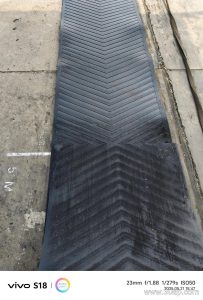
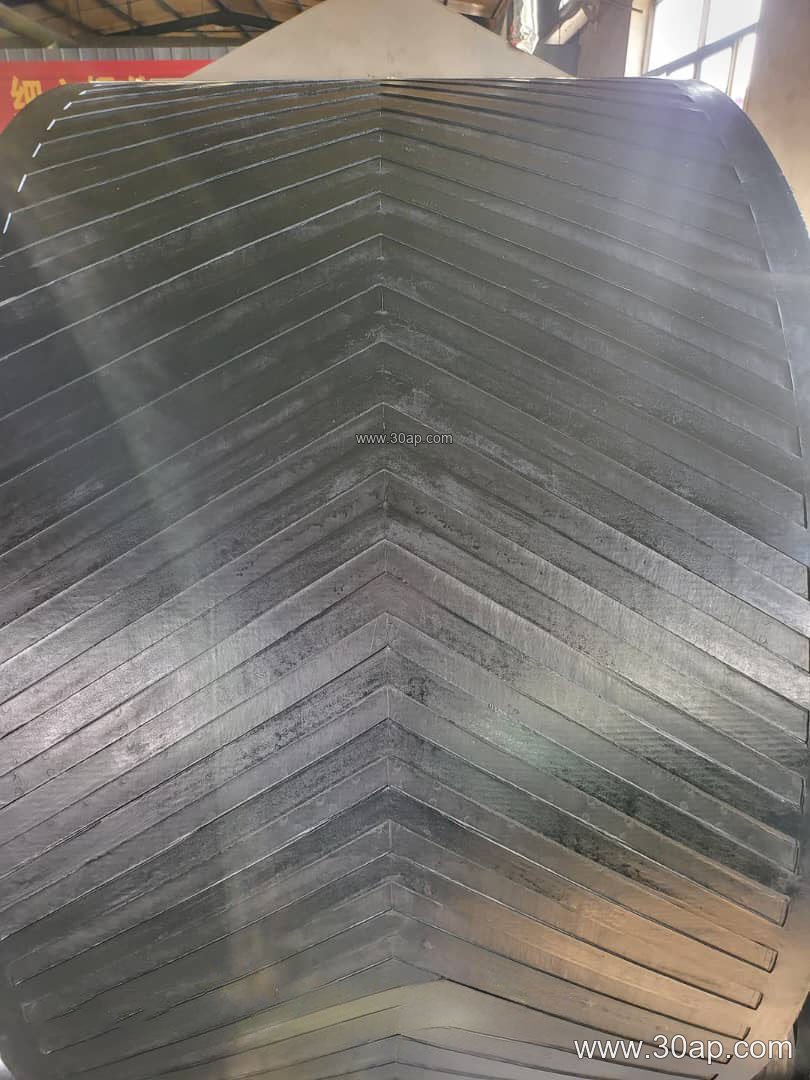
| Surface forms | Smooth, patterned, chevron or herringbone, corrugated sidewall |
Belt width and pulley diameter are separate design choices. A given width does not lock the system to one pulley size, and shaft diameter must be calculated from the actual load case, not guessed from belt width.
Where It Fits in a Conveyor System
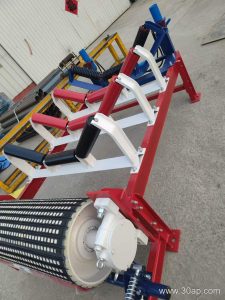
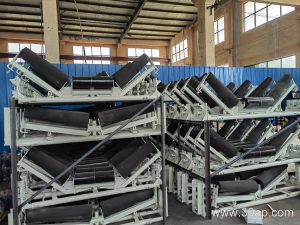
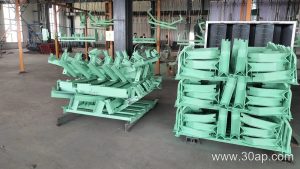
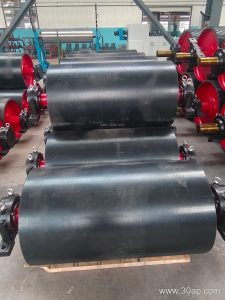
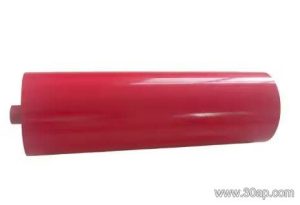
The belt runs over a drive pulley, a tail pulley and bend pulleys, supported between them by idler rollers mounted on conveyor brackets. The drive pulley transmits motion, the tail pulley returns the belt, and bend pulleys route it through curves or take-up zones. Each of these components has its own function and they are not interchangeable. The belt must be compatible with all of them.
EP fabric belts appear in mines, coal preparation plants, cement works, power stations, sand and gravel yards, ports and bulk terminals. They handle crushed ore, clinker, coal, limestone, aggregate, fertilizer and similar loose materials. In dusty or wet conditions, a flame retardant and antistatic cover may be specified for coal handling, while heat resistant covers suit clinker and sinter lines.
What a Buyer Should Check
- Calculated tension: choose the EP grade from the design tension with a sensible safety margin, not from habit.
- Cover thickness: match top cover to material size and abrasion, and bottom cover to pulley contact and cleanliness.
- Pulley and idler compatibility: confirm pulley diameters, troughing angles and idler roller spacing with the belt supplier.
- Environmental demands: state whether the line needs oil resistance, heat resistance, cold flexibility, flame retardancy or antistatic behavior.
- Splicing method: decide between mechanical fasteners and vulcanized splice early, since it affects belt ends and lead times.
- Storage and handling: keep rolls dry, out of direct sunlight and away from ozone sources such as electric motors.
Routine checks of belt tracking, cover wear, edge condition and splice integrity prevent small faults from becoming shutdowns. When a replacement is ordered, record the existing grade, width, cover thickness and ply count so the new EP fabric core conveyor belt matches the conveyor rather than merely resembling the old one.